This is the final leg of this trip. For me, probably the most important one, because it leads into the Hoggar Mountains, and it was precisely those mountains that brought me here in the first place. They were where my dream of reaching Algeria began. The snag is, Tomek is somewhere, who knows where, and we are completely out of fuel to get there. We simply have to find either Tomek or some petrol in Idles. As simple as that.
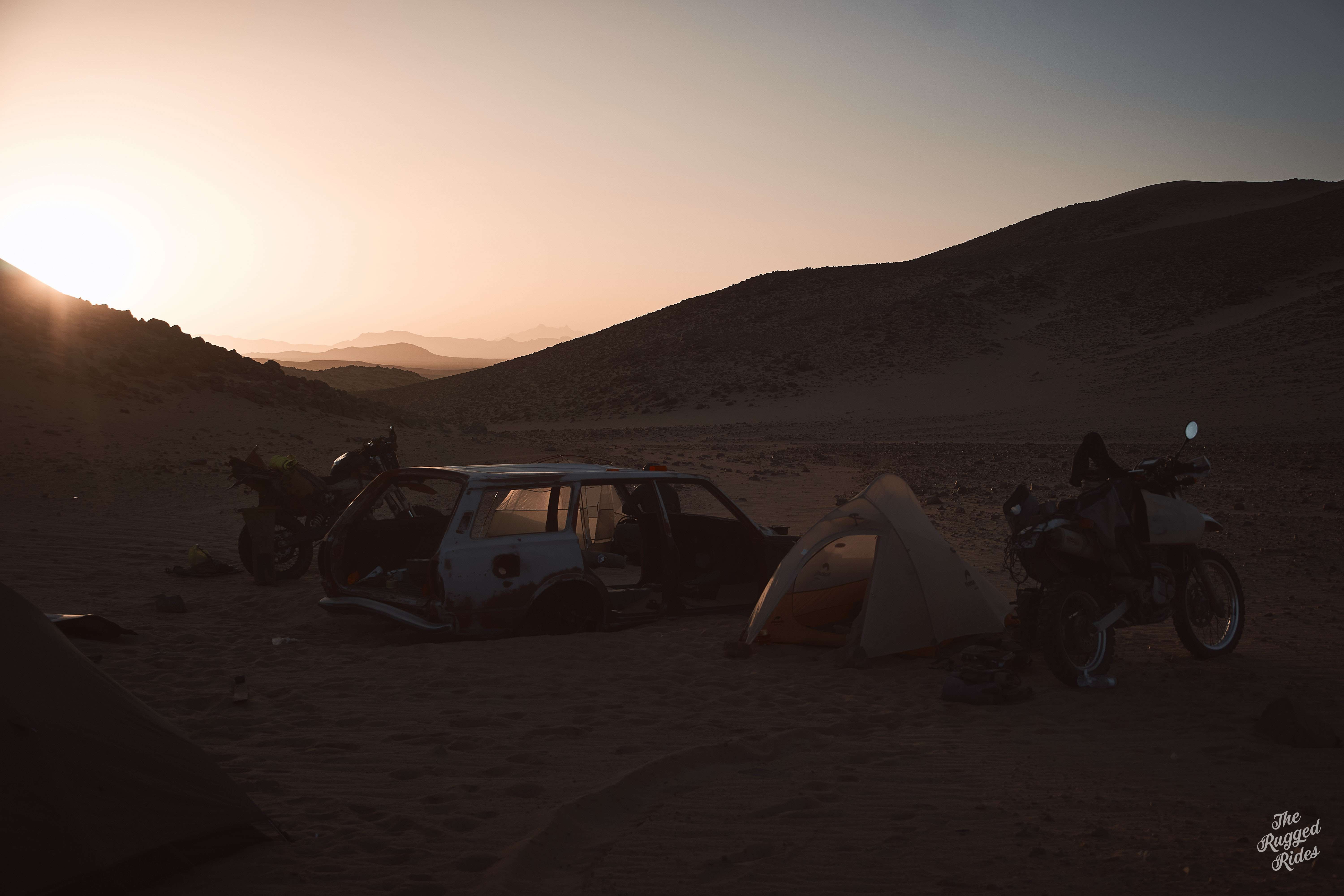
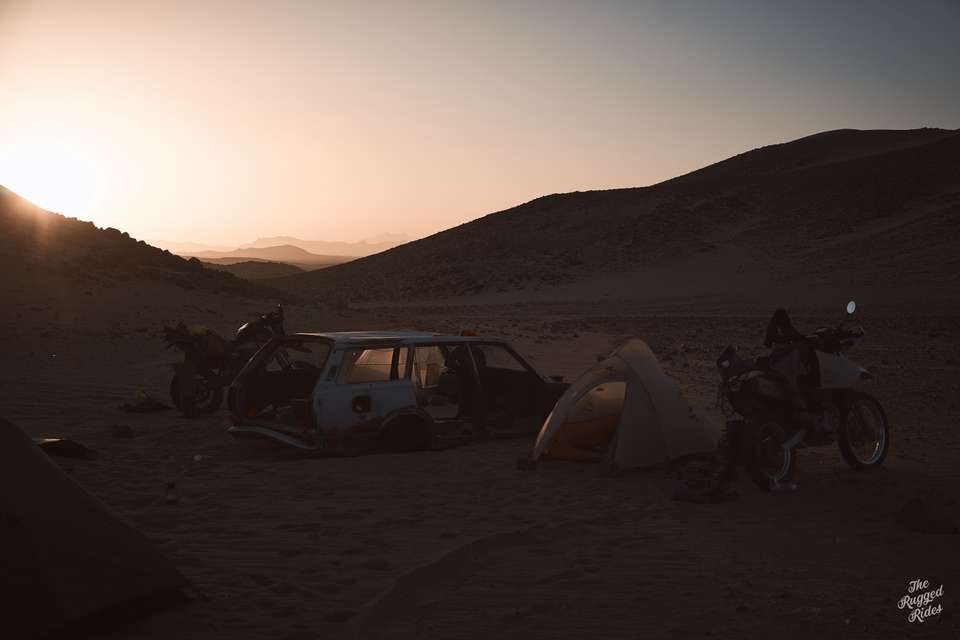
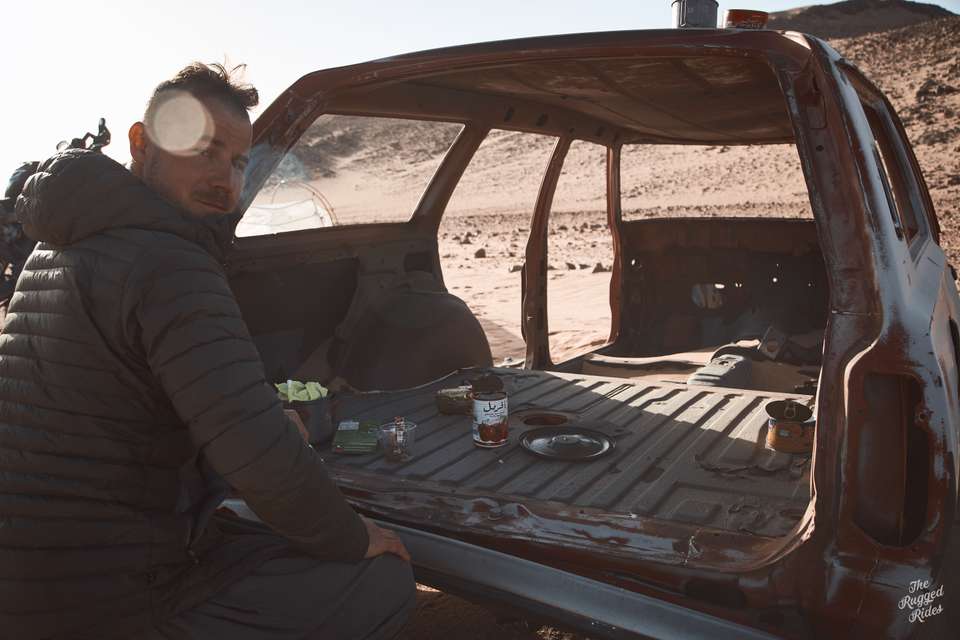
We get up at dawn. Our tents, the wreck, everything is bathed in the orange glow of the low sun. Surrounding air is incredible, silence and isolation. We decide to take it easy, have a rest and give Tomek a chance to catch up. If he doesn't turn up within two hours, we'll head for Idles. We assume Tomek will be thinking along the same lines.
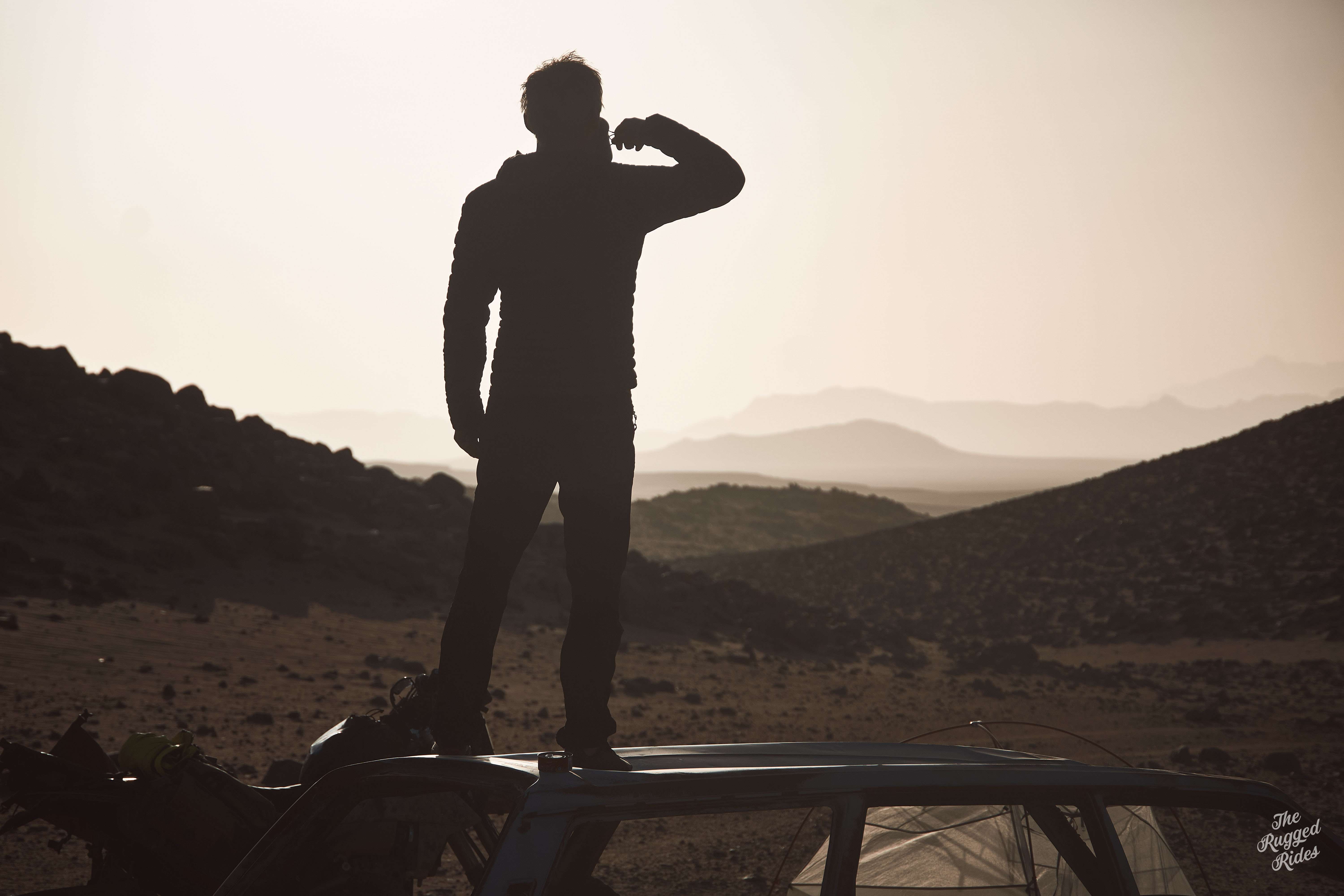
Around the second coffee, we pick up the distant, barely audible sound of an engine. Without a doubt, it's an LC4, many kilometres away, you simply can't mistake it for another bike. Few moments later, Tomek arrives. He had camped nearby, night had fallen and he preferred not to ride in the dark, which is entirely understandable. Oddly enough, we had no radio comms. The mountains must have killed the signal. All we had was an arrangement to meet at this exact spot, just like in the good old analogue days. We drain some fuel and Tomek sets off on his own way. He's still in the mood for riding solo, so he skips this last desert section. We'll see him in Idles.
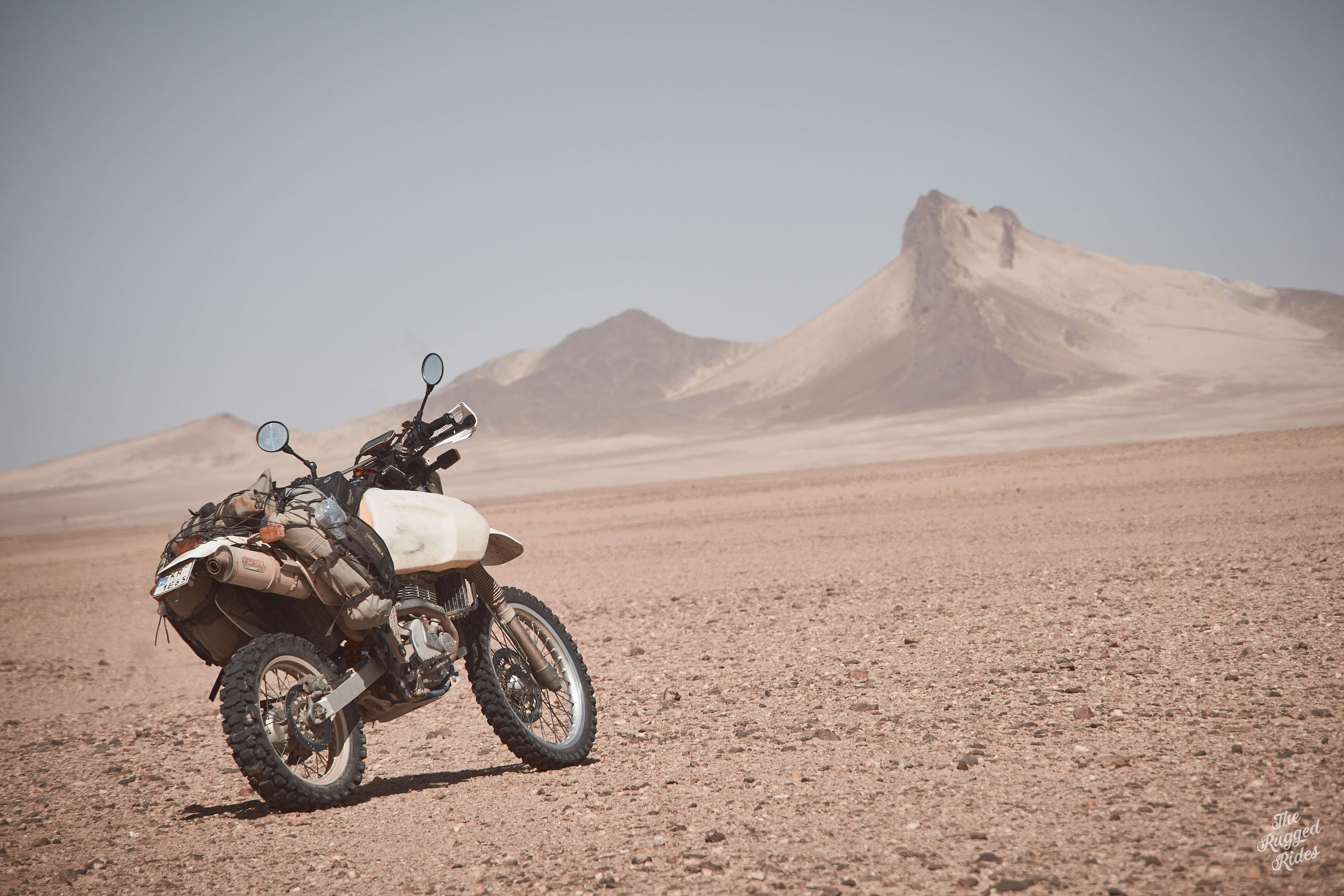
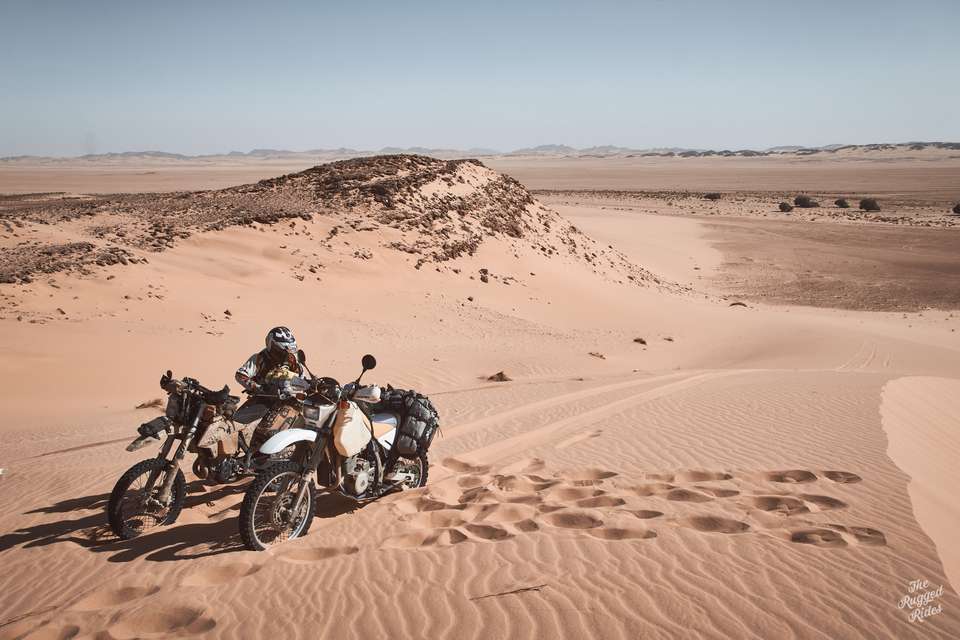
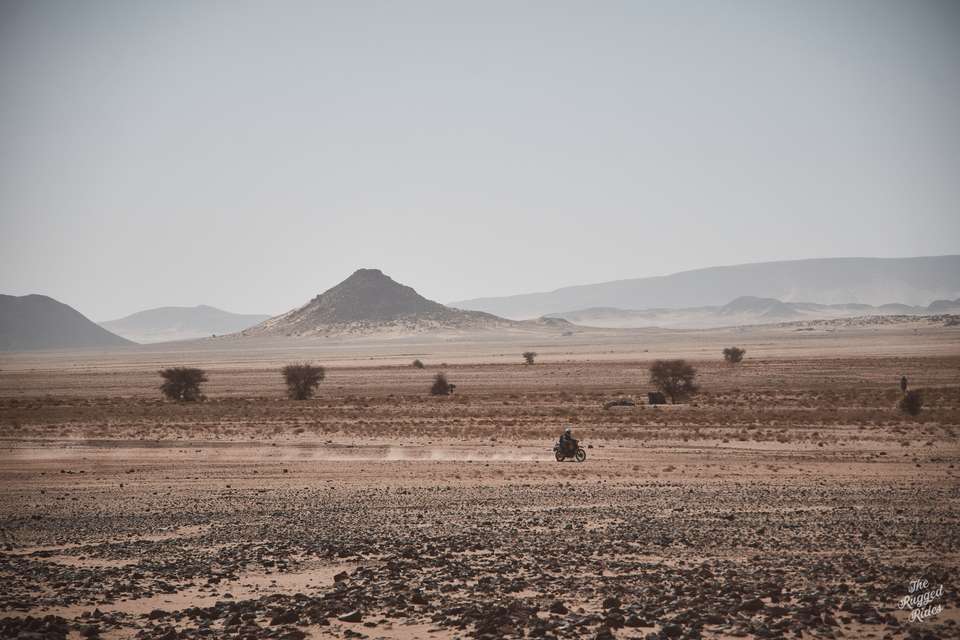
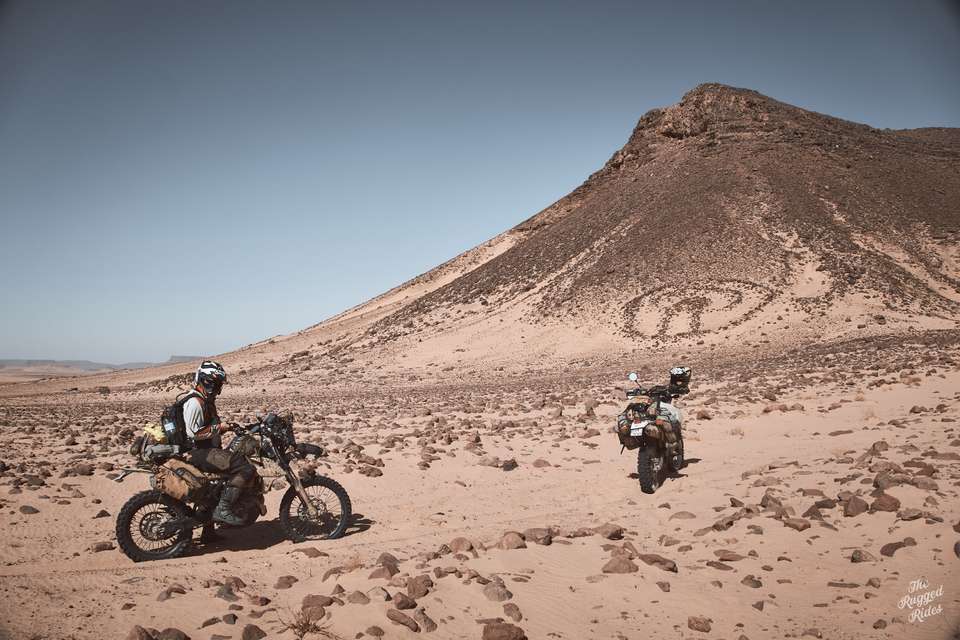
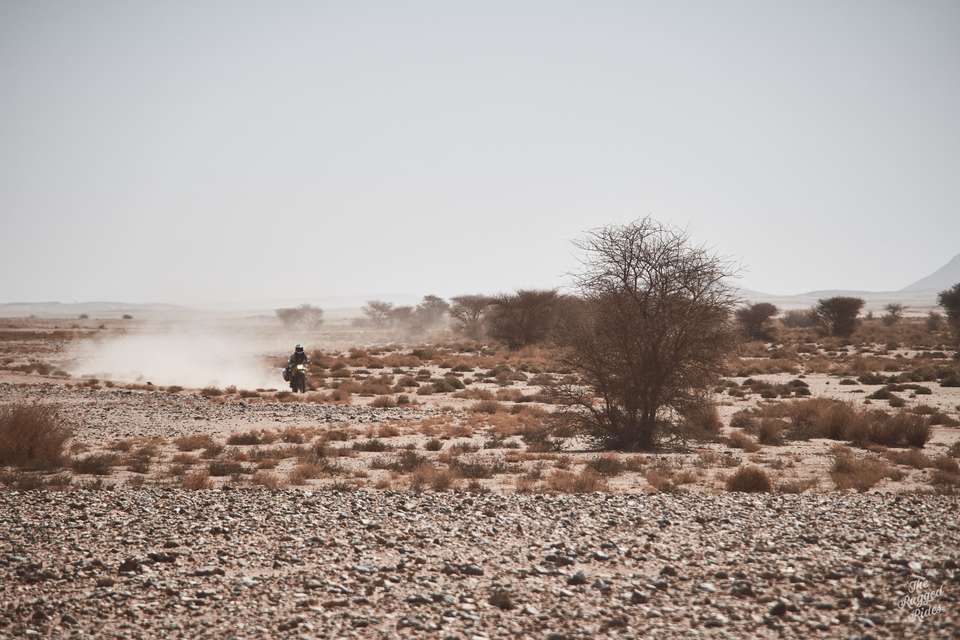
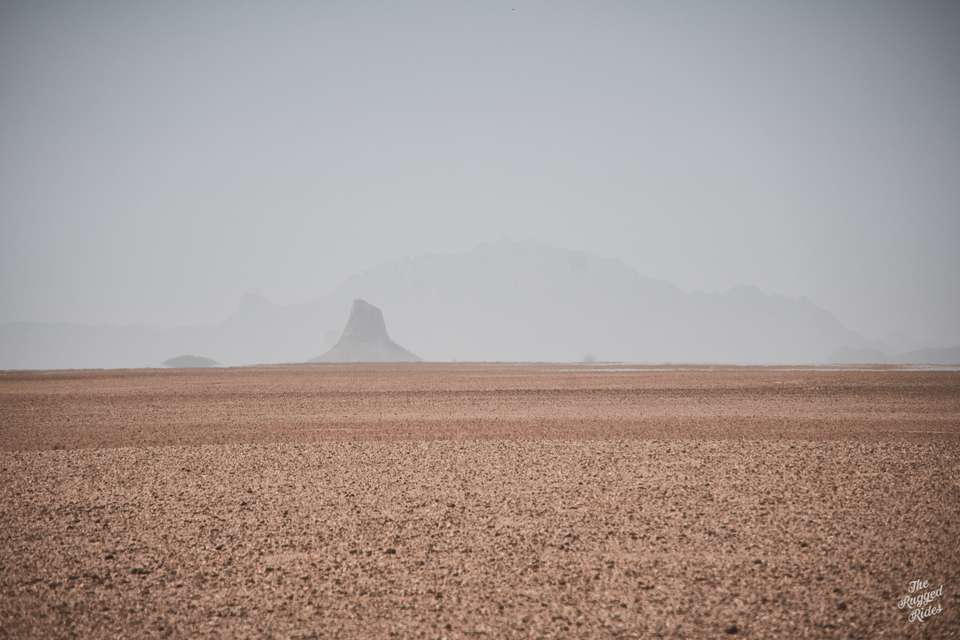
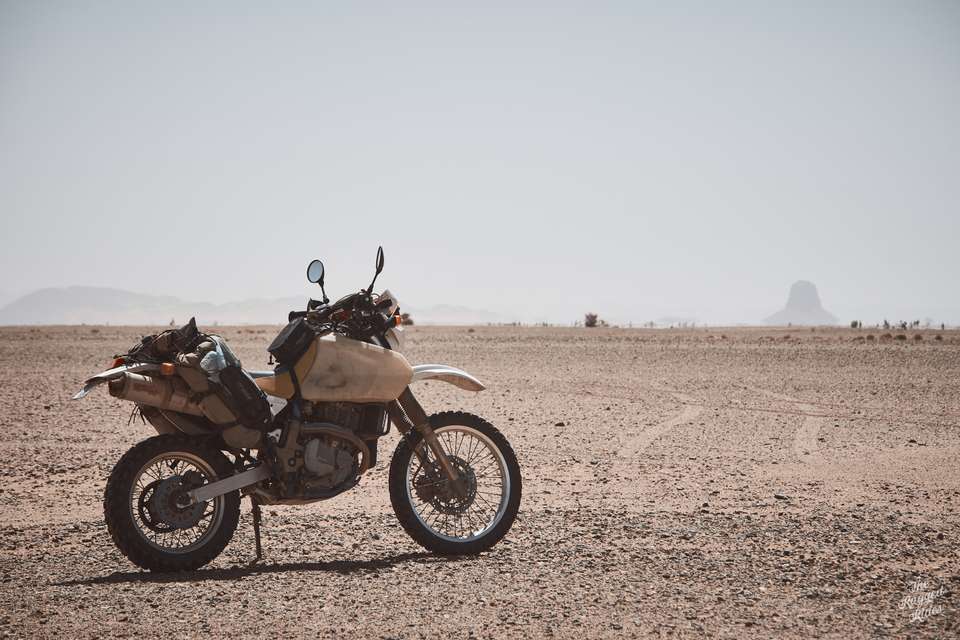
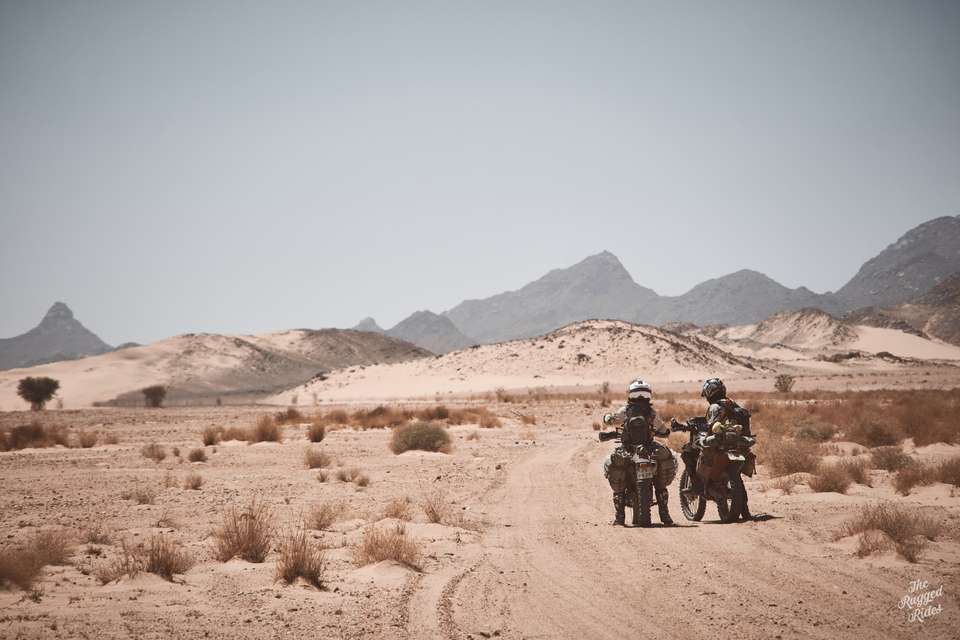
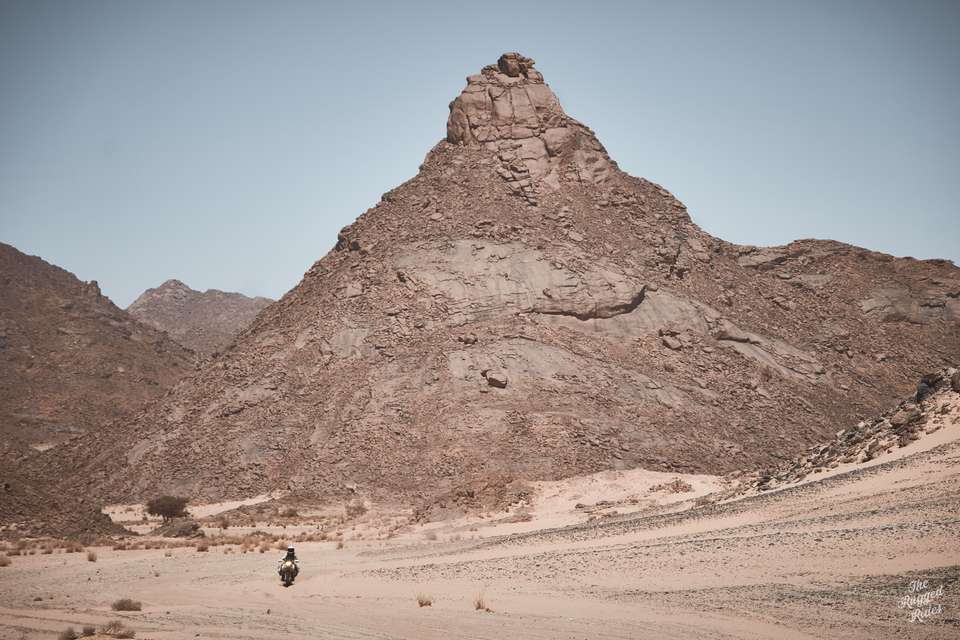
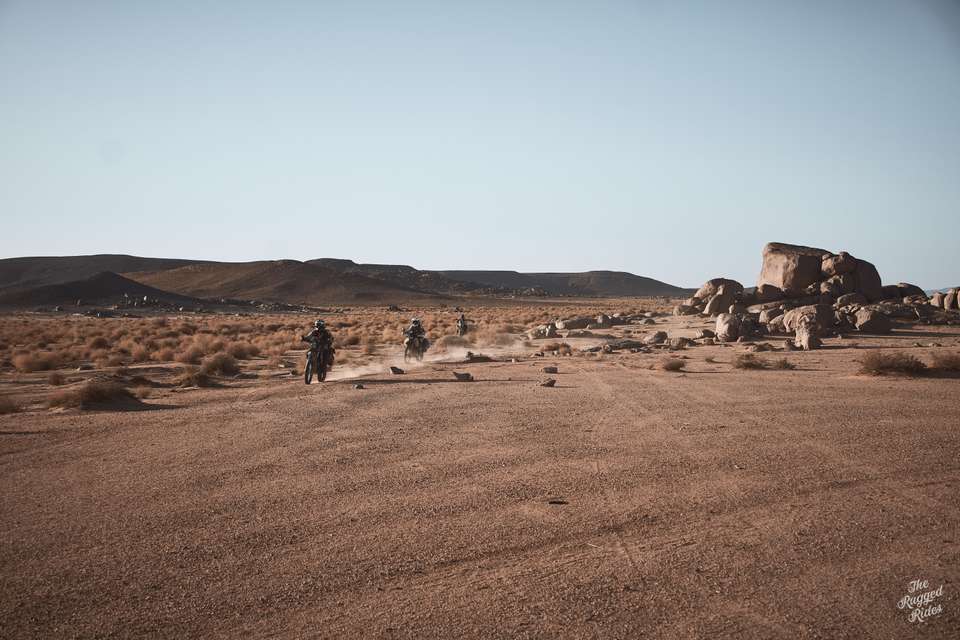
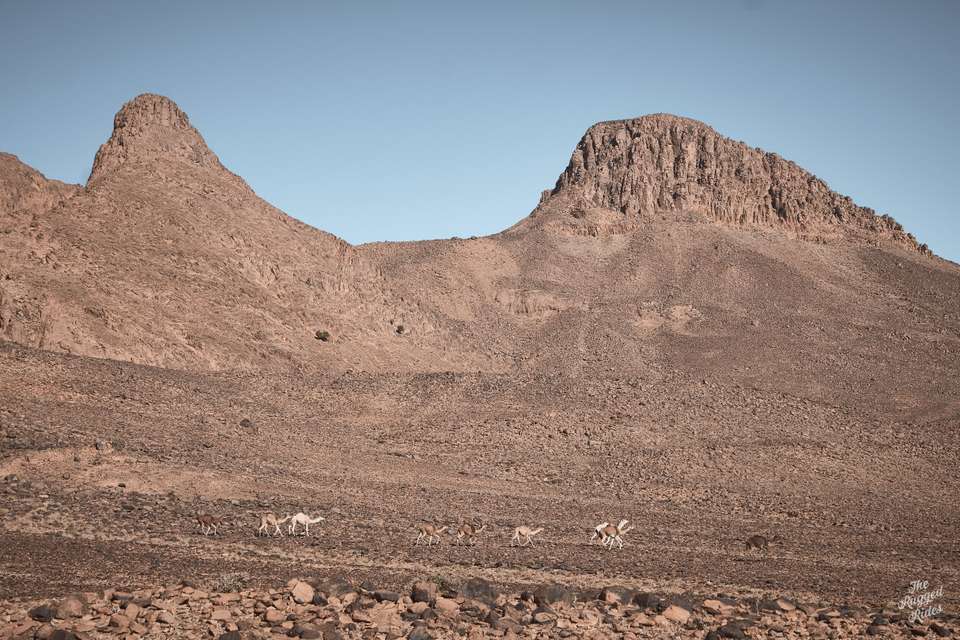
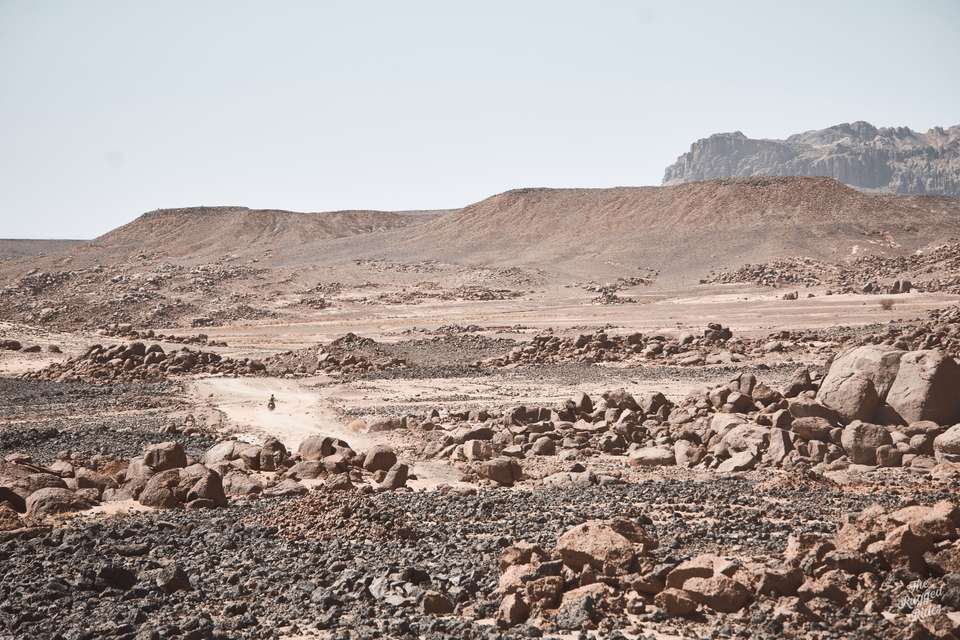
As for us, we dive straight into the hamada just beyond the camp. At first there are no any tracks, no roads, we'll reach those only several dozen kilometres later. The flat hamada lets you slip into a kind of trance. Some remarkably shaped mountains appear on the horizon. From time to time we pass Neolithic tombs. Other than that, there is absolutely nothing and nobody. I've almost stopped noticing it by now, I've grown used to these vast expanses of nothingness. Even when riding as a group, we don't keep particularly close together. There are moments when all we have is the radio reception, and a rough idea of where everyone is. Sometimes it gets quite amusing, when I assume, that Kondzio is riding ahead of me on my 2 o'clock, only for a tiny dot to emerge from behind me on the left.
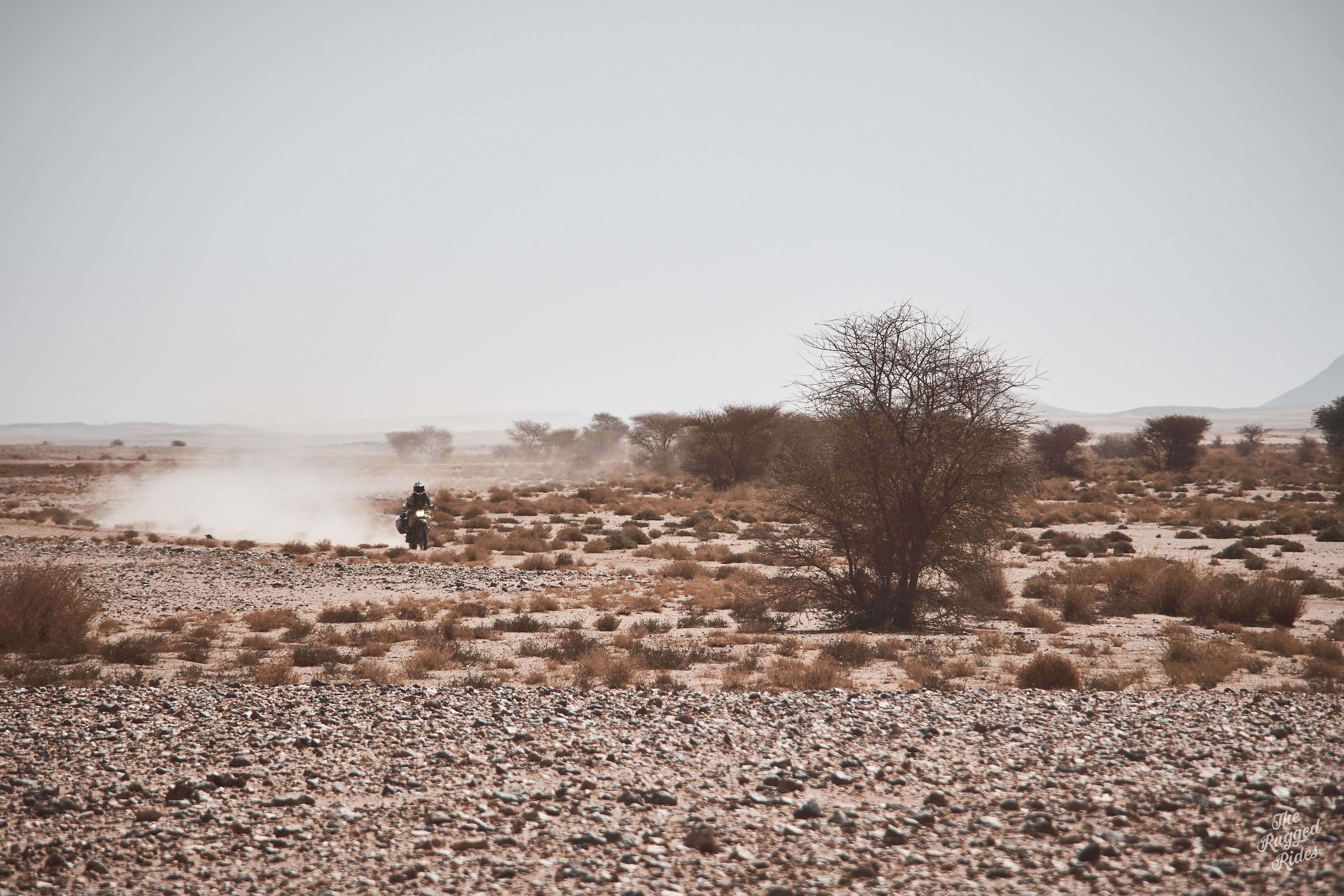
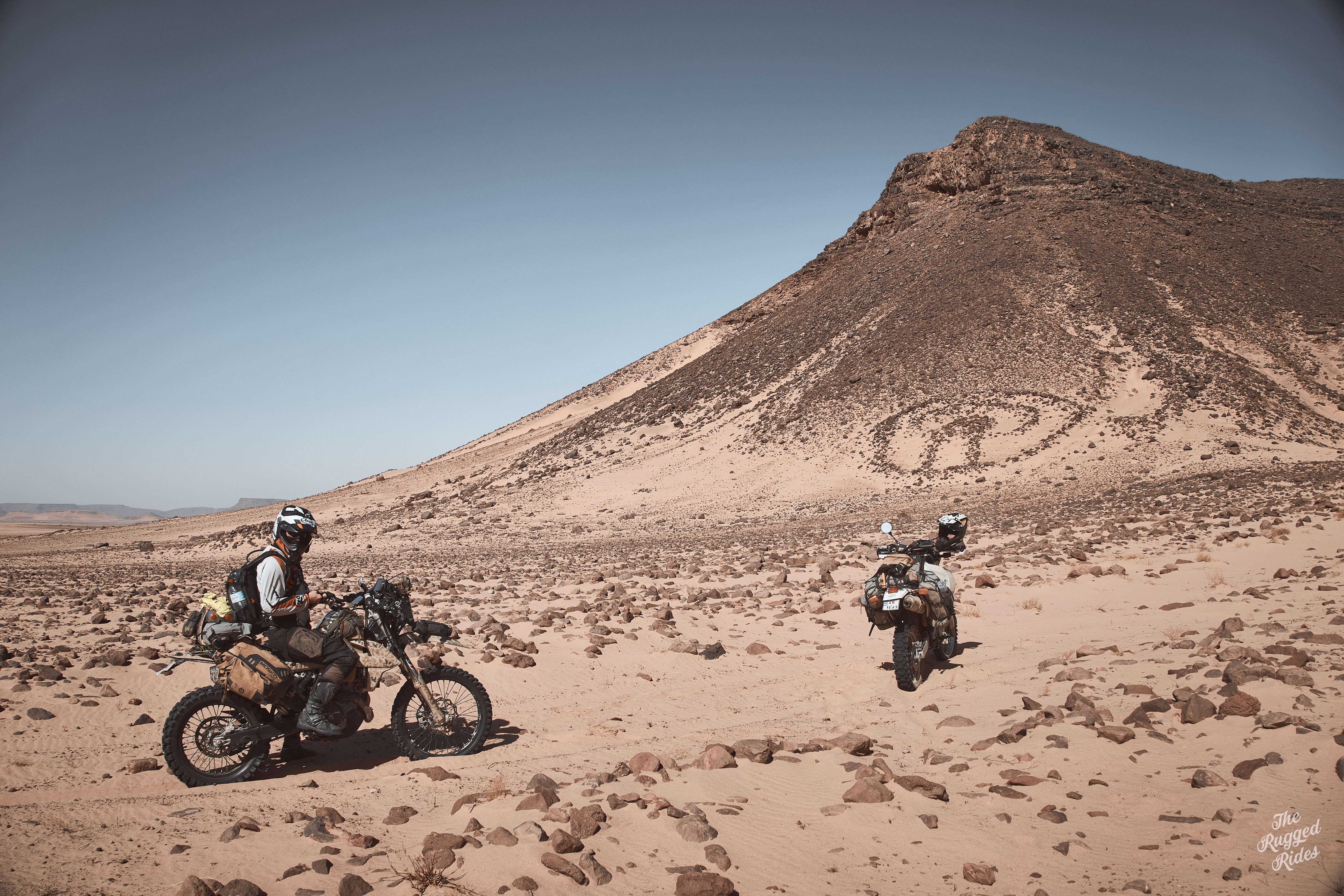
We still have around 250–300 km to Idles. That's quite a distance considering the fuel situation, we'll make it, but that's about it. There certainly won't be enough fuel left to cross the Hoggar Mountains. In the back of my mind, I'm keeping my fingers crossed for that fuel in Idles. I'm assuming that if there isn't a functioning petrol station, we'll at least be able to buy a few litres from someone privately.
I reach the point where our track crosses the main N55 road. The famous desert piste is slowly and inexorably turning into tarmac. As far as I know, only the middle section remains unpaved these days, precisely here where I am now. It makes me rather sad that we humans are so relentlessly expanding and changing every available patch of land. I think we could leave some parts of this planet untouched, not industrialise them, not build new settlements, not lay new roads. Perhaps one day we'll come to understand that.
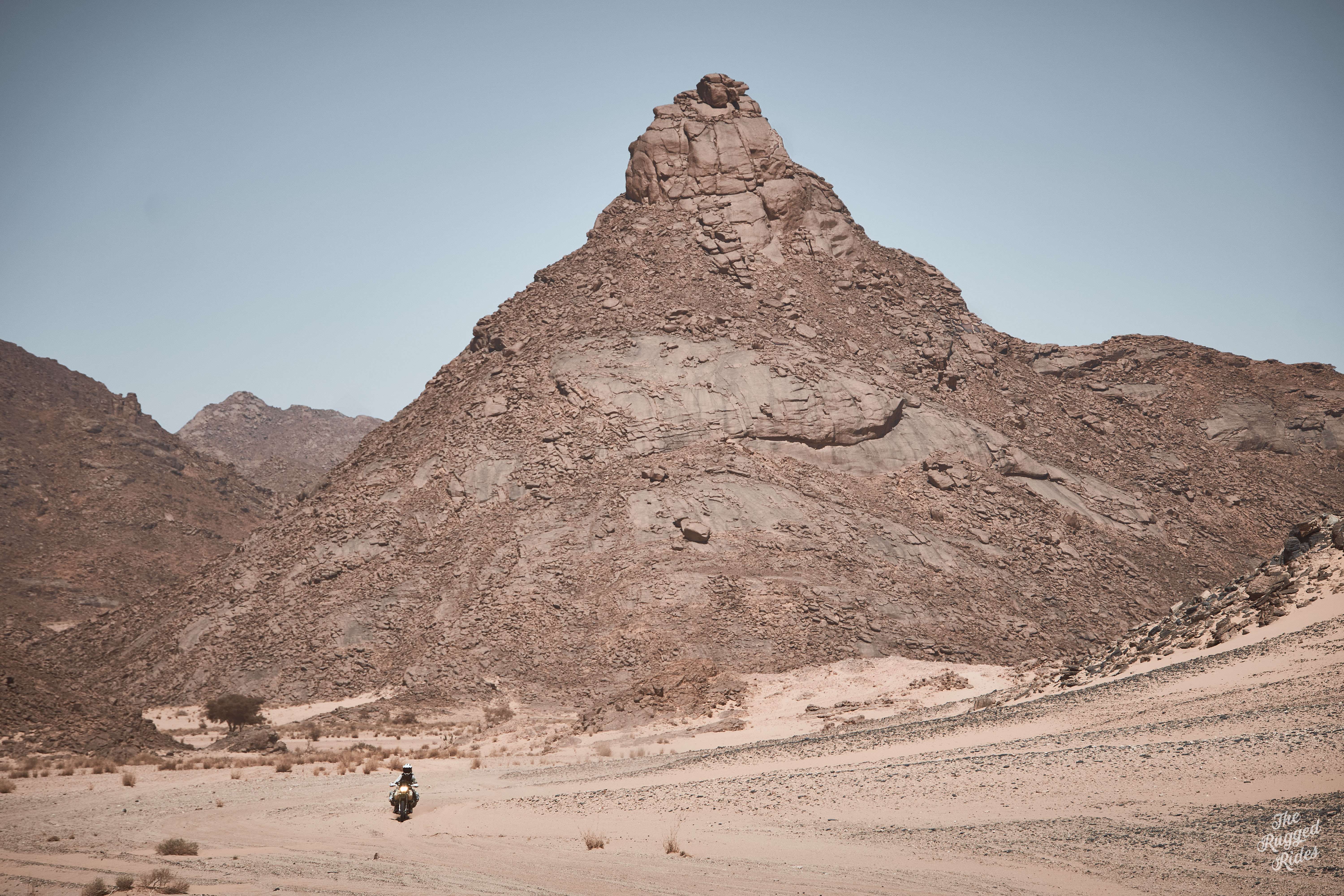
A little later we're all together and set off to tackle the final stretch before Idles. This one will be different, more mountains, decidedly. That means a slower pace and more work. My mind is already in the city, so the riding feels rather tedious. The beginning is fast and flowing, beyond that there is nothing but sand, heat and rocks. I ride almost absent-mindedly, an autopilot. Only the area just before Idles pulls me out of this daze. Impressive mountains begin to appear and my impatience grows.
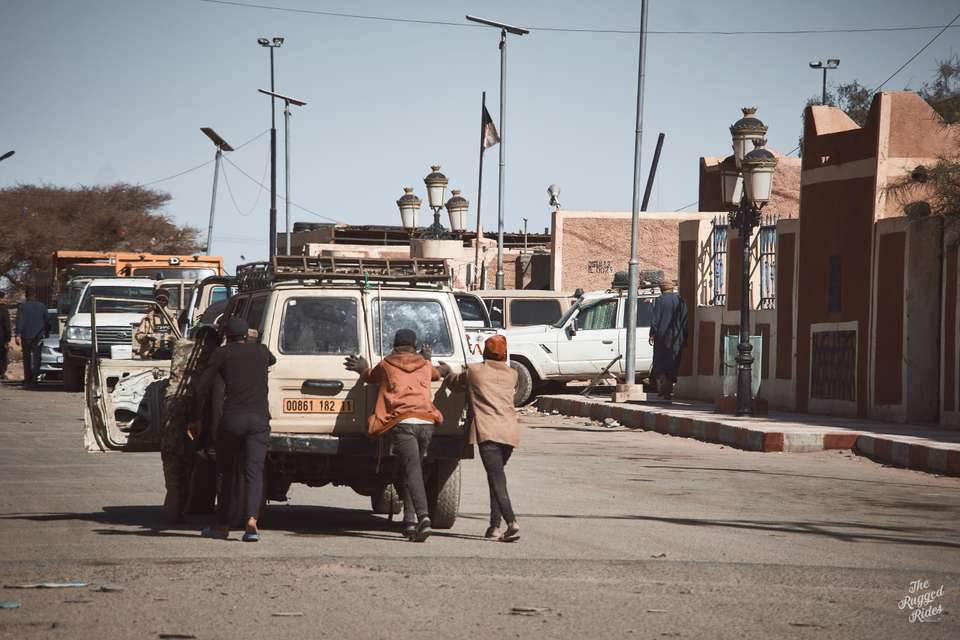
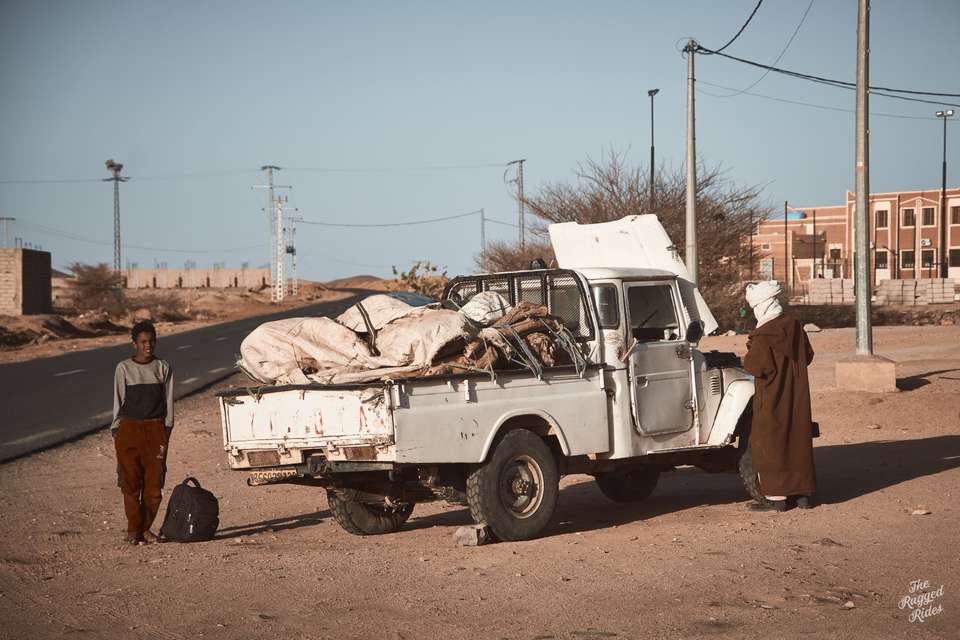
As has become standard practice, we enter the town cautiously, slightly from behind. Idles is completely different from anything we've seen elsewhere in Algeria. The streets are littered with rubbish, the heat carries a thin haze of smoke, and the air is pierced by a cacophony of sounds. It's crowded, dirty and alive. I don't see a single woman, but we're surrounded by masses of short young men, their skin deeply black and their facial features leaving little doubt that they come from far to the south, from the Sahel or even further. Had this been my first or second time in Africa, I might have felt uneasy. Fortunately, we know how to handle ourselves in places like this. We locate one of the very few cafes around and our first priority is something to eat. We haven't heard a word from Tomek and there is no sign of him anywhere nearby either. While we're still inside, we organise some shopping and start asking about fuel. Both the owner and the others point in the same direction, towards the petrol station. Oddly enough, though, nobody wants to go there with us.
OK, let's see what this mysterious place has for us. I load up the bike, while an increasingly dense crowd gathers around. At one point, a Hilux pulls up so close to my bike that it actually tips it slightly. The passenger seat is occupied by a gigantic Arab, sitting cross-legged, morbidly obese. I don't know why, but I immediately sense a bad aura coming off him. The newcomer quickly forces a conversation, interested in us just like everyone else around. He speaks to me in Russian. I know the language, but I don't use it. At one point he asks me about Moscow, what I think of it and whether we're planning to go there. Absolutely not. Given the current situation, there is nothing drawing me there. But the Arab is relentless. He starts talking about Putin, who, according to him, is a very good man and a wonderful leader. Awful.
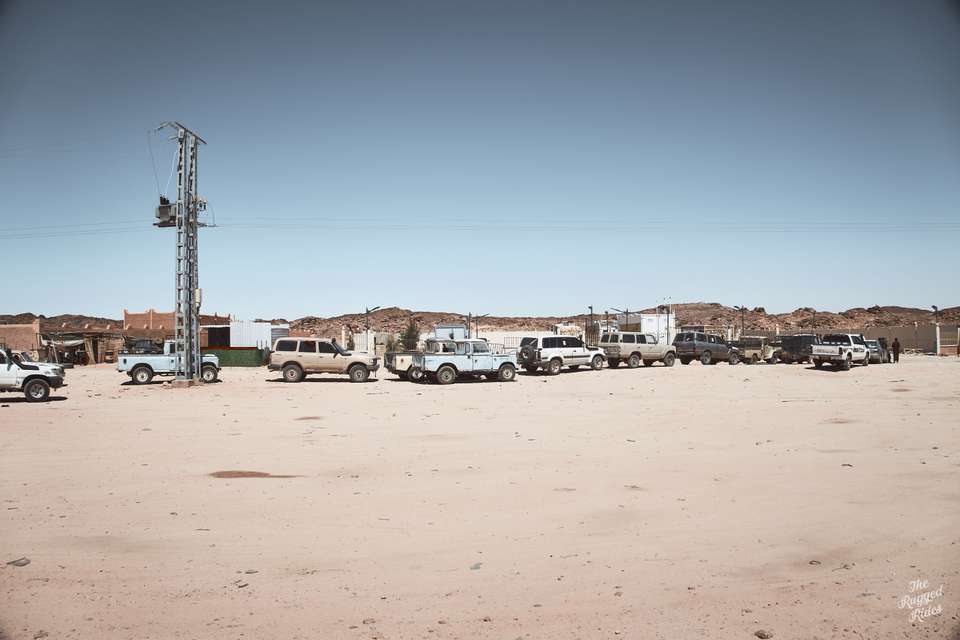
Once I manage to escape this man's sphere of influence, it takes us only a few moments to reach the place where the petrol station is supposed to be. As it turns out, what I initially took to be a scrapyard isn't one at all. The cars driven around here are simply so old and battered, and those now waiting for fuel have been abandoned nose-to-tail, bumpers touching. The idea is presumably to stop anyone from entering into the queue. How long have some of them been standing here?!
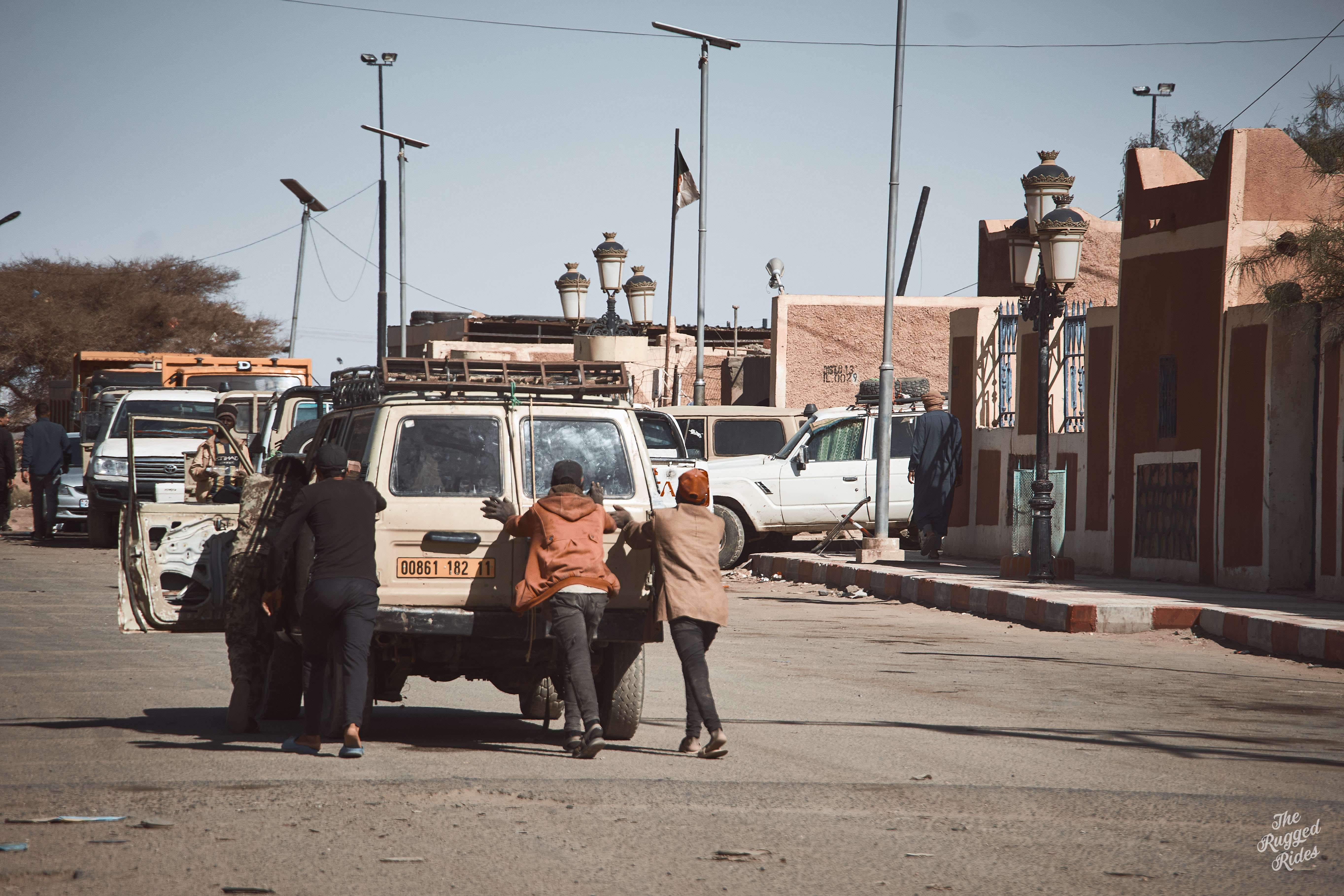
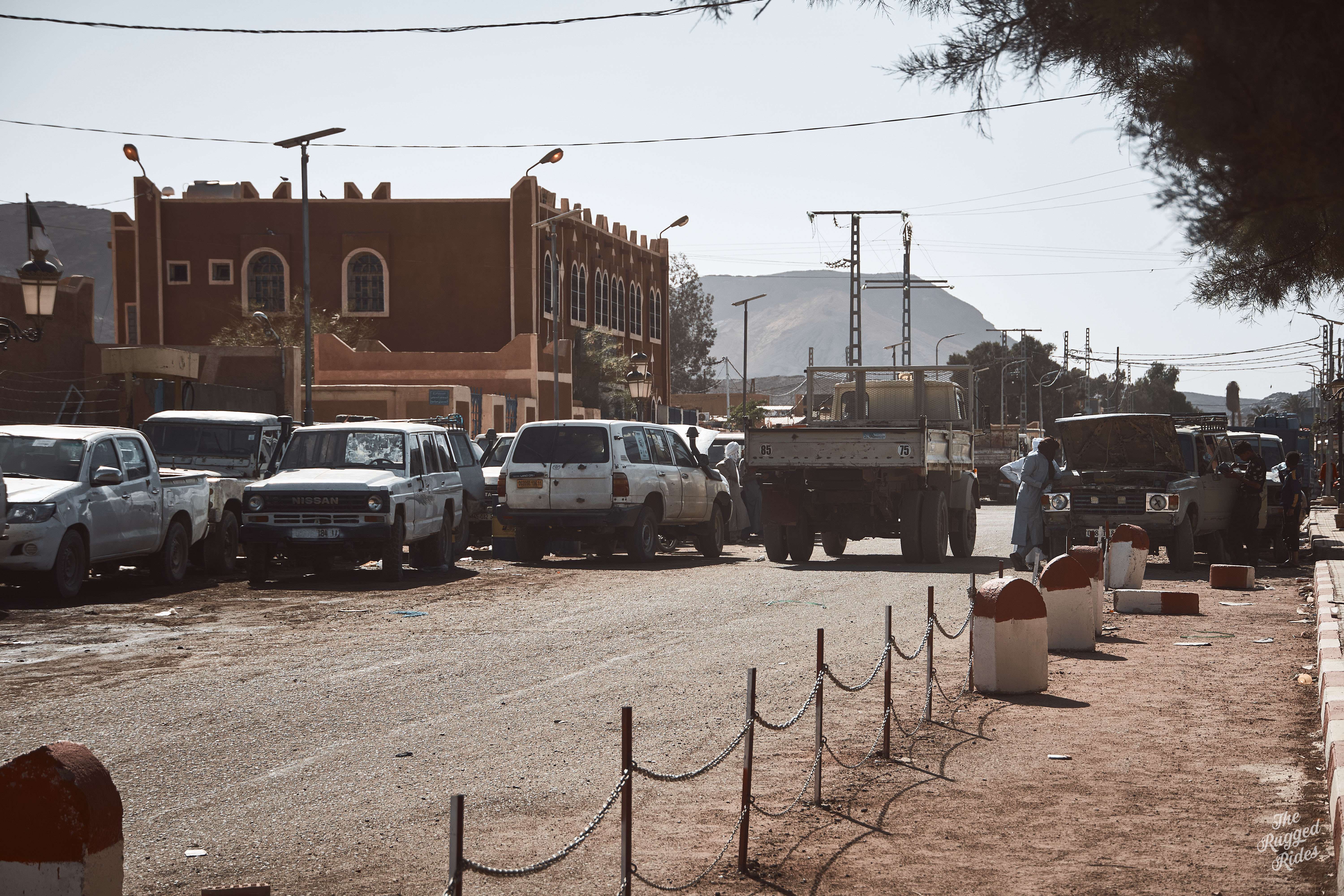
It quickly becomes clear that the petrol station is nothing more than a single old pump mounted on a movable truck platform. Unfortunately, there is no fuel, but there are plenty of random people hanging around. I ask them about a "jerrycan", in French, with gestures, everything. Nothing. And the run of bad luck isn't over yet.
When I turn around, there are already gendarmes standing next to us. They spotted us from their post and presumably became curious about what we were doing here. I imagine they don't get many visitors. We are exotic. The story unfolds as usual. They are convinced that we need an escort, obviously for our own good. What's more, this escort will come for us tomorrow, while tonight we're supposed to stay with them, in the garden behind their walls. Absolutely not. The negotiations go on for a very long time, but I've learnt something from Tomek. I am determined and absolutely firm in my point. It takes more than an hour, but eventually, after phone calls to the highest-ranking official available here, the commander agrees to our terms. And those terms are very simple, we're leaving. End of story.
Now we're blasting down the road straight into the setting sun. I don't want to test whether "no escort" means no escort only as far as the gate, or perhaps for five kilometres, or maybe genuinely none at all. Nor am I particularly interested in the fuel situation. I mean it, I know we basically have none and most likely won't even make it together to the nearest petrol station in In Amguel. None of that matters now in the face of the Hoggar Mountains. At worst, we'll shuttle back to a station, or buy fuel from barrels in some village along the way. Something will work itself out. For now, we ride on, and I only glance alternately at the road disappearing into the sun and the fuel level in my tank. And that is now really, really close to empty.
And precisely then, what they splendidly call a "plot twist" in the movies takes place. On the road ahead, I spot the tall silhouette of a motorcycle, a motorcycle with its headlight on, a motorcycle ridden by… Tomek! Without a word, we all pull off onto the desert and exchange a few sentences, just enough to find out whether we're alright and what we're doing next. Full discipline, completely focused on the objective. The sun is low and we want to find a good bivouac in the mountains. So we don't waste another time. We set off and cut through the village of Hirafok, straight onto the famous piste.
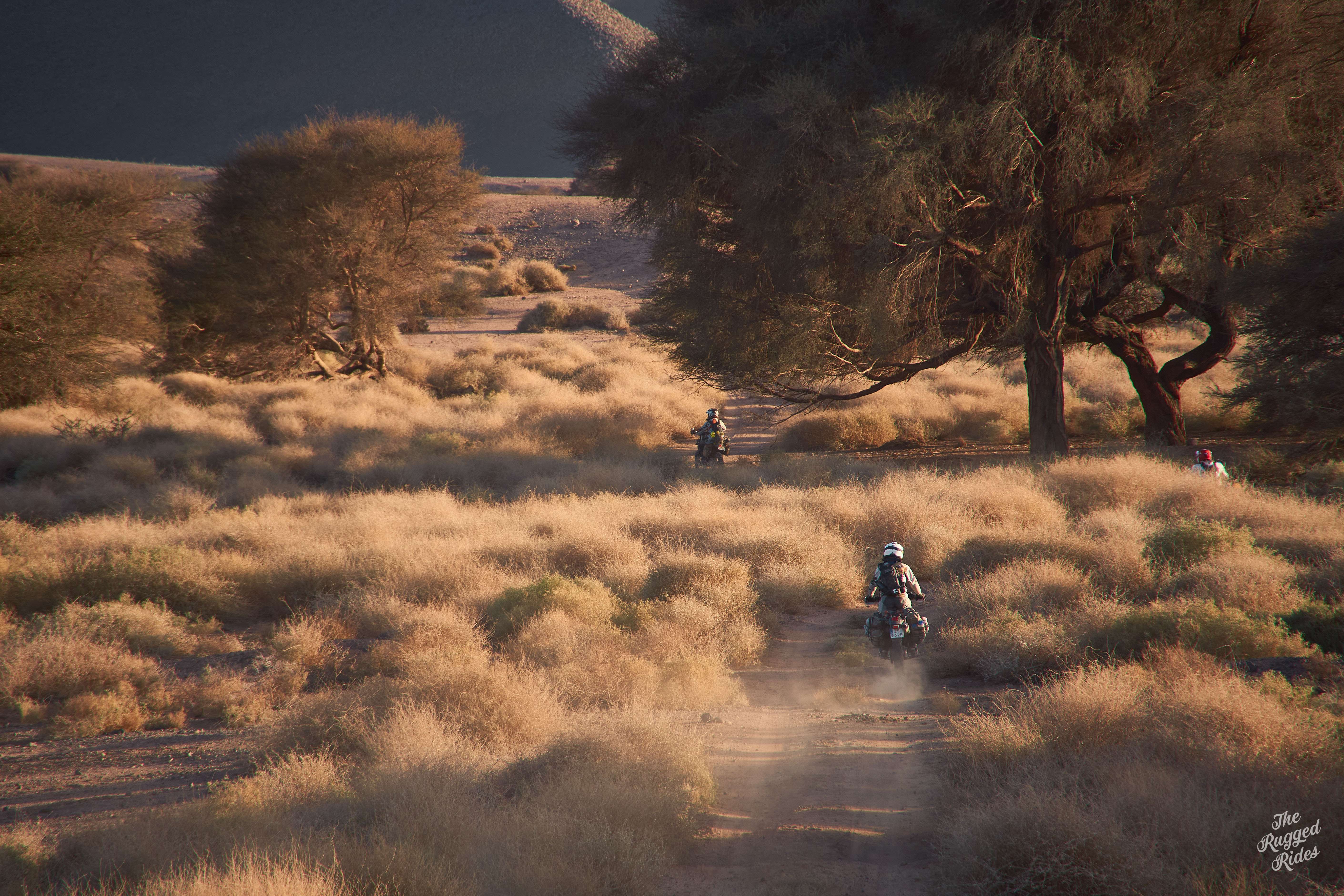
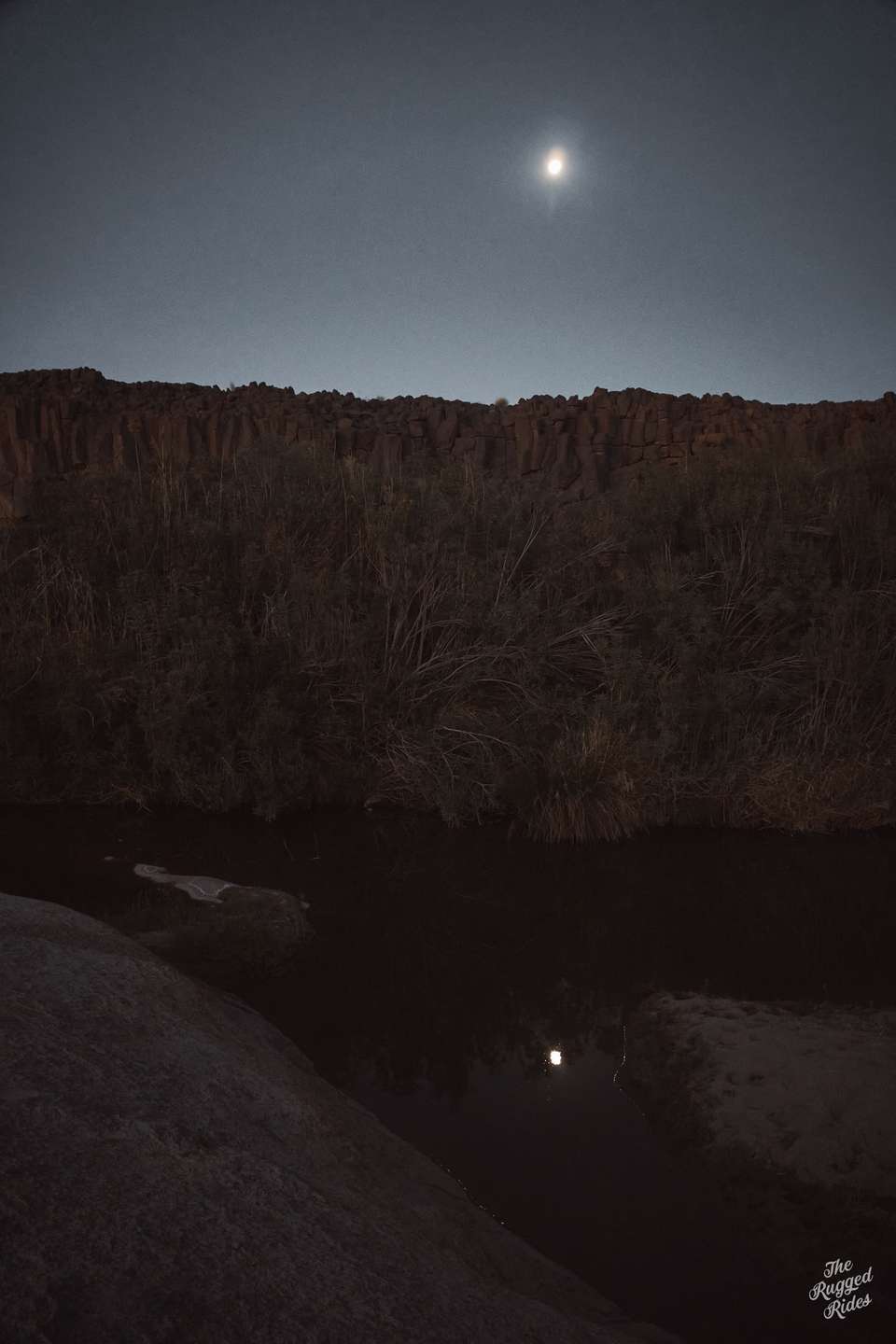
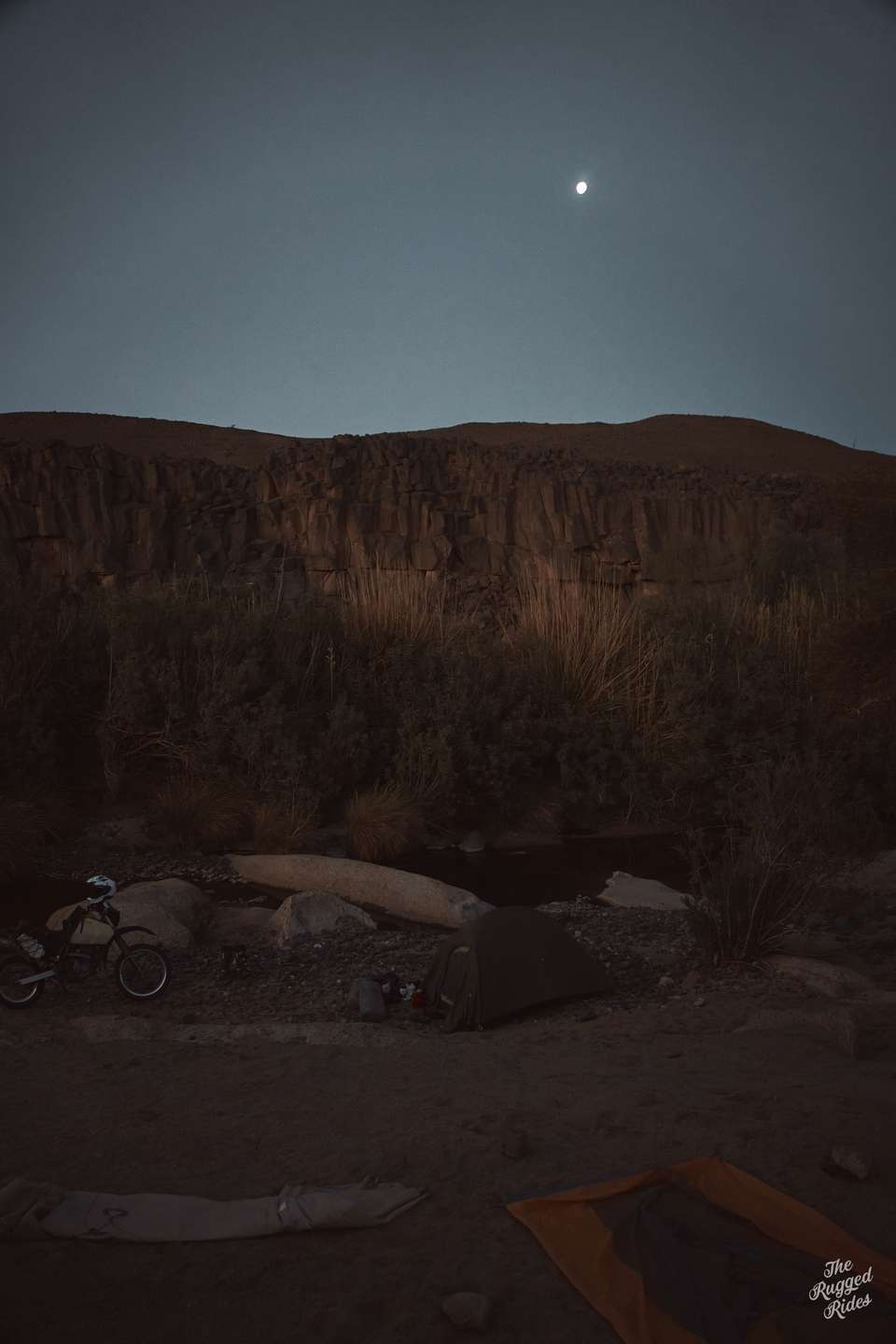
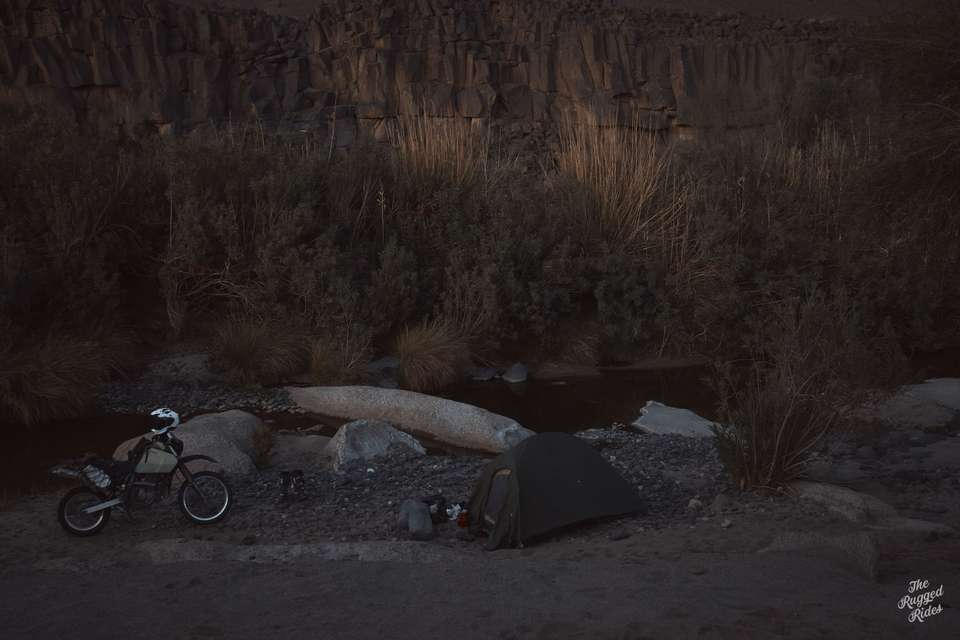
Right from the start we get a taste of what's waiting for us. I'd heard the piste was pretty bad, and it certainly is, in places entire sections are simply missing. We reach the location I'd marked on the map earlier in the glow of the setting sun. Perfect. Kuba finds an ideal spot. Our camp is invisible, tucked away inside a canyon. We pitch the tents fancifully among enormous, softly rounded boulders, right beside the river. There is water in it, and the moon is reflected in its calm surface.
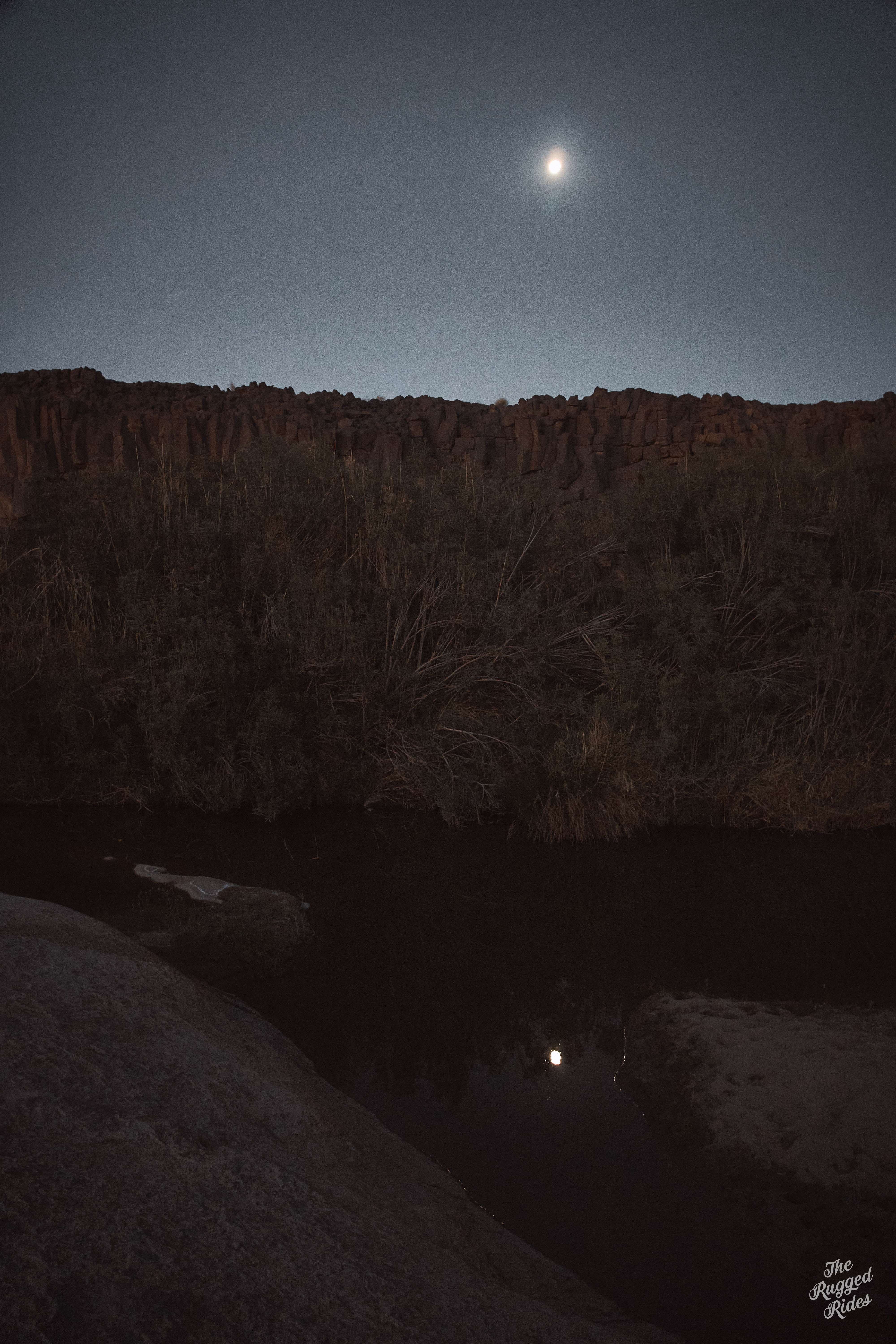
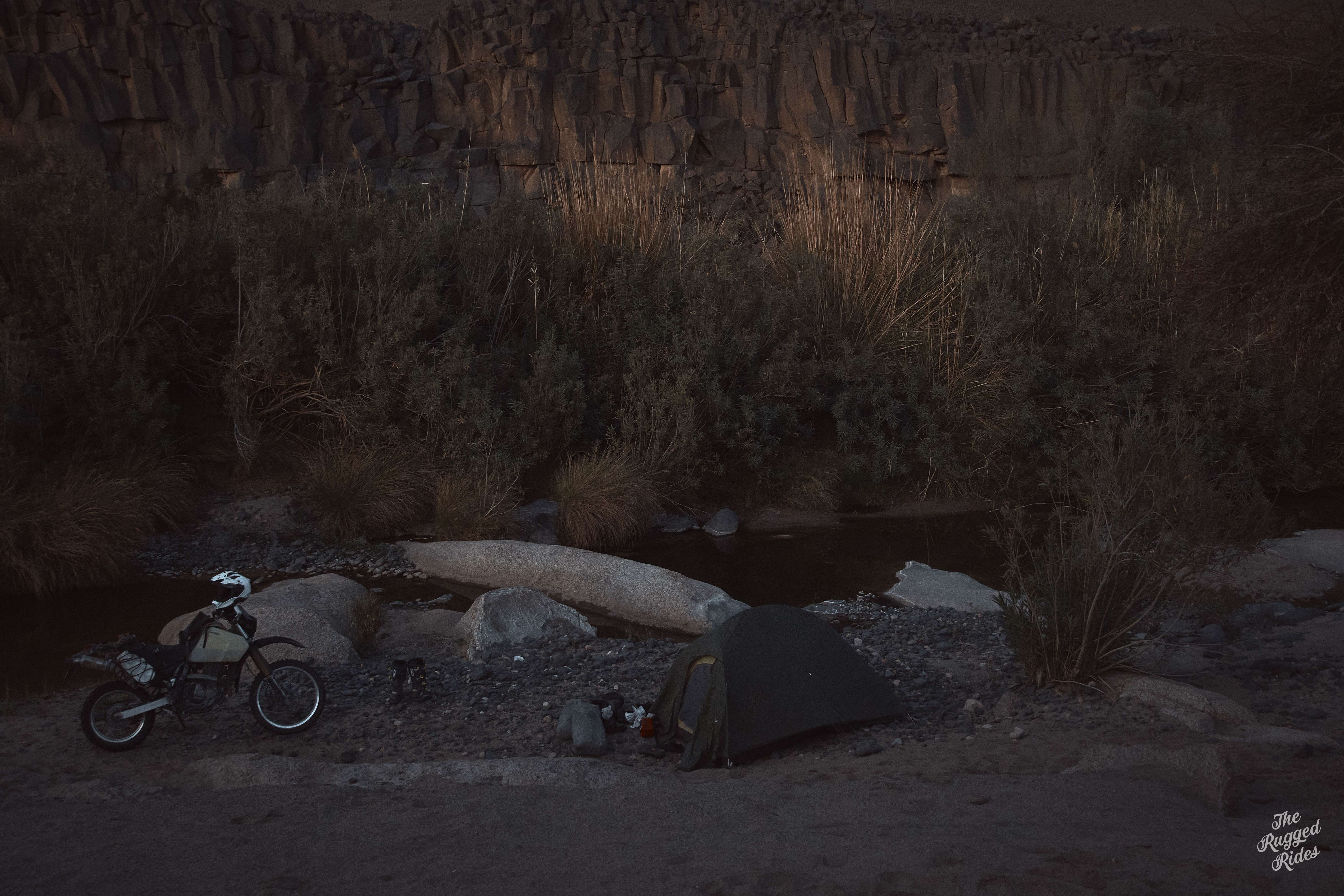
We lie on one of the boulders, catching up on each other's adventures. It turns out that Tomek, who reached Idles fairly quickly, realised there was no fuel and rode on to In Amguel. There is a petrol station there marked on the map, unlike the previous ones. Another dead end. Cars had already been waiting there for two days and the fuel was supposedly due to arrive, but when? Nobody knew. Running on reserve, Tomek kept searching, eventually checking another two places where he might potentially find petrol. Nothing. At the last workshop, the owner came to his rescue with 1.5 litres from a jerrycan. That was enough for Tomek to make it back to In Amguel. And then it turned out that a fresh tanker had just arrived. Brilliant. Tomek filled his tank full and got a five gallons for us.
We lie on the rock, sketching out plans for the following day. The canyon rises above us towards the star-filled sky. The night is warm and peaceful. The final day is falling perfectly into place. We shall finish the loop we'd planned and crown the journey by reaching the Assekrem pass. We've timed it perfectly. At that very moment we hear Kuba's alarming words:
- I think I've just lost my drive chain… come and have a look.
We get up at 5 a.m., Kondzio and me. Kuba's chain, despite being a new DID fitted before the trip, has lost several rollers and is about to die and start chewing the teeth off the rear sprocket. As you can see, you should always prepare your own bike by yourself. Kuba's Suzuki was bought just before the trip and someone else fitted the drive kit. A matter of trust. Kuba and Tomek stay at the camp, while Kondzio and I make our summit push. We'll crown this year's Algerian loop by reaching Assekrem. If we hurry, we'll make it back to the same place. If the route demands too much hard riding, we'll drop down the other side towards Tamanrasset. Either way, we'll stay in touch.
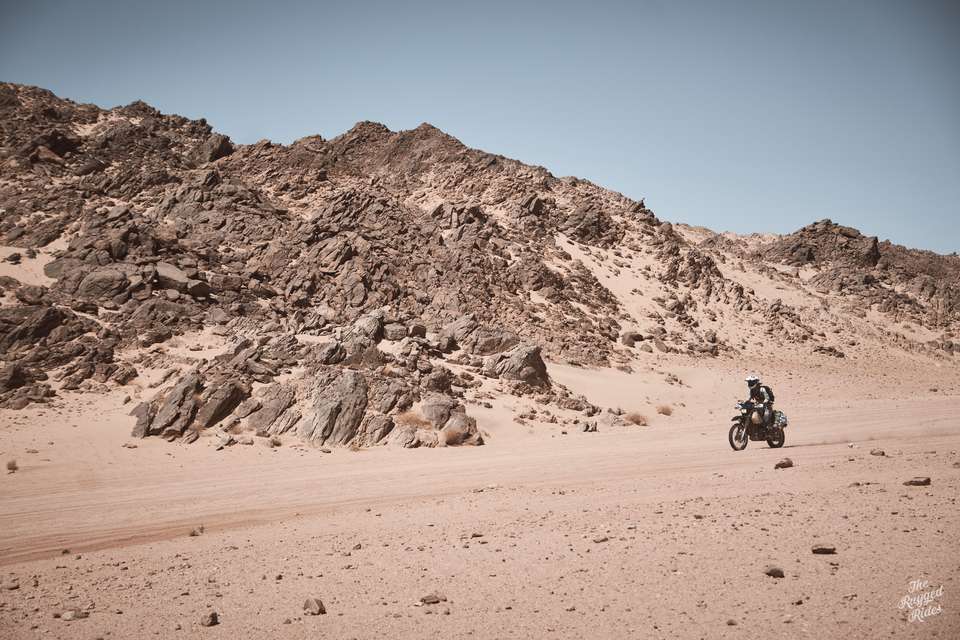
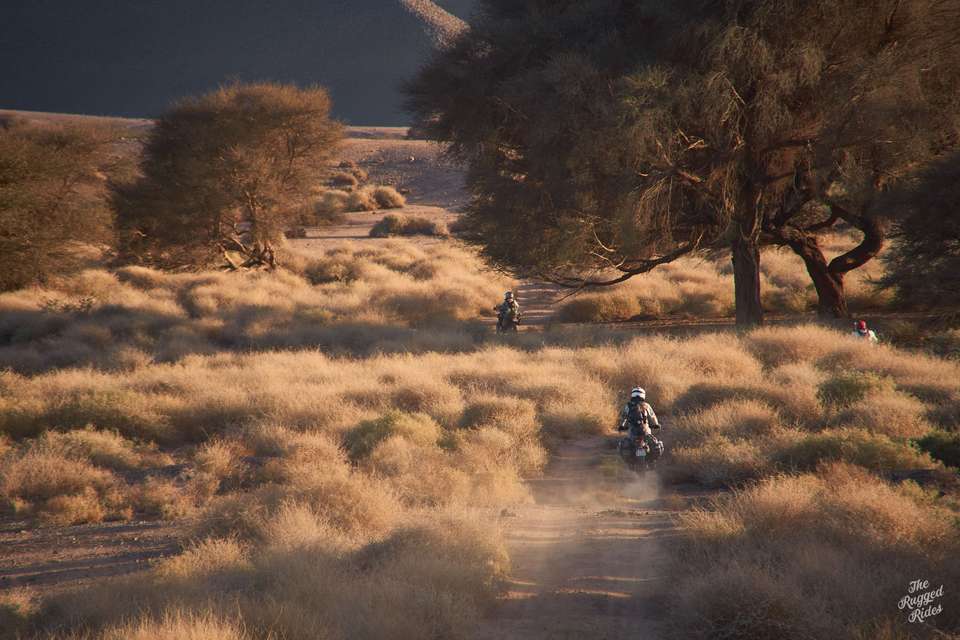
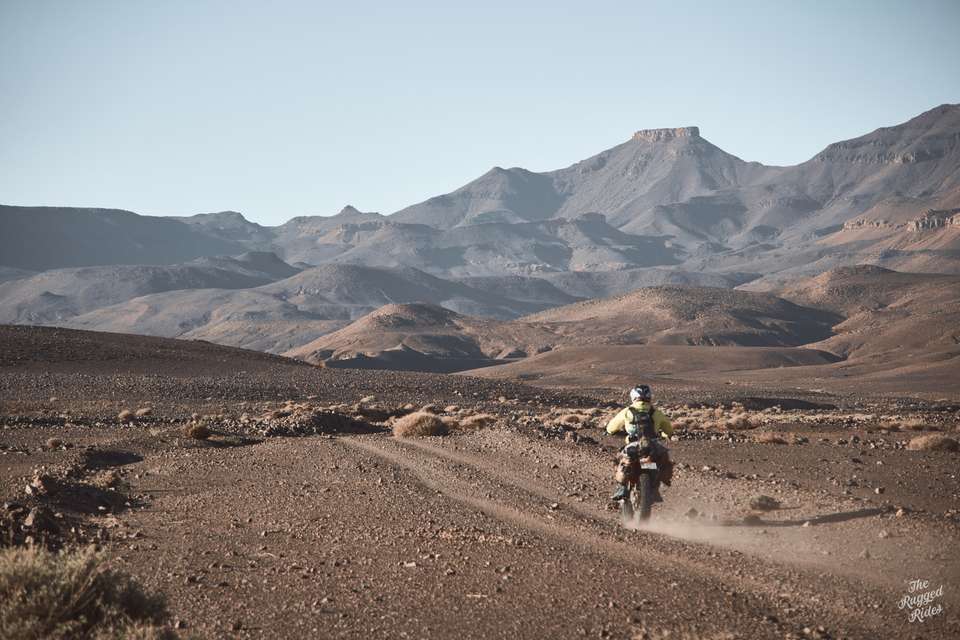
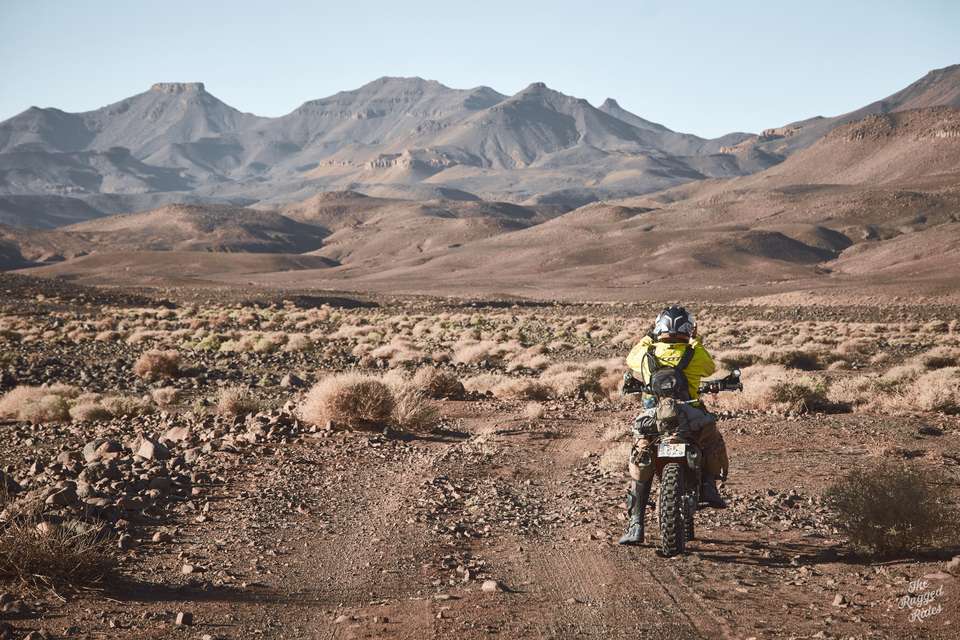
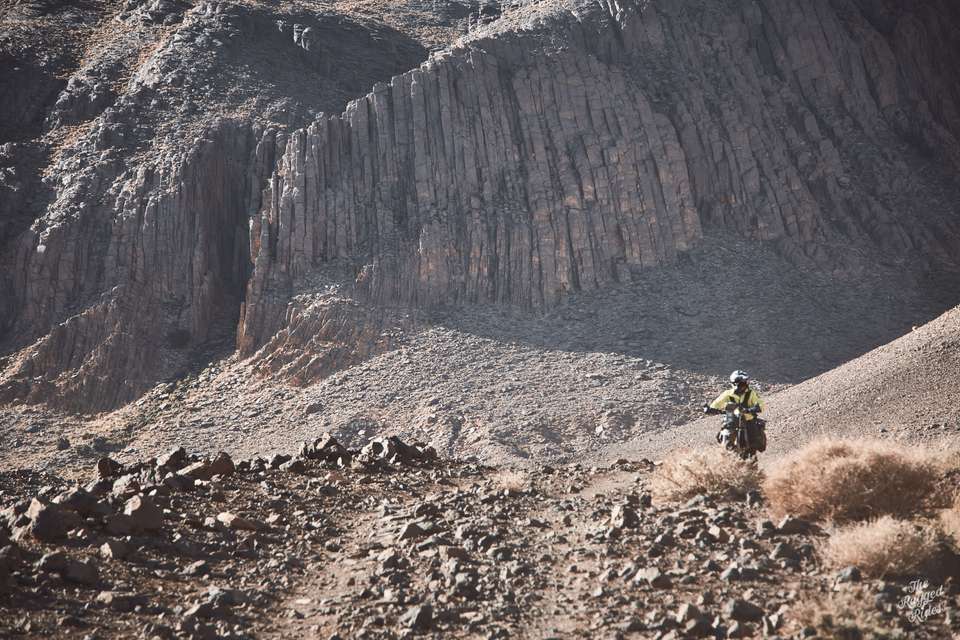
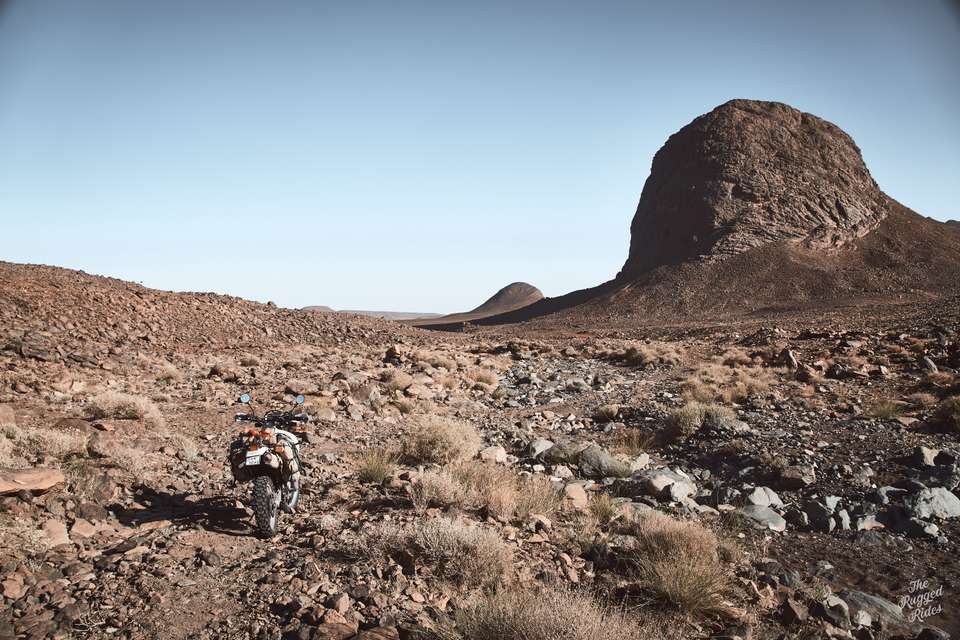
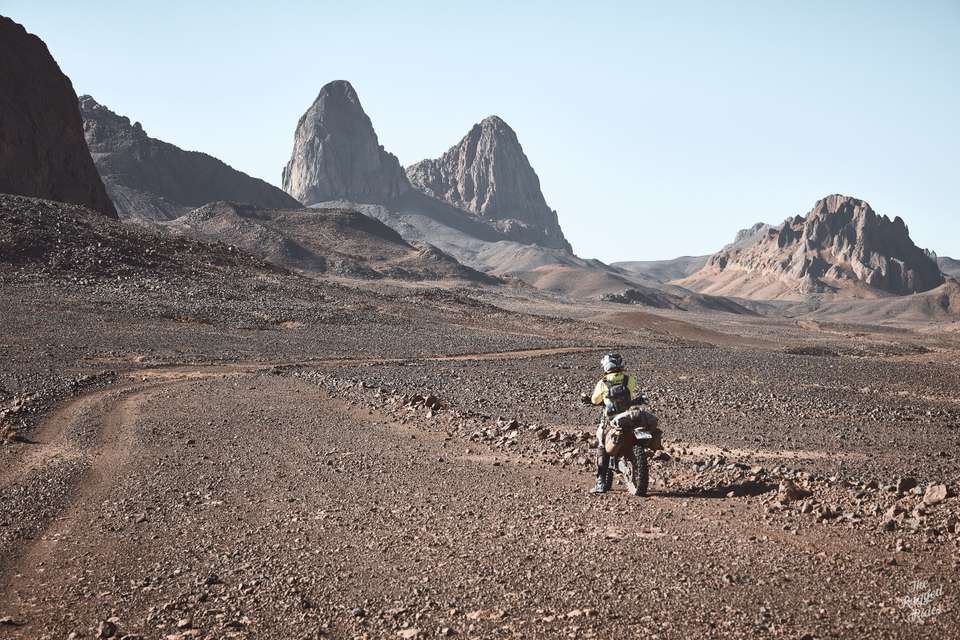
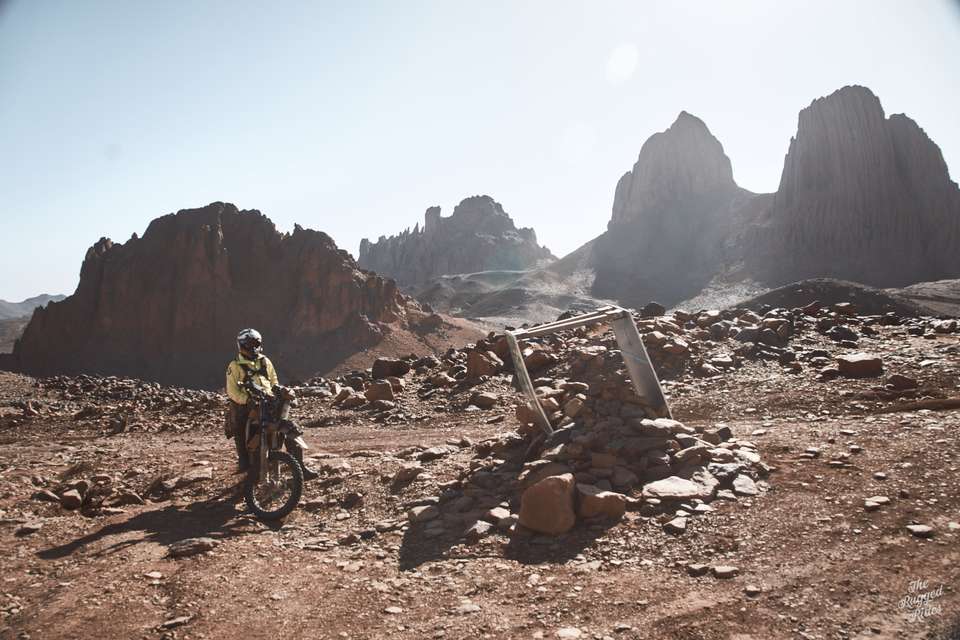
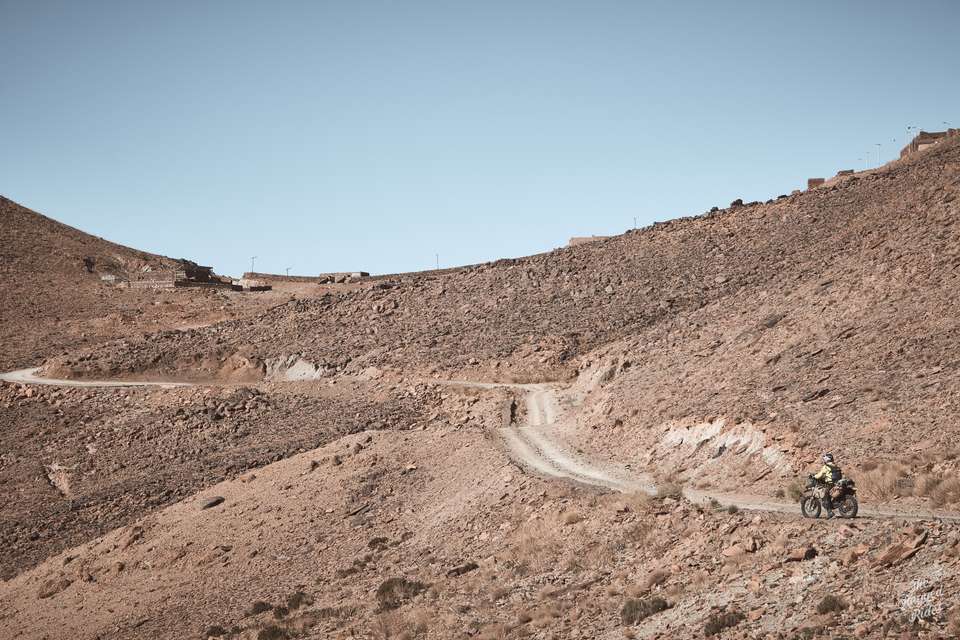
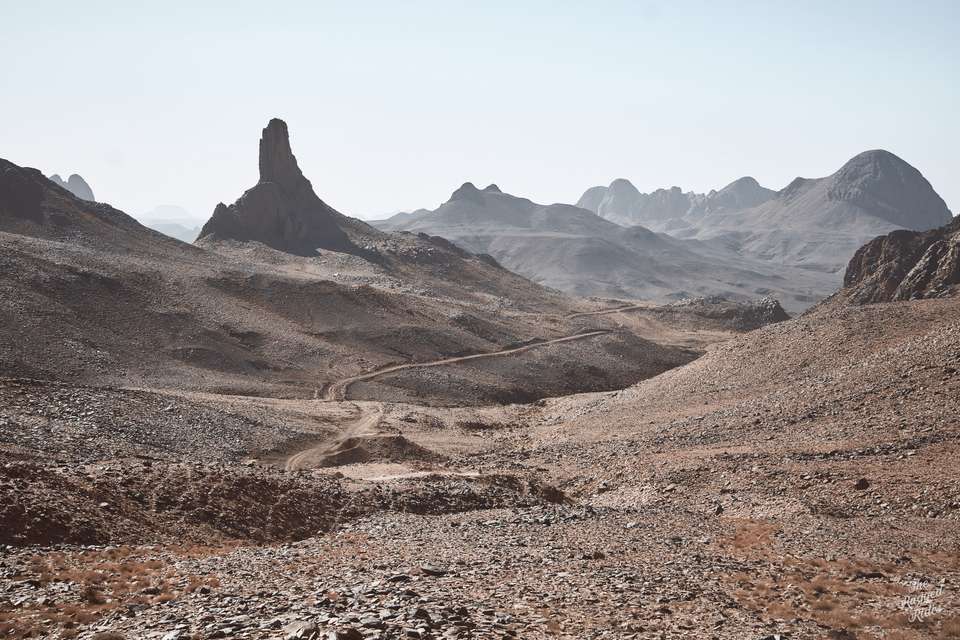
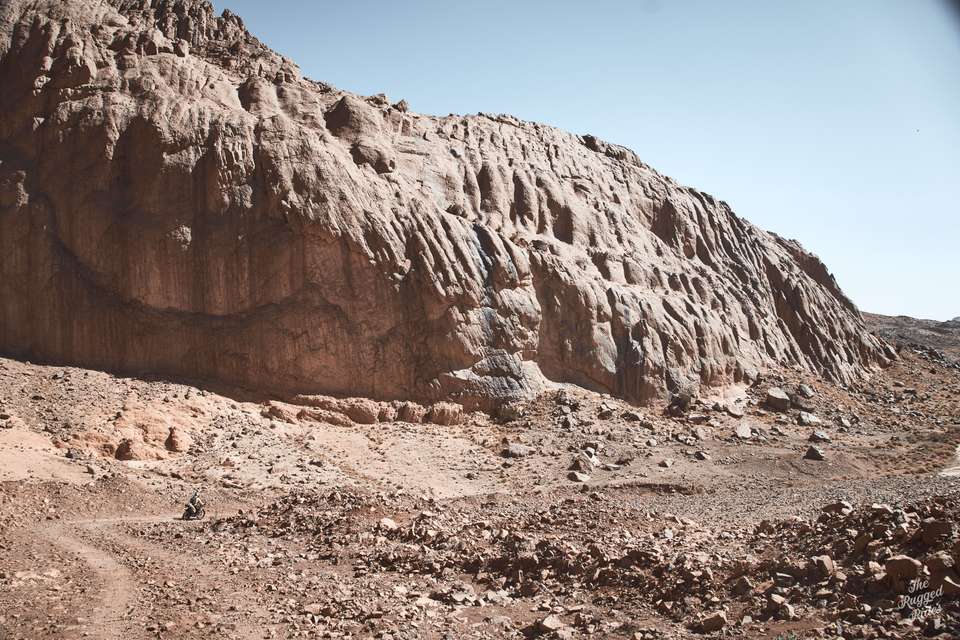
When we set off, it's still a golden hour. The wilderness takes on a rusty hue. A sea of rubble stretches all the way to the horizon, looking as though someone has scattered the contents of entire coal wagons across the landscape. At first there aren't any peaks in sight at all, you could hardly say you're in the mountains. Yet there's no way to ride fast. Every few moments the road is collapsed or washed away, and sometimes sections more than a kilometre long are simply missing. We want to cover a good distance as quickly as possible, so that we still have the morning light when we reach the pass and so the other two don't have to wait for us for too long.
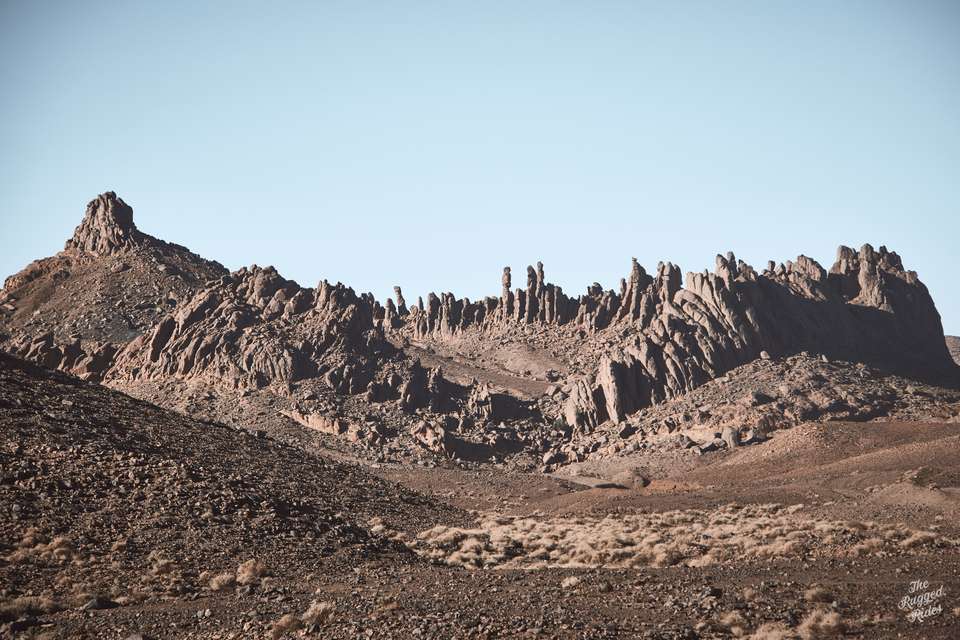
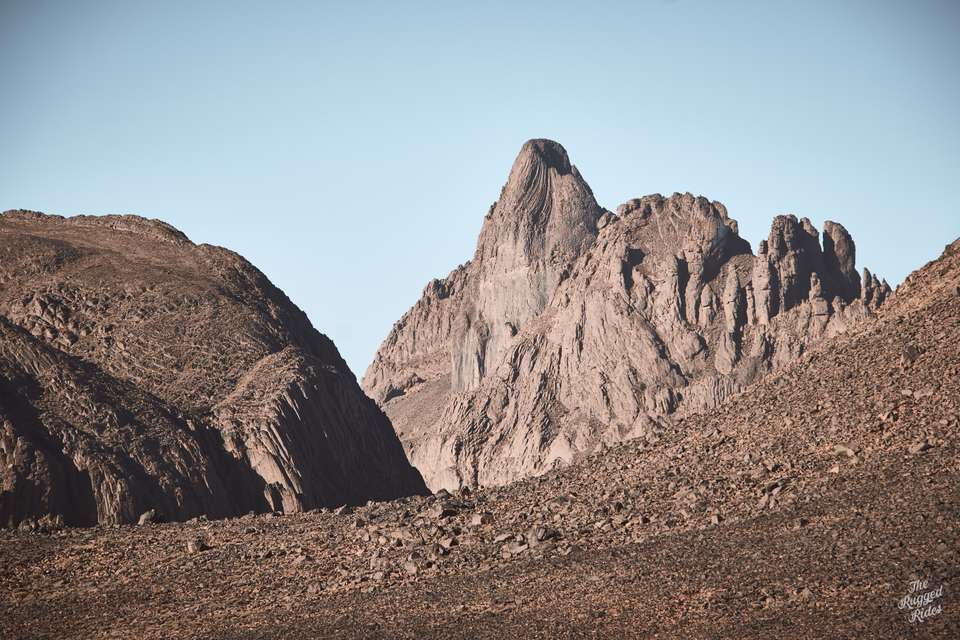
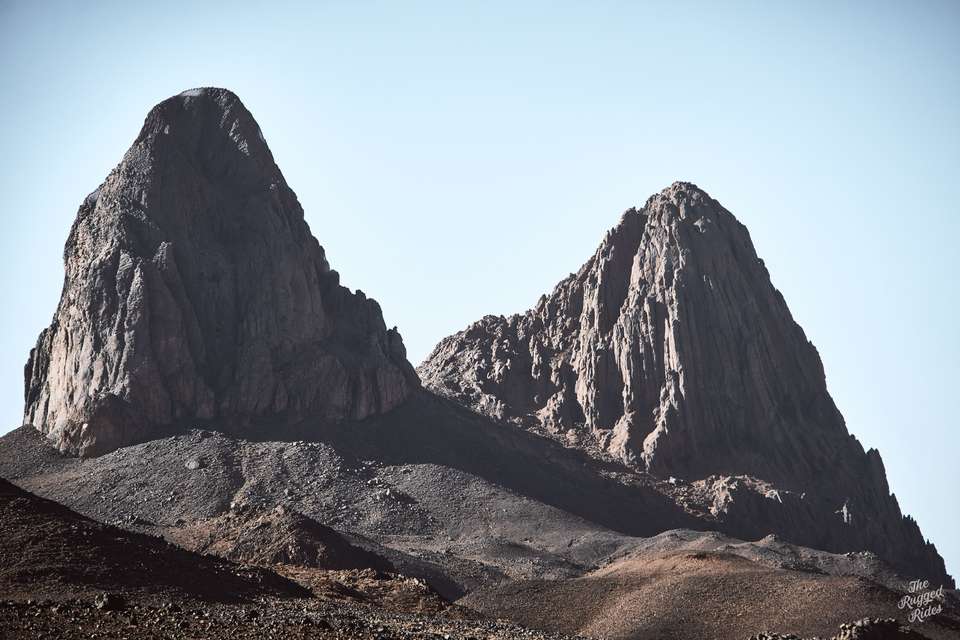
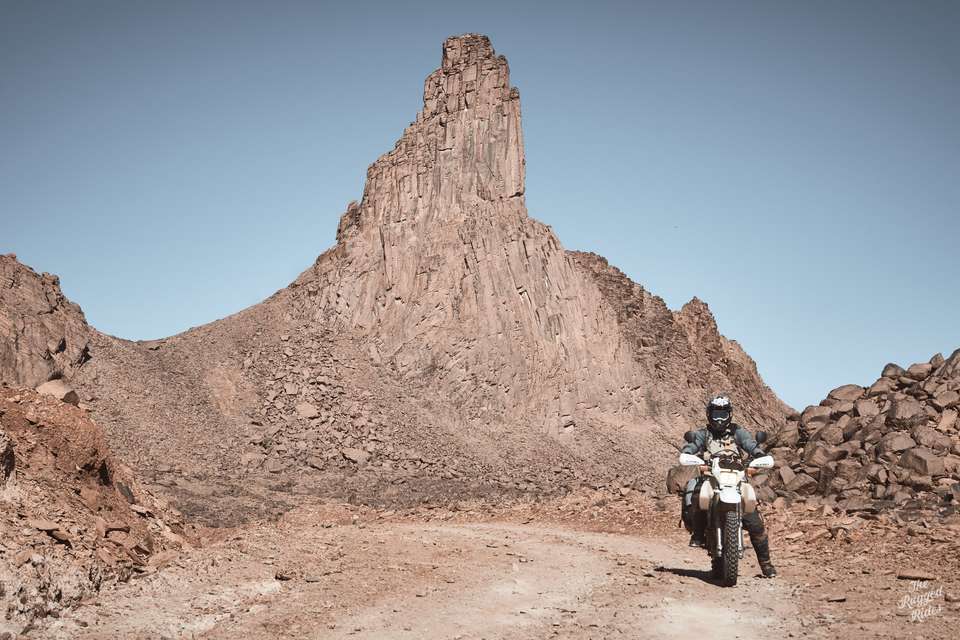
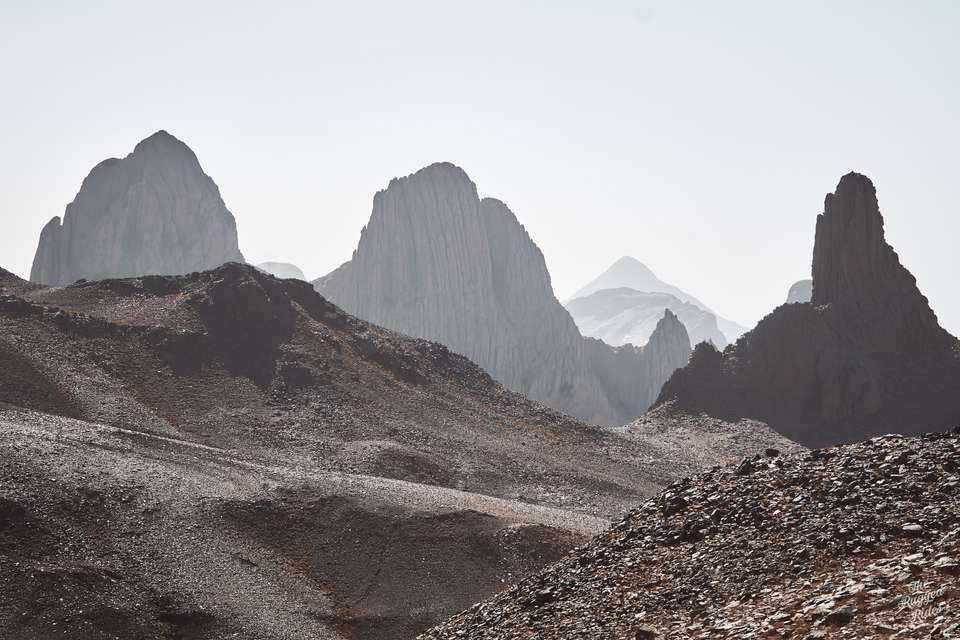
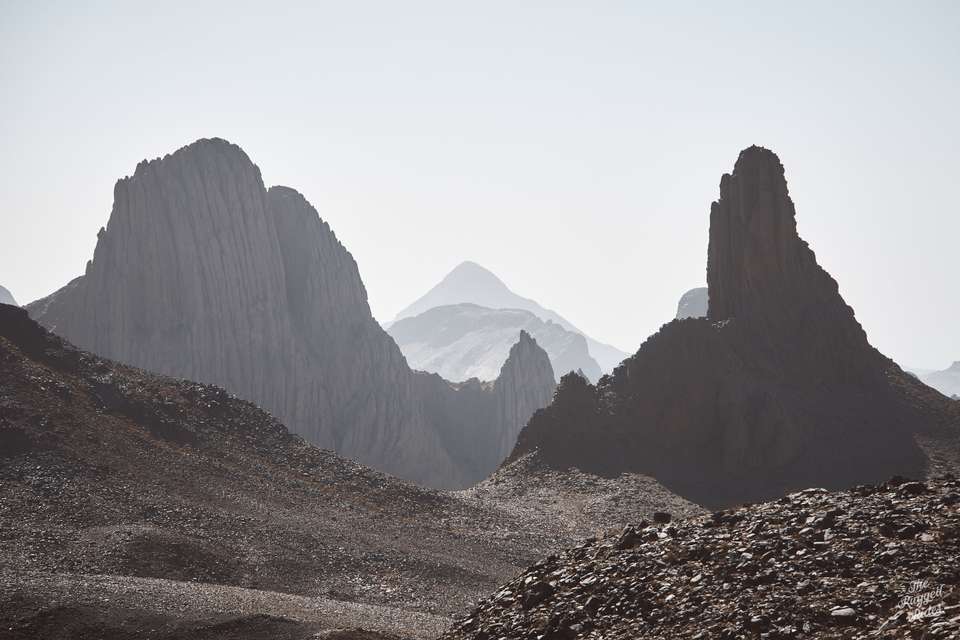
At long last, there it is! A forest of basaltic spires emerges from behind the horizon. These are the Hoggar Mountains in all their glory. I feel a shiver down my spine because this is the place that drew me here in the first place, the main objective of this journey. A place I once thought of only as an unattainable dream.
The Hoggar Mountains are a fragment of a very ancient continent, Precambrian in origin. It belongs to a larger structure known as the Tuareg Shield, part of the ancient African continental crust. Different parts of the Hoggar feature various types of bedrock, gneiss, migmatite, granite, and other rocks. The Hoggar is formed of diverse tectonic blocks, varying in age and history. Between them lie ancient fault zones and tectonic sutures. Standing here, you might have rock beneath your boots that was formed before most modern continents even existed, long before the first animals appeared.
And then, much later, a young volcanic process arrived on top of all this. Ancient volcanic structures were repeatedly intruded by younger ones. The process happened many times, in different geological periods, often in the very same places. What we're looking at today could just as easily be 3 million years old as more than 20 million. Simply knowing how old some of these formations are commands respect.
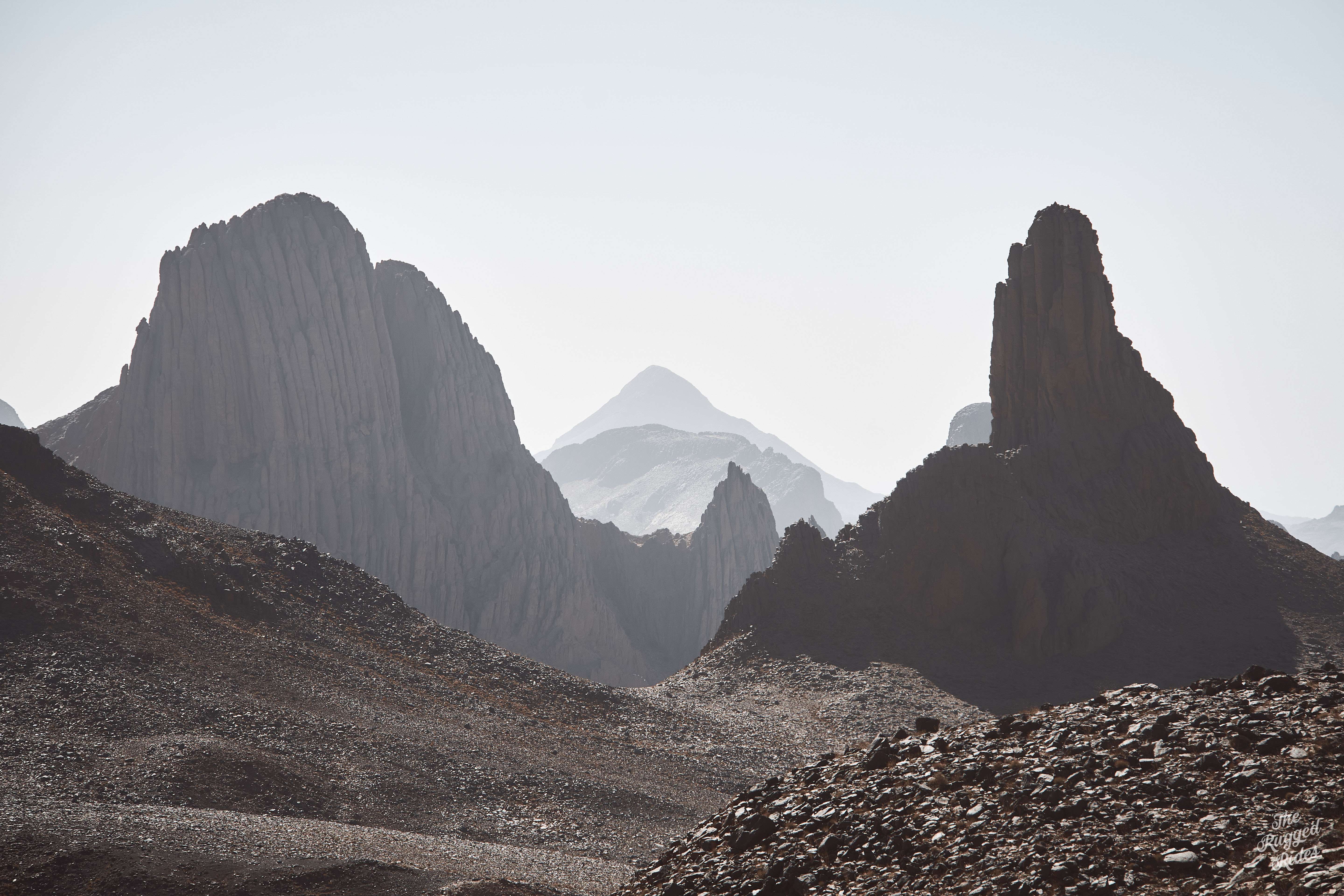
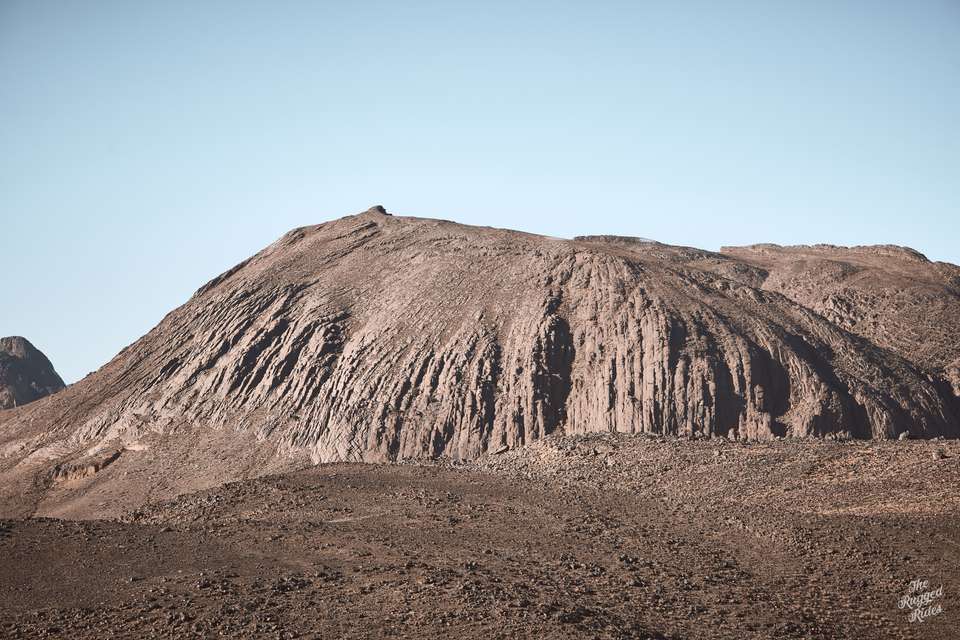
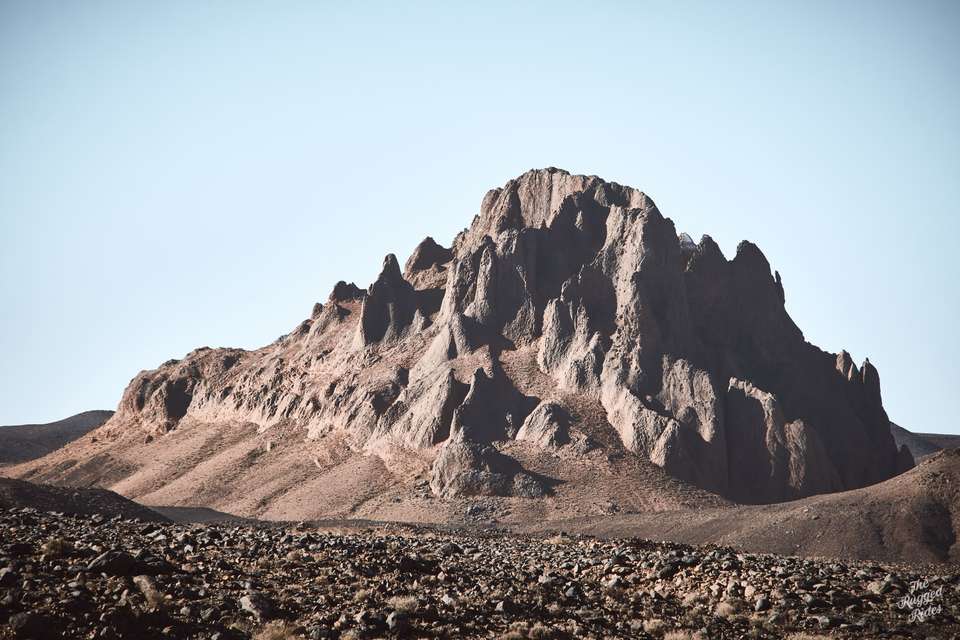
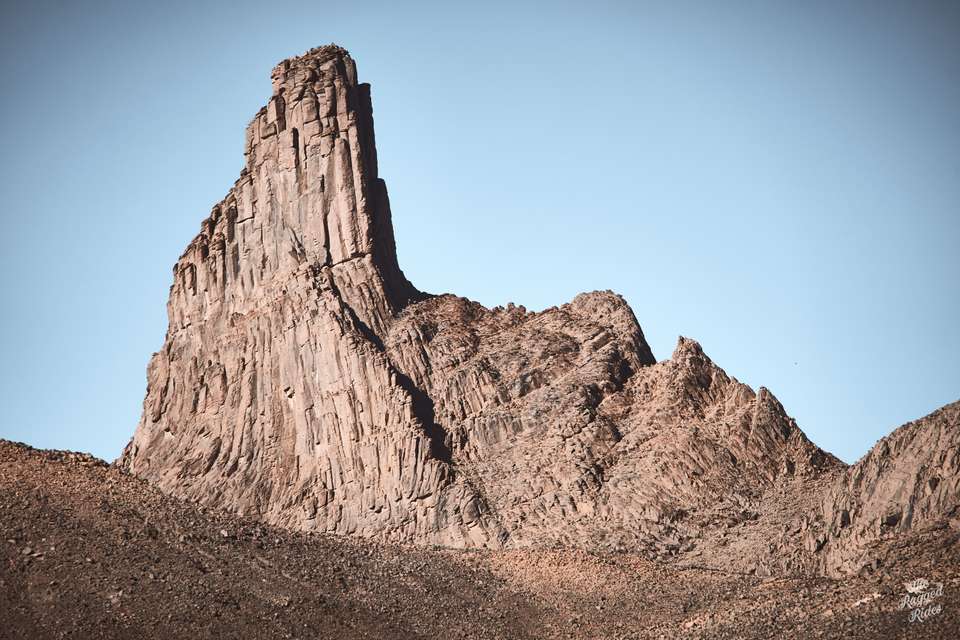
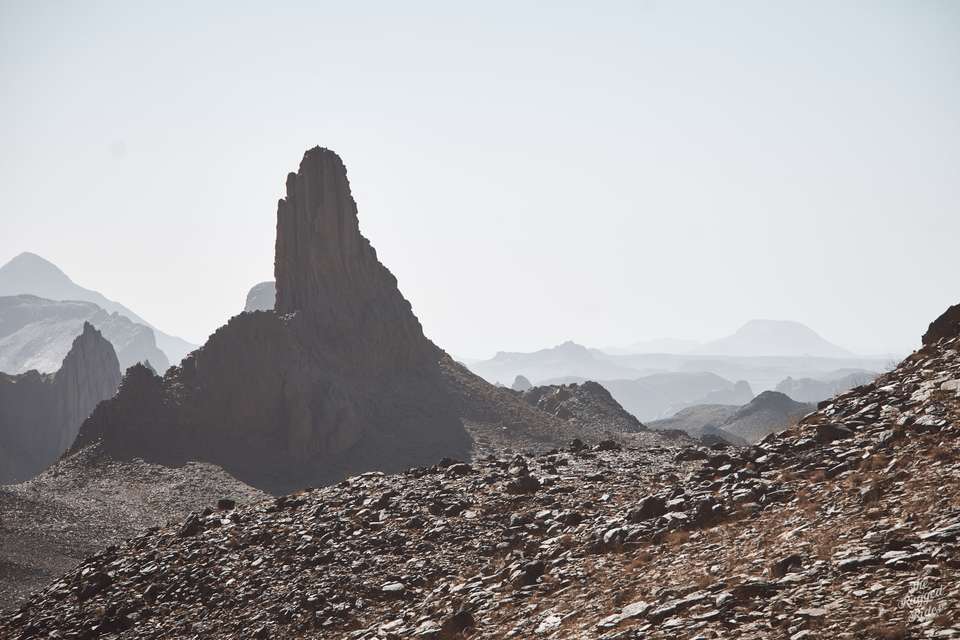
Today, we can admire a whole array of peculiar formations. It isn't merely the towering, sharp spires, which are the remnants of ancient volcanic vents. One can see solidified lava flows, eroded volcanic basins, even massive lava domes. These sights are utterly extraordinary, truly one of a kind, often, often the landscape appears as though it was from another planet. The somber mountains make a tremendous impression, they certainly did when I first saw them in photos, but experiencing them in the real life is something else entirely.
And that's not the end of the geological curiosities. Someone as little versed in geology as myself could easily look at one of these jagged rock towers and assume it's simply an eroded, collapsed volcano. The mechanism is rather more interesting. Magma that solidified inside a volcanic conduit formed extremely resistant rock. Later, over millions of years, erosion wore away the volcano itself and its surroundings. The same goes for the geometric shapes visible here and there, so-called organs, or rubble fields made up of almost vertical, parallel ribs. These are the result of thermal fracturing as the lava cooled.
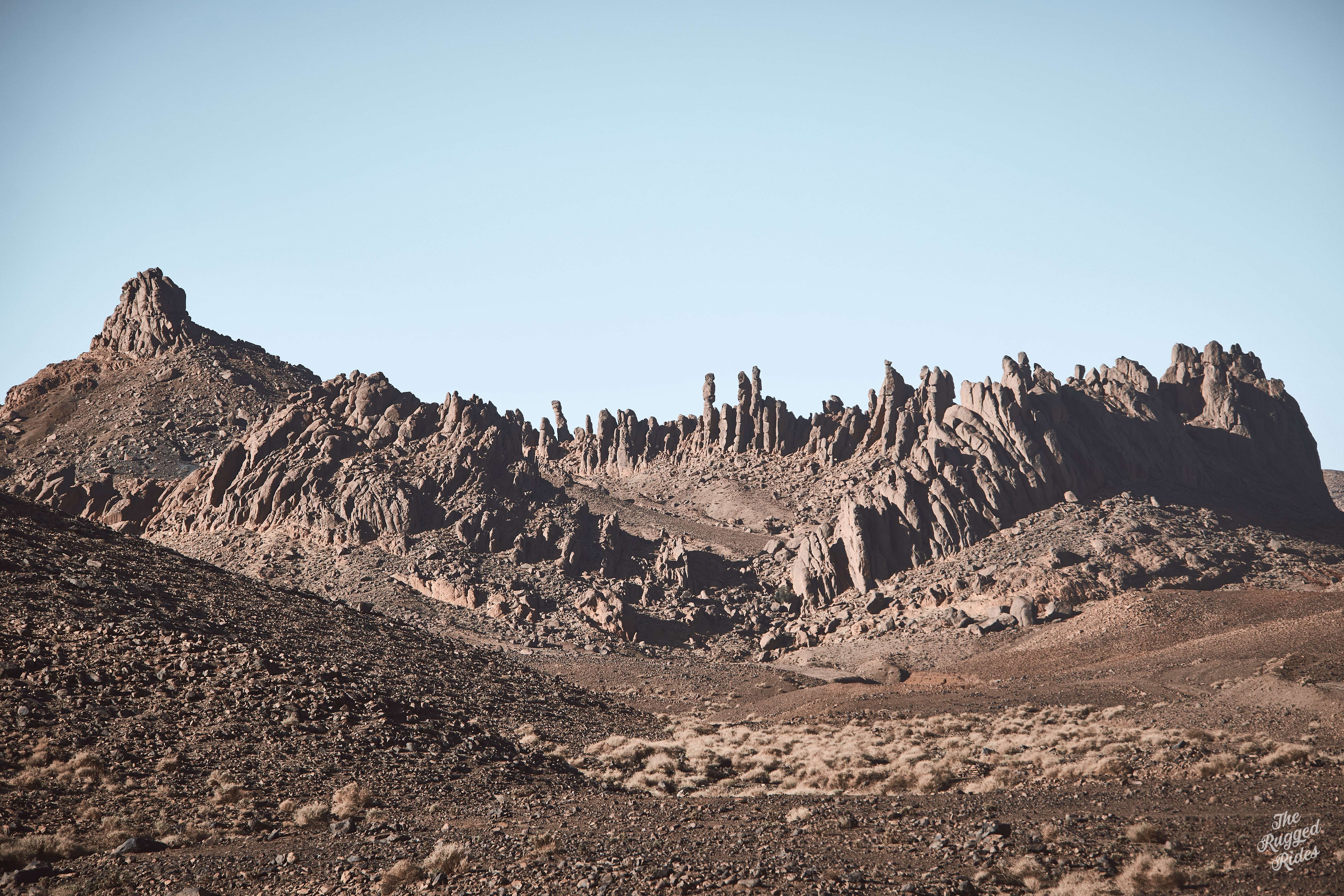
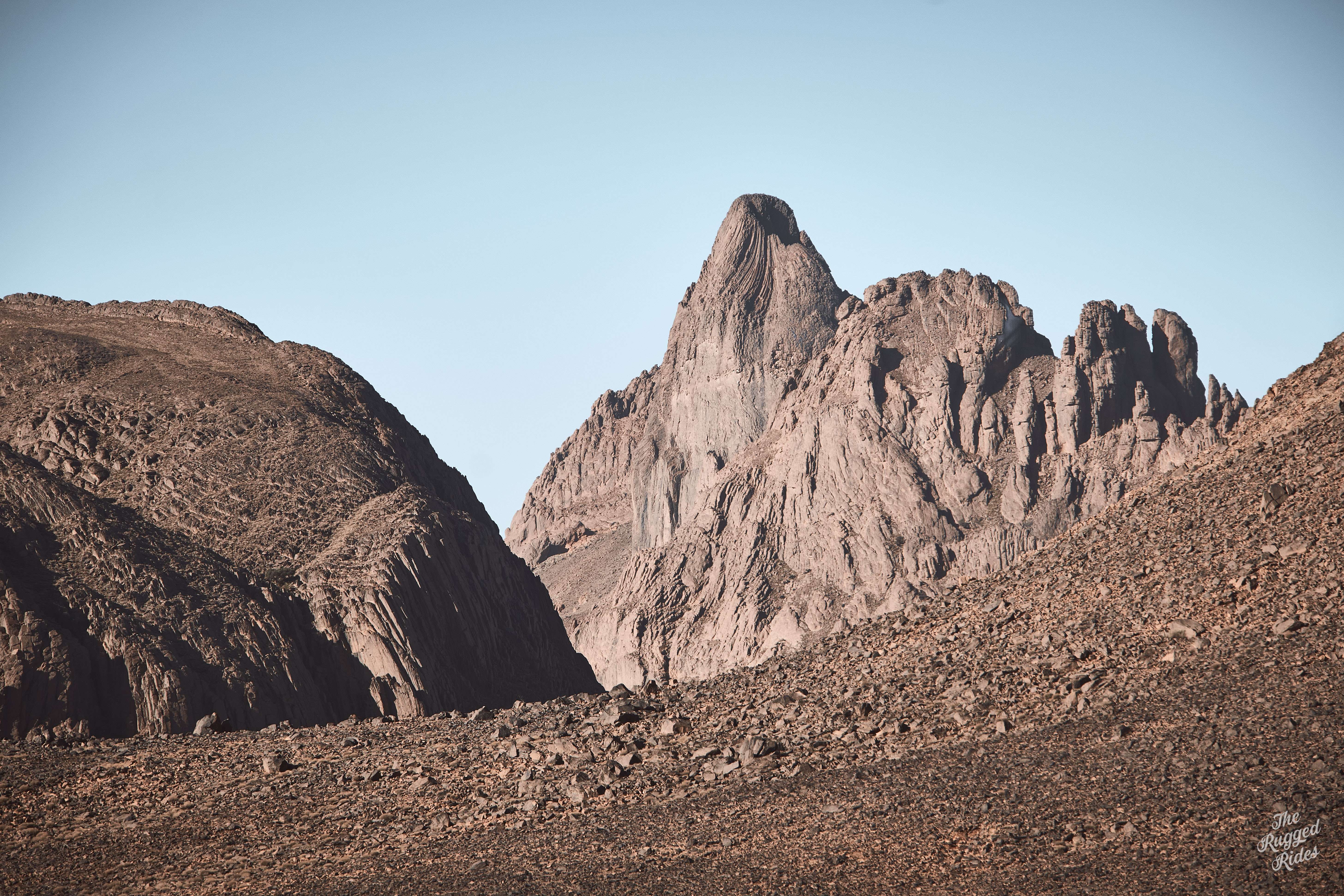
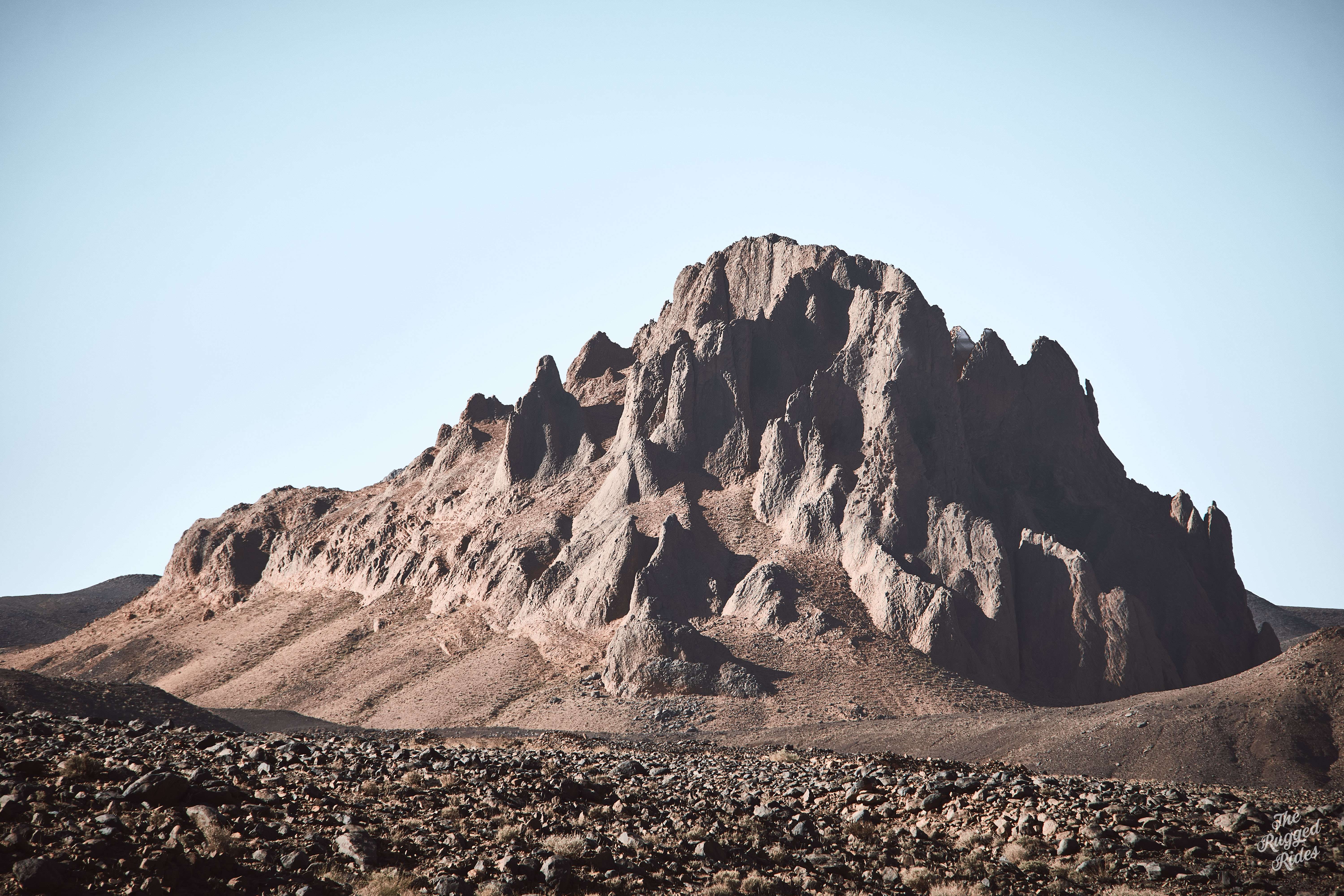
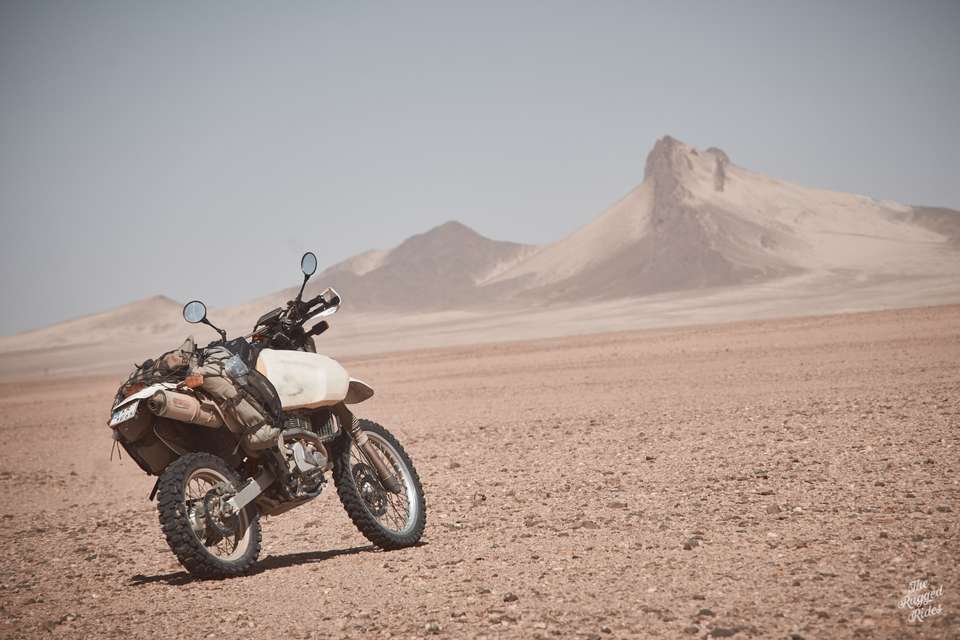
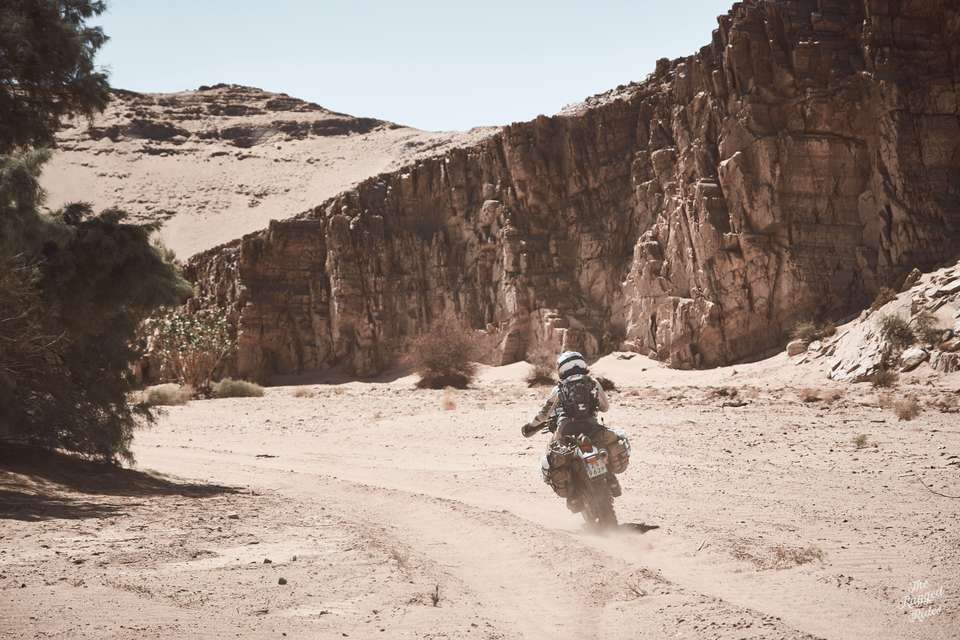
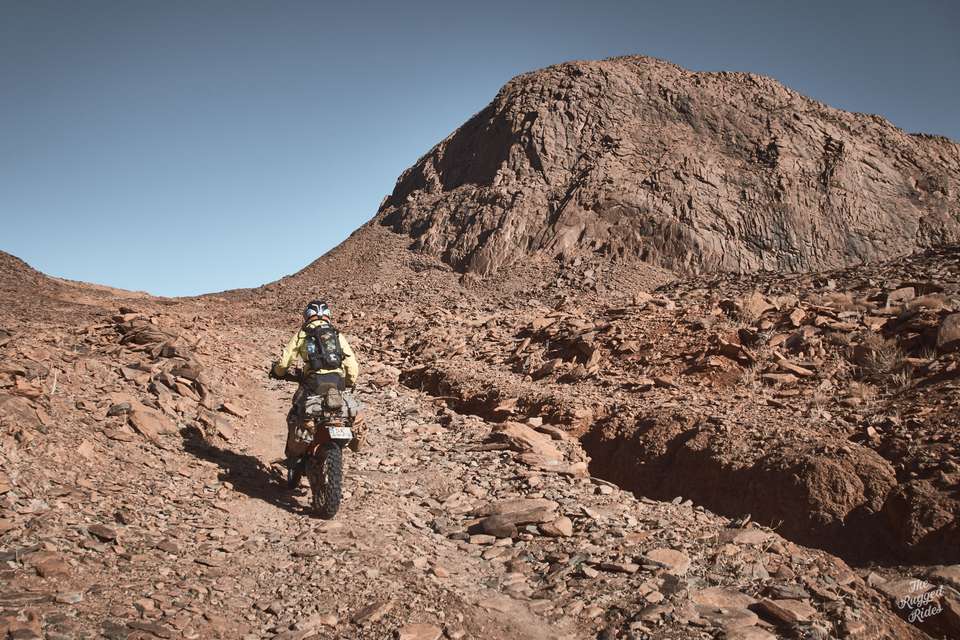
The road becomes steeper and steeper, and in places disappears altogether. The light and the views leave us no chance of making good time, and we take hundreds of photos. Where the road has been washed away, detours have been created, often using flat slabs of rock laid across the ground. Around Col de Tihintaghtimt, the difficulty increases yet again. The approach to the pass is steep, and once again I appreciate just how easy it is to tackle obstacles like these on the DR. Its engine works like a tractor, puff, puff, puff, and there's simply no chance of stalling. That makes balancing over large rocks while simultaneously negotiating tight uphill hairpins an absolute joy.
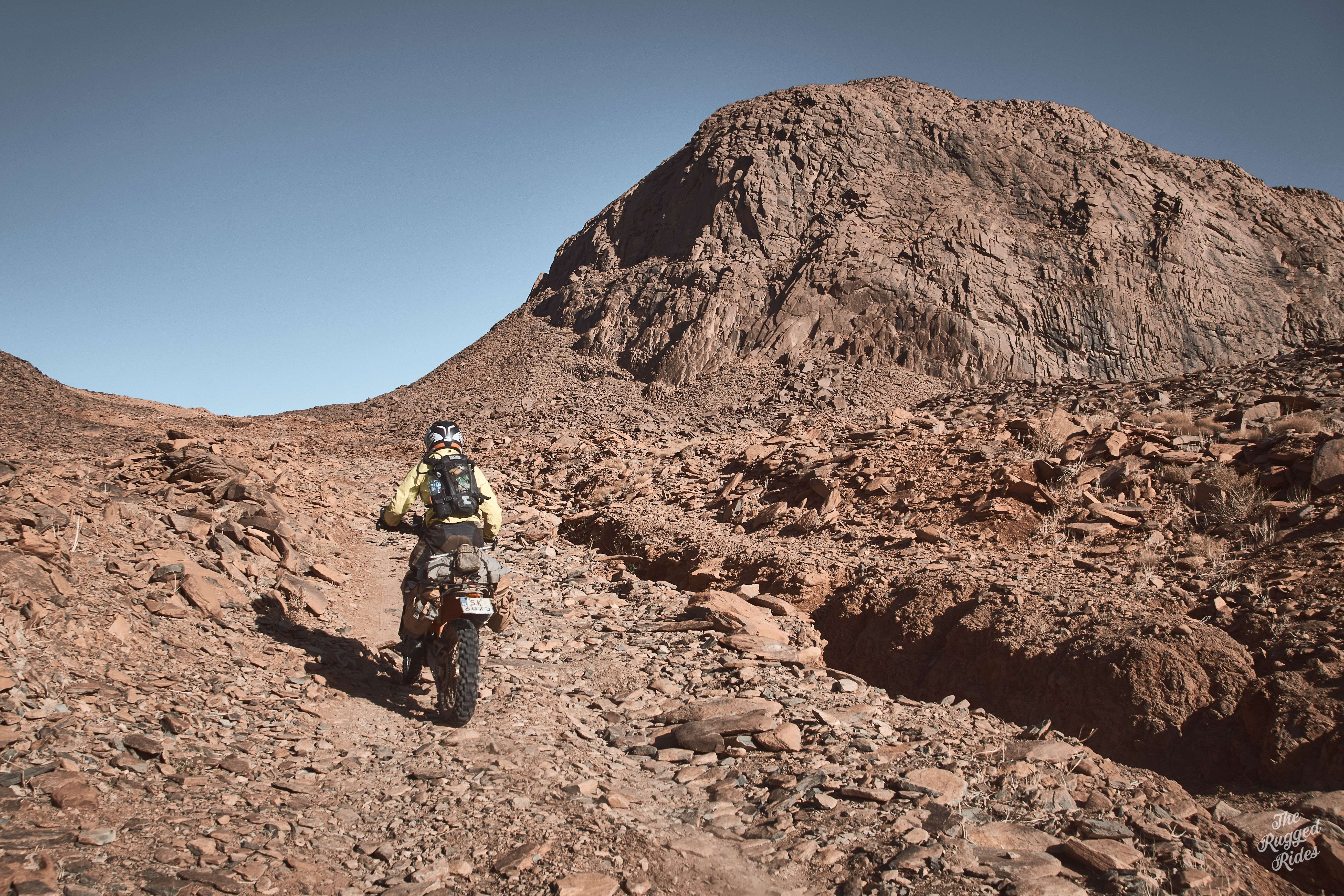
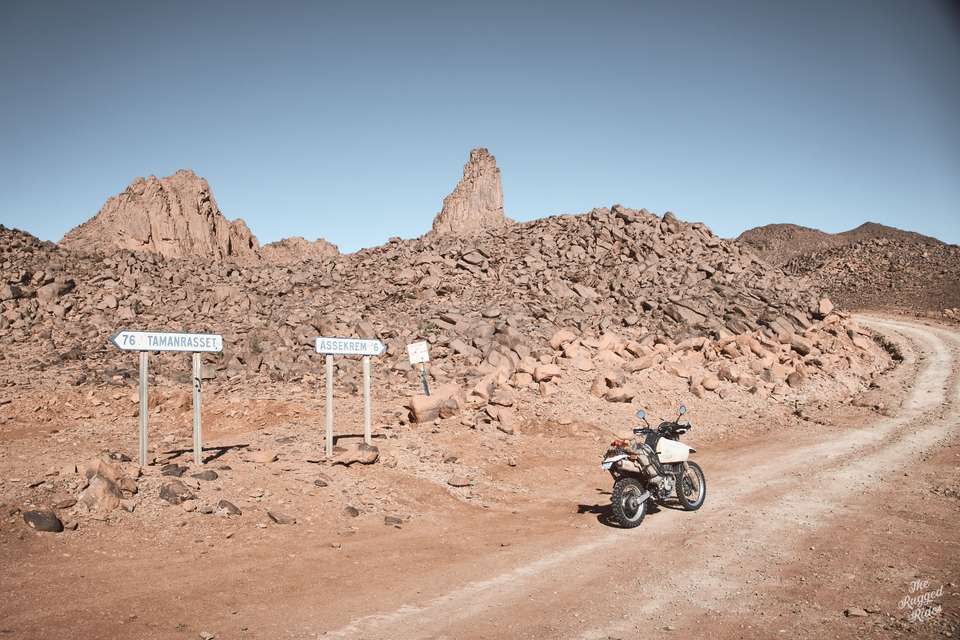
Finally we reach a crossroads. Green-and-white signposts, tilted by the wind and propped up on piles of stones, immediately trigger a familiar association. I'd seen this place in a guidebook and on Chris Scott's website. Every time I looked at those pictures, I wanted to have exactly the same photograph. One of those strange, inexplicable little obsessions. Well, now I've got it. Kondzio shows remarkable patience while I make several passes, trying to position myself perfectly against the backdrop of the soaring peak.
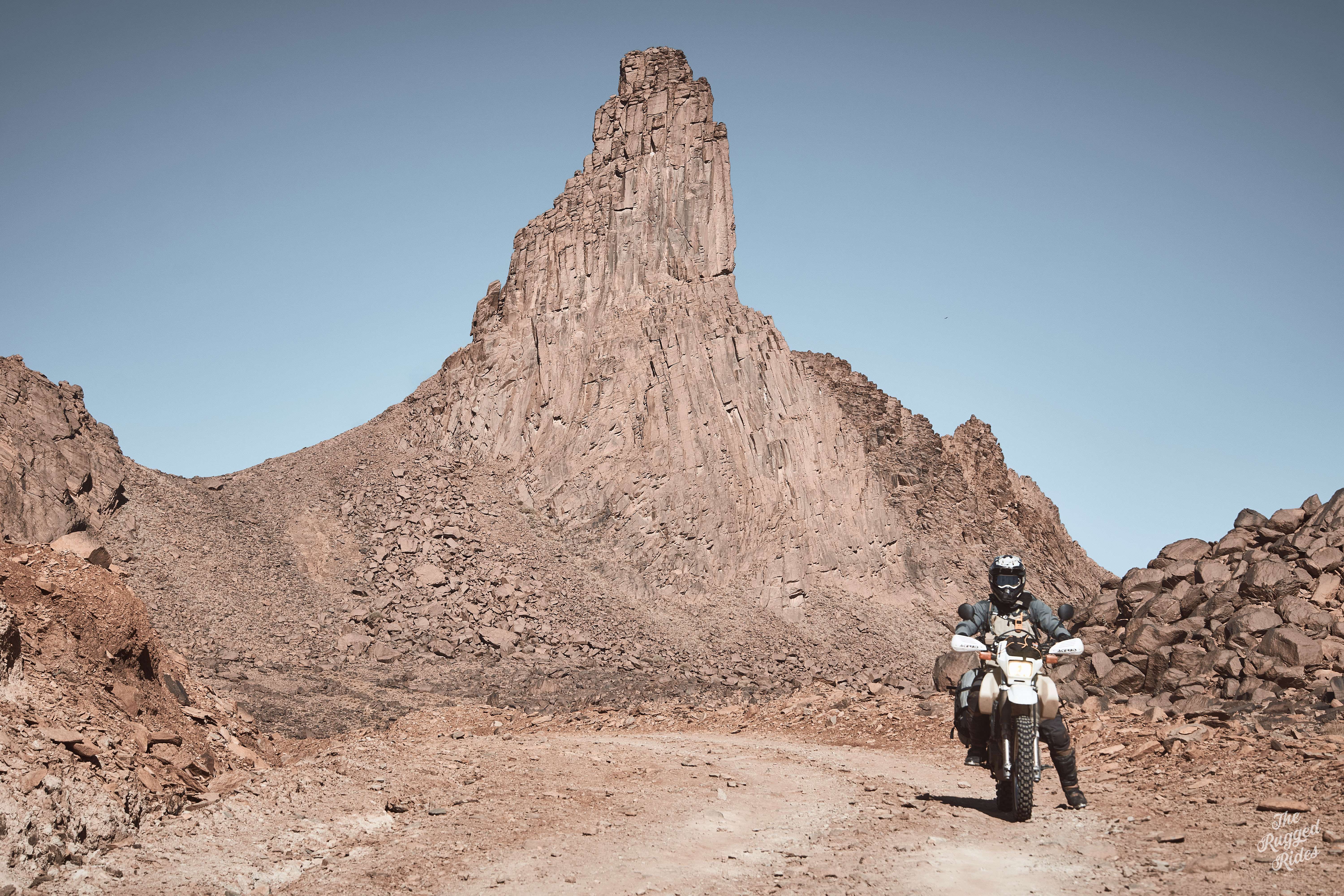
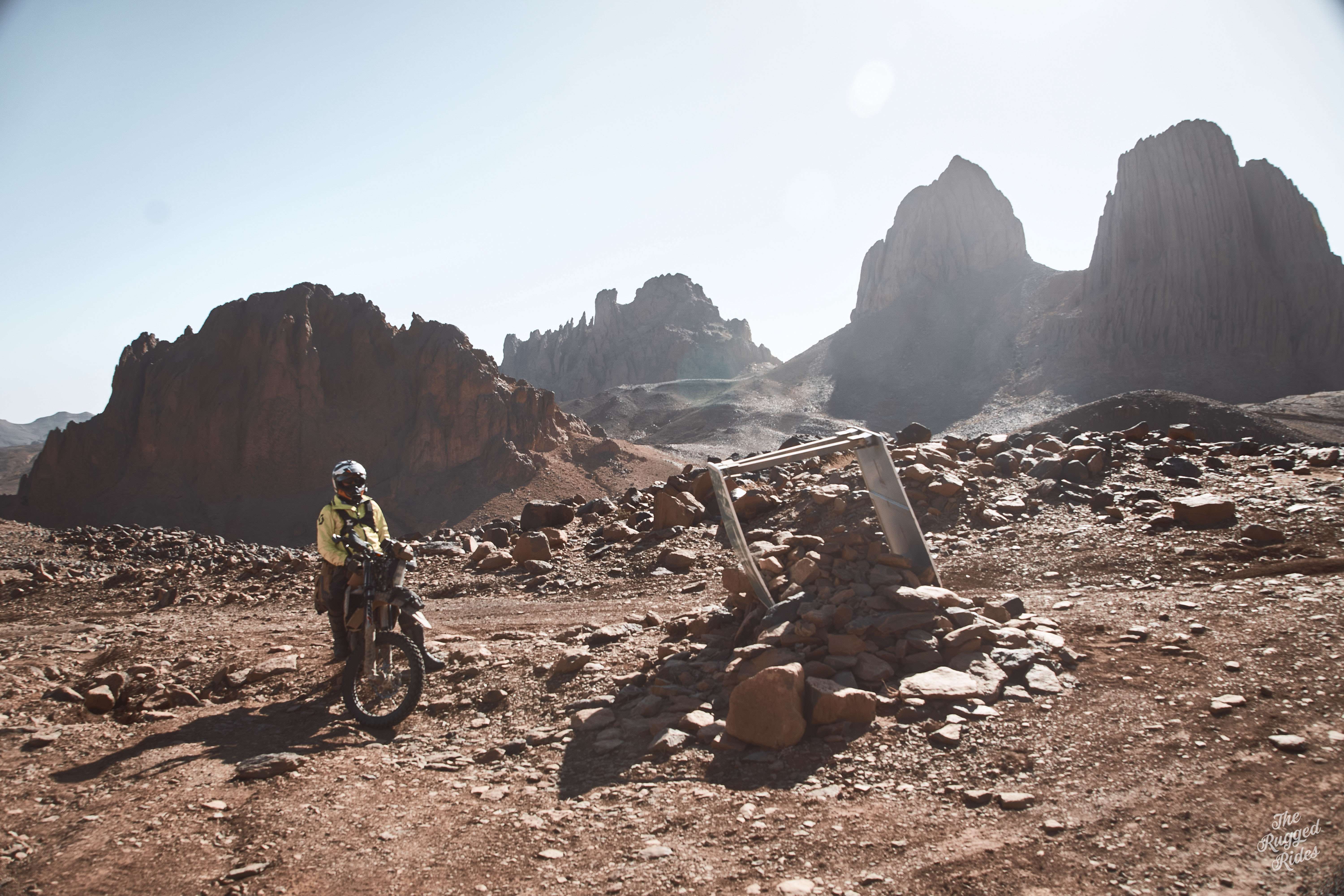
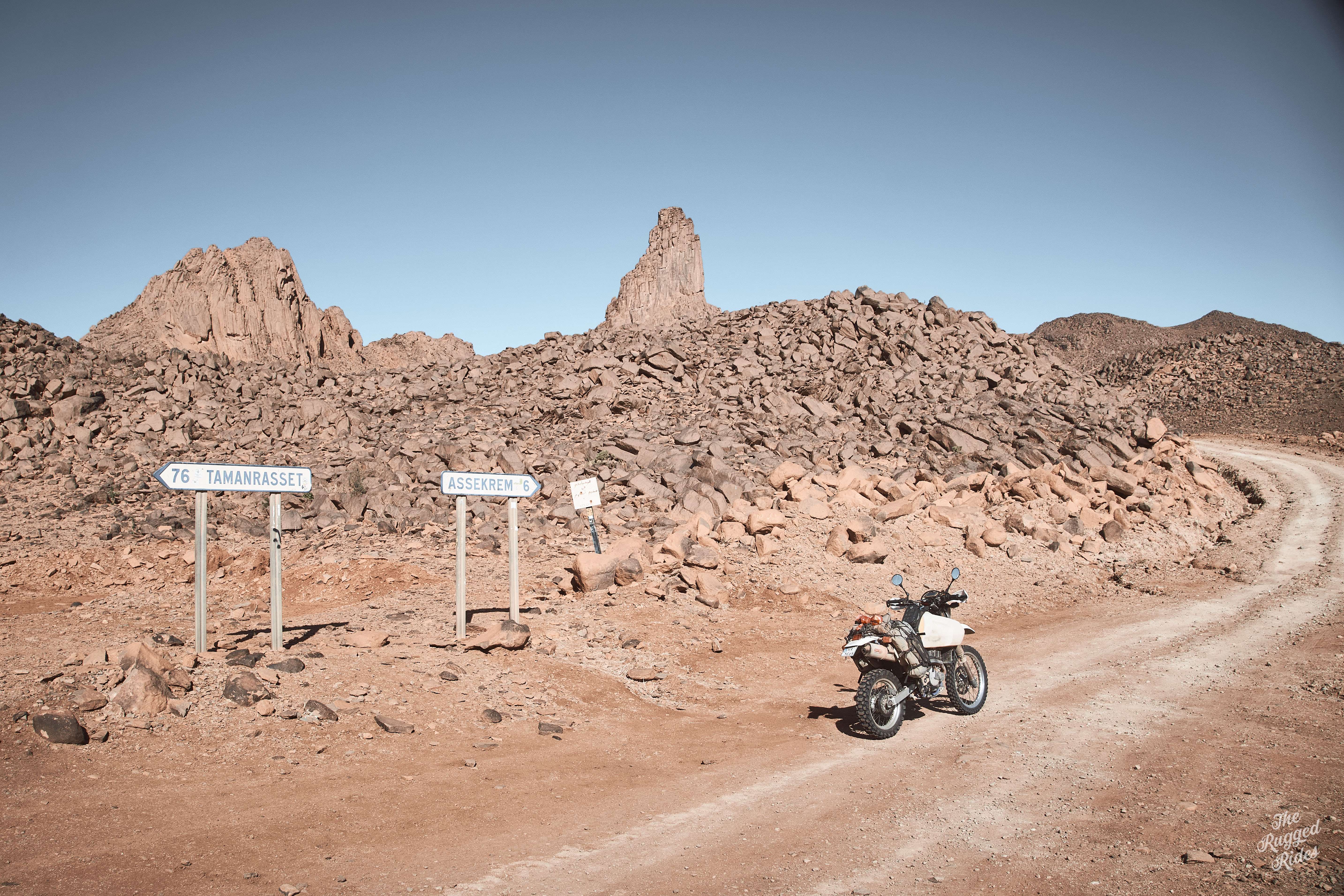
Assekrem, 6 km, a few turns and we are there. 2,700 metres above sea level. The view from the pass is often described as the end of the world, or a lunar landscape. Perhaps that's a romantic cliché, but according to many travellers, this is one of the finest places in the world to experience a sunrise or sunset, with visibility stretching for dozens of kilometres.
At the top we're greeted by a completely unexpected sight. I'd imagined the place would be deserted, that we'd park the bikes and simply sit there taking it all in. Instead, we're met by a wall and street lamps. I see a Toyota with French plates parked nearby, and the people inside stare at us in amazement. I think I know why. Right behind them is a white-and-green Mercedes G-Class, the gendarmerie. They arrived together, while we have come alone. Since we're not interested in joining their escort, we turn around and abandon our stay at the summit.
It's a shame. I was really looking forward to walking up to the small hermitage built in 1911 by Charles de Foucauld, a French aristocrat, officer and traveller who became a monk and hermit and found his peace here. Charles de Foucauld chose this place precisely because of its isolation. He wanted to be close to the Tuareg, studying their culture and language, Tamasheq. Interestingly, he wrote the first Tuareg–French dictionary.
Perhaps the whole situation is a minor flaw on the bigger picture, but hey, apart from that, everything worked out perfectly. We made it into the Hoggar and reached Assekrem Pass. I am completely satisfied. We find another place to rest and have breakfast. We have some cake in a plastic wrapper and sweet yoghurt, which tastes absolutely delicious here. Much like the views surrounding us. Several hours have already passed since morning, and there is no chance we'll make it back down the way we came in any reasonable amount of time. The decision to turn towards Tamanrasset comes naturally. I'm pleased, because deep down I really wanted to reach it. On top of that, a G-Class is already making its way down, we can see it in the distance. Naturally, we set off ahead, keeping a safe distance :-)
The way down is a fast, scenic gravel track. It's a completely different category of road from the piste on the northern side of the massif. The scenery changes quickly. The blue of the clear sky gives way to dust, while the soaring rocks turn into a plateau cut through with canyon scars.
Tamanrasset is a place where ancient caravan routes met. So it's hardly surprising that in more modern times it became a town of expeditions, a base for the vast Ahaggar mountains and the rest of the desert. Travellers heading deep into the Sahara would arrive here, rest, resupply and prepare for the road ahead.
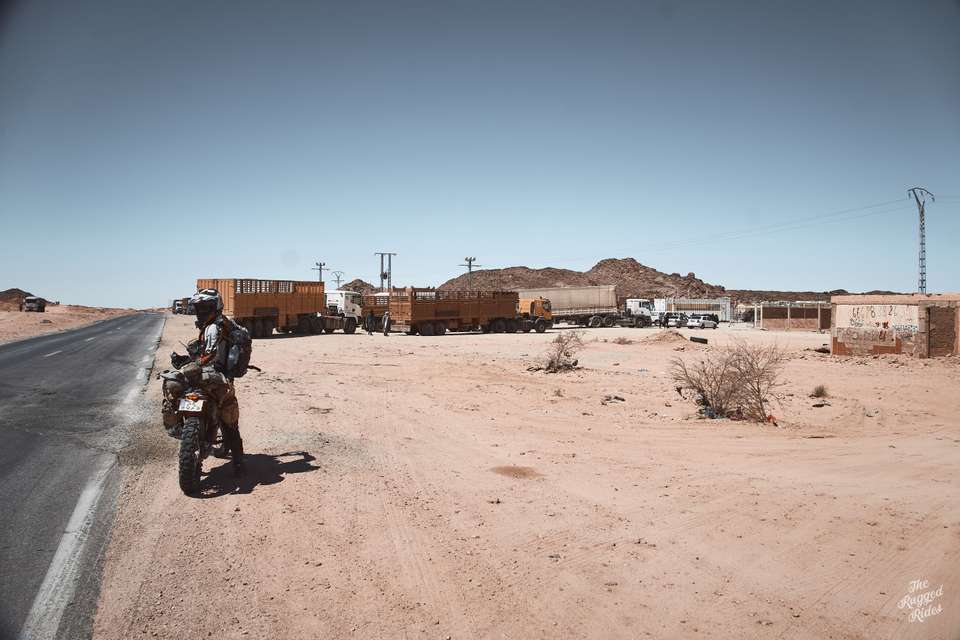
With these romantic visions in my head, I ride straight into the narrow streets of the Arab quarter. The noise and congestion hit immediately. Our main task is to find fuel, and then we want to reach Kuba and Tomek. We push through the traffic towards the petrol station I'd marked on the map. There it is. Closed. The queue for this closed petrol station winds through the streets for several hundred metres.
We look for another one. We choose a point along the main road out of town, to the north. Exactly the same situation. No, this can't be right. We approach the closed gate and point at our almost empty tanks. Naturally, this triggers a whole wave of helpful goodwill. The gate opens, specifically for us. They let us in through the lorry entrance, stop someone who is already being served and tell us to pull forward. We fill our tanks and fuel bags at really quick. Kondzio pays a few pennies, while we're immediately surrounded by a crowd. Everyone wants to exchange WhatsApp numbers, take selfies and sit on the bikes. In short, the usual routine. I'm really grateful to fate that things worked out with this station. I wasn't expecting anything else, really, but the prospect of standing in a queue like that certainly exercises the imagination.
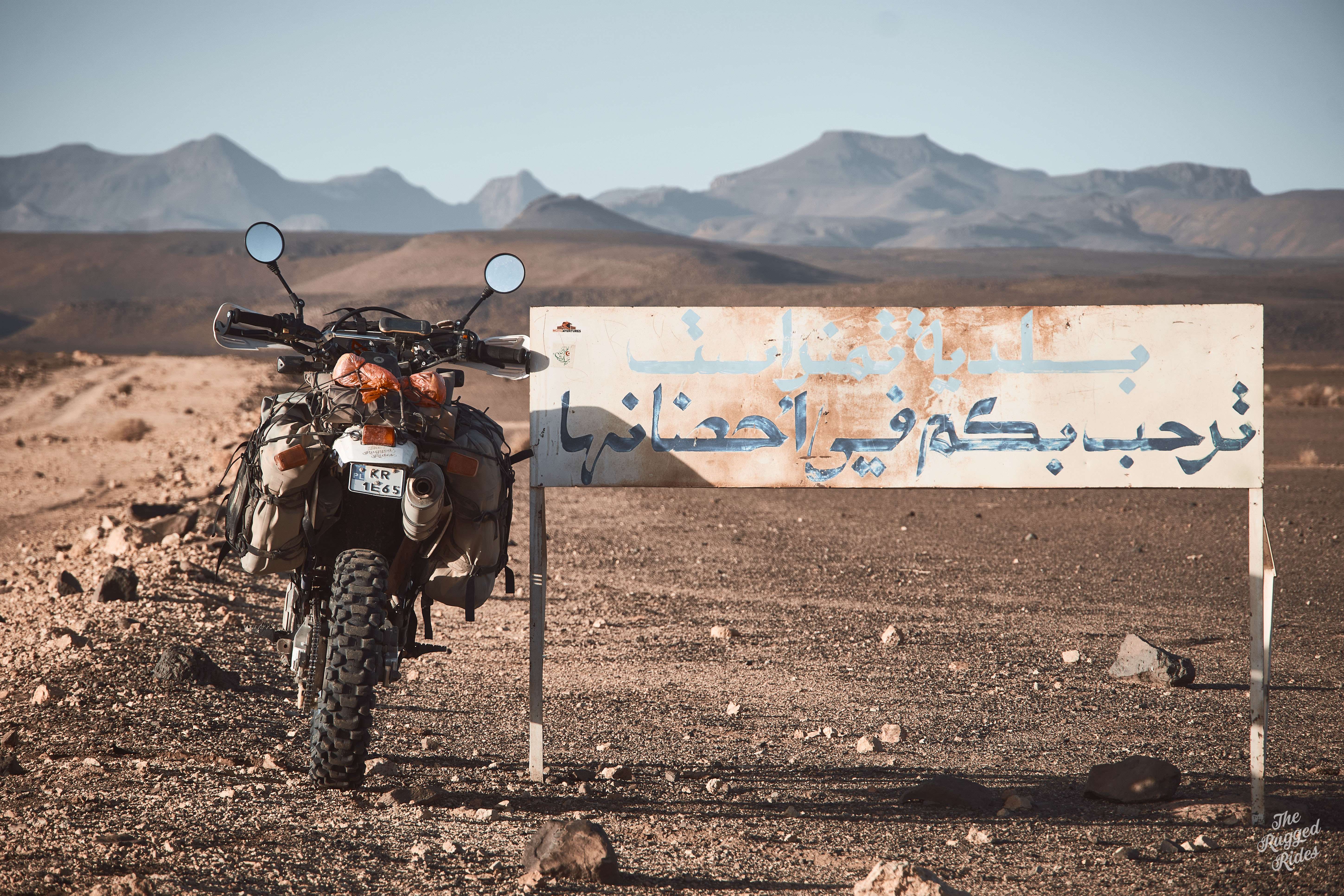
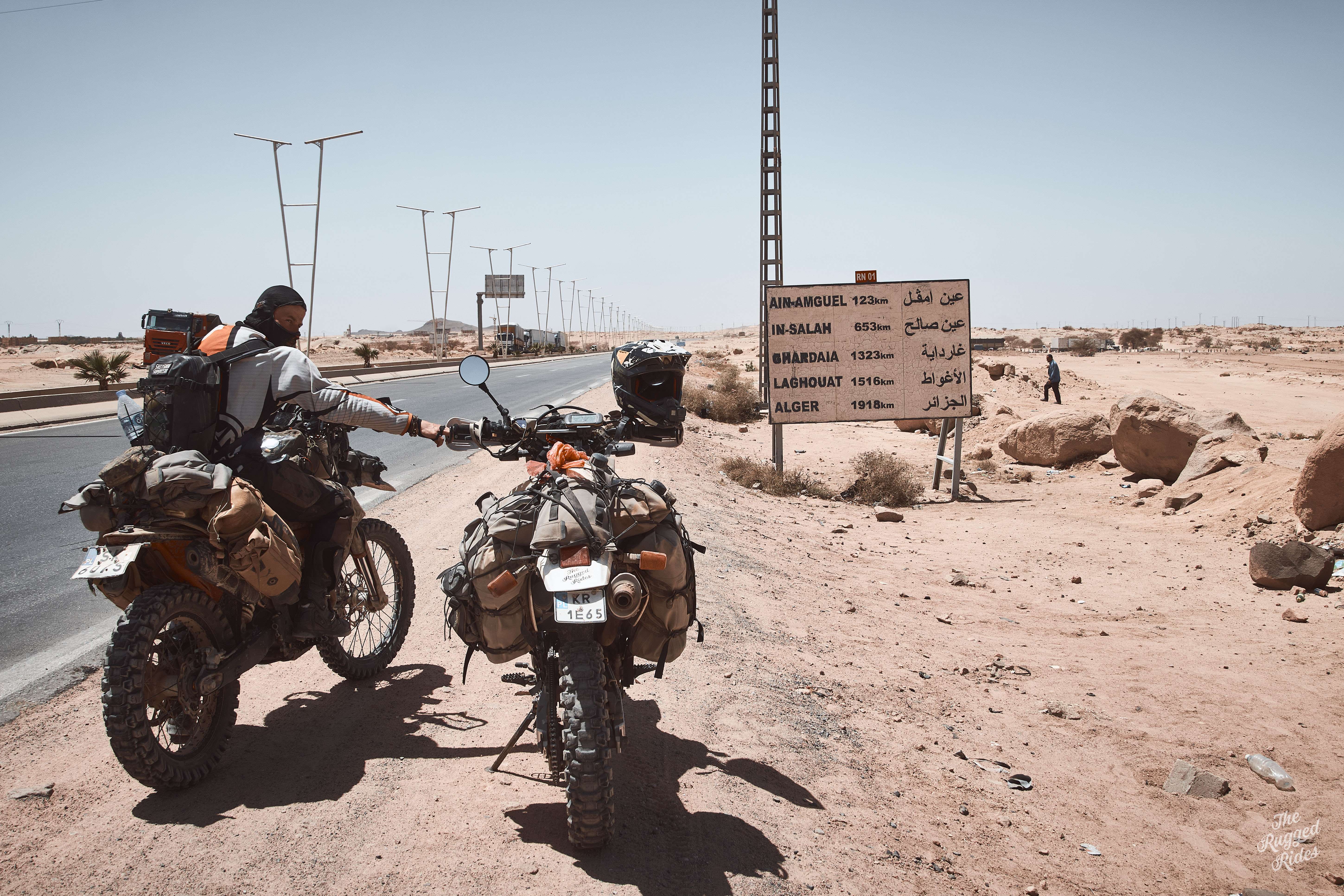
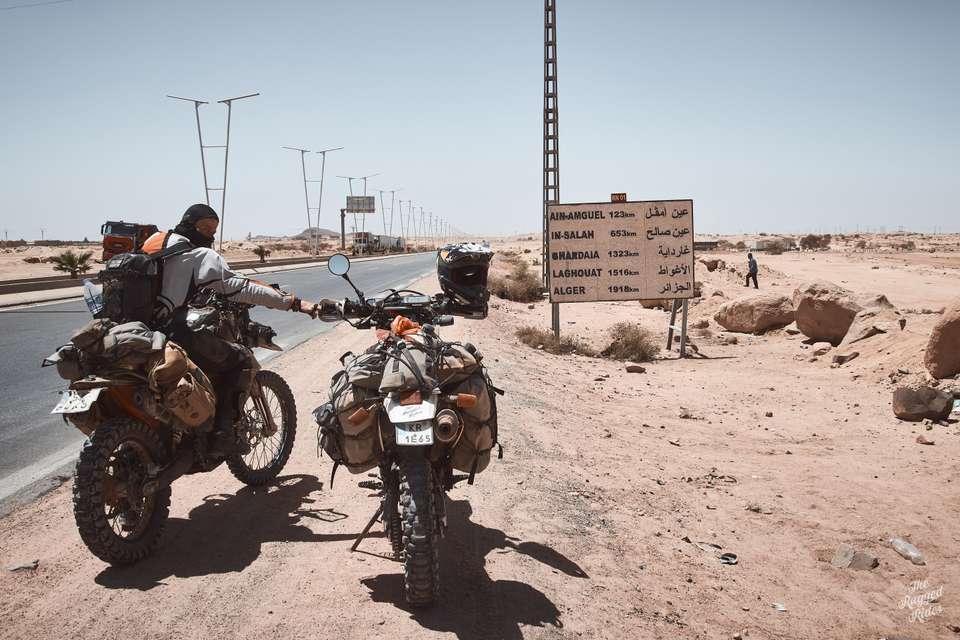
We stand beneath a sign, In Amguel 123 km, In Salah 653 km, Algiers 1918 km… It feels serious, almost ceremonial. At least it does to me, deep down. We've finished a beautiful adventure. Now we hit the tarmac and head back towards the coast. We have two days to do it, and beneath our wheels we'll roll as much of the world as we travelled across the last three weeks off-road. First stop, In Amguel. We'll give Kuba and Tomek some fuel, then head off to find a bivouac somewhere in the desert.
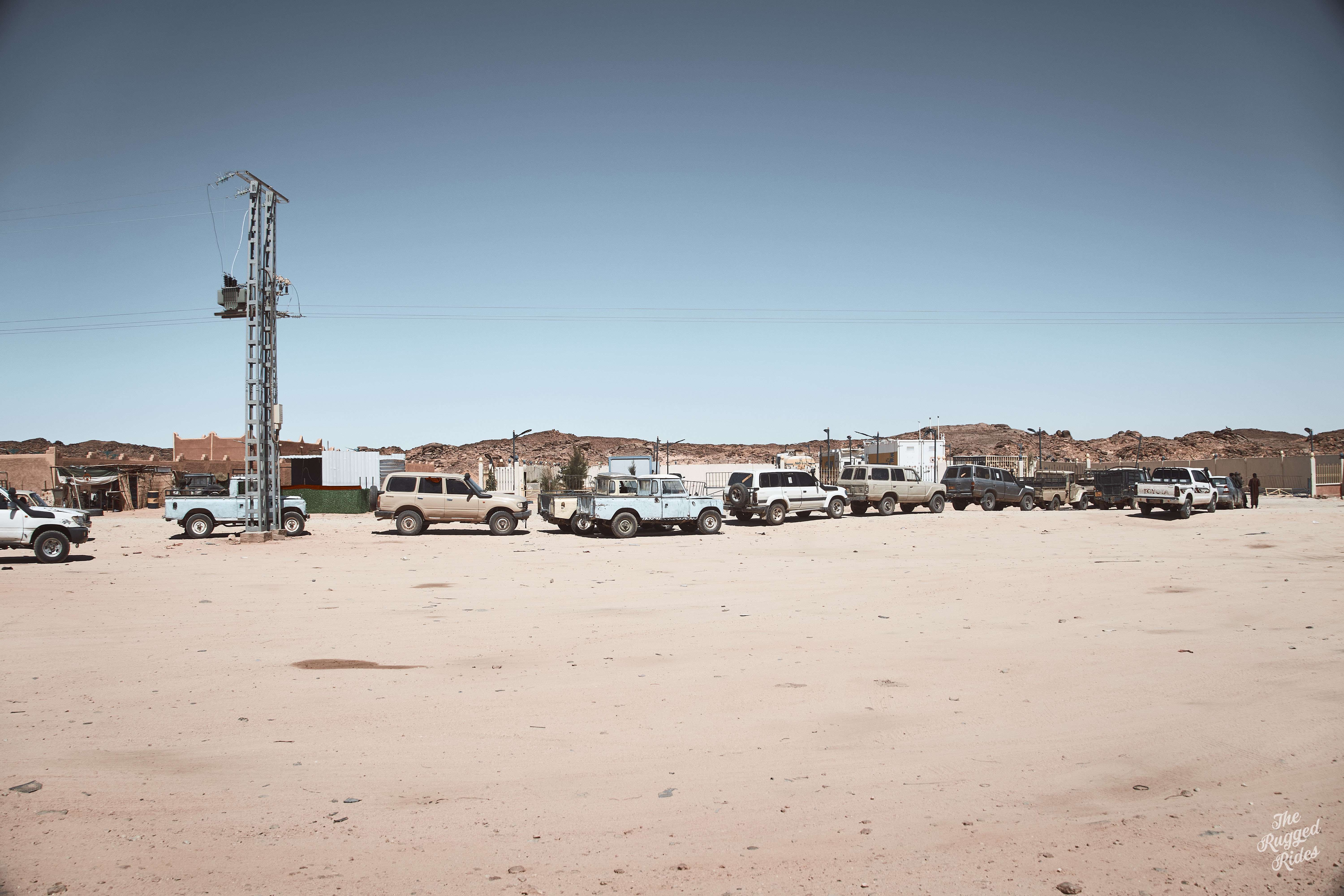
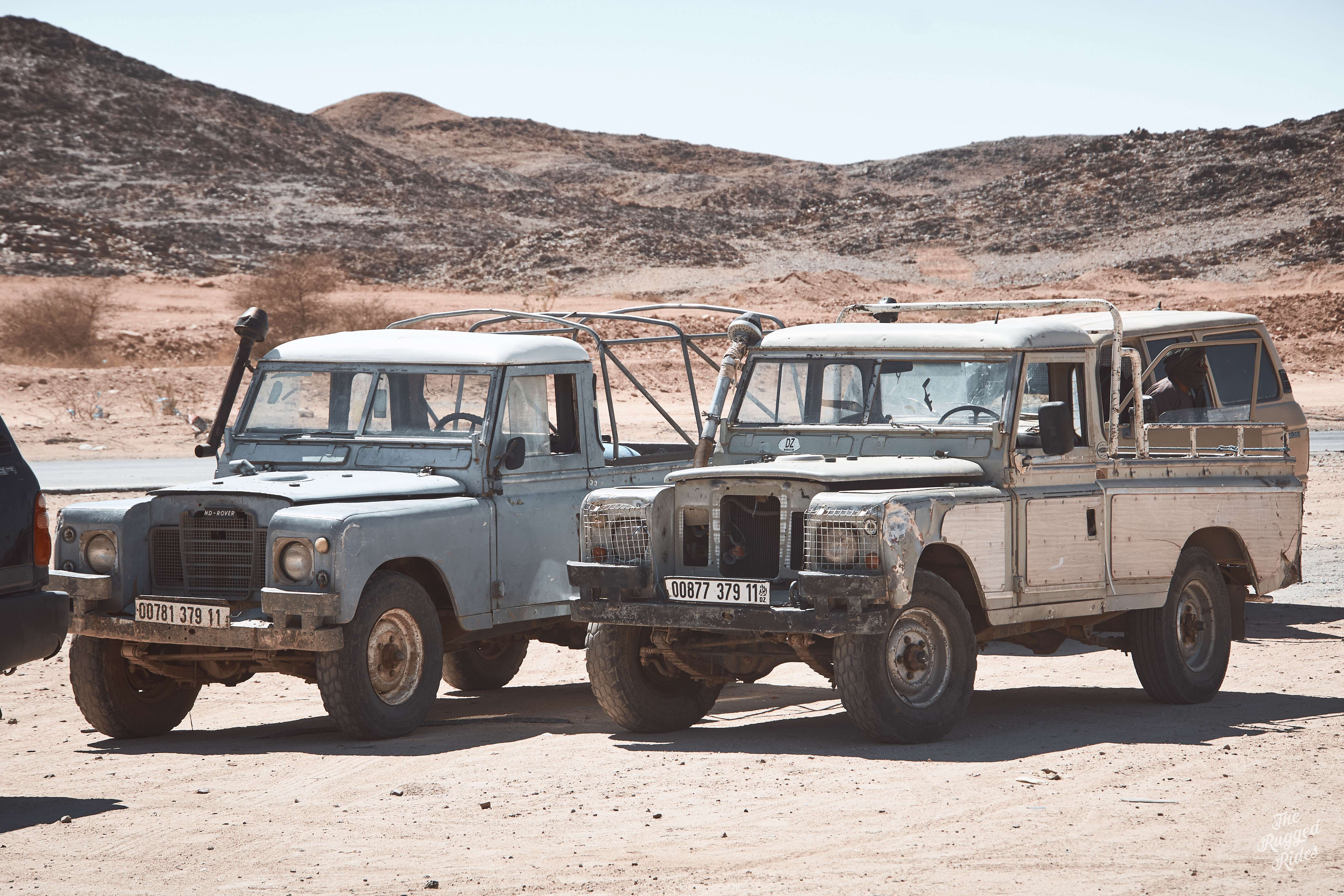
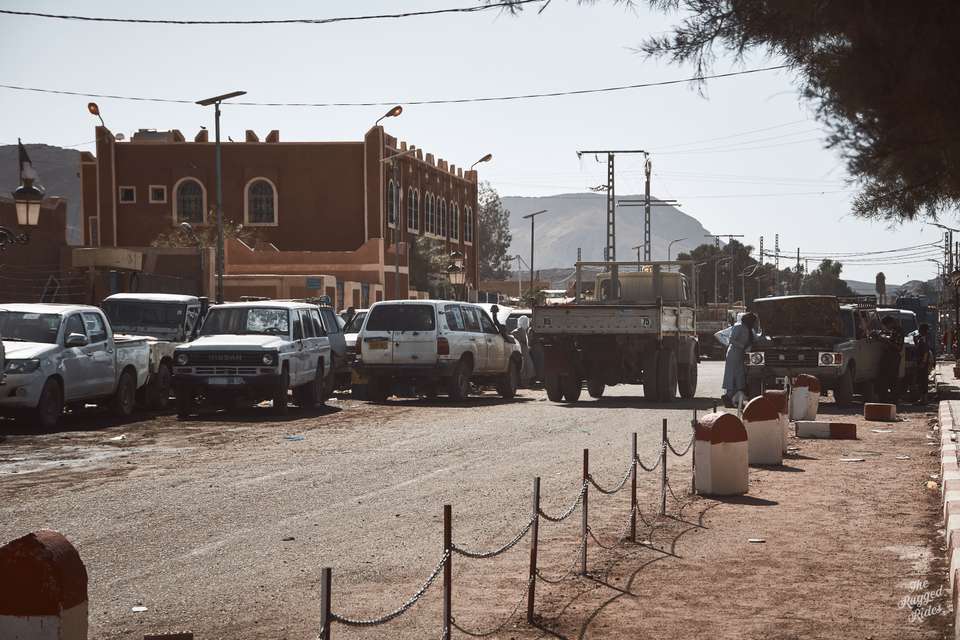
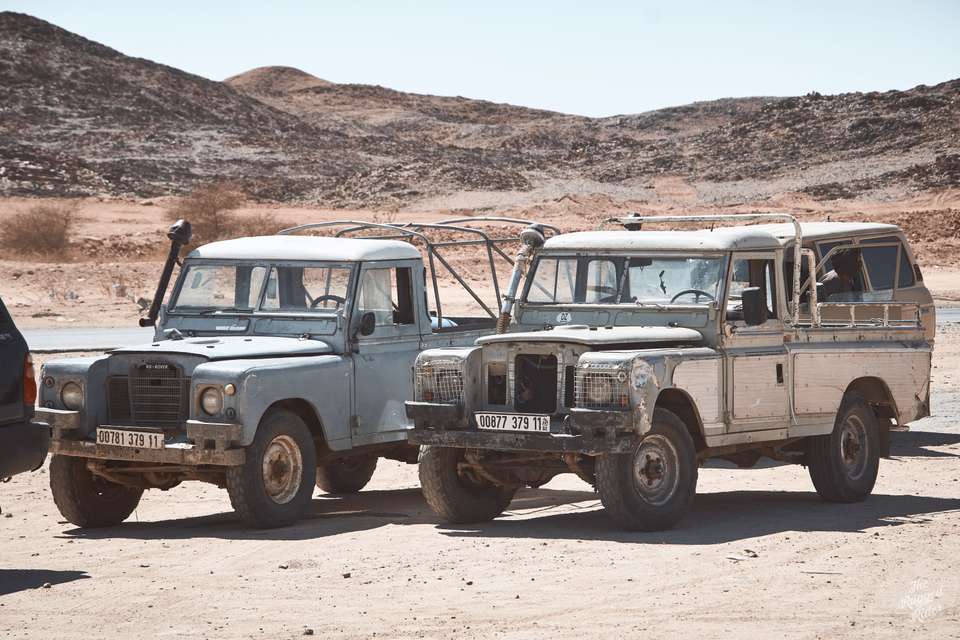
When we reach the meeting point, we're greeted by a rather charming little scene. A queue made entirely of Land Cruisers and magnificent Land Rovers points towards the petrol station. I absolutely love these vehicles. They've been serving faithfully here for decades, some of them dating back to the 1970s. A tiny cafe is attached straight to the station, and inside are our friends. I quickly eat whatever they happen to have, and drink several glasses of freshly squeezed juice. Tomek and Kuba have also managed to refuel, so things are looking very good. We'll make it to In Salah without too much trouble.
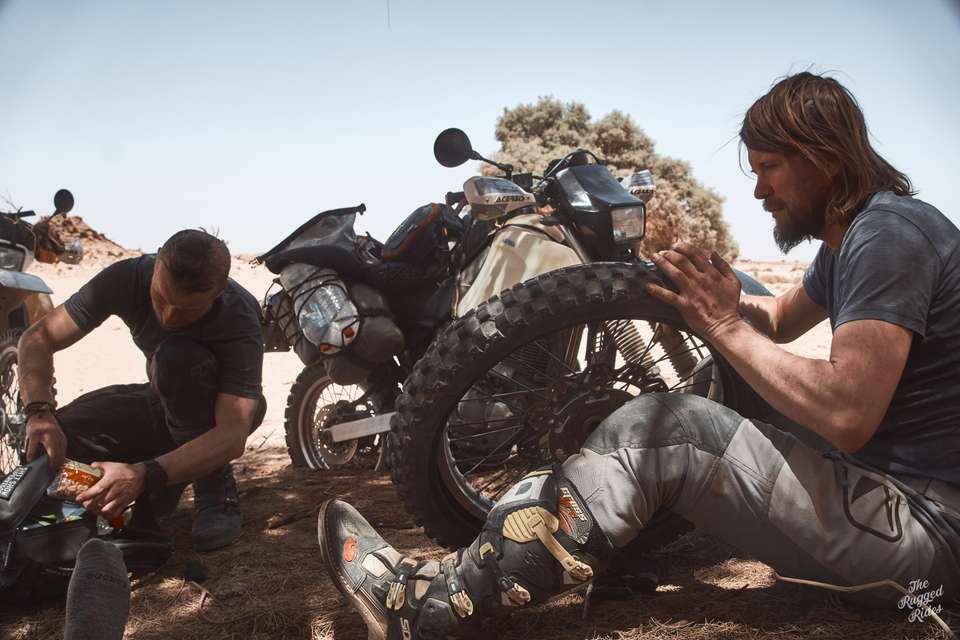
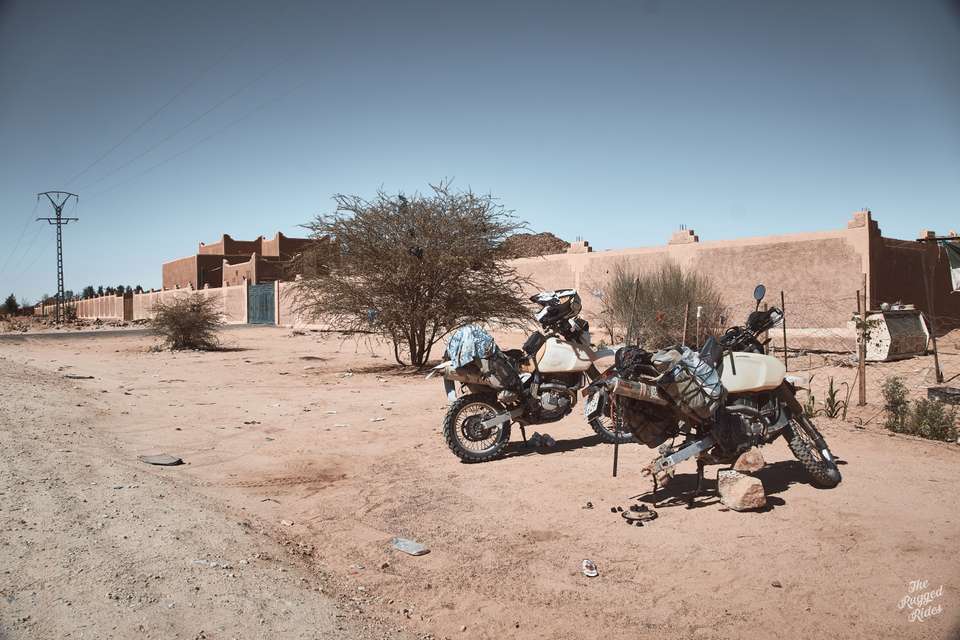
We set off. Eeeh… actually, no. Kuba's got a flat on the rear. Right then, we drop the bike onto a rock and get to work. I order some extra juices and we sort the wheel out. When the locals gathered in the cafe spot the electric pump we're about to use to inflate the tube, they are absolutely fascinated. The air fills with the repeated chant: "compresseur petit, petit compresseur!"
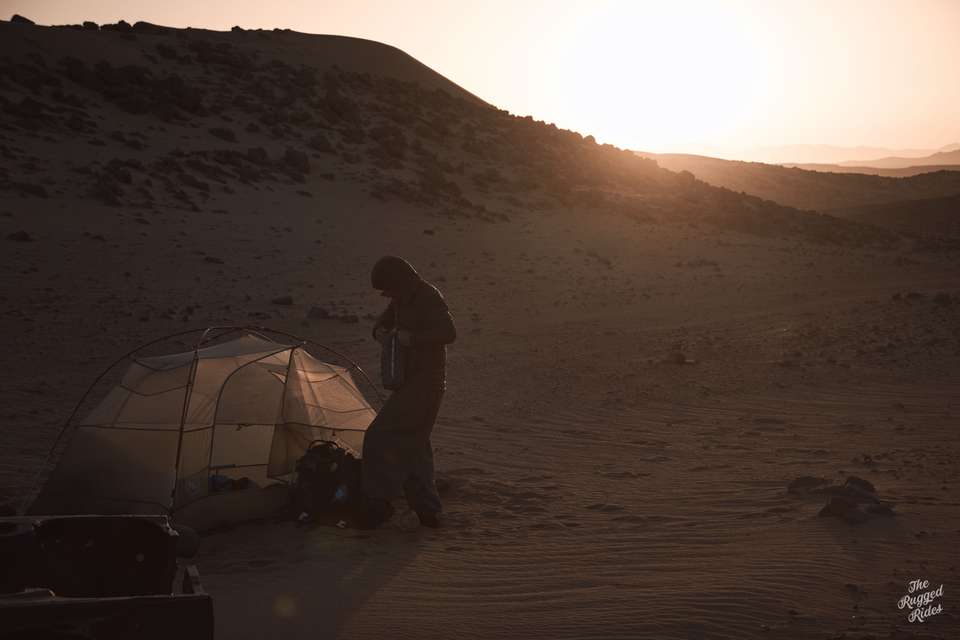
Done. We set off. Or perhaps not again… Kuba's five-gallon Giant-Loop fuel bag has just finally given up. It was lying on the ground in the sun when it suddenly went pffffyyyyyyy. We only managed to transfer the last drops of fuel. Right. Now we're definitely leaving. Time is getting on, so we set tonight's bivouac after less than 200 km. It's good to be together again. The last few days have been played at a seriously high tempo, now it's time to slow things down. Now is the final kilometres, all on tarmac, simply the back home. And that has its own charm too.
Track: https://loc.wiki/t/281890051?wa=sc
Leave a comment