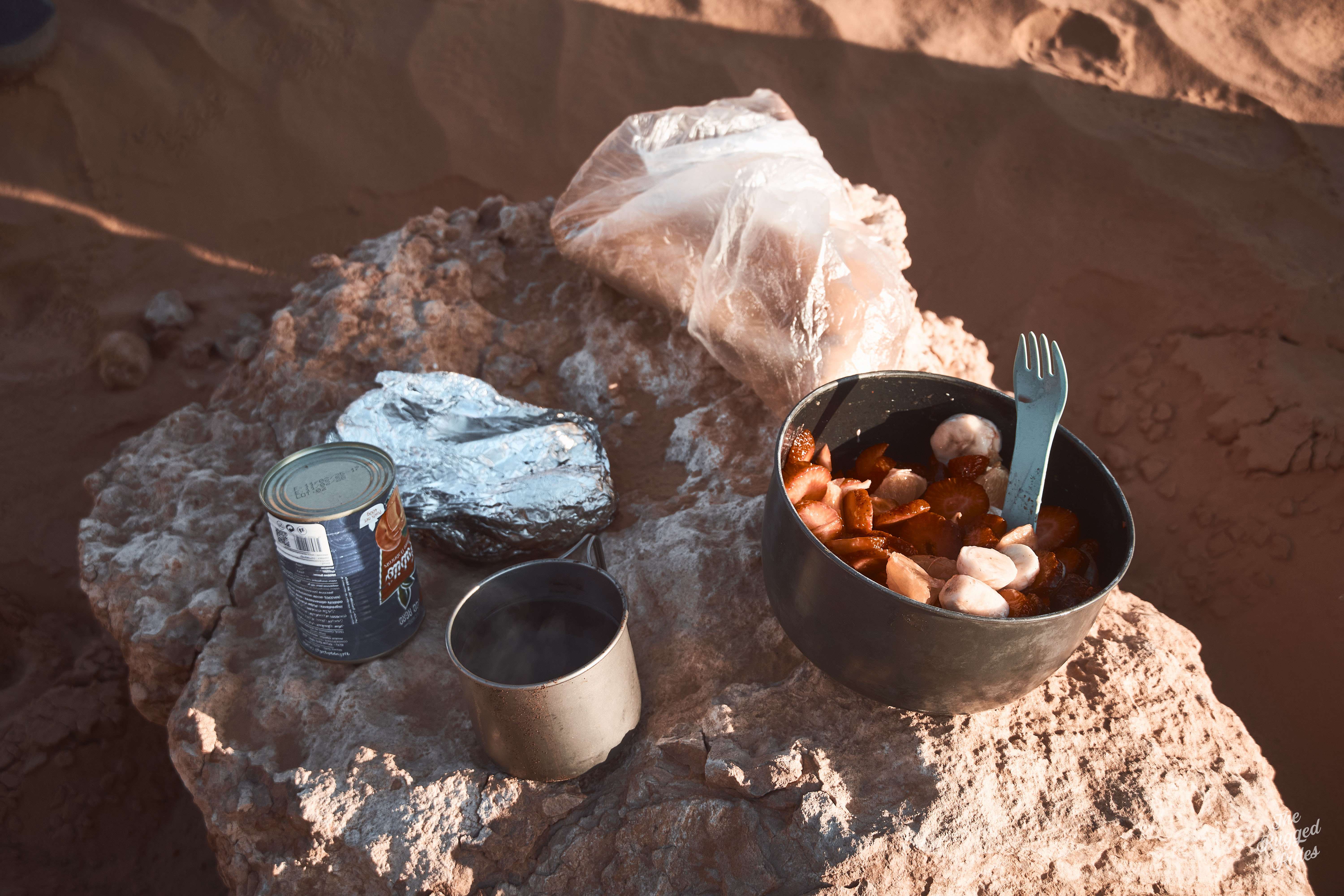
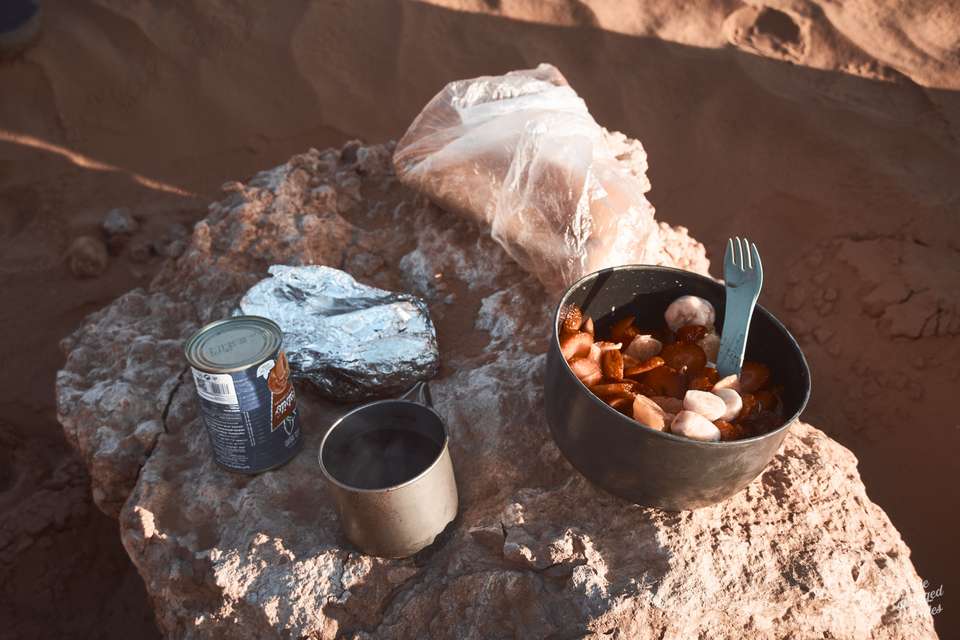
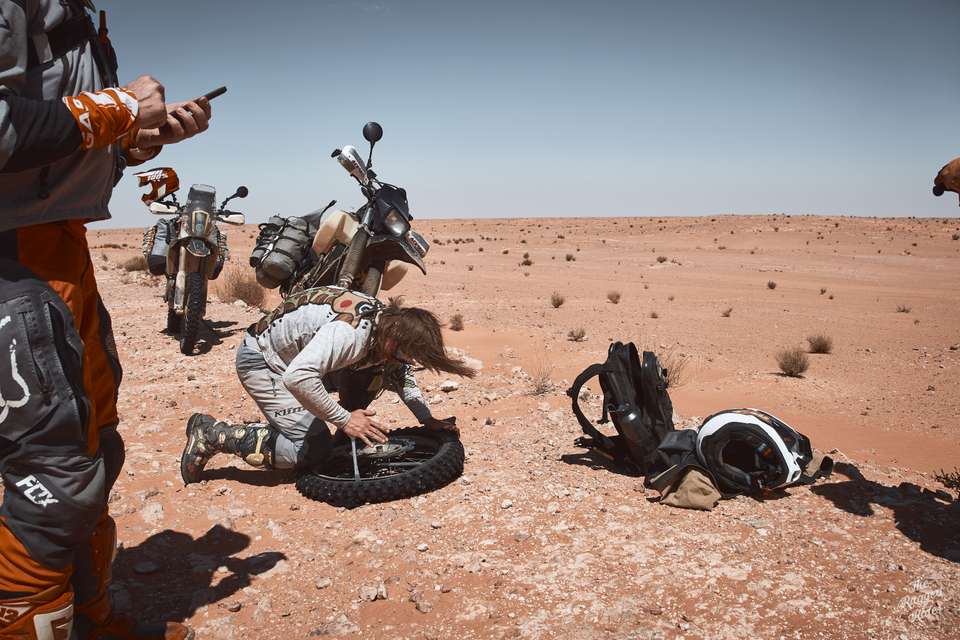
Campfire chicken served with a crusty baguette, alongside a fresh fruit salad of strawberries, oranges and bananas, finished off with apricot jam and a beautifully aromatic coffee. To keep things interesting, we also squeezed in a few outdoor activities – namely, patching an inner tube. A proper gathering of the desert's birds, the off-road bohemian elite!
So, during the night we finally committed to what we'd been calling the queen stage of this trip – the desert run south, straight to Bordj Omar Driss. A truly special route, and, as far as I know, a place where practically nobody rides. Spirits are sky-high as we leave camp and head out into the desert. Our first objective is Ouargla, the city where we need to stock up properly, but also, according to my rather obsessive research, the last place you can reach without a guide or an escort. Beyond that, it's guides only. So, if we only manage to leave Ouargla heading south into the desert, if we only make it through those 600 kilometres along the dunes, if everything goes our way... we'll reach Bordj Omar Driss, where we're almost guaranteed to attract attention. The real question is what happens then? Right now, that hardly matters. I can already feel that this stretch alone is going to be the crowning jewel of our adventure so far.
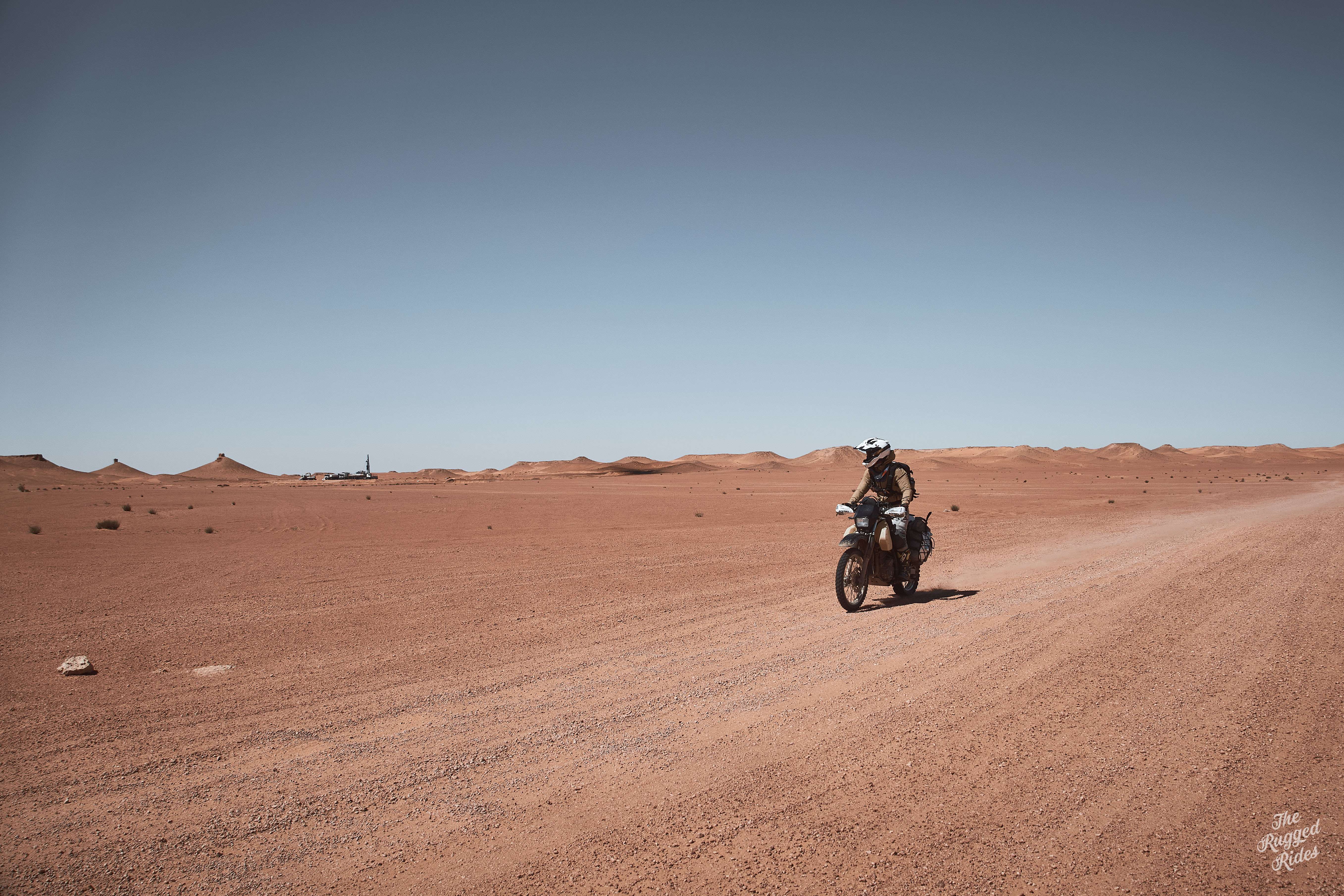
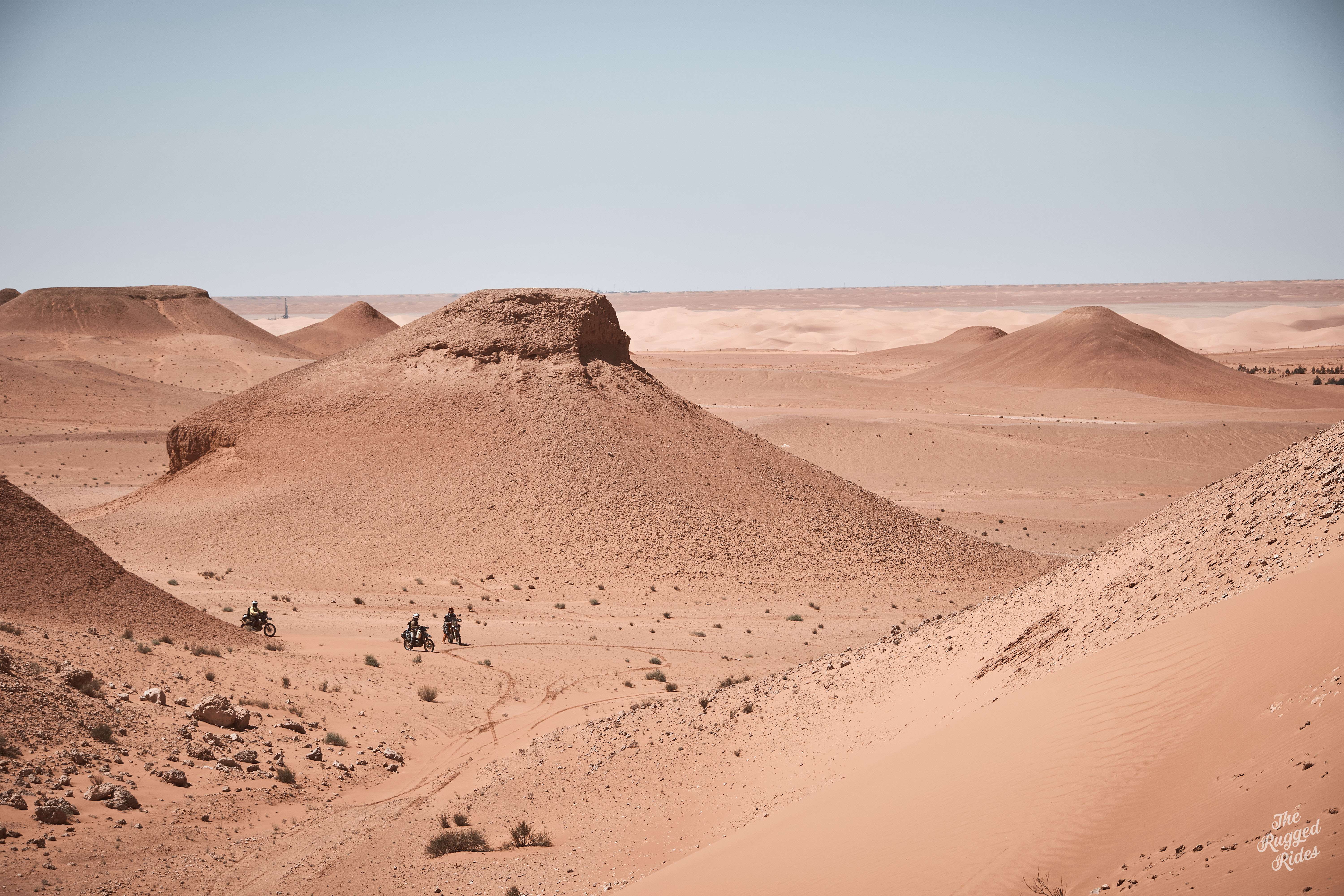
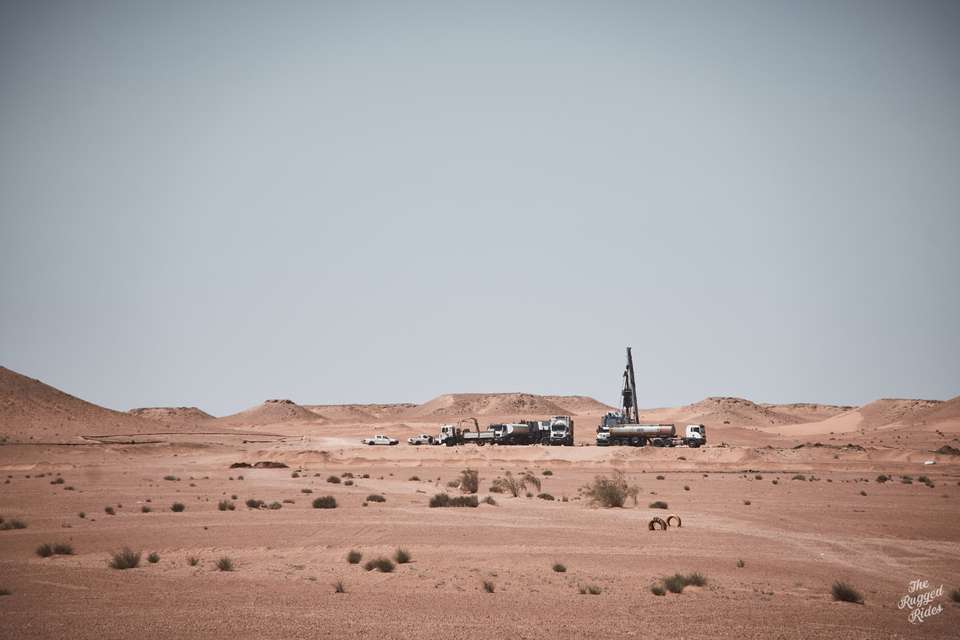
With all those thoughts swirling around in my head, I blast across the grassy hamada towards Ouargla. At first, our track cuts through barely travelled country along wadi M'Zab, then cleverly skirts the endless oil installations before opening onto the vast plains outside the city. Towards the end, the track becomes heavily used, splitting into countless parallel tracks. Pipelines and drilling rigs appear on the horizon, and we eventually reach the outskirts by fighting our way through piles of rubbish.
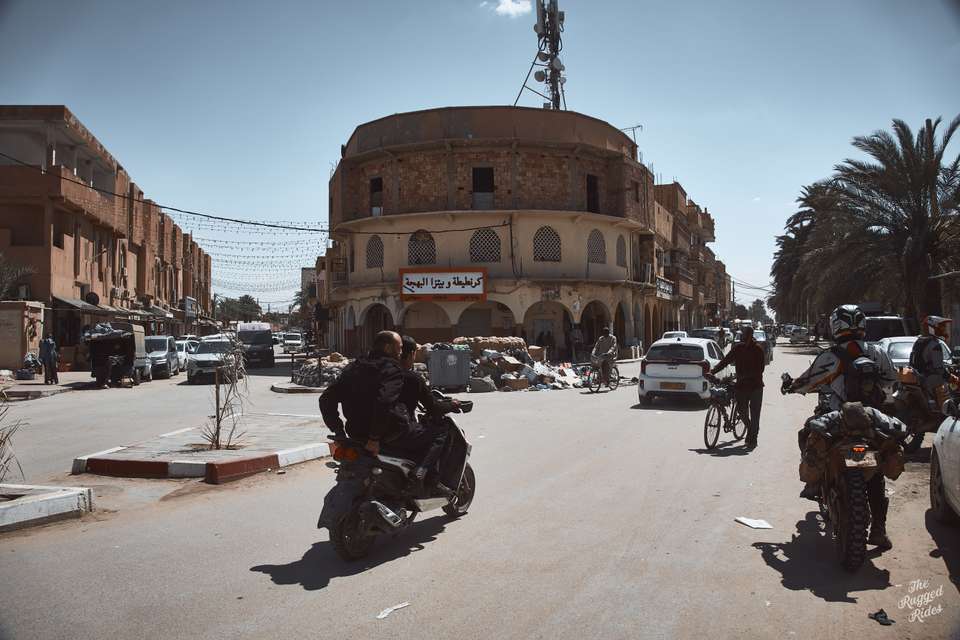
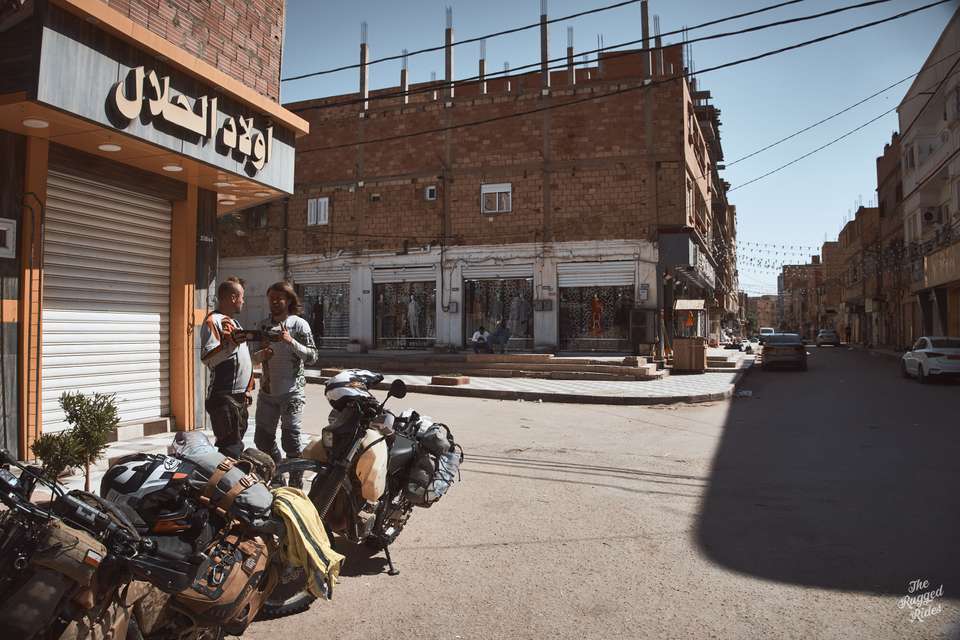
As usual, we roll into town straight out of the desert. We try not to stand out and get everything sorted as quickly as possible. Once we've found a nice cafe, I finally have a chance to take everything in. If someone had dropped me here blindfolded and asked where I was, my first guess would've been Western Sahara. The architecture, the market stalls, the atmosphere, the people, everything feels strikingly similar. Also, quite a few locals have noticeably darker skin, clearly having come from further south of the continent.
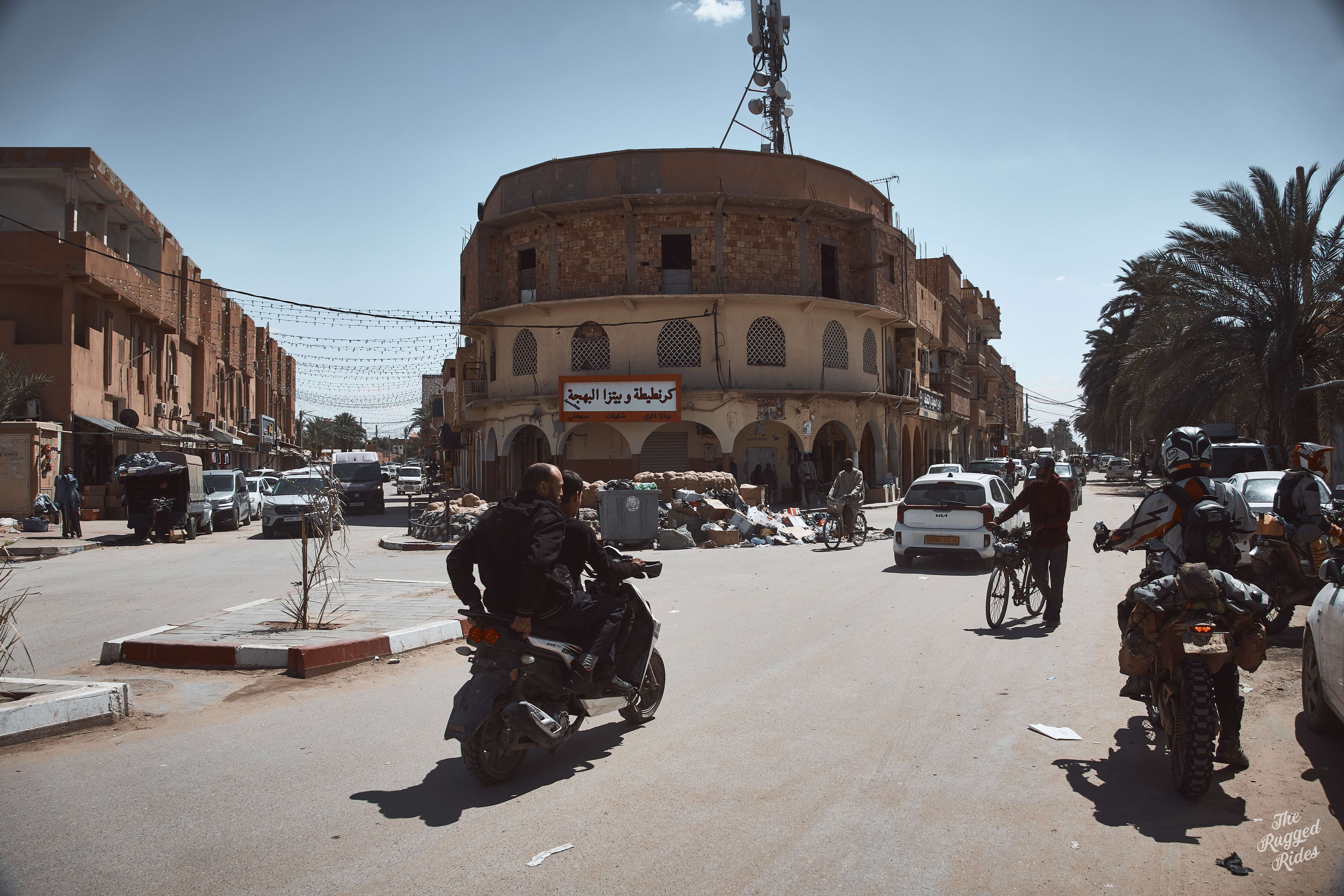
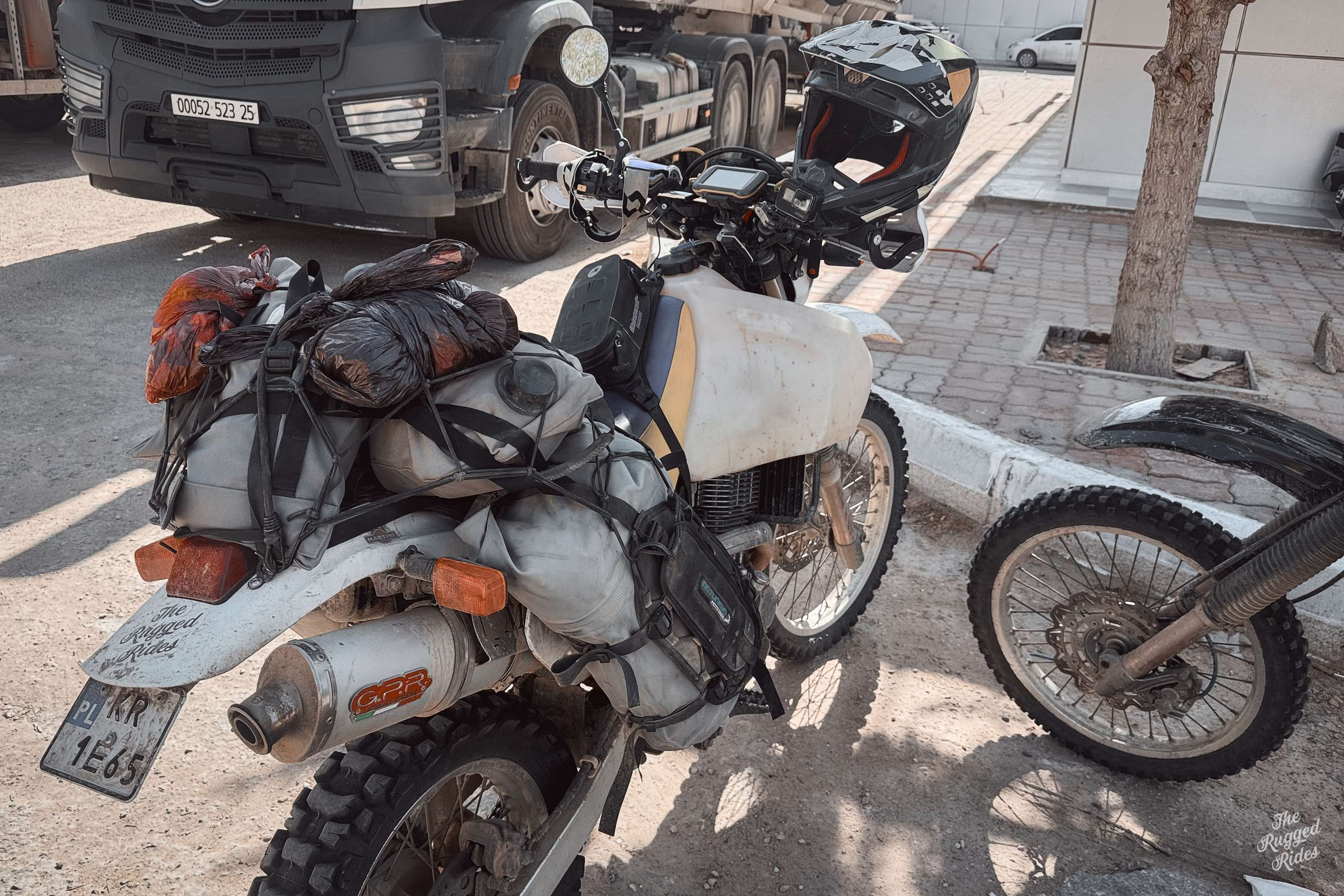
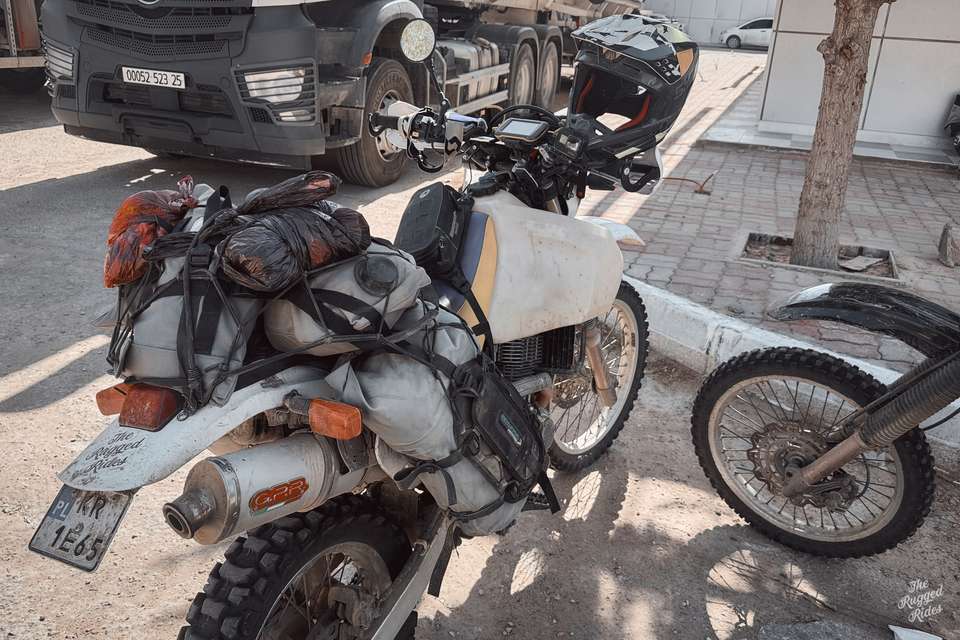
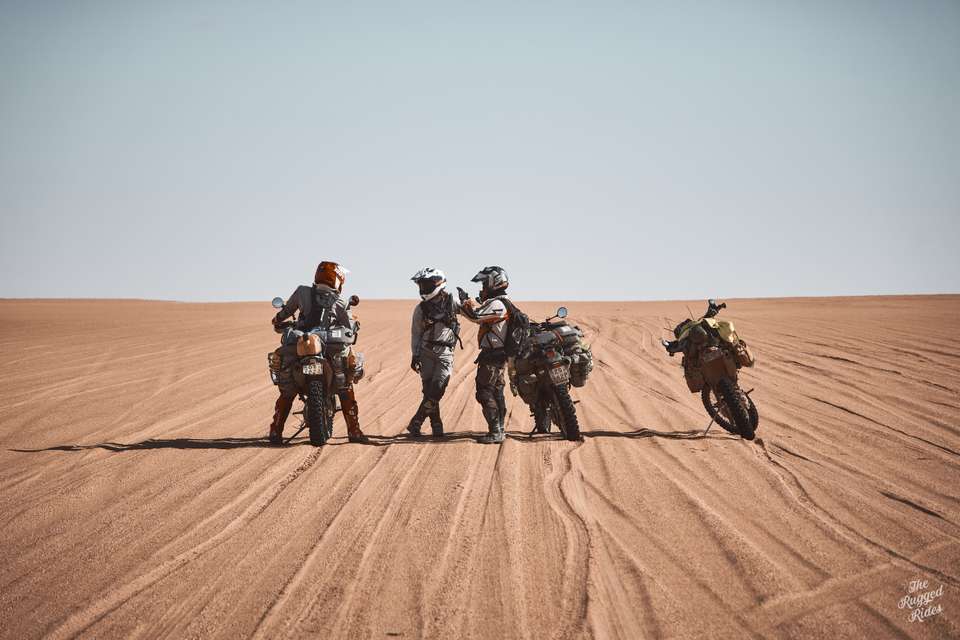
Fuel comes next. First things first, we fill petrol into absolutely everything that'll hold it. The fuel bladders alone won't give us enough range, so we've also brought several PET bottles, including one monstrous five-litre beast. Then comes the challenge of beating the system. There's a long queue of cars waiting for a single payment booth. You tell them how many litres you want, pay up... and, against all logic, nothing comes out of the pump. The bike's been stripped of its luggage, fuel bags are lying open and ready on the ground, yet there's still no petrol flowing, while the cars behind us are leaning on their horns. Several failed attempts to restart the pumps, several repeat payments, plenty of shouting, chaos and frantic attendants sprinting in every direction later, we somehow all end up standing together in the shade at the corner of the station. Success. The bikes now look like overloaded pack mules, but we've got everything we came for.
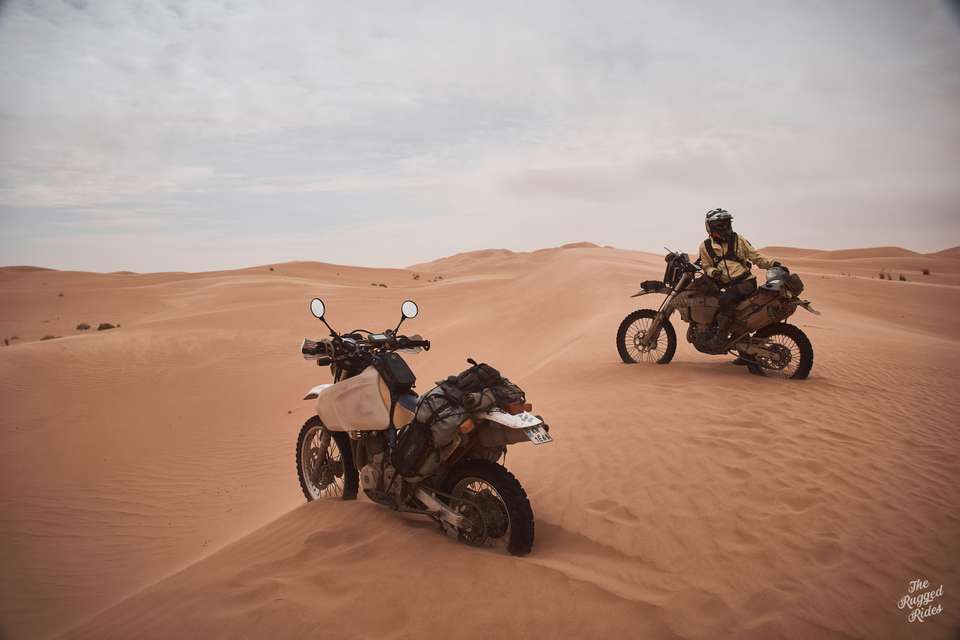
Time to get moving. I'm carefully checking how the DR feels carrying such an absurd amount of weight. It's far from perfect, and there's barely any room left to shift my body backwards, but it's manageable. With every kilometre we cover, the weight of the whole setup will drop.
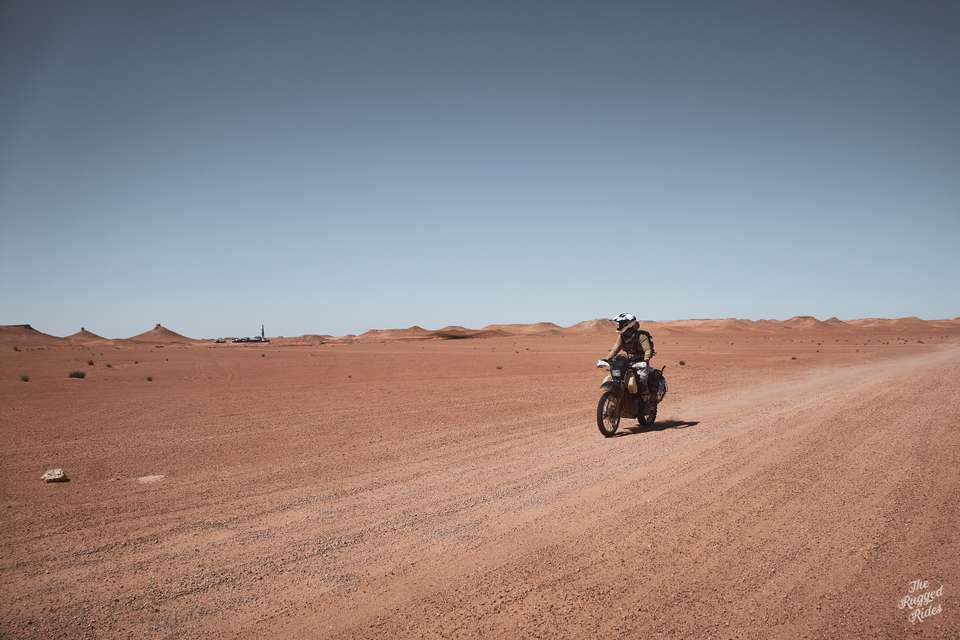
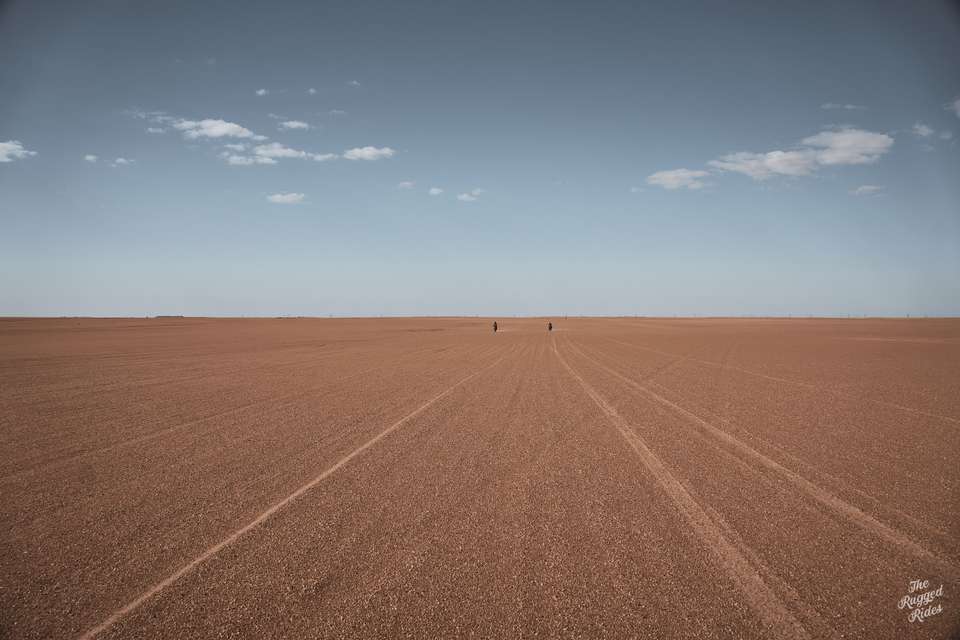
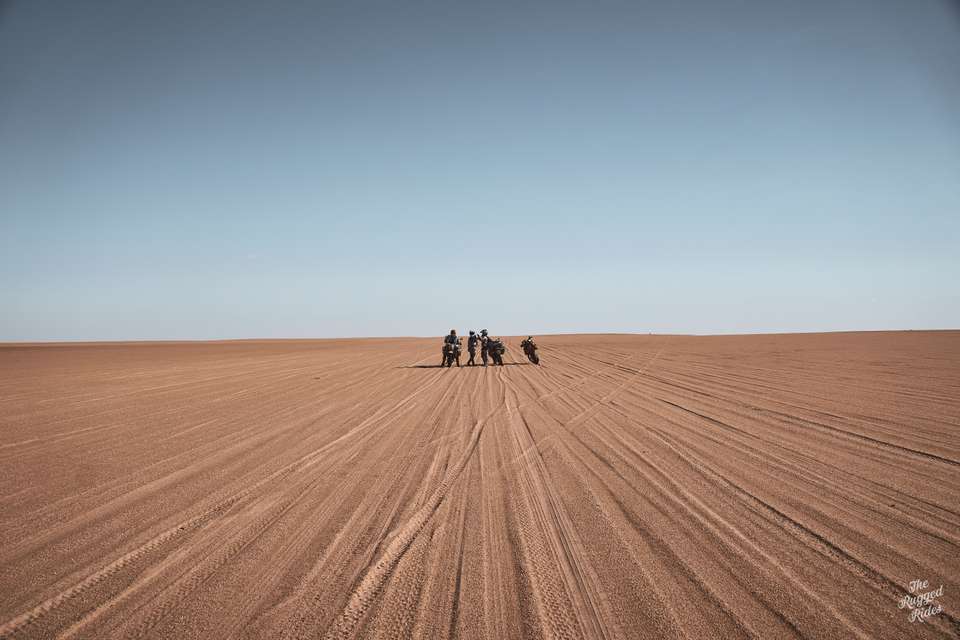
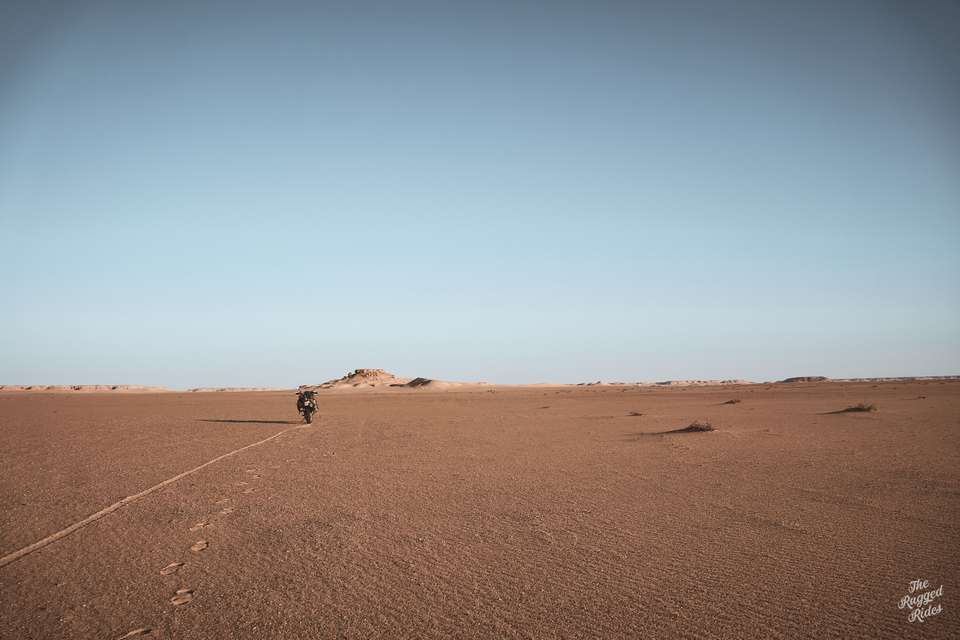
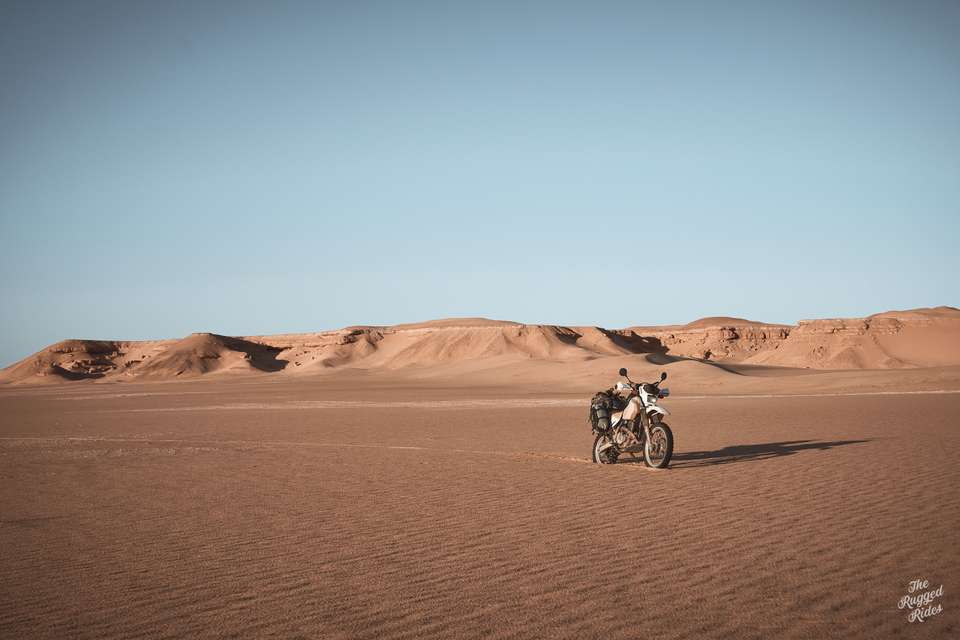
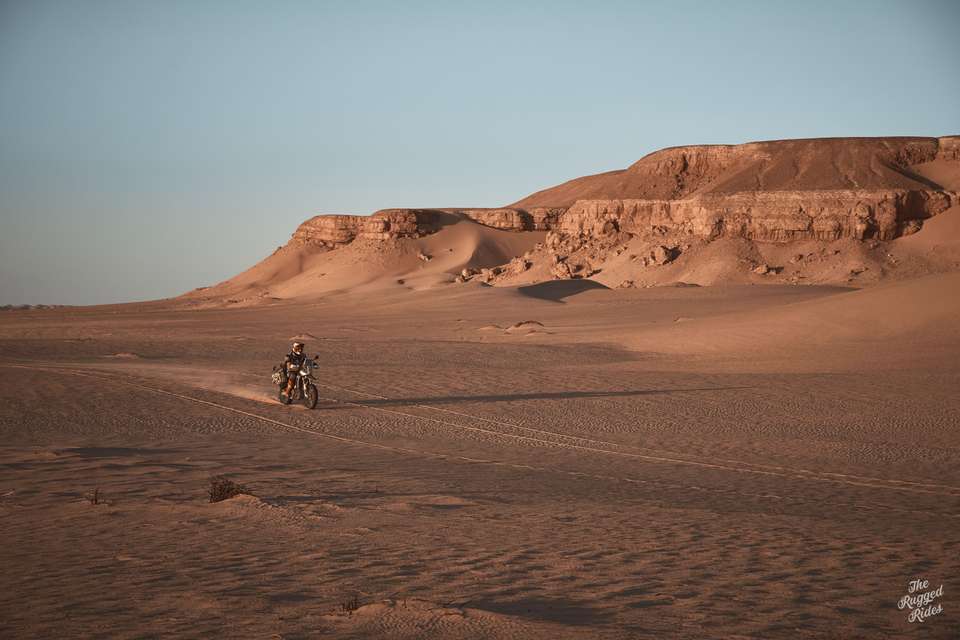
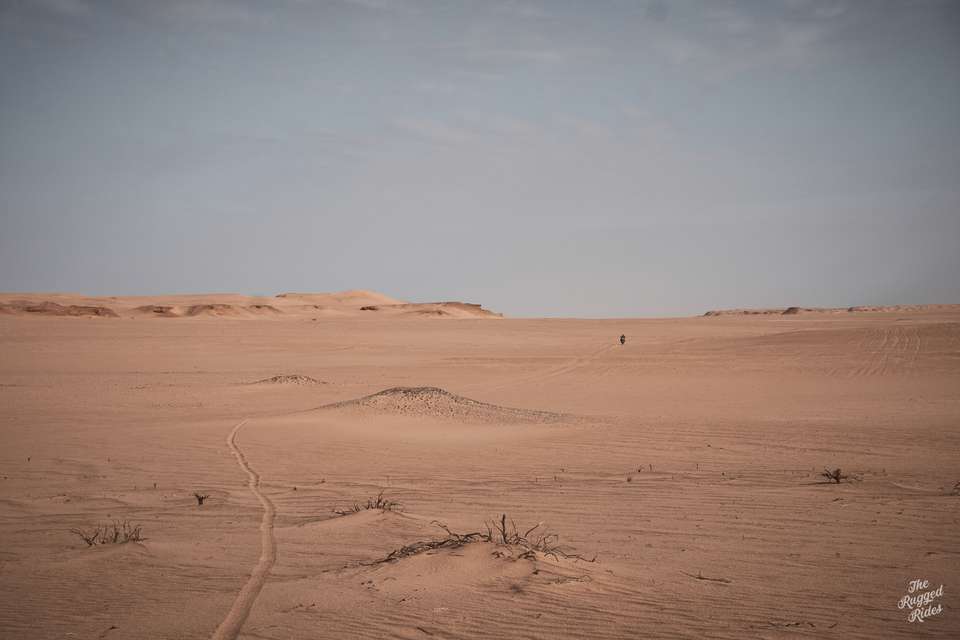
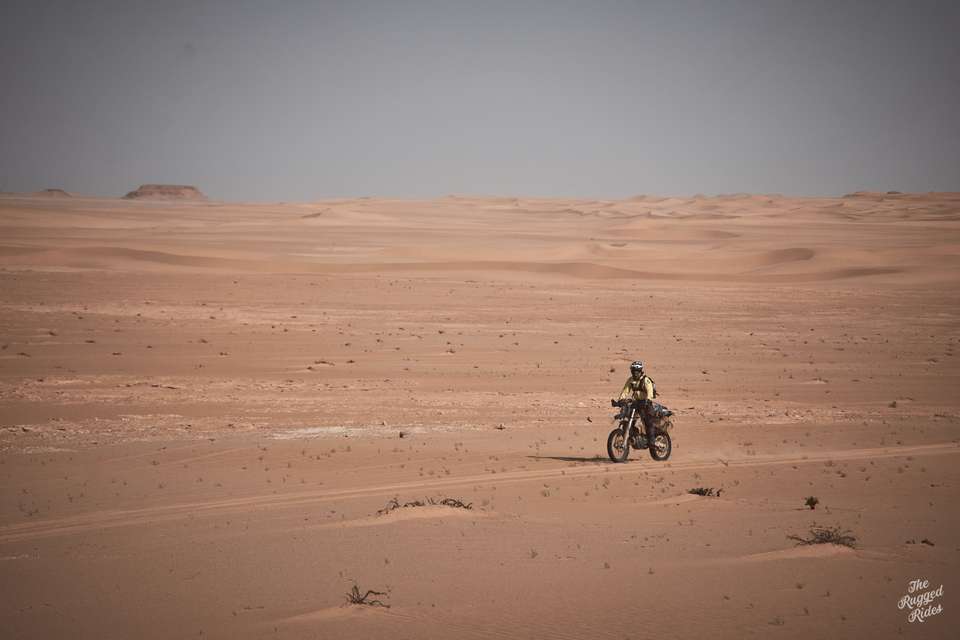
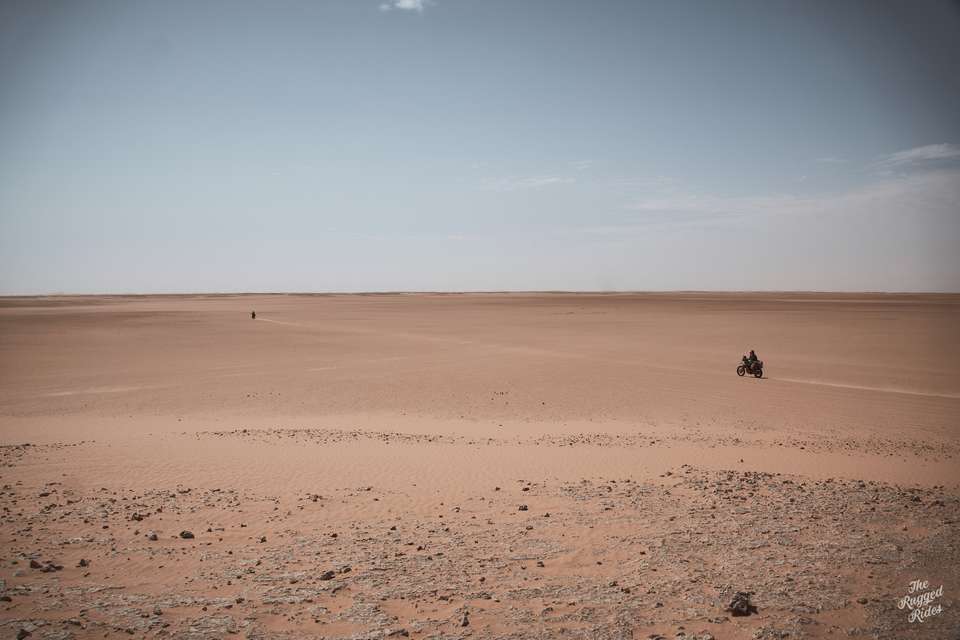
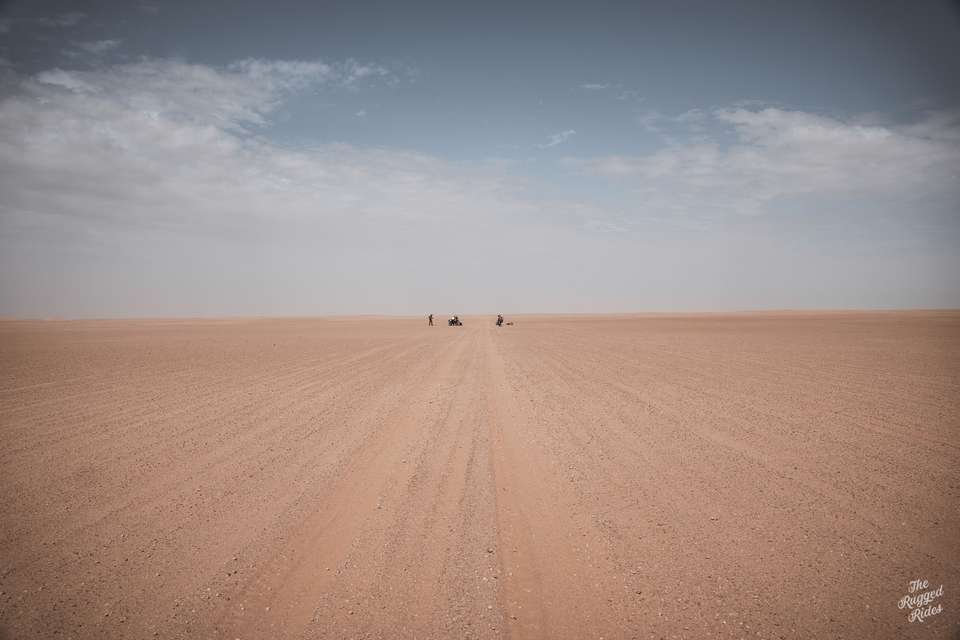
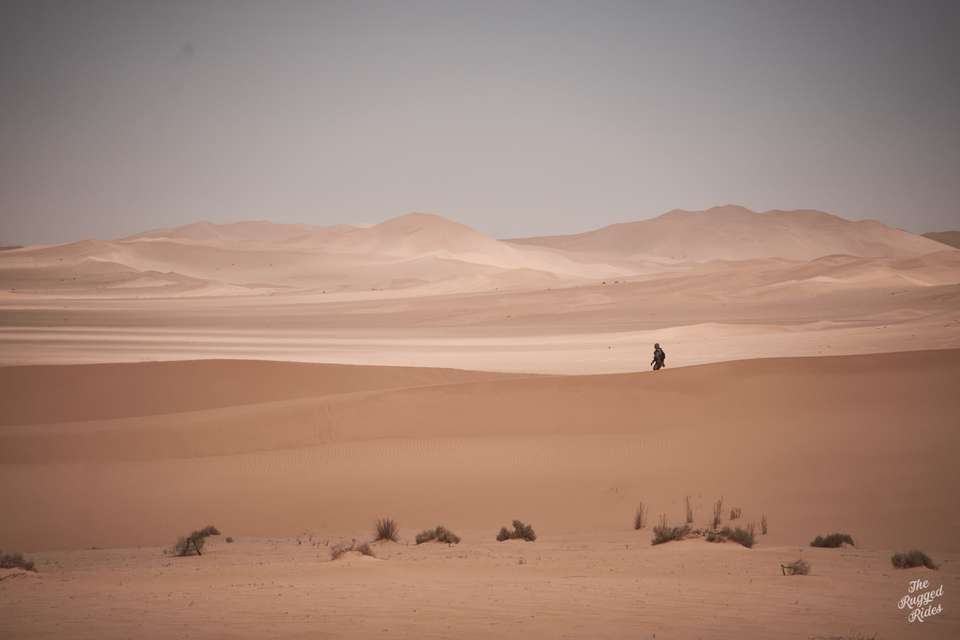
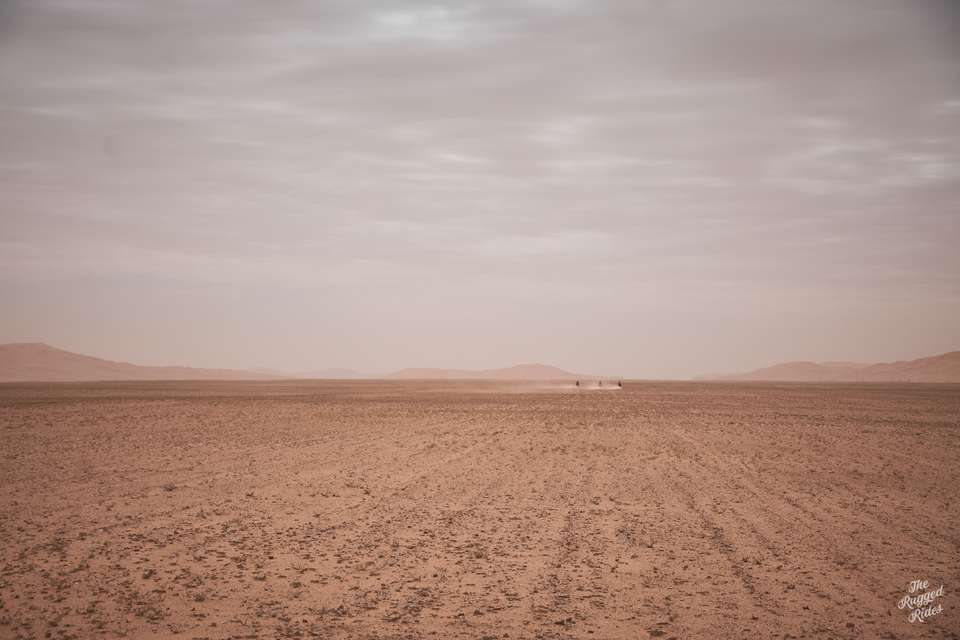
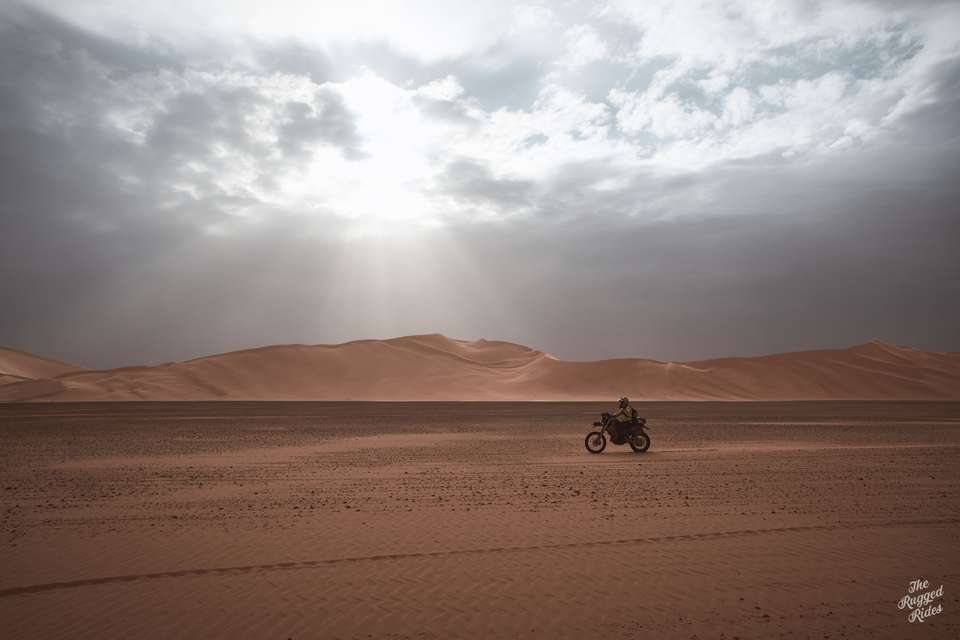
Now comes the most important moment, leaving the city behind and entering the empty immensity of the Sahara. It couldn't be easier. Nobody stops us. We ride freely through the palm groves and beyond. We turn south and... it literally takes my breath away. Ahead lies an absolutely flat surface of desert. Nothing. Absolutely nothing in sight. The earth and the sky are divided by a perfectly straight line stretching to the horizon. The sense of pure scale is mind-blowing! We throw ourselves forward, each of us disappearing into his own little trance for the first few kilometres. Eventually we regroup, everything falls neatly into place, and our queen stage has officially begun.
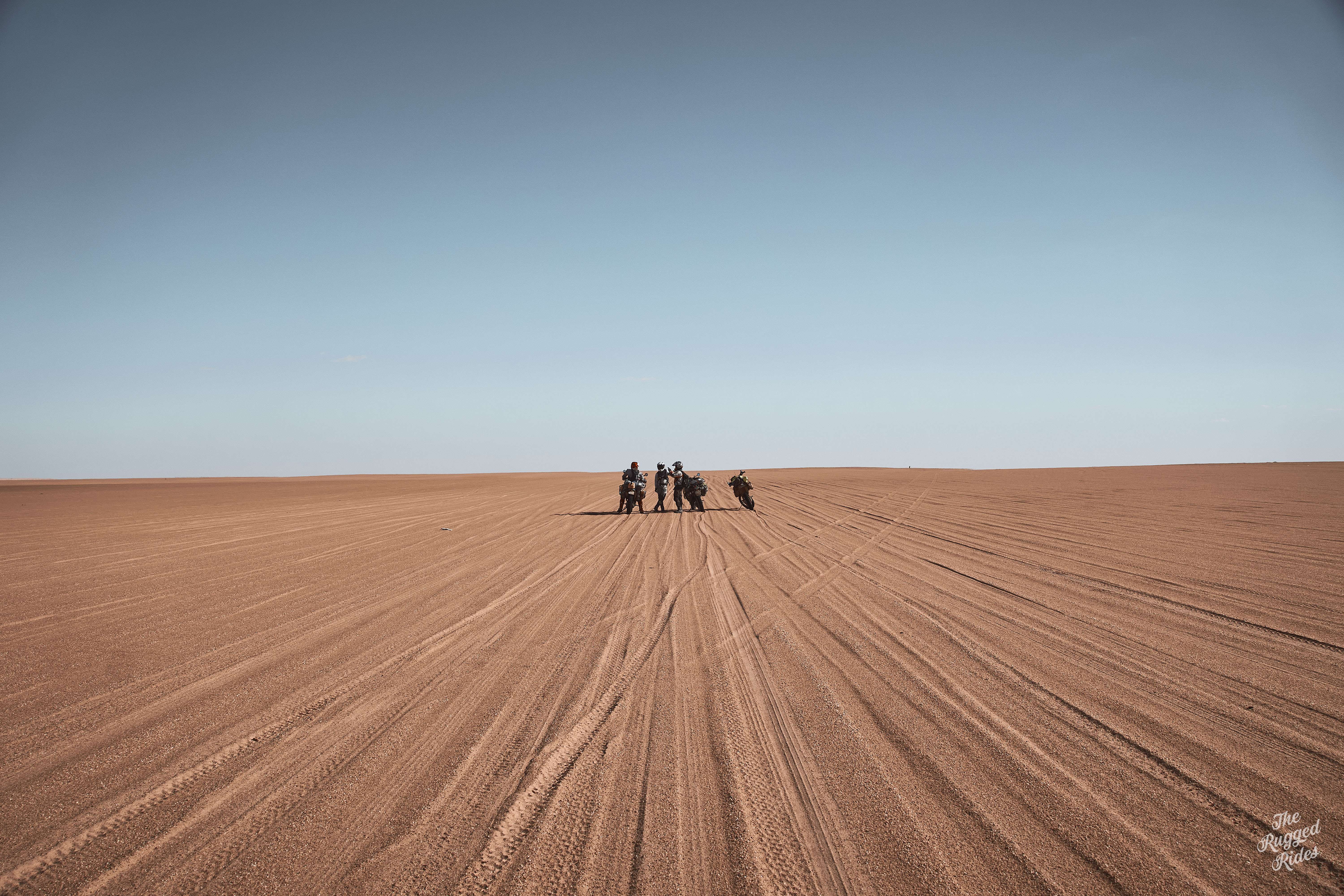
We have over 600km ahead to Bordj Omar Driss. The track cuts through the desert west of the Great Eastern Erg. Crossing the erg itself would be impossible for us in our current setup. For starters, there's no way we'd have enough fuel for the deep, powdery sand. A year earlier in the exact same erg in Tunisia, the KTM EXCs were consuming 10L/100km. Then there's second difficulty, the Eastern Erg is famous for incredibly soft dunes, the sand has a minimal grain size, and the bikes just sink into it like in flour.
Instead, we're planning to follow a corridor leading south-west. Dozens of parallel tracks run through it, most probably heading towards In Salah. We'll eventually break away to the south. From that point onwards, satellite imagery barely shows anything anymore, just faint hints and scattered pixels. Roughly 250 kilometres later we'll reach the beginning of the seifs. These "sand swords" - that's literally what the Arabic word means, are enormous, elongated dunes formed where winds usually blow from two opposing directions. The seif field we're about to tackle stretches for more than 200 kilometres, with most dunes standing over 150 metres high.
And that's where we'll have to make our decision. Based on our fuel consumption, supplies and overall pace, we'll either press on or turn back. Once we enter the seifs, there's a point of no return. Not because of courage, but because of fuel. And there won't even be any possibility of escaping sideways towards the tarmac, roughly 100 kilometres away, because the dunes simply won't let us pass.
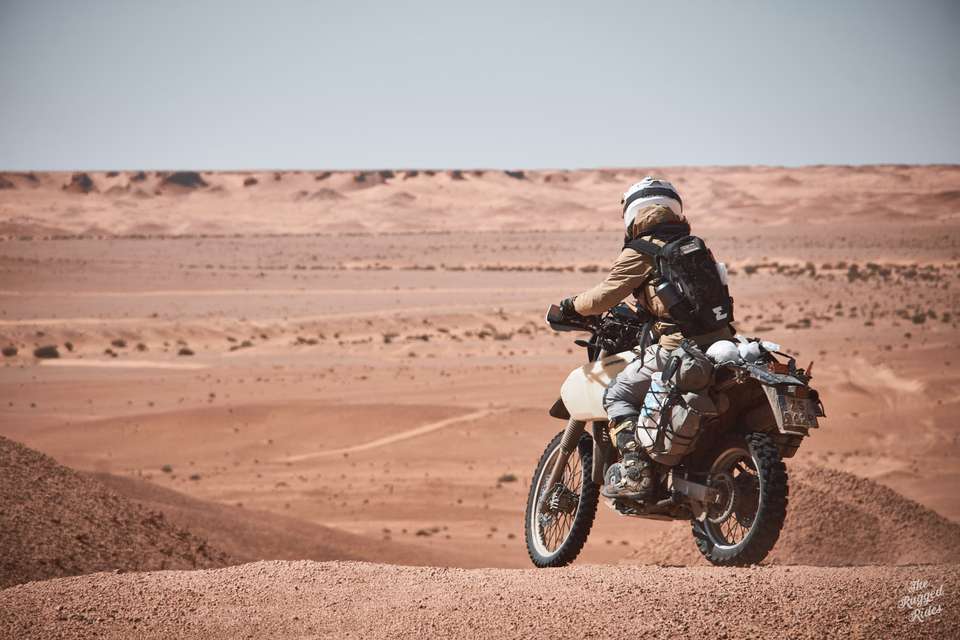
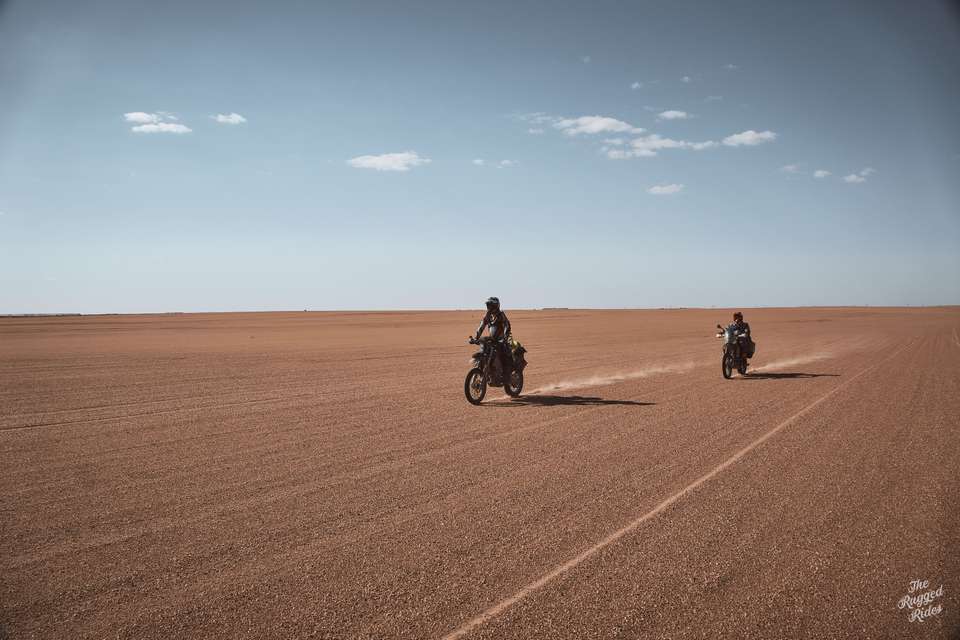
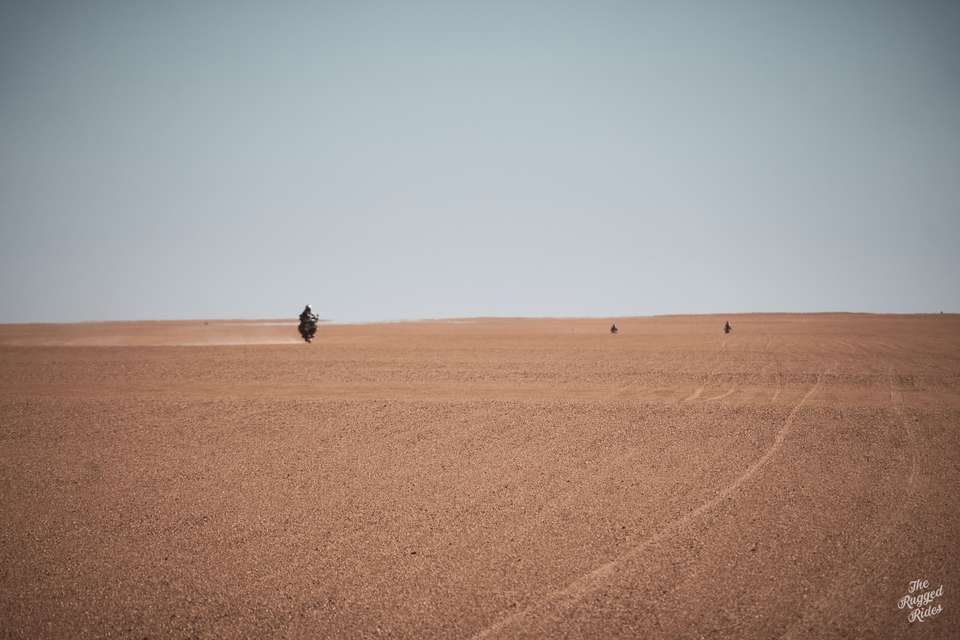
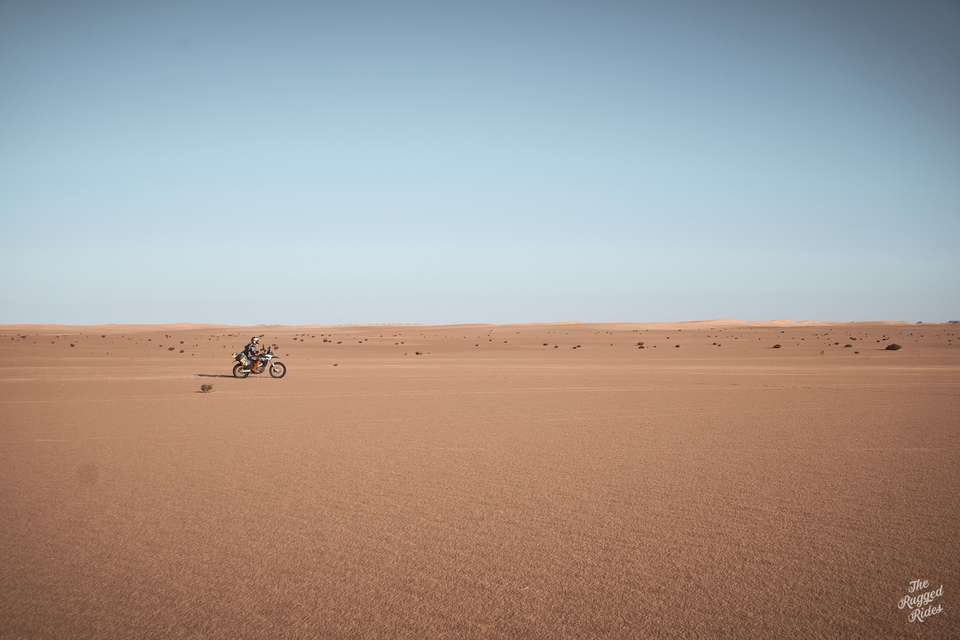
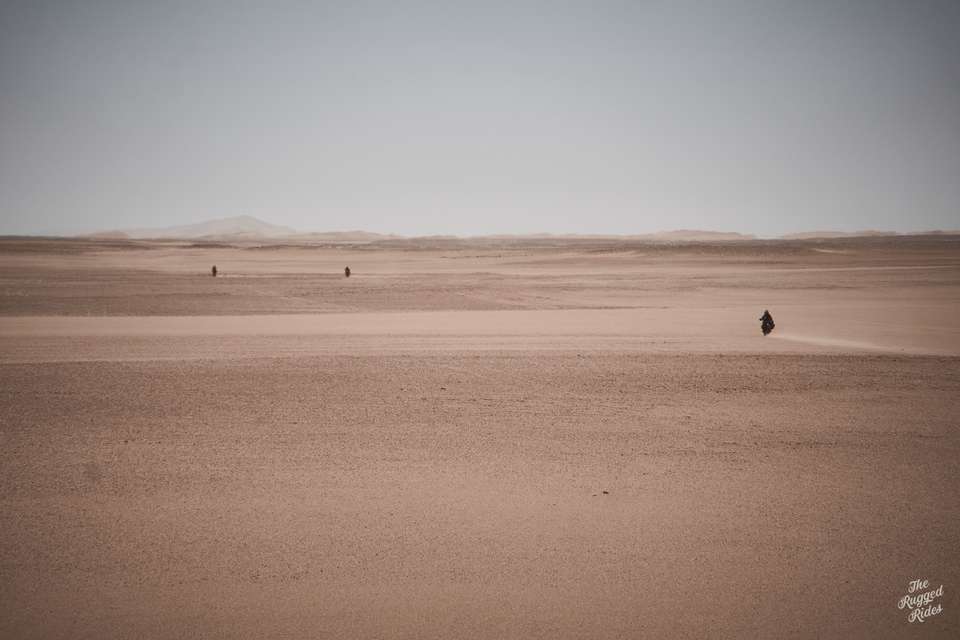
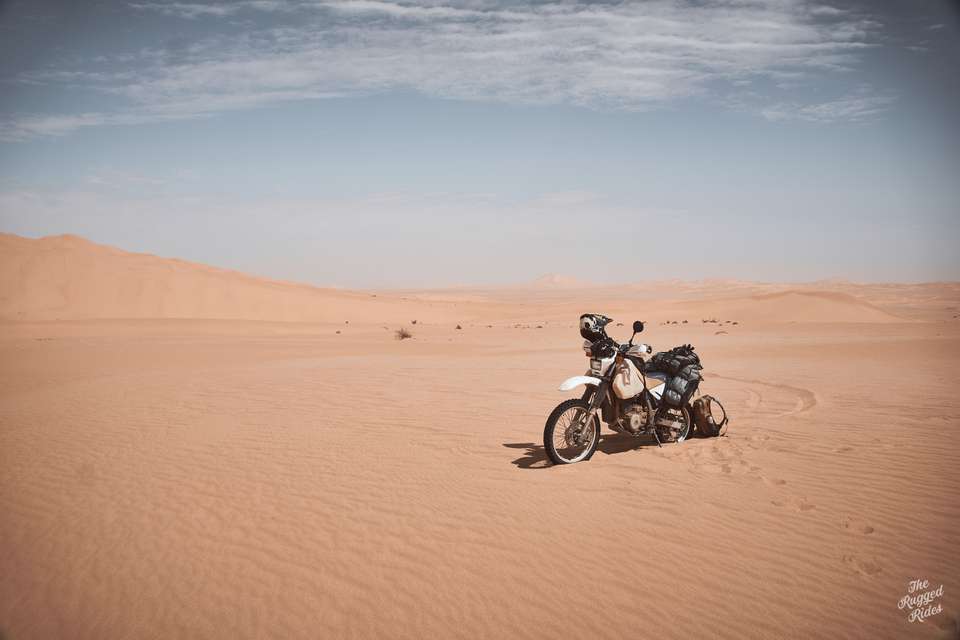
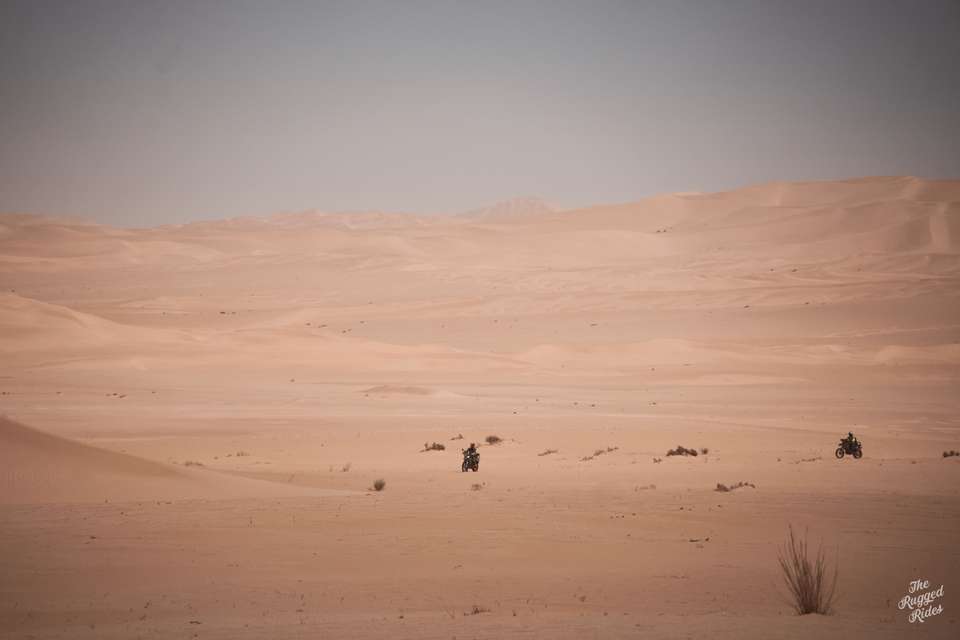
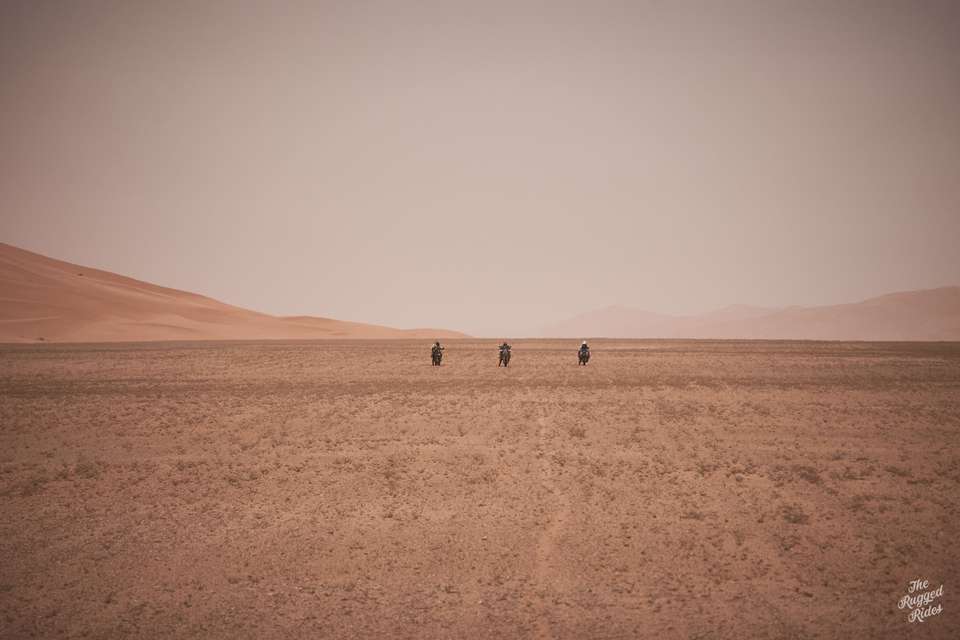
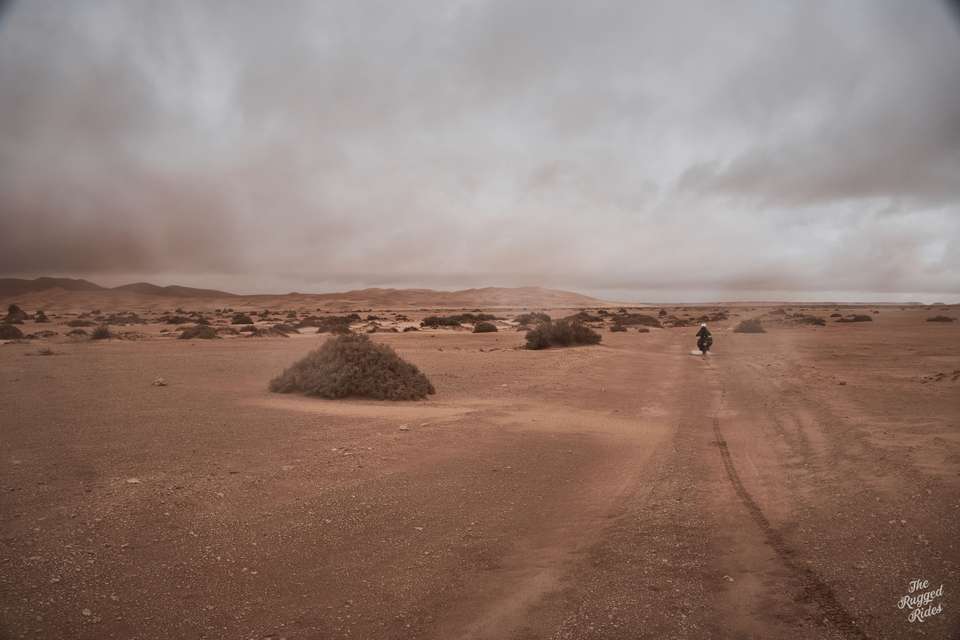
For now, there's more and more sand around, forming ridges and deep ruts. With the sun hanging low, I settle into a steady rhythm, trying to be smooth on the throttle and picking the optimal line to avoid camel grass and small mounds, all to save fuel. In this absolute infinity surrounding me, a strange anxiety creeps in when everyone vanishes one by one. Everyone's chosen a slightly different line, spreading ourselves several kilometres apart, sometimes even out of a radio range. The main thing is we're on the same track, so getting lost isn't really on the cards.
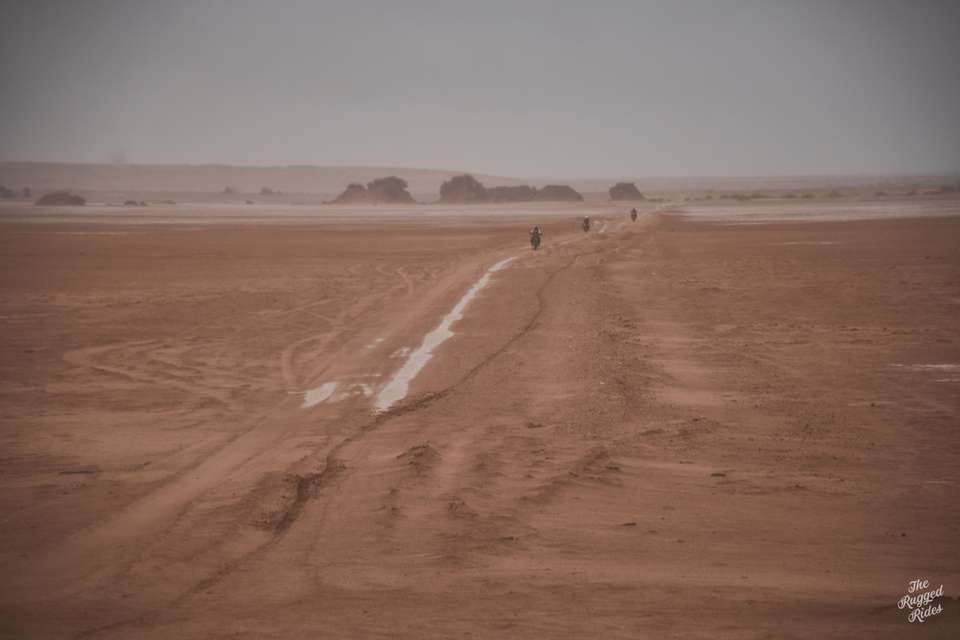
Right after leaving Ouargla, I spot some isolated cars, maybe two or three times over the first few kilometres. Then... nothing. We leave the main piste and head south, and every trace of civilisation disappears. We alternate between slightly elevated rocky ground and huge flat patches that look like dried lakebeds. Those are particularly nasty, soft and boggy beneath the surface. I try to keep momentum, but I still end up dropping into fourth, sometimes even third gear. The DR isn't an LC4. It doesn't have that brutal punch. I start worrying seriously about our fuel range. If every soft section is going to be this much of a fight, how many litres are these bikes going to swallow? I keep searching for the perfect line, but there simply doesn't seem to be one. Every time, you just have to grind your way through.
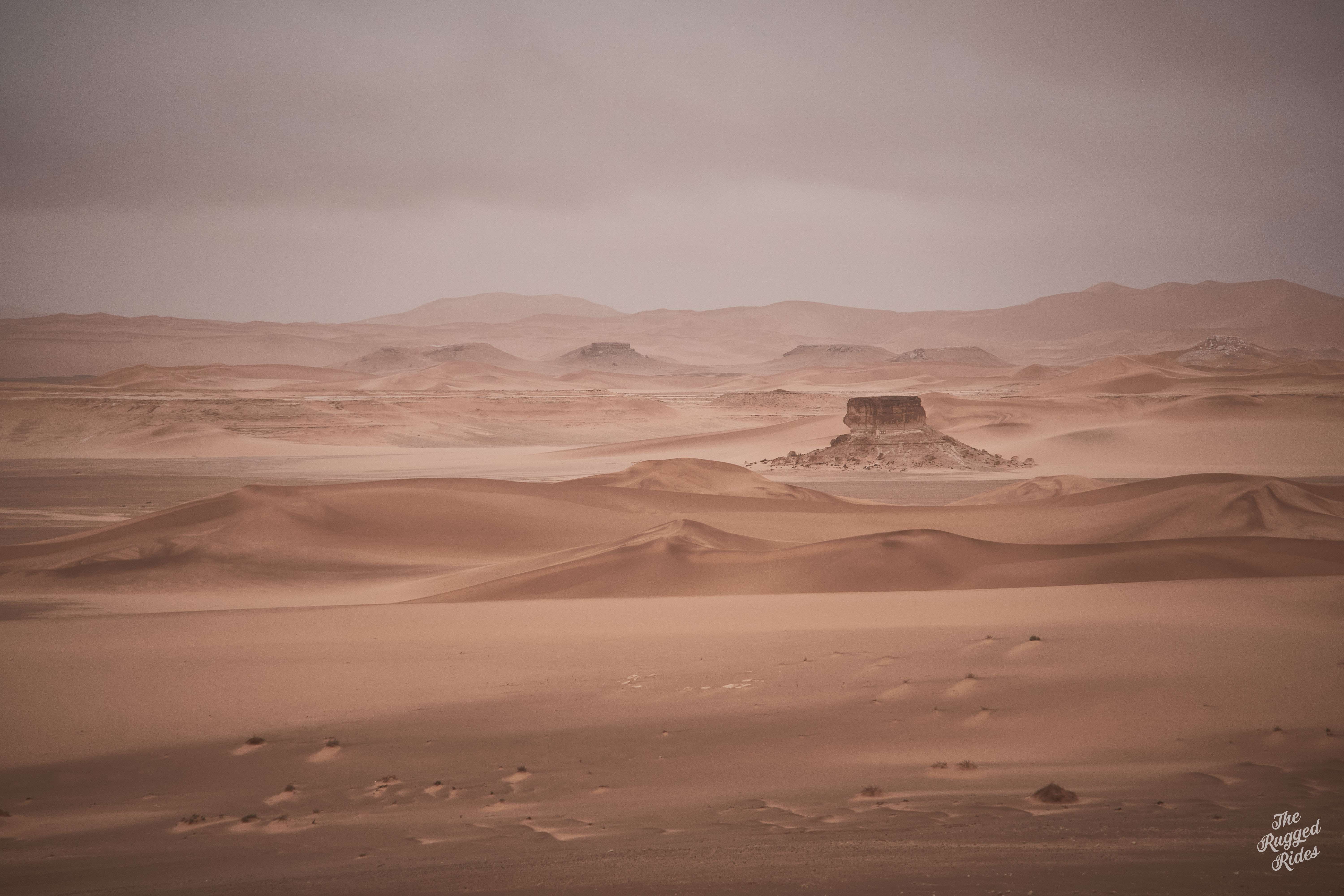
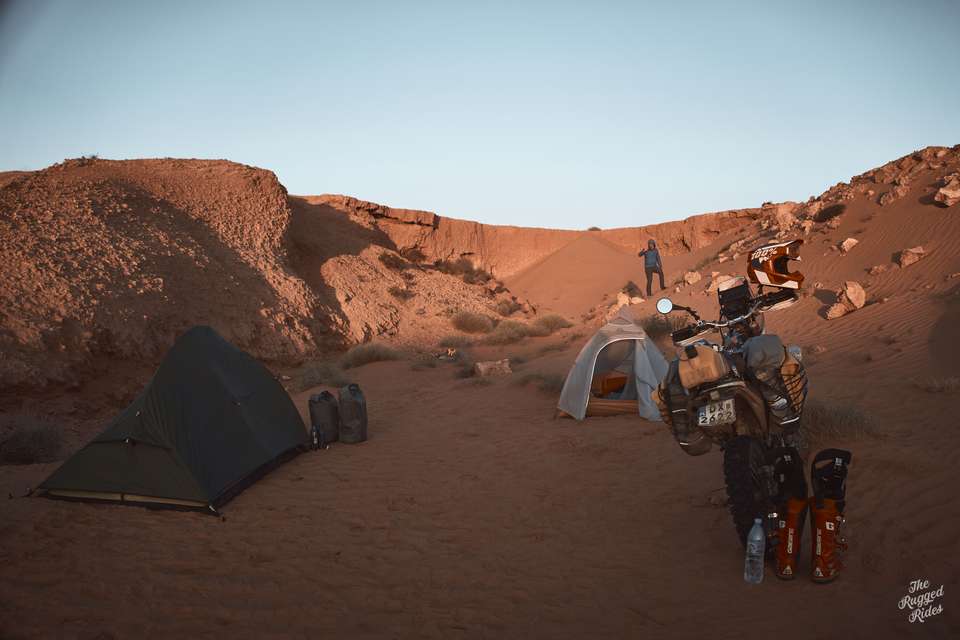
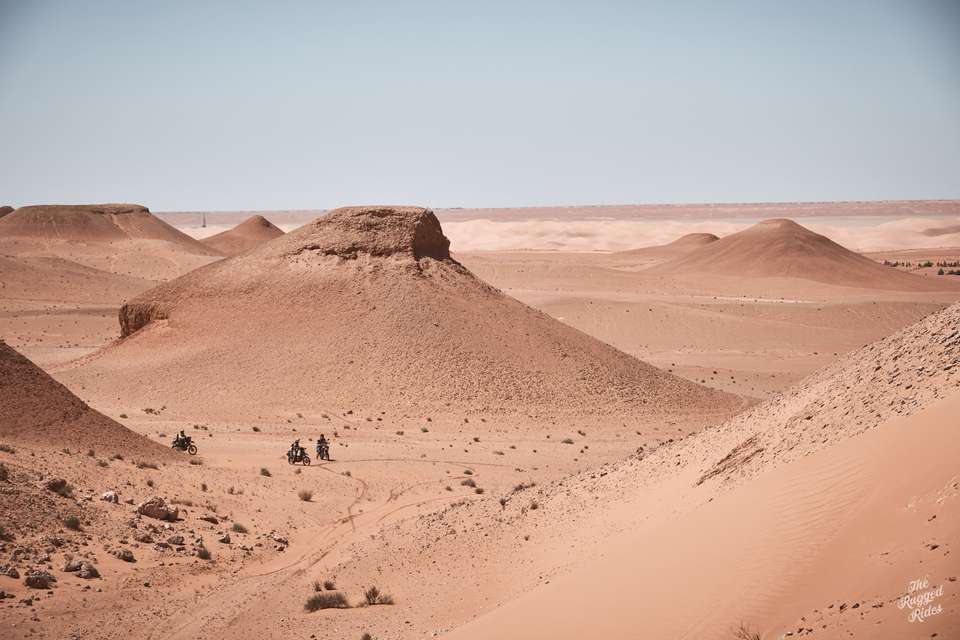
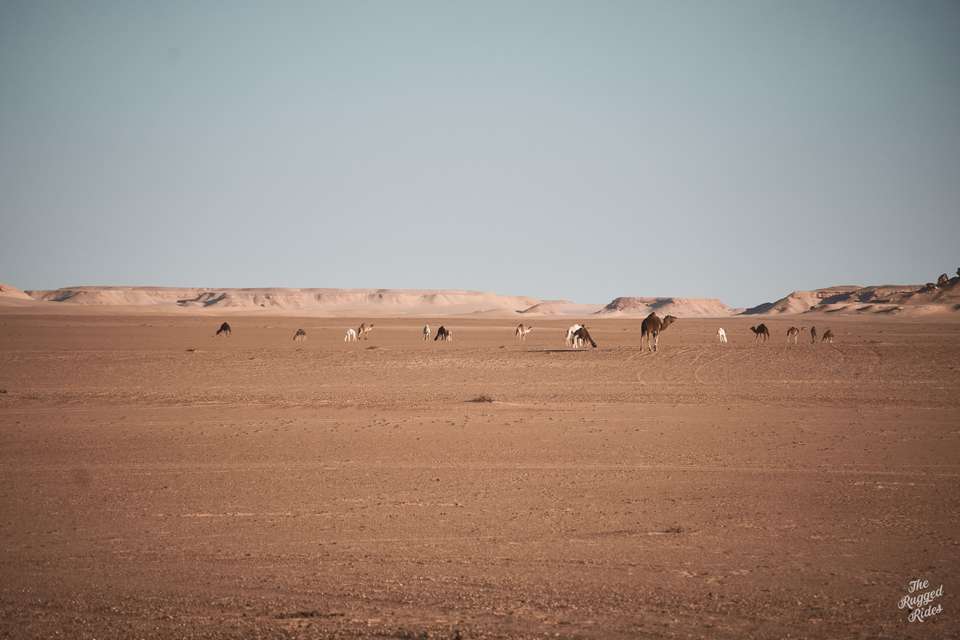
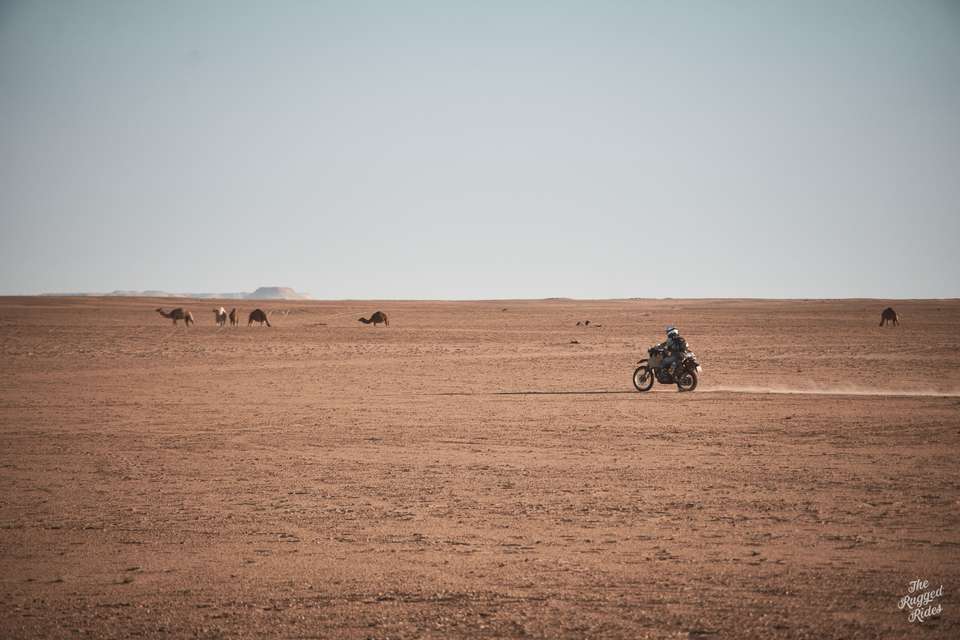
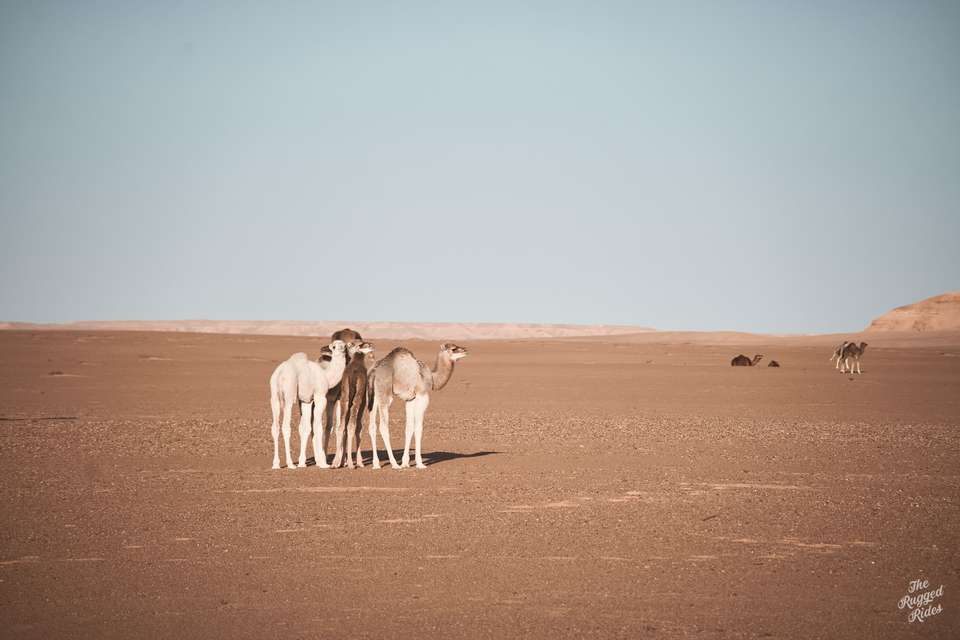
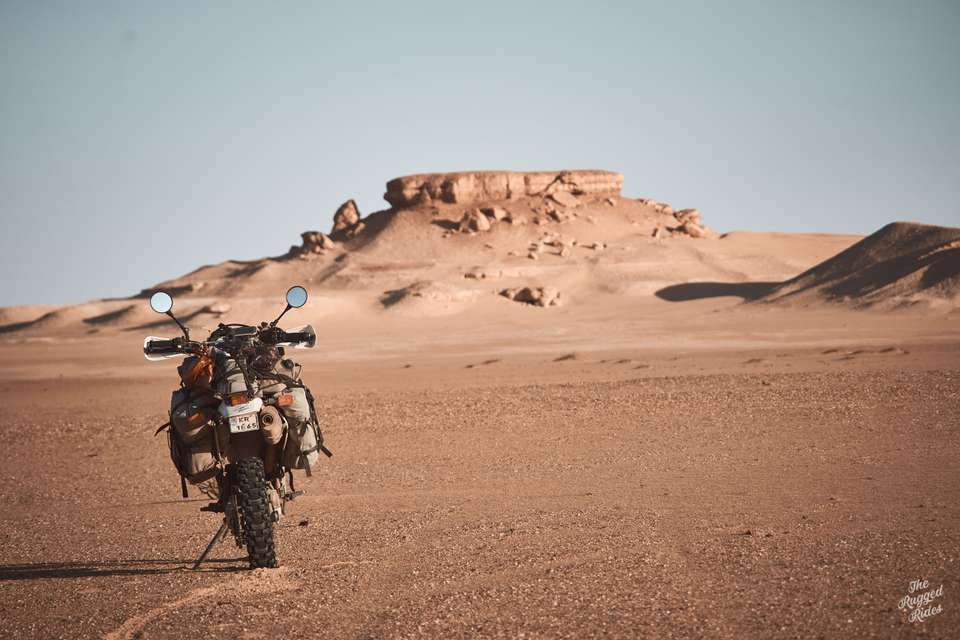
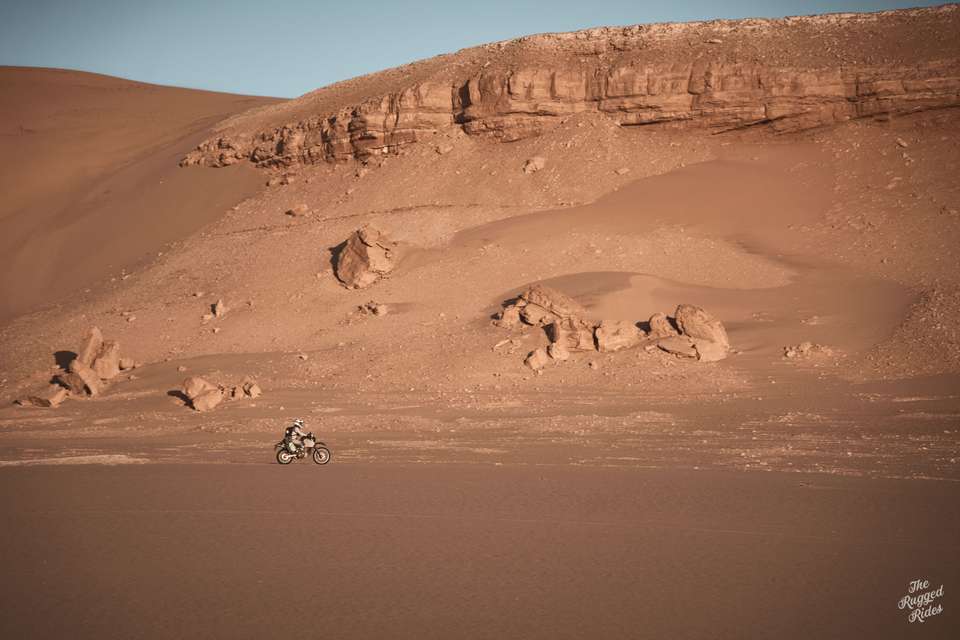
I'm suddenly snapped out of these tangled thoughts by the view ahead. A herd of camels. Behind them, broken fragments of a plateau rise from the desert – isolated rock formations, the buttes. The whole scene is bathed in the warm gold of the setting sun. This is exactly why I came here. Algeria is slowly beginning to seduce us with its greatest treasures. We take dozens of photos before finally pitching camp. Bivouac is located against the sheltered side of a dune to escape the strengthening wind.
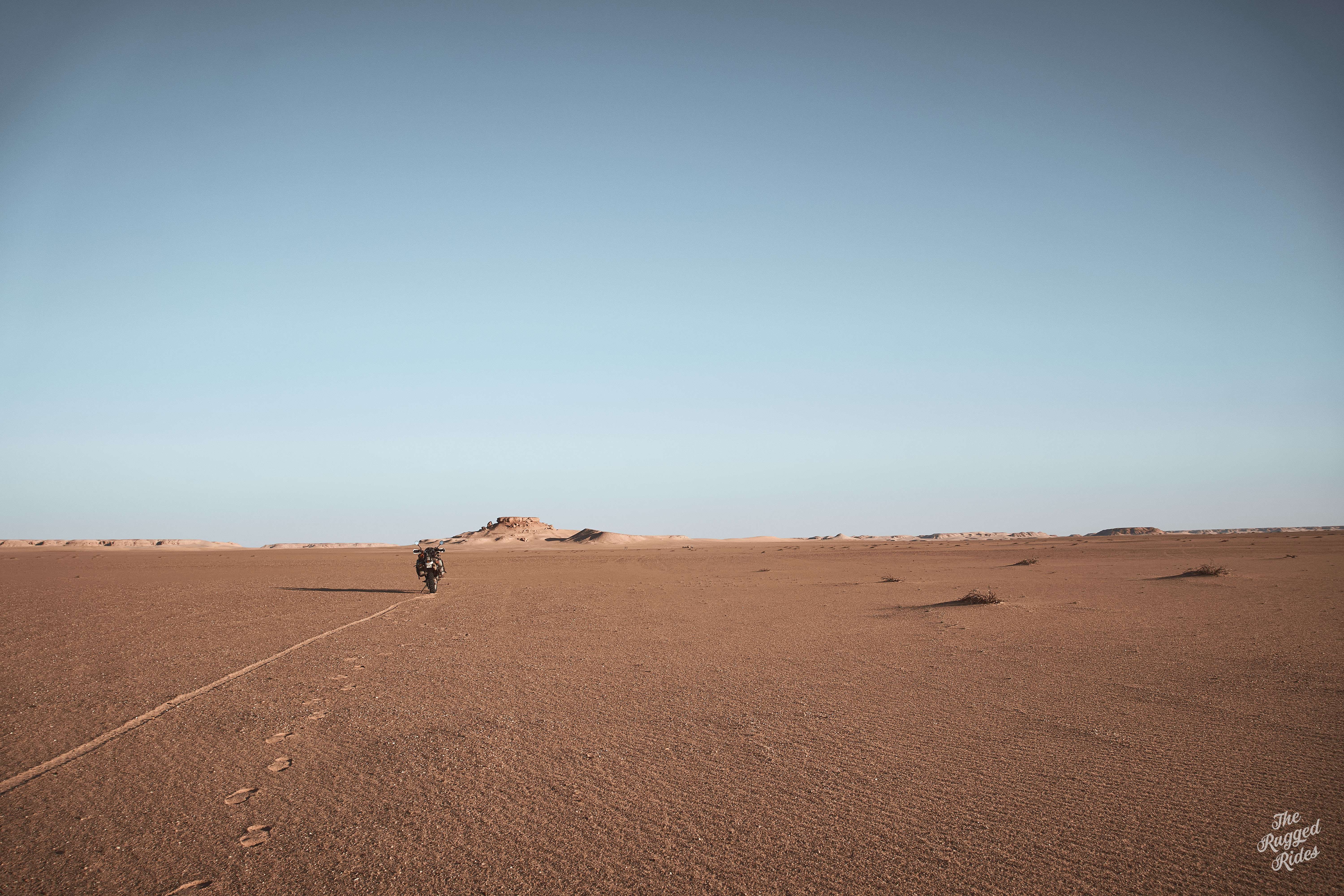
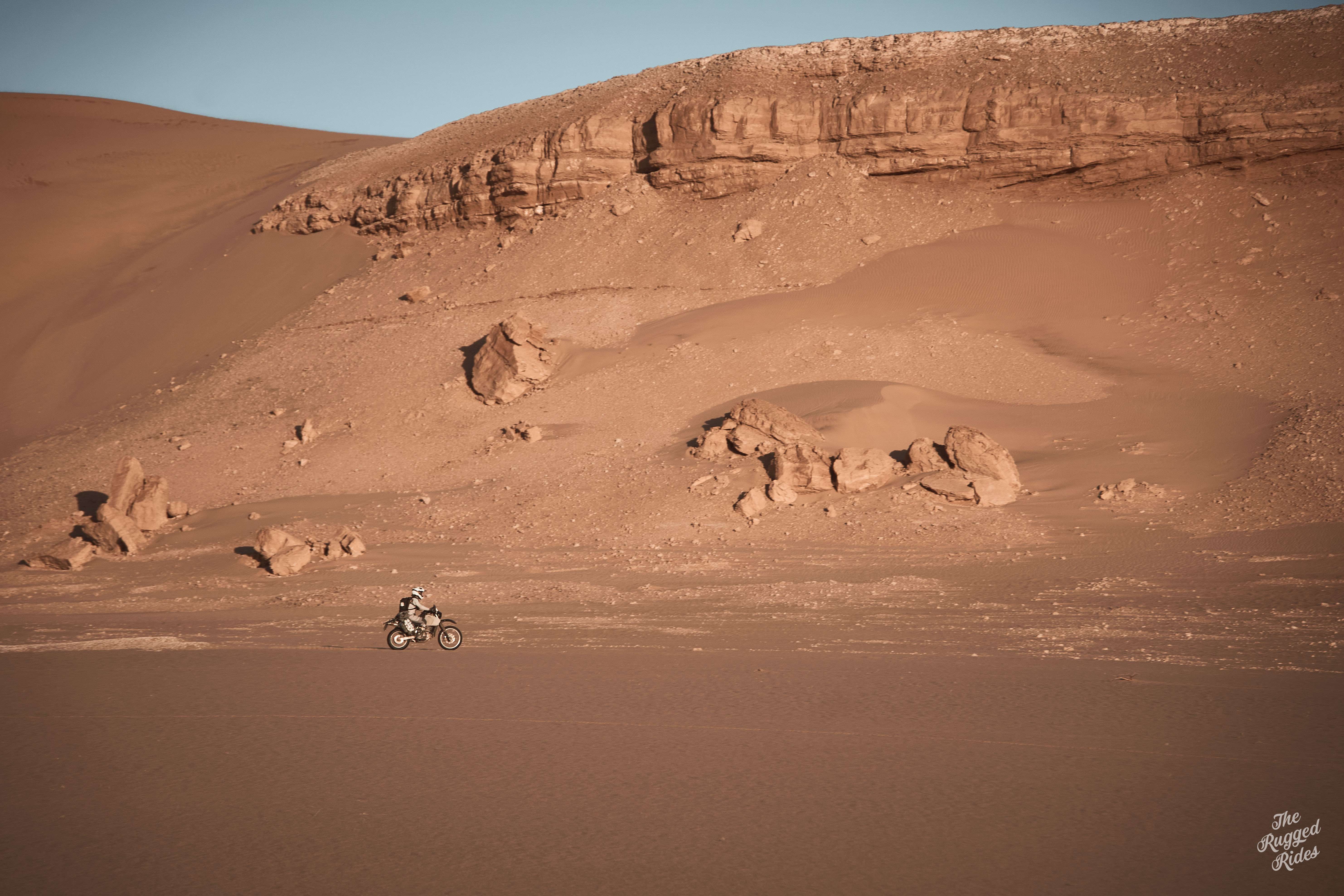
We set the tents up in no time and hike onto the dune to watch the sunset and immerse in everything unfolding around us. Then we catch the unmistakable smell of petrol. Surely not... Unfortunately, two more fuel bladders are showing signs of leaking. They're not dripping, but they're sweating. We unclip them from the bikes and stand them upright so the leak sits above the fuel level. We check tomorrow's distances on the track and request a weather forecast from the Garmin. Still got a long way to go, and tomorrow evening thunderstorms are forecast. Things are getting interesting, properly adventurous. Naturally, we decide we're carrying on. The point of no return is at the entrance to the seifs... and none of us is even thinking about turning back.
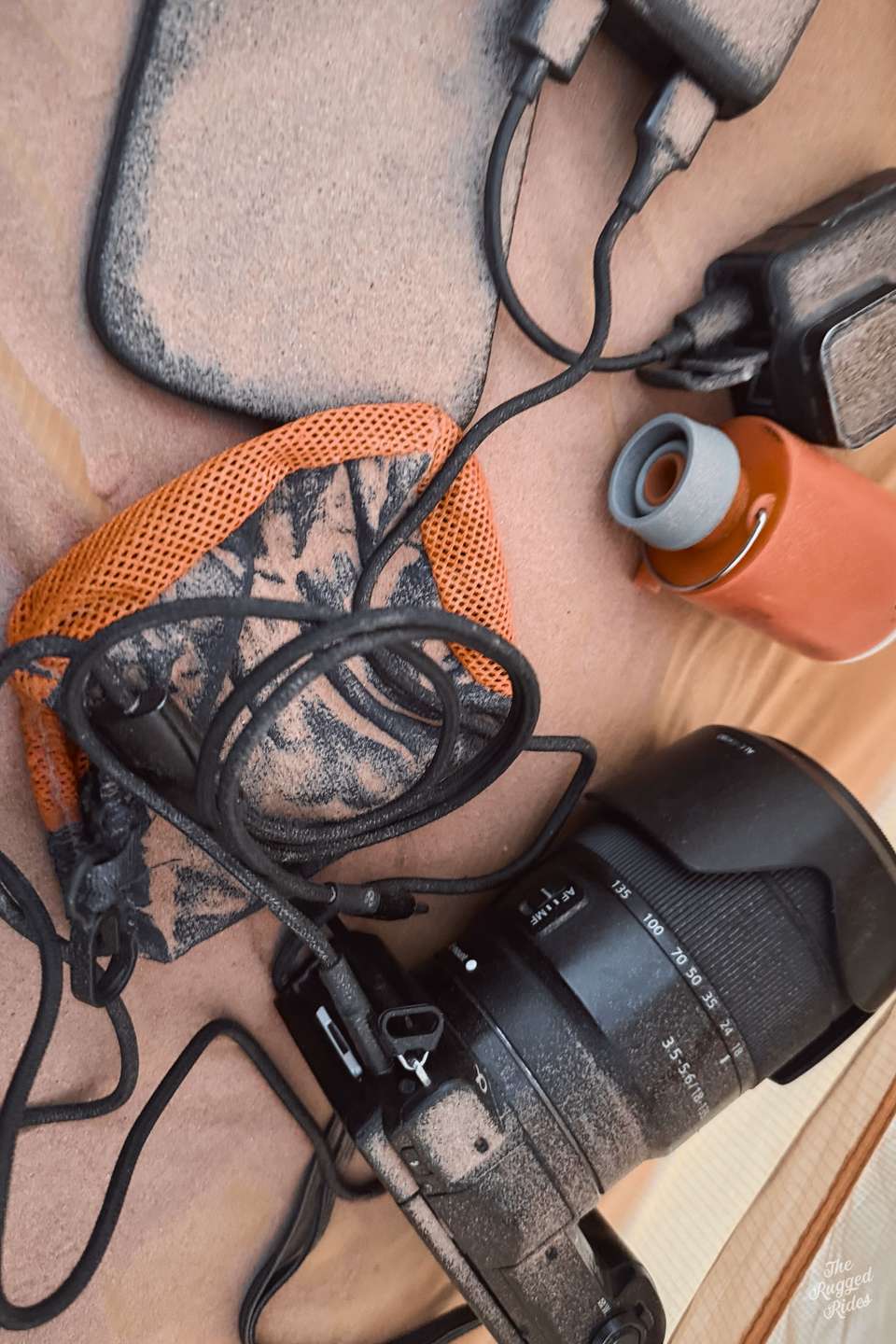
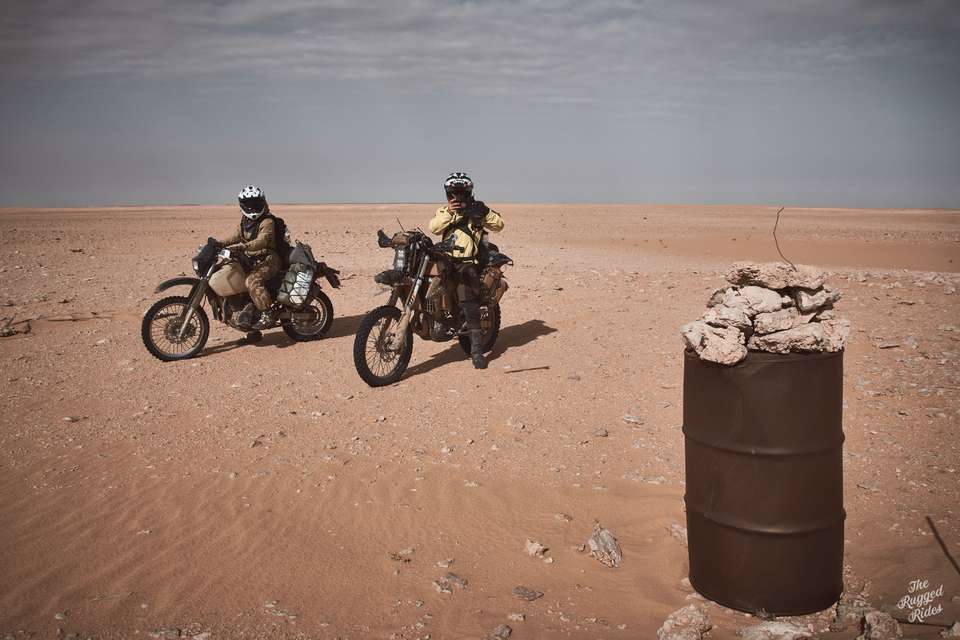
The wind absolutely hammered overnight. I wake beneath a thin layer of sand. Everything is covered in sand. Well... everything inside the tent, at least. We set off early. We aren't far from climbing onto the plateau, and we're crossing our fingers that the boggy bits are behind us, expecting things to get rockier. True enough, the ground hardens up, a few faint tracks reappear, and the route is marked by old oil drums. We transfer the fuel from the bladders into the tanks. Success. We haven't lost any. We're still in the game.
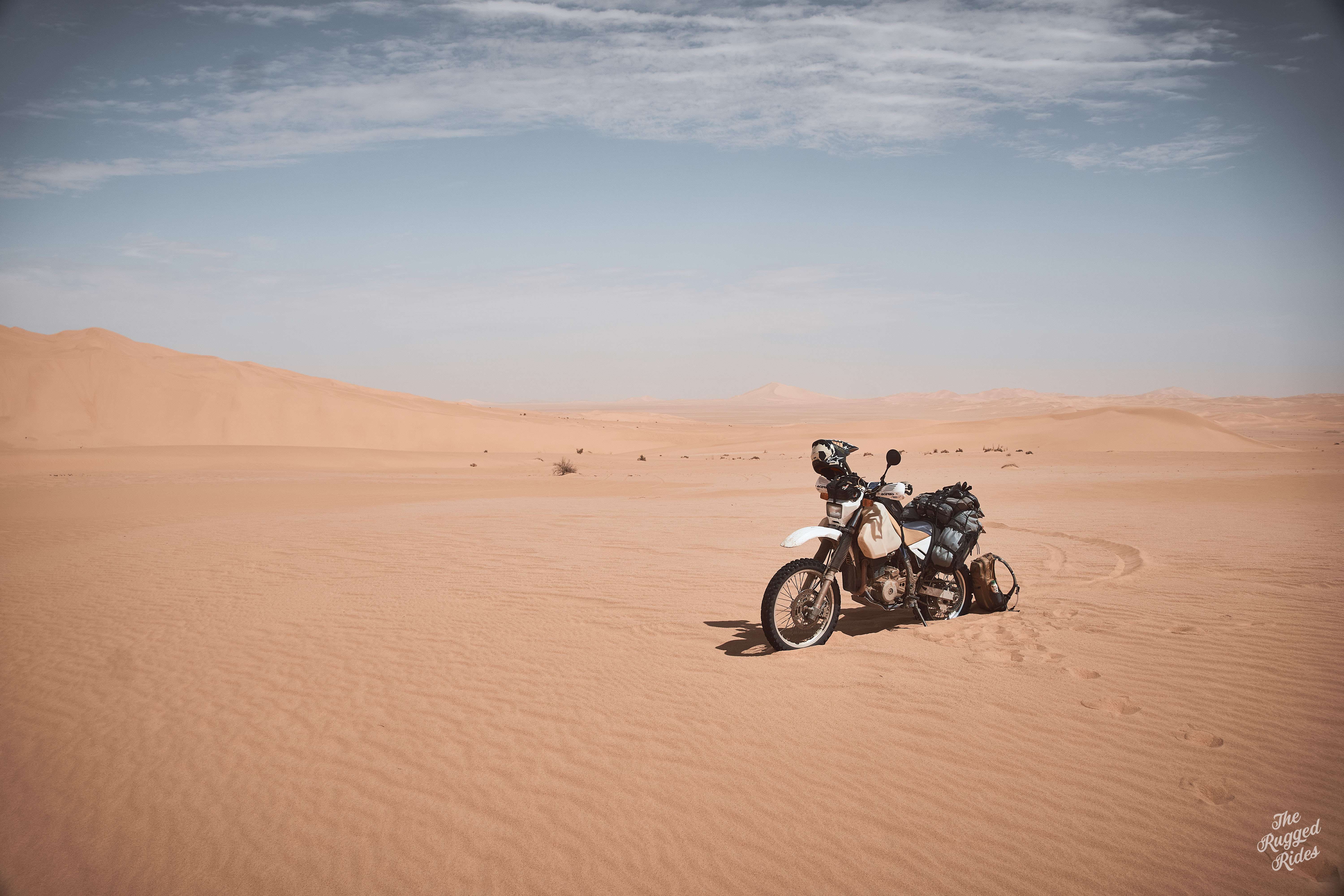
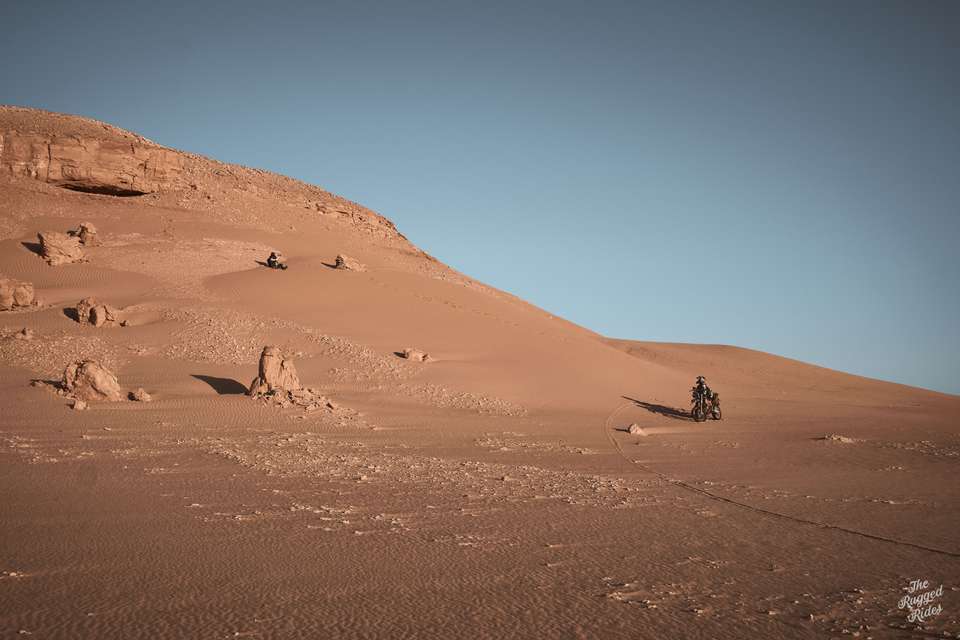
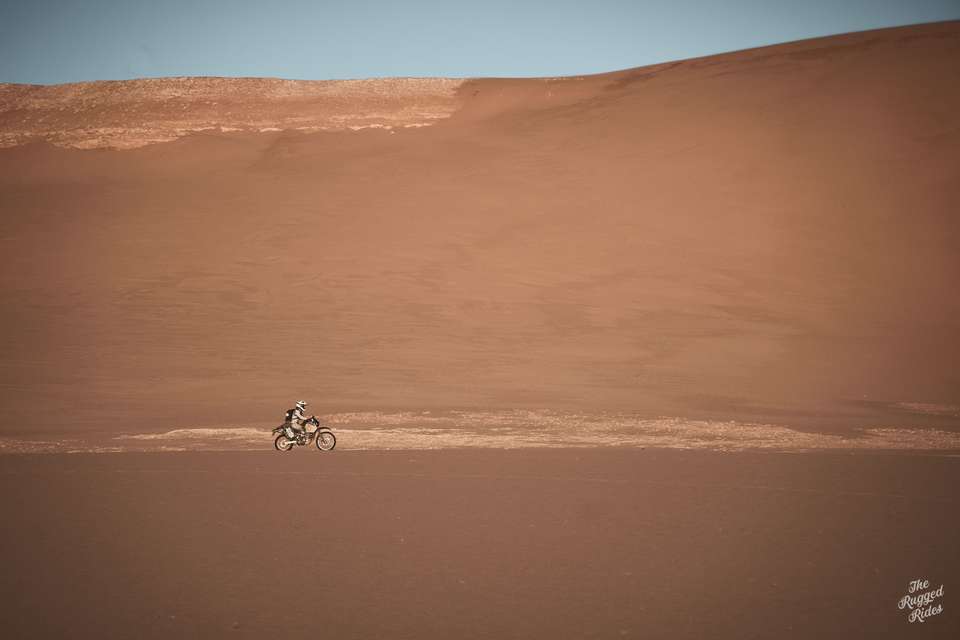
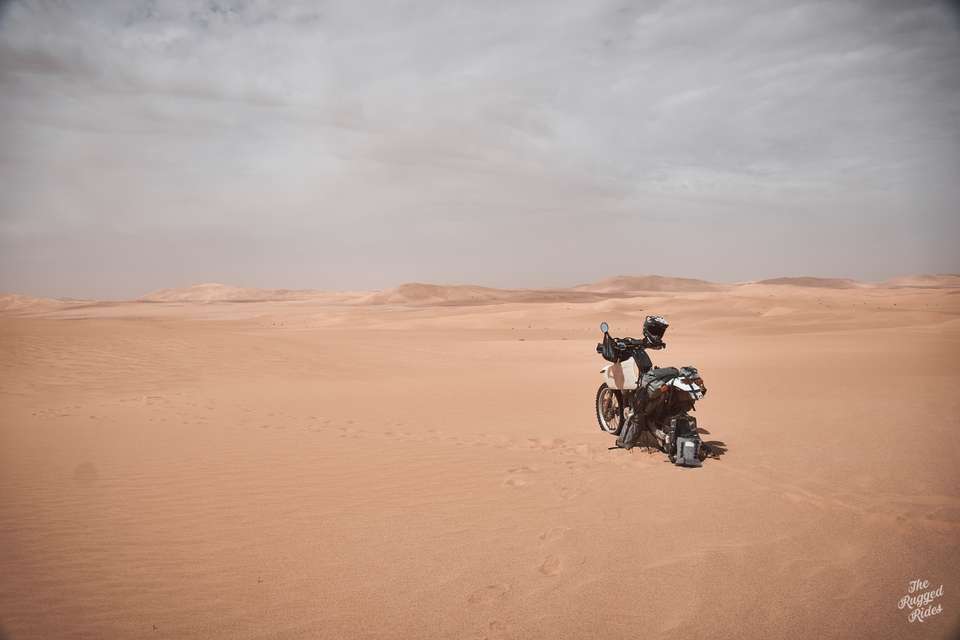
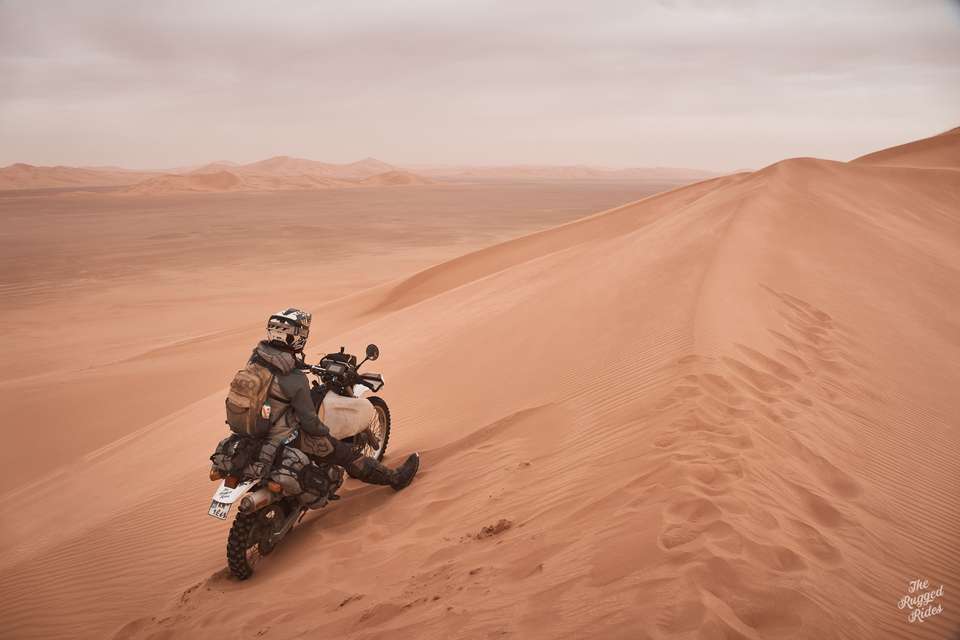
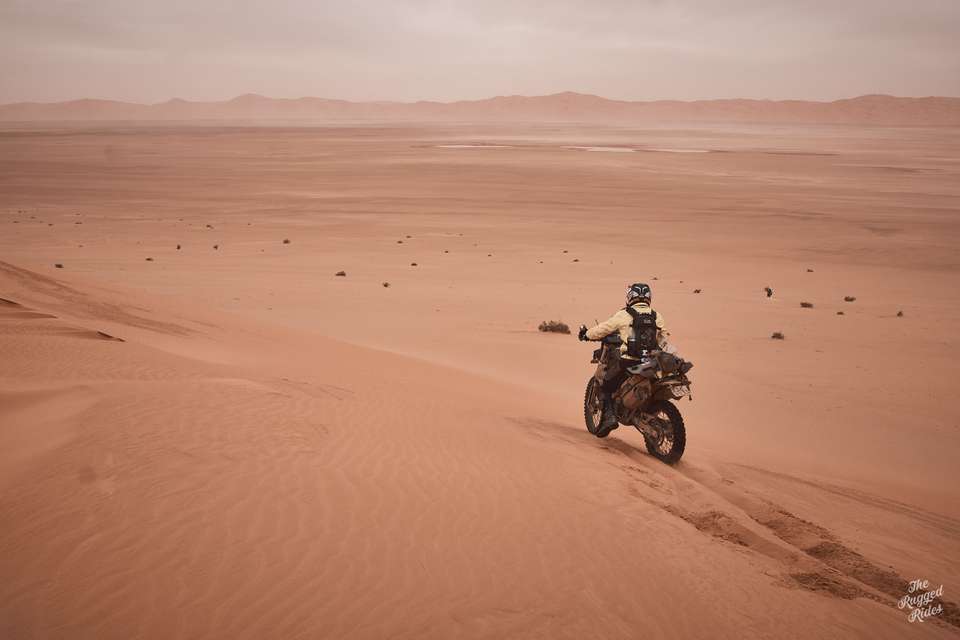
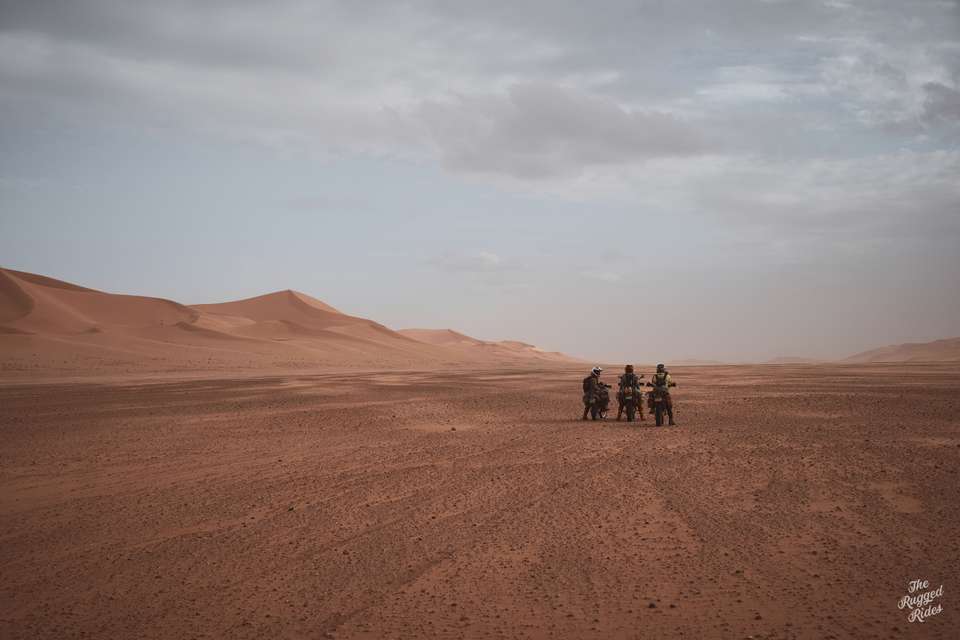
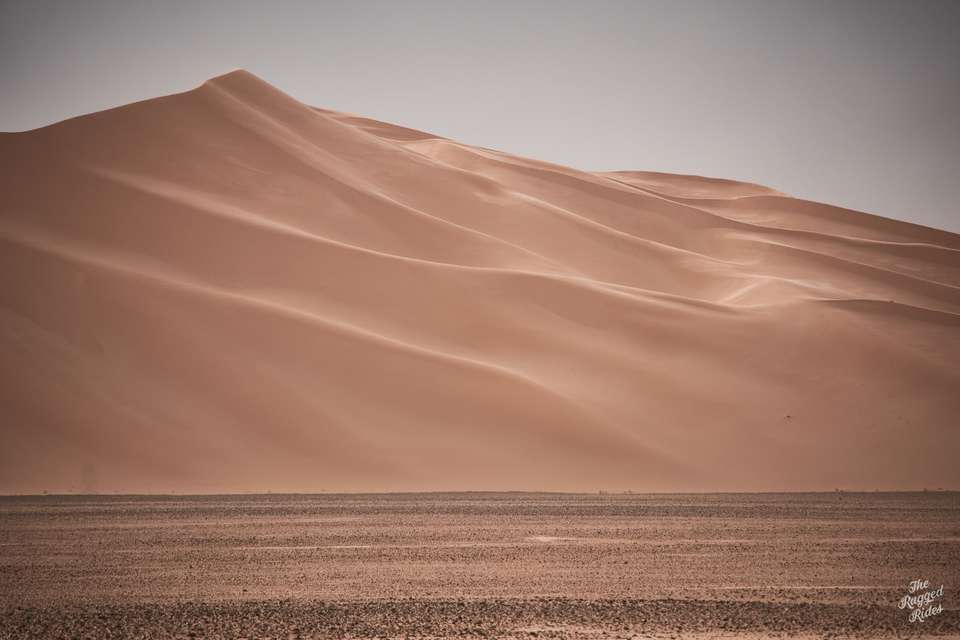
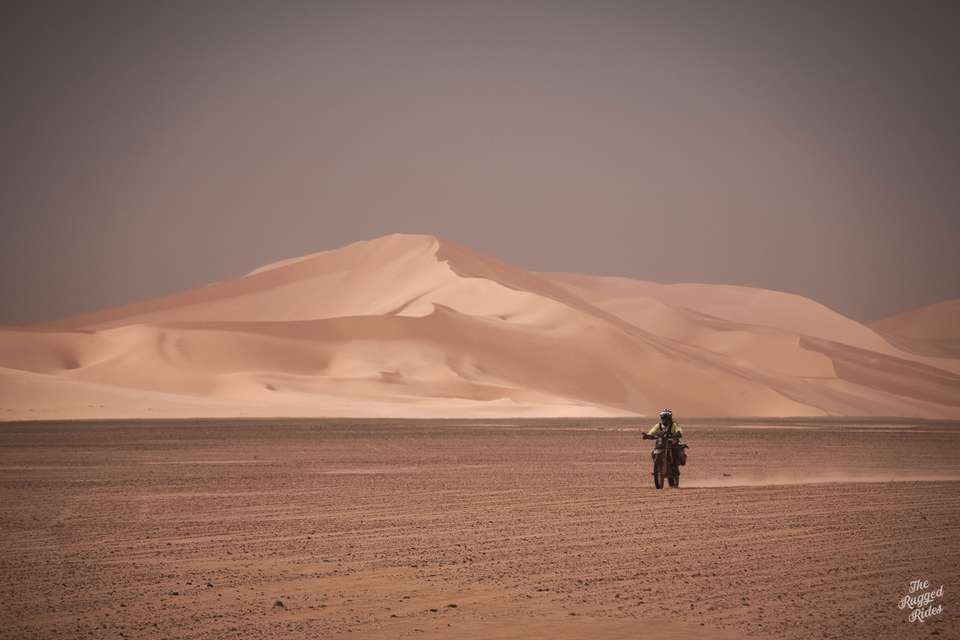
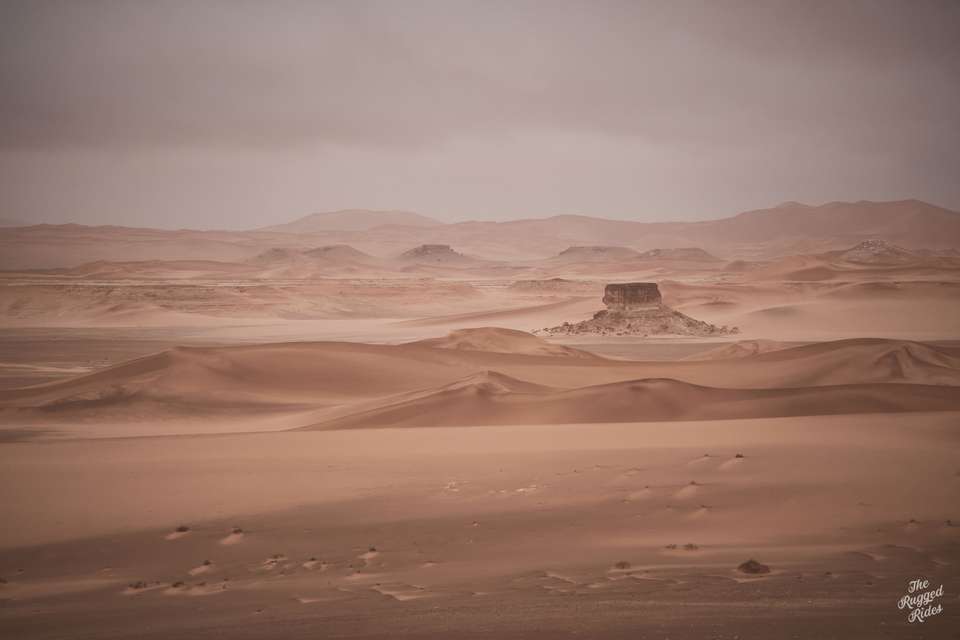
The tracks multiply, and we actually stumble upon an old, abandoned piste. Every one of these tracks leads towards one of the entrances into the many gassis, natural corridors running between the seifs. Their floors of those gassis are hard, allowing us to travel more than 200 kilometres south with hardly any need to cross the dunes. It's breathtaking. First we climb several dunes, but from their crests it's immediately obvious where we're heading, a promising carpet of flat stones running perfectly between endless chains of towering sand. The dunes are enormous, exactly the same scale as Merzouga, except these chains stretch for hundreds of kilometres in every direction.
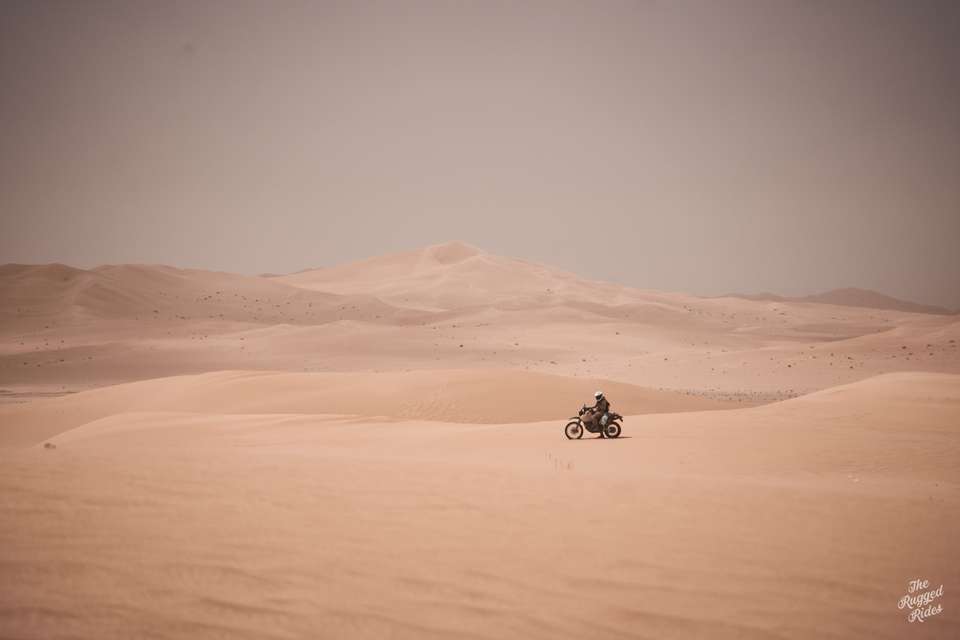
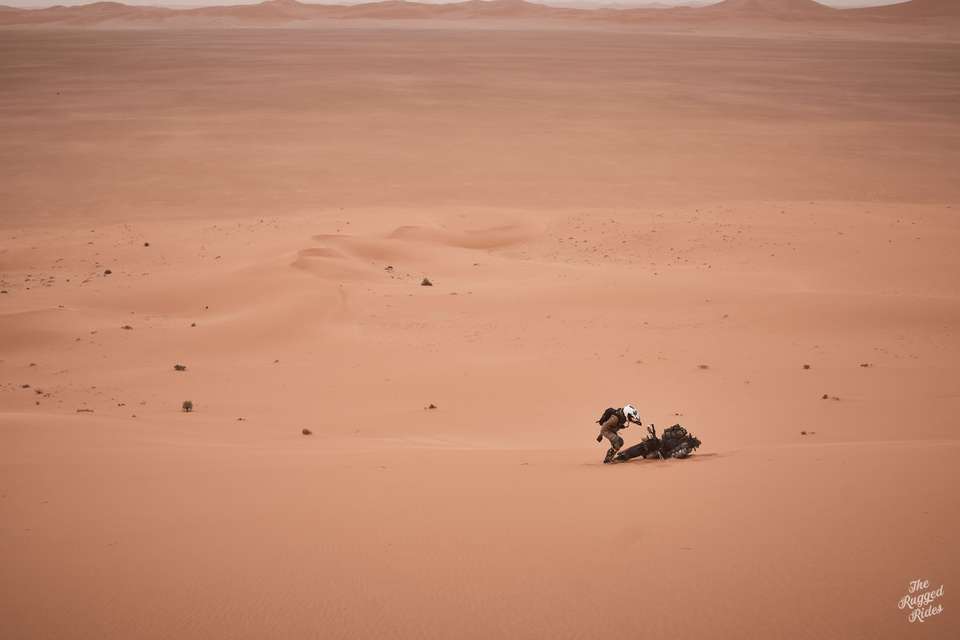
Strangely enough, riding these gigantic dunes is ridiculously easy. I don't know whether it's because they haven't been churned up by hundreds of riders like the more popular places, or whether it's simply the nature of the sand itself. Either way, holding the correct line comes naturally. The bike barely sinks at all until you reach the sharp crest and the steep drop beyond, and that's obvious.
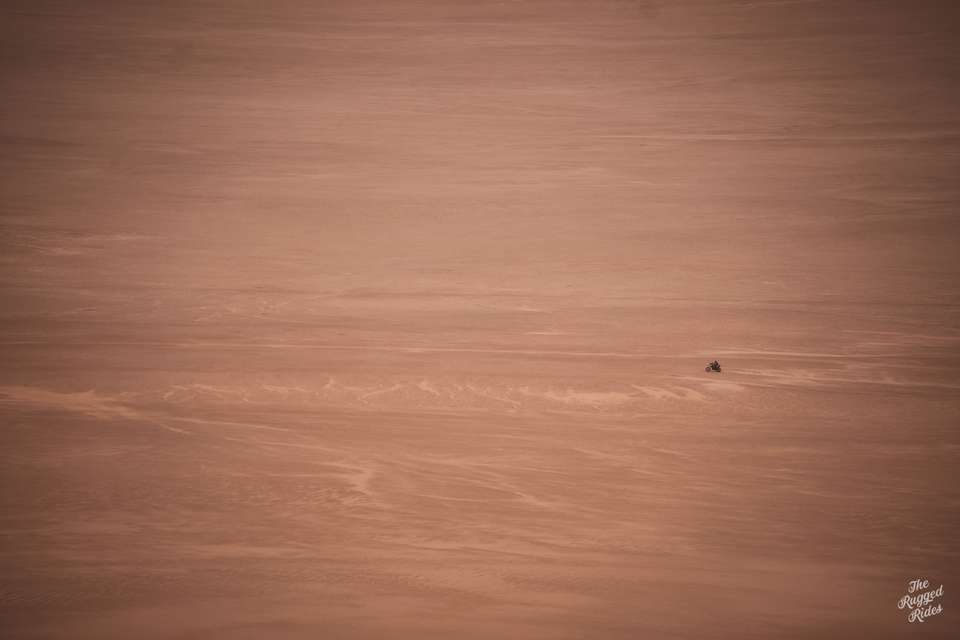
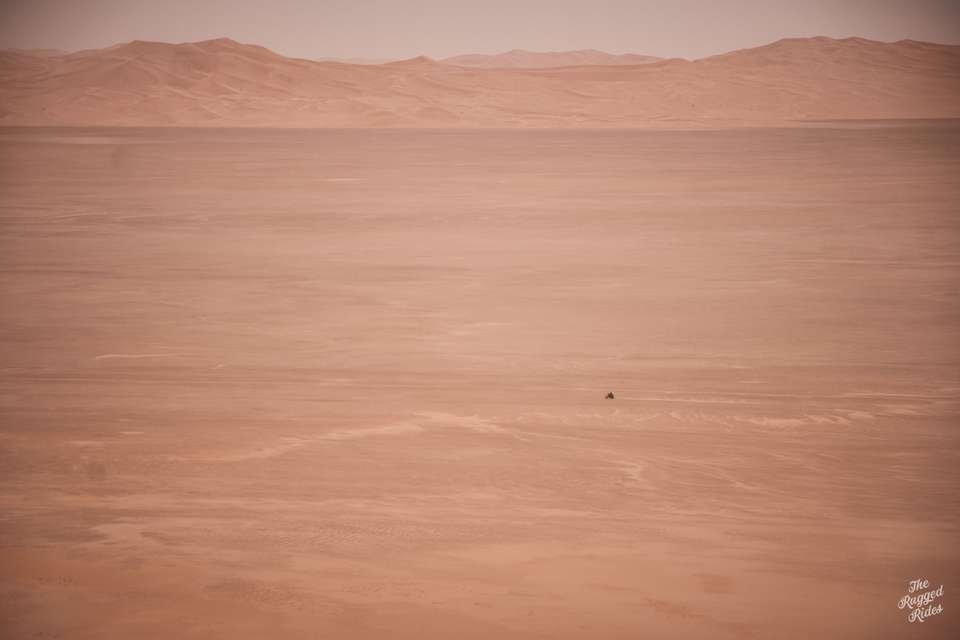
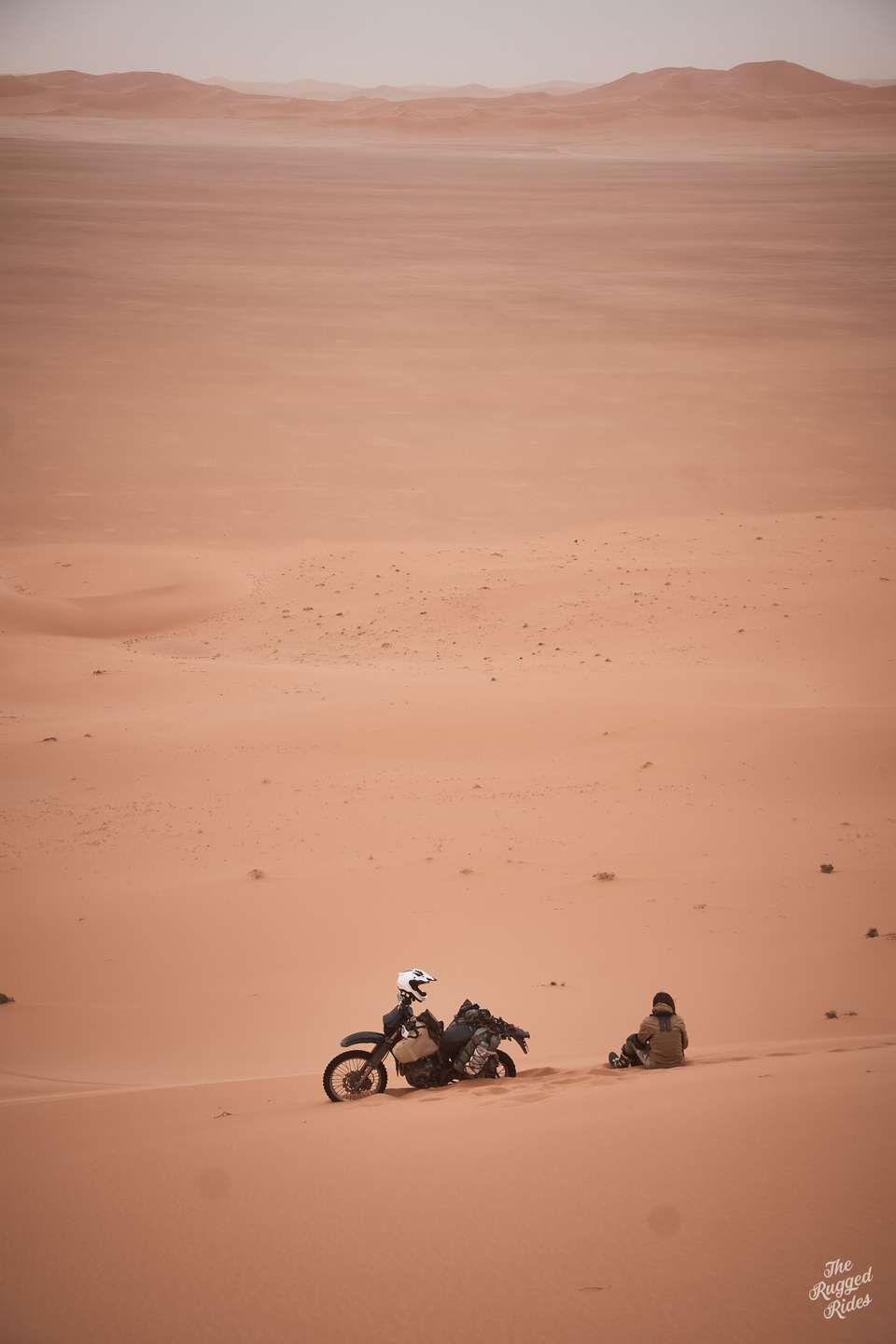
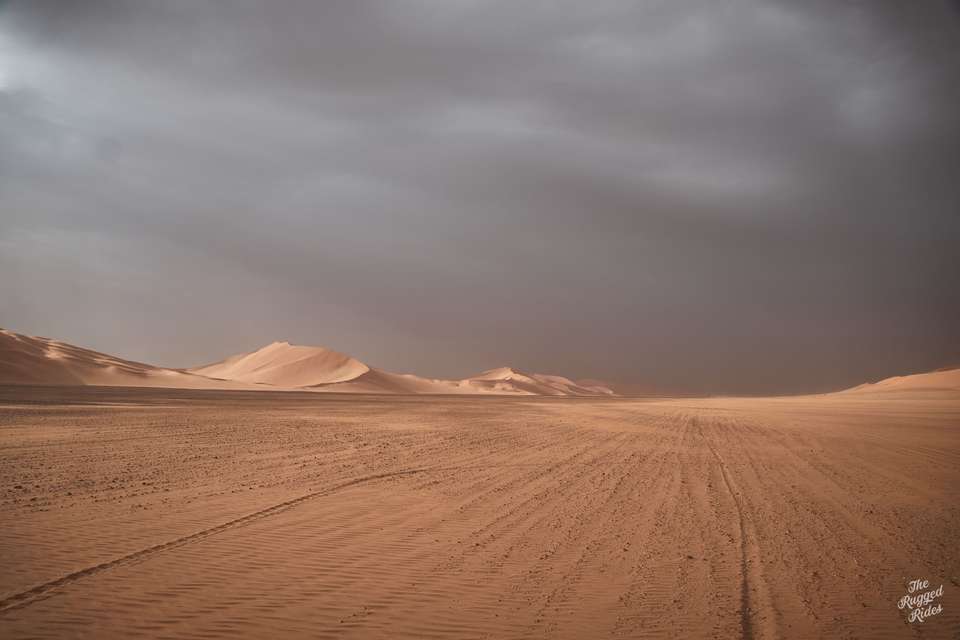
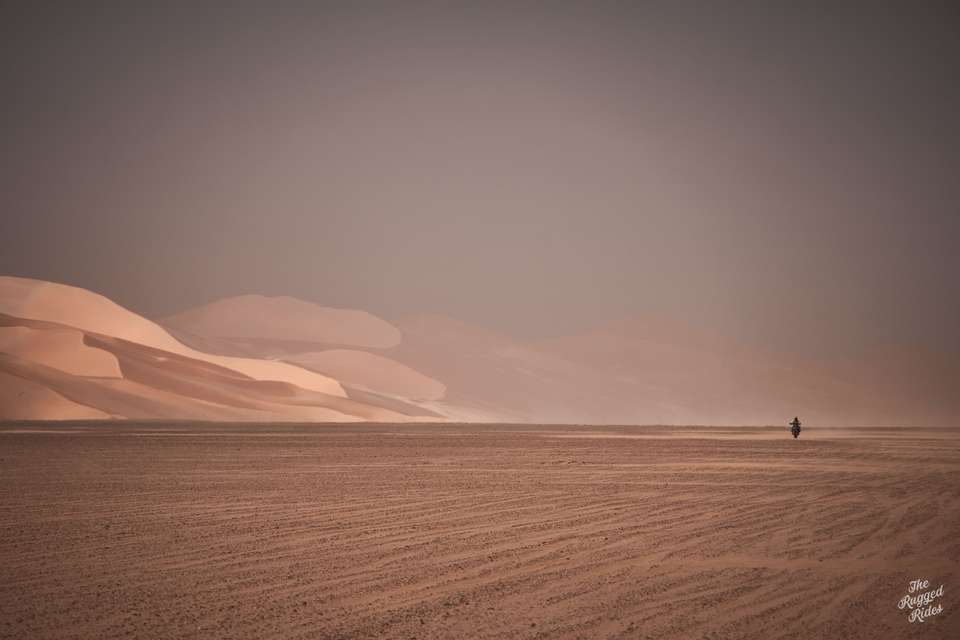
We drop into the floor of the first gassi. At exactly the same time, the sky pulls a curtain of rusty clouds across the horizon. Everything suddenly feels mysterious, almost Martian. Ahead lies at least several dozen kilometres of dead-straight riding. I keep myself disciplined and stay focused on fuel consumption. Thankfully, the wind is now behind us, helping us save every possible drop. About an hour later I spot one dune that's only marginally taller than the others. Instinctively I turn towards it. At exactly the same moment, Kondzio does the very same thing. Moments later we're standing on top, looking down the length of the corridor. The scale of these passages is almost impossible to comprehend. Kuba is several kilometres away, nothing more than a tiny dot against the endless dunes. We try calling him over the radio alert, but no joy, he is completely absorbed by covering kilometres.
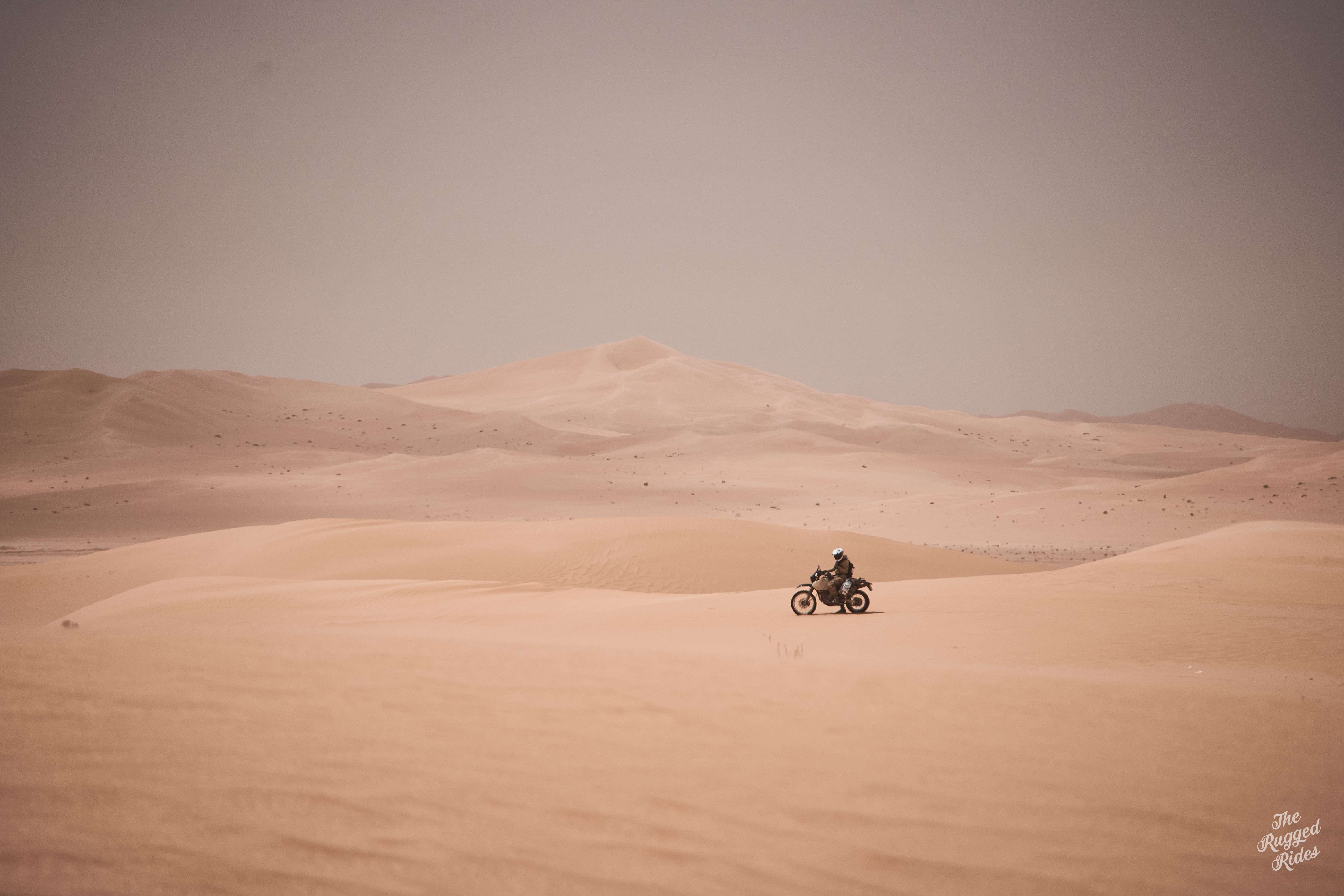
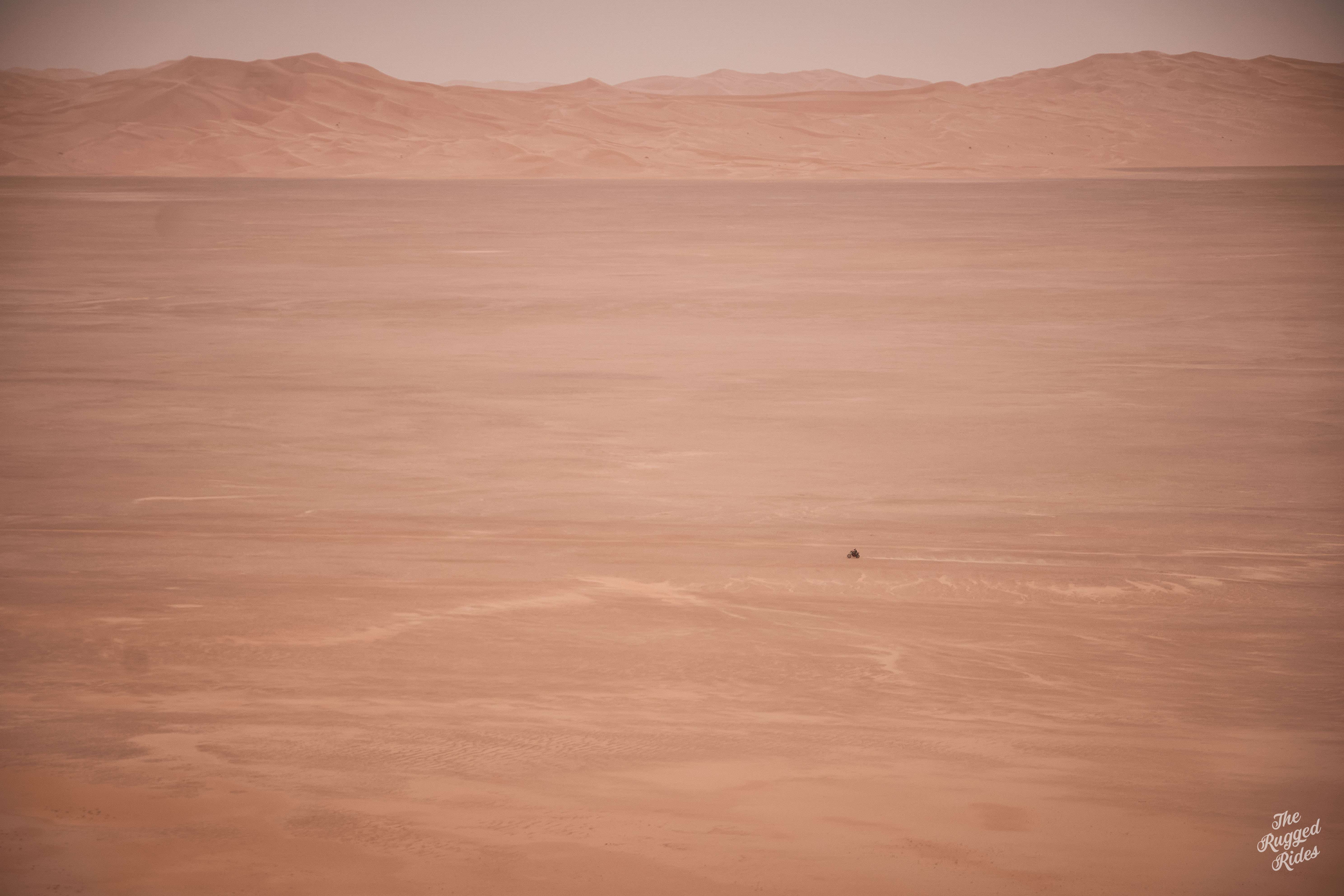
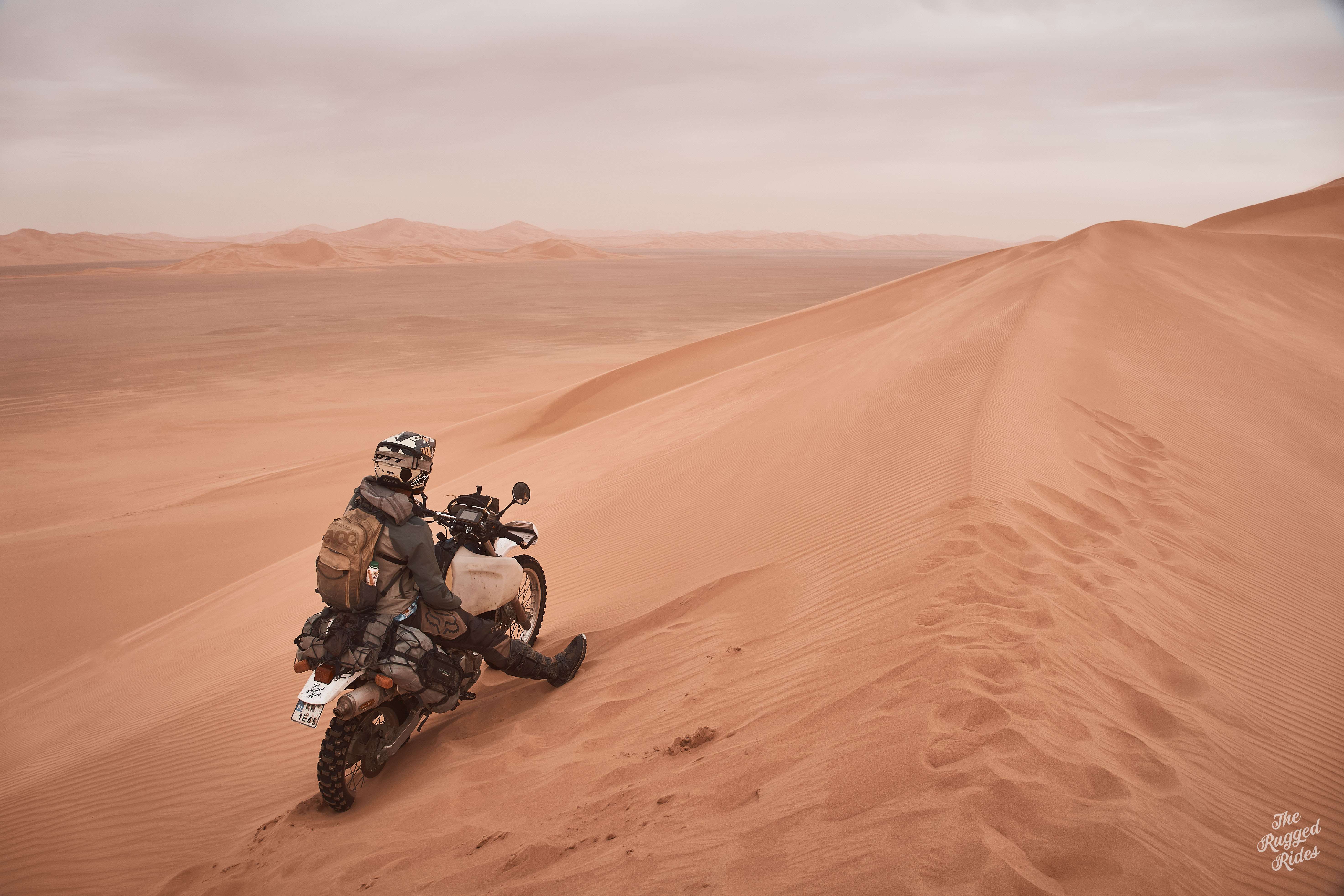
The whole crossing of the seifs merges into one unforgettable memory. By the time evening arrives and we finally turn up on the far side, I'm absolutely certain I've just ridden one of the greatest sections of my life. The sky has turned steel-grey. When the sun manages to find a gap in the clouds and lights up the golden dunes, we become silent witnesses to an incredible display of light and colour, unlike anything I've ever witnessed. Out here, among these monumental landscapes, it feels totally out of this world.
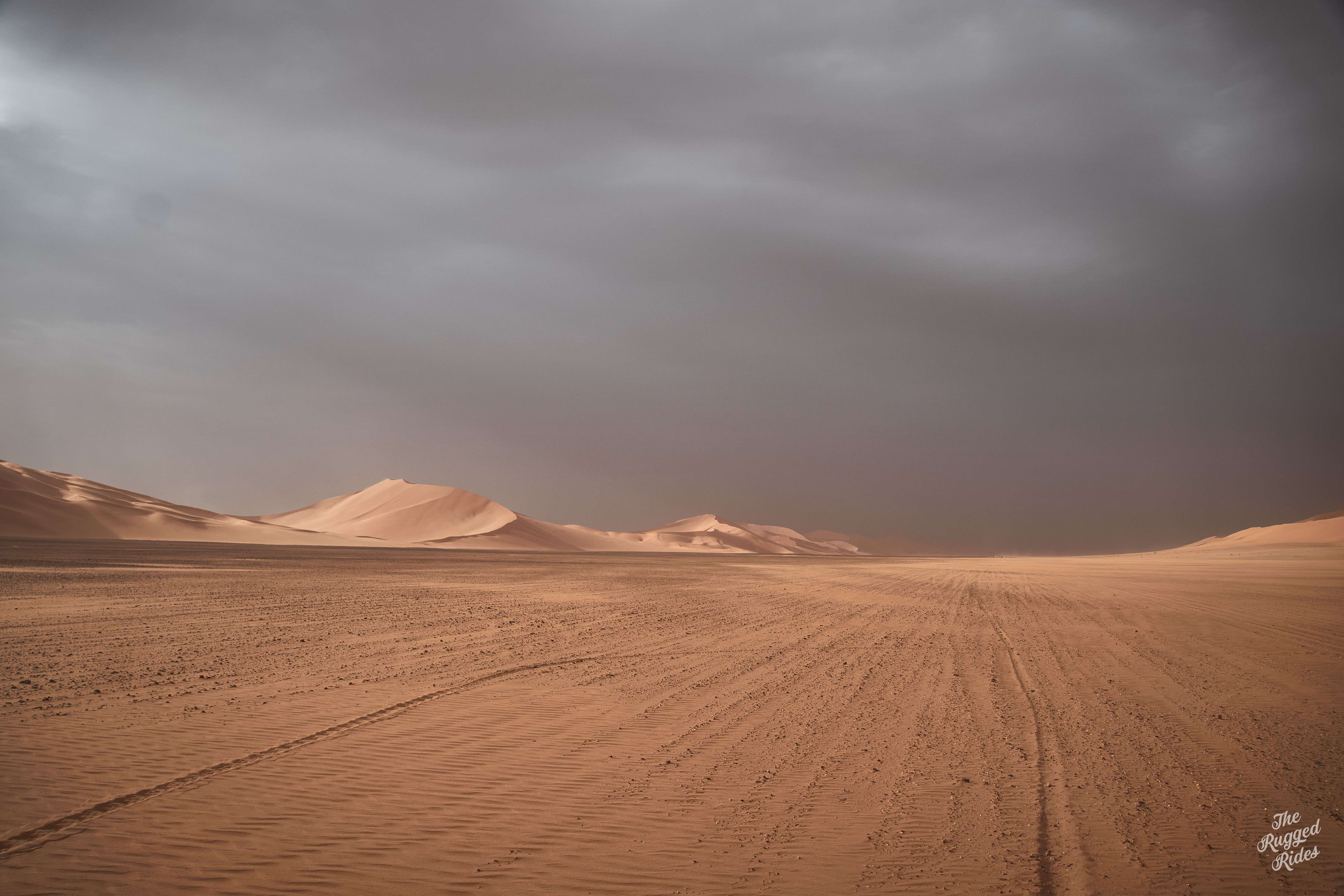
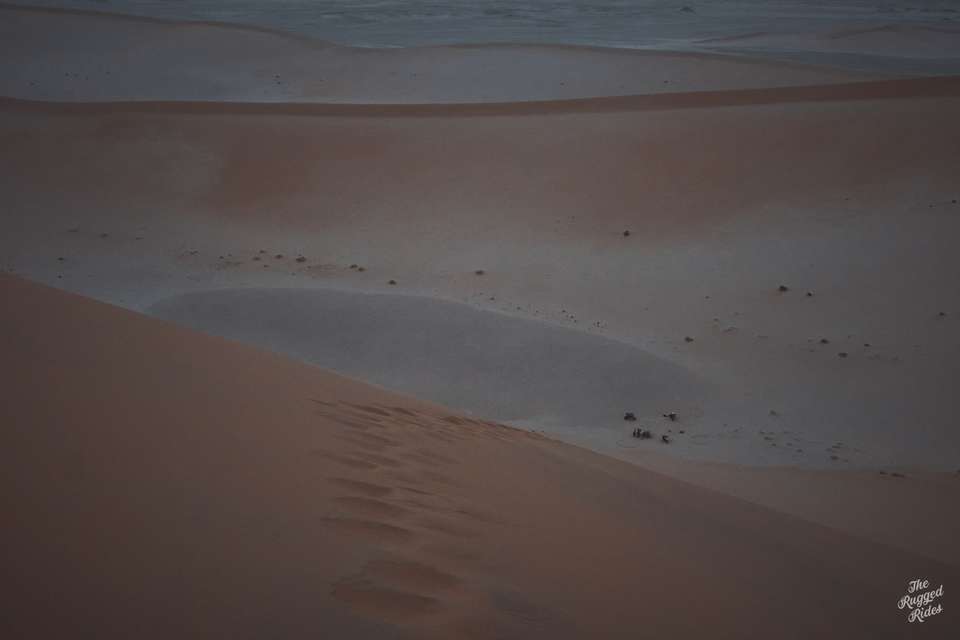
I really want to stay here for the night. Unfortunately, the storm is closing in, and we're right in the middle of the desert. The wind is already fierce. We search for shelter and eventually find a hollow completely surrounded by dunes. Either it'll shield us from the gale... or funnel the wind from every direction. We'll soon find out. For now, we set a bivouac and spend more than twenty minutes climbing the tallest nearby dune. Beyond the horizon there's nothing. Just dune after dune after dune.
Before going to sleep, I request another weather update. A few moments later the Garmin beeps with the verdict. The storm is coming. More than 30 millimetres of rain are expected overnight and into the morning. I put my headphones on, roll onto my side and hit play on my favourite playlist... although I can't help wondering why the second song queued up is "Can't Stand The Night"…
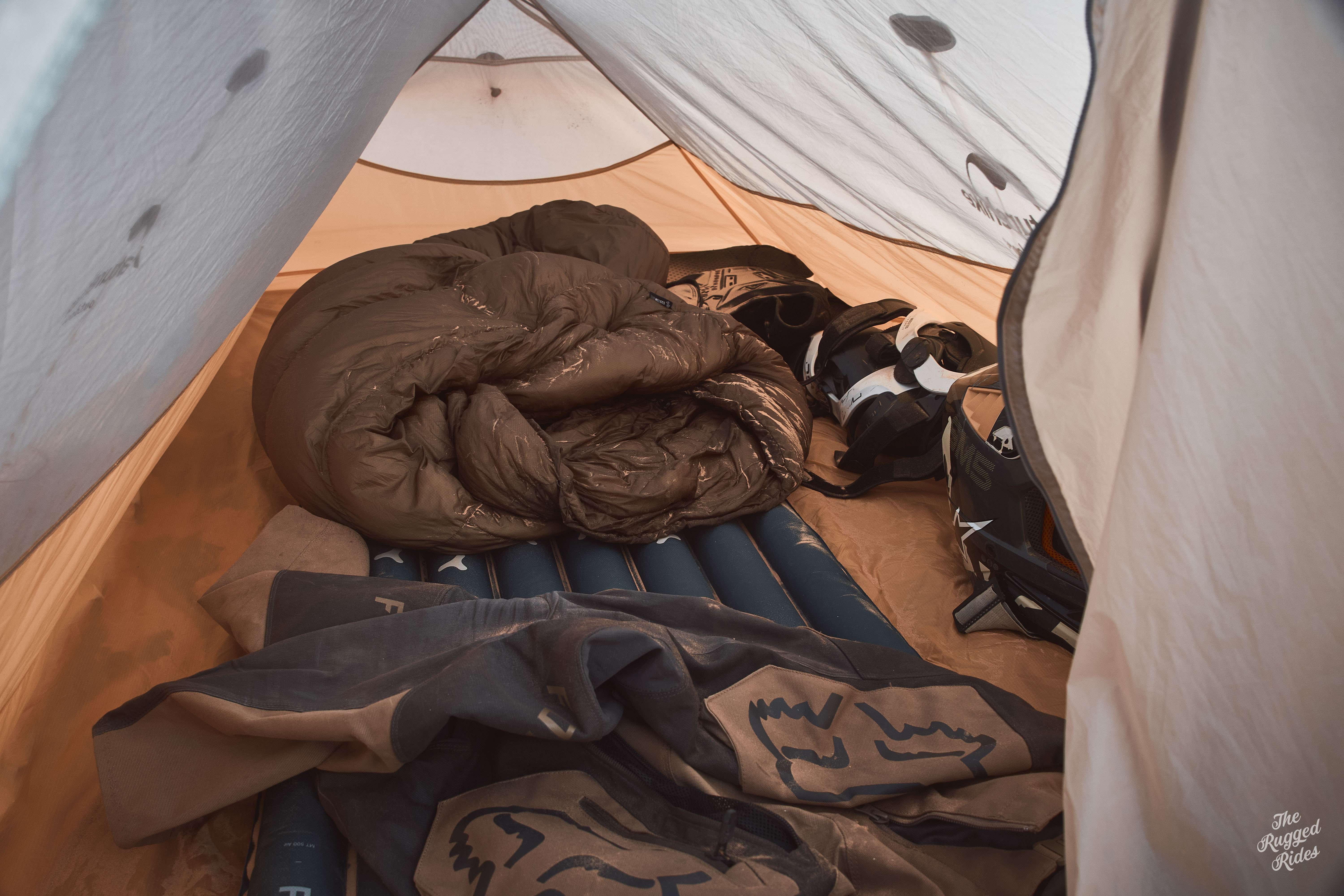
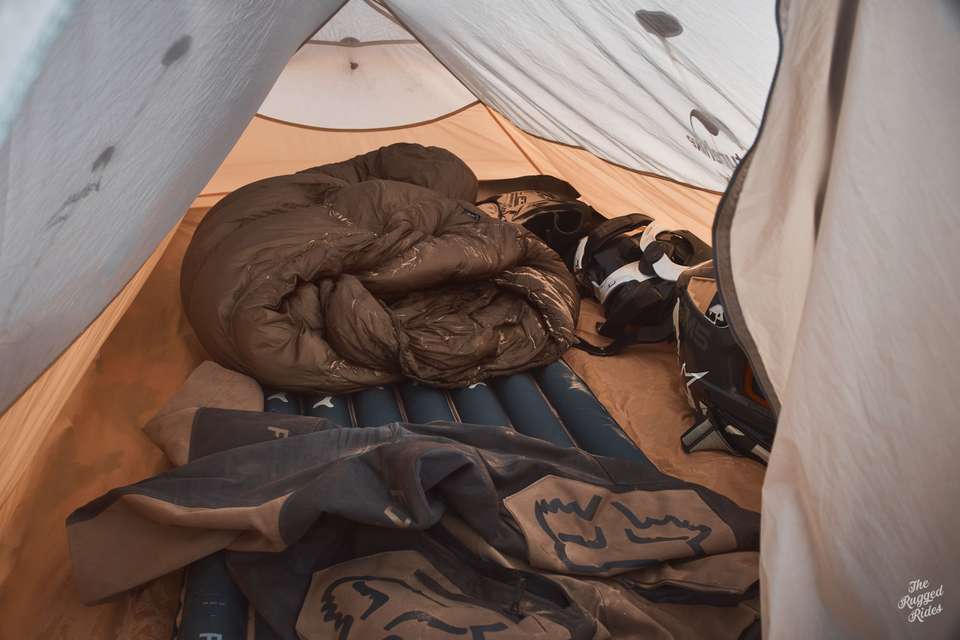
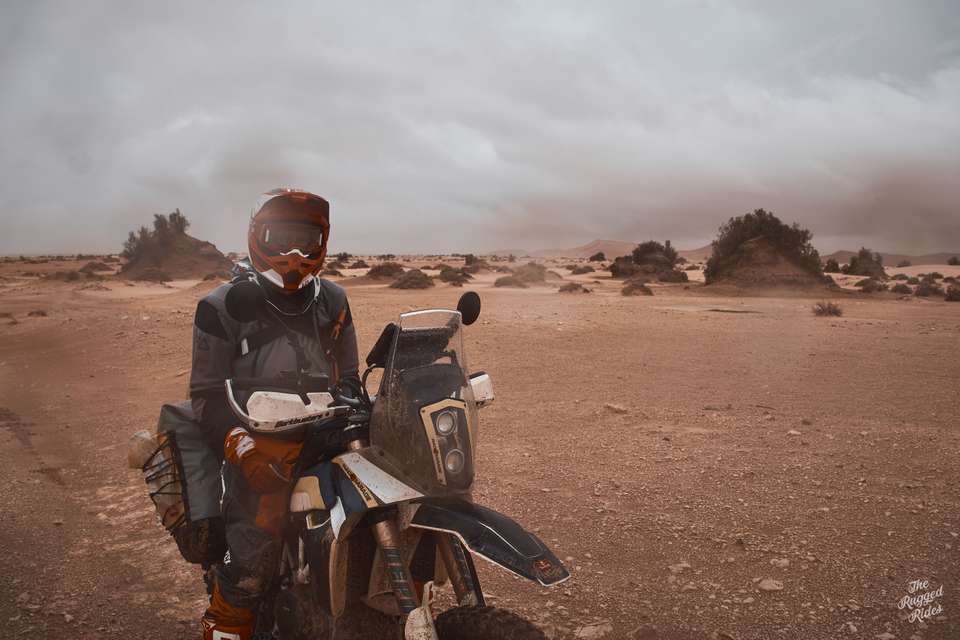
It begins around midnight. Steady rain, then violent gusts arrive from every direction. Not really gusts, more like brutal, isolated punches. I trust the long sand pegs I'd specifically brought for this trip will hold. Then one decisive blast hits and instantly, I'm looking at the open sky. I dive out of the tent to grab the flysheet before it vanishes. Success, it's still clinging onto two poles. For a moment, I battle the gale, trying to fold it back down. Not a chance. If the wind managed to get under it despite being staked out, I’m definitely not winning this round in these conditions. I quickly calculate my options, throw everything heavy into the inner tent, and wrap myself and my sleeping bag in the flysheet. It’s my most prized possession tonight—giving me warmth and a fighting chance of regenerating before tomorrow. And the morning? Well, torrential rain is coming anyway, so what difference does it make if everything gets soaked now?
The next two or three hours become an endless battle against sand forcing its way into every gap, numb hands, and trying to keep some sort of breathing hole open. I make improvised snorkels out of rolled-up bits of the flysheet and hold them in front of my face so one end reaches fresh air outside. Every so often I have to change position, and the whole struggle starts again. Eventually I realise the wind has noticeably eased, while the rain is becoming heavier with every passing minute. This is my chance. Maybe I can get the flysheet back up and snatch a little sleep? Amazingly, I manage it. I secure the flysheet, weigh down the corners of the inner tent with everything heavy I've got, and fall asleep dreaming that all of this is already packed away in the panniers, that I'm fully dressed, and that we're finally leaving this cursed hole behind on our way to Bordj Omar Driss.
Dreams do come true. We're all standing by the bikes, fully geared up. The tents and the rest of our kit are sloshing around inside the panniers. Turns out I wasn't the only one who had an eventful night. Yesterday's ride became one of the most beautiful days I've ever experienced on a motorcycle. Last night will remain one of the hardest.
Time for positive thinking. We've still got a healthy fuel reserve, helped enormously by the tailwind. Only around 150 kilometres remain to Bordj. It's still pouring, but at least it's daylight now, the wind has stopped, and according to the forecast the rain should gradually ease before clearing completely later in the day.
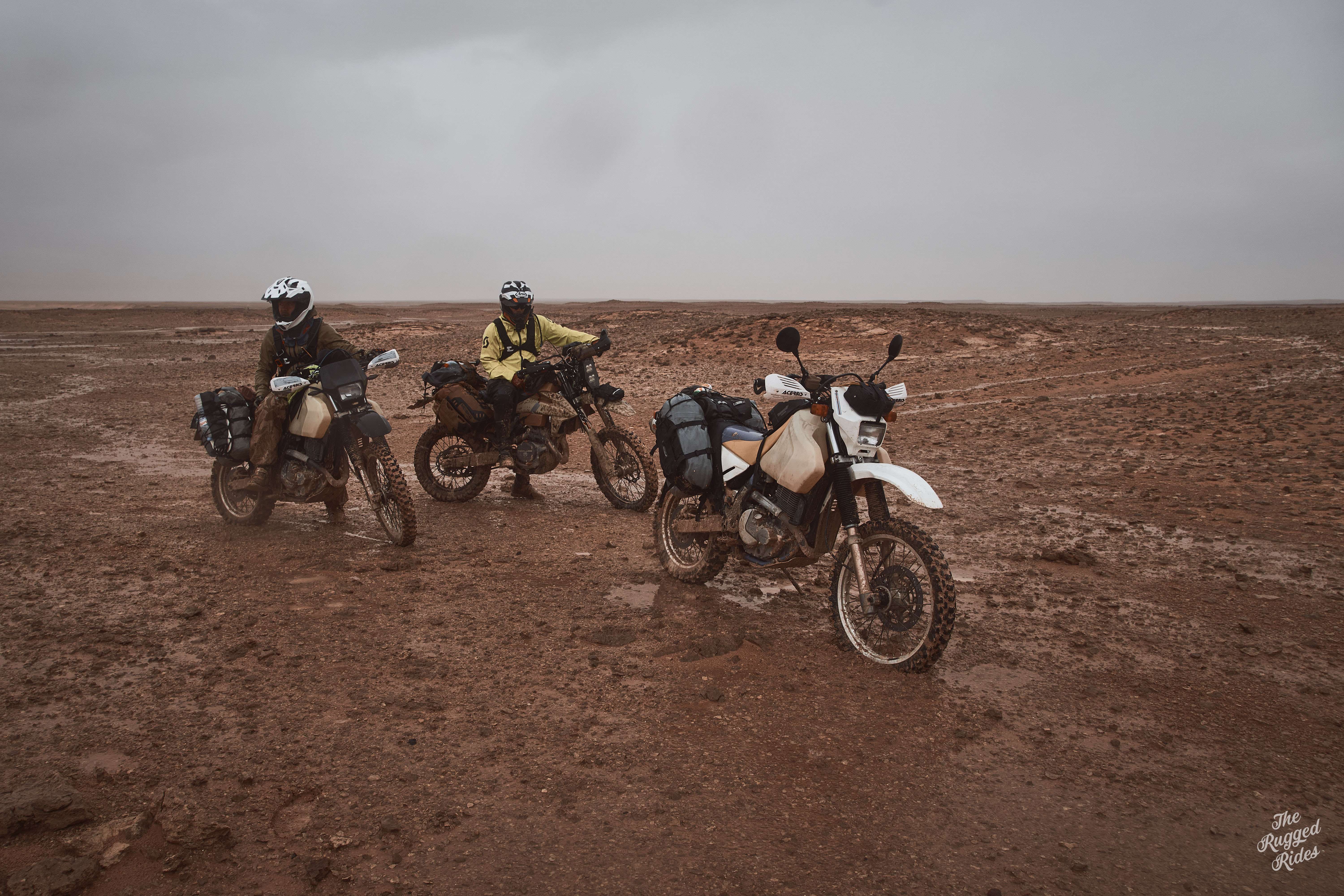
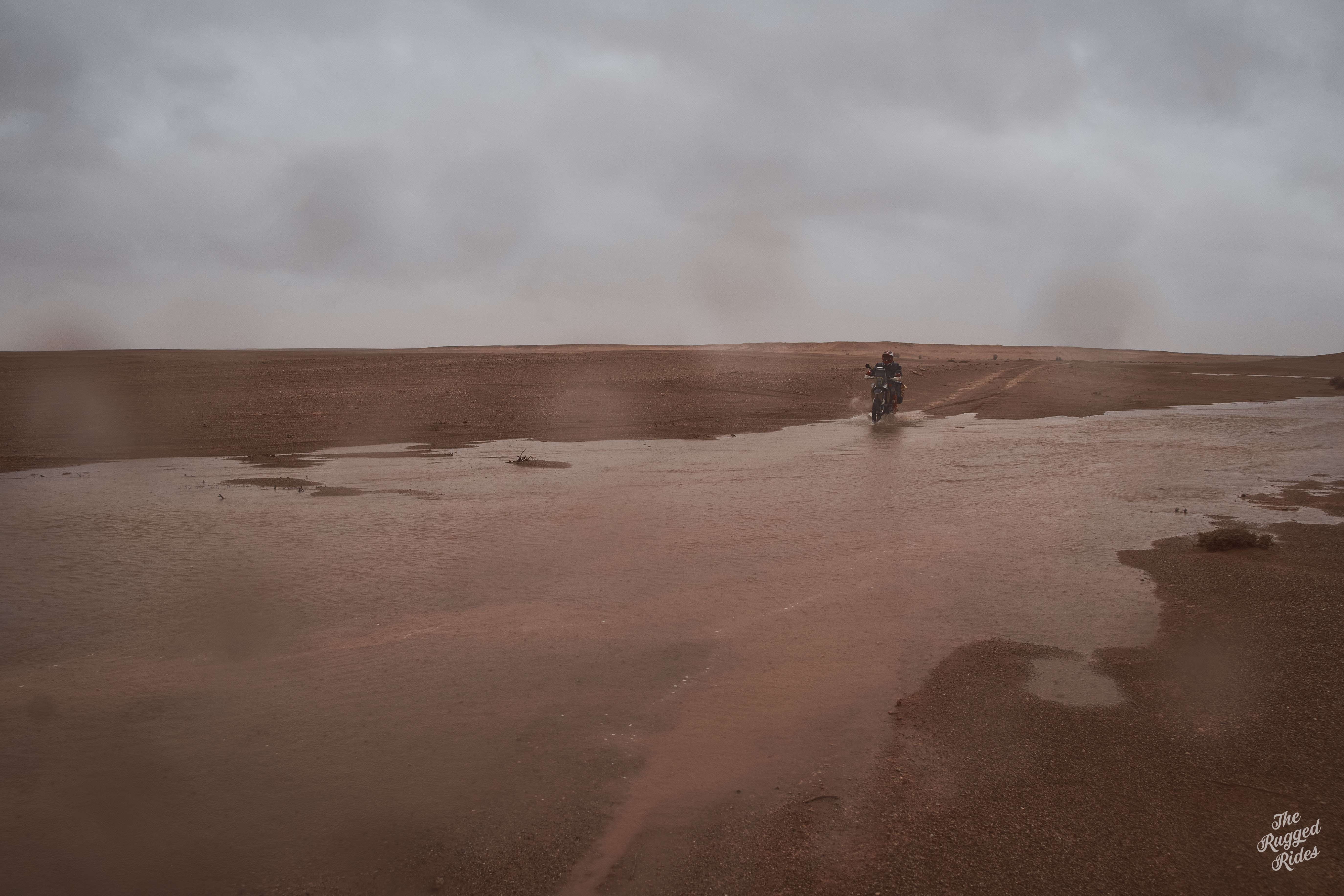
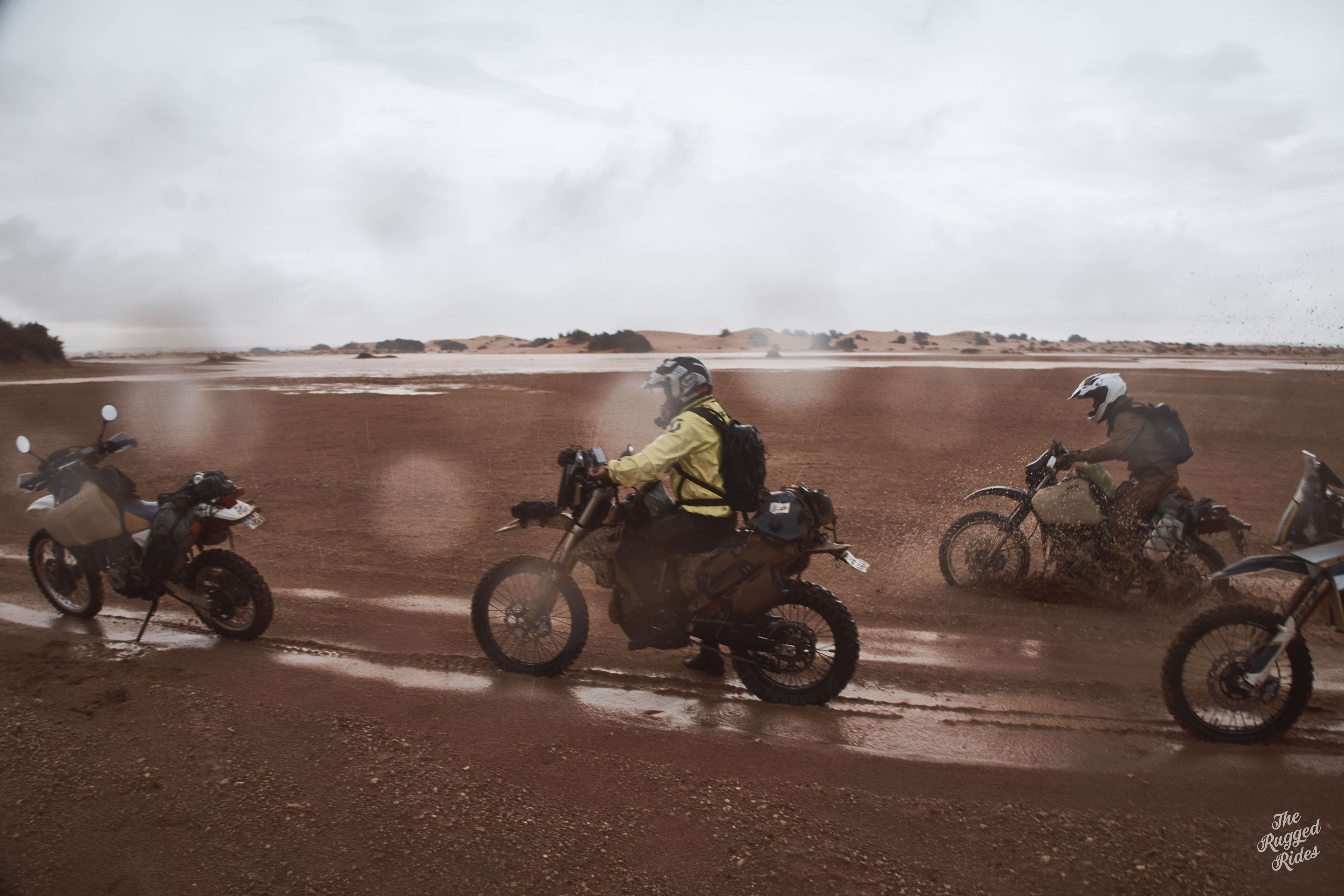
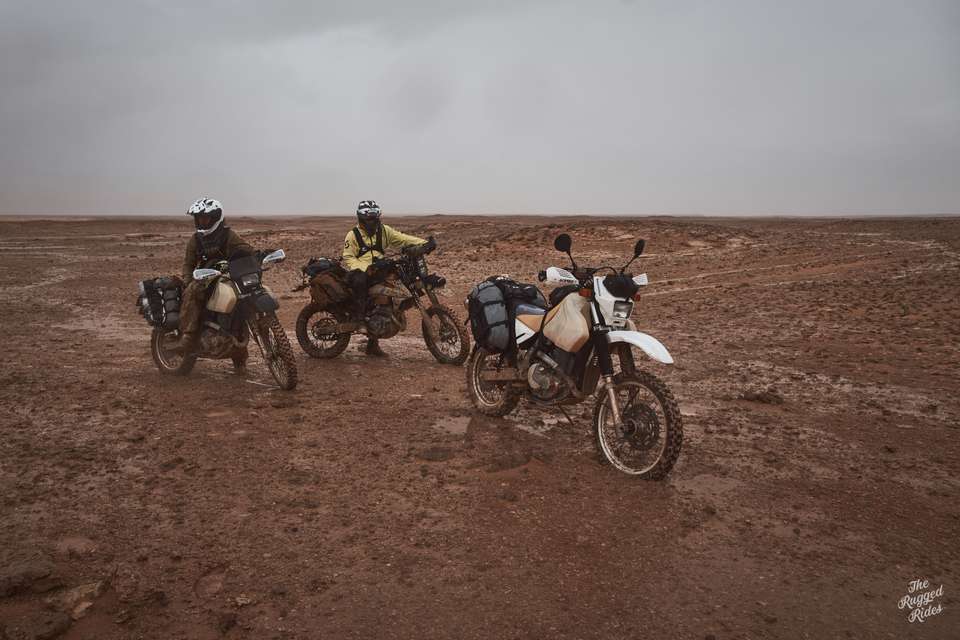
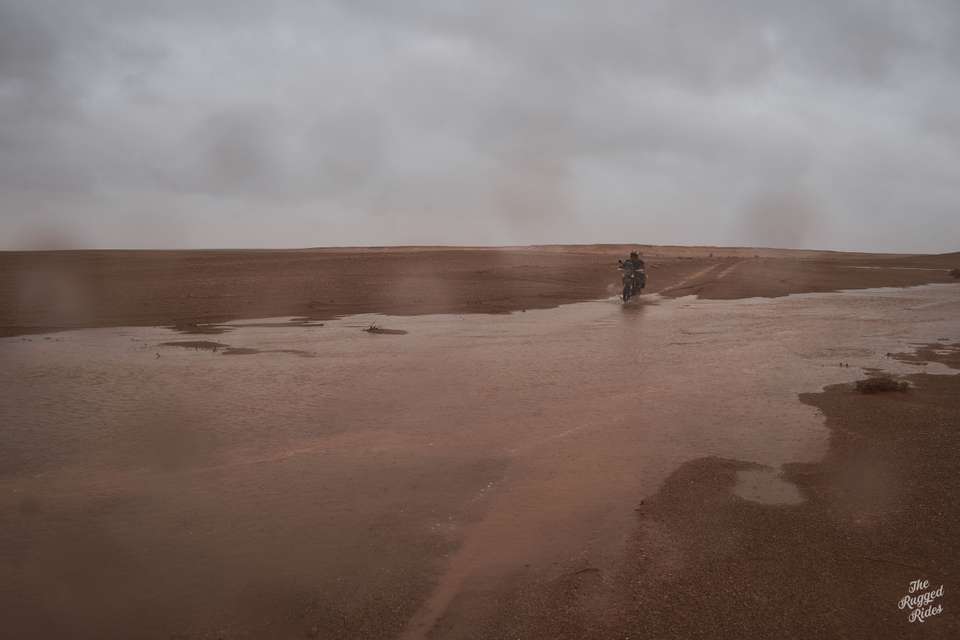
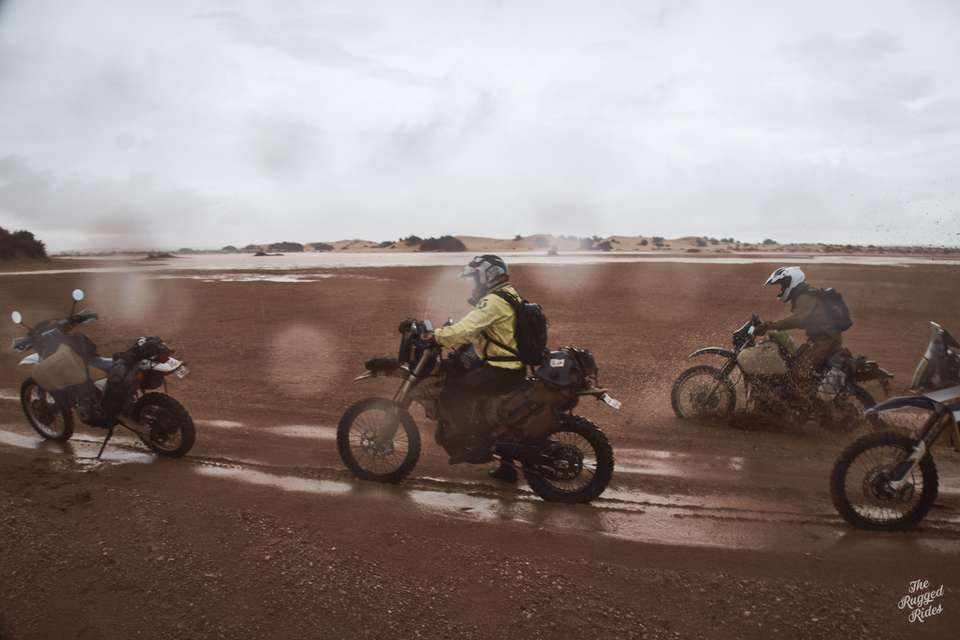
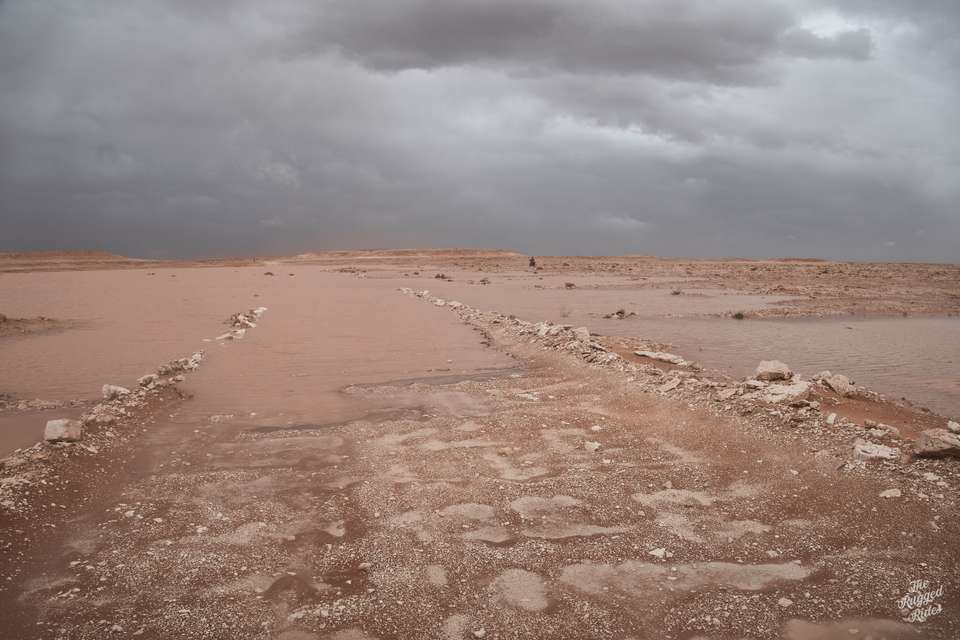
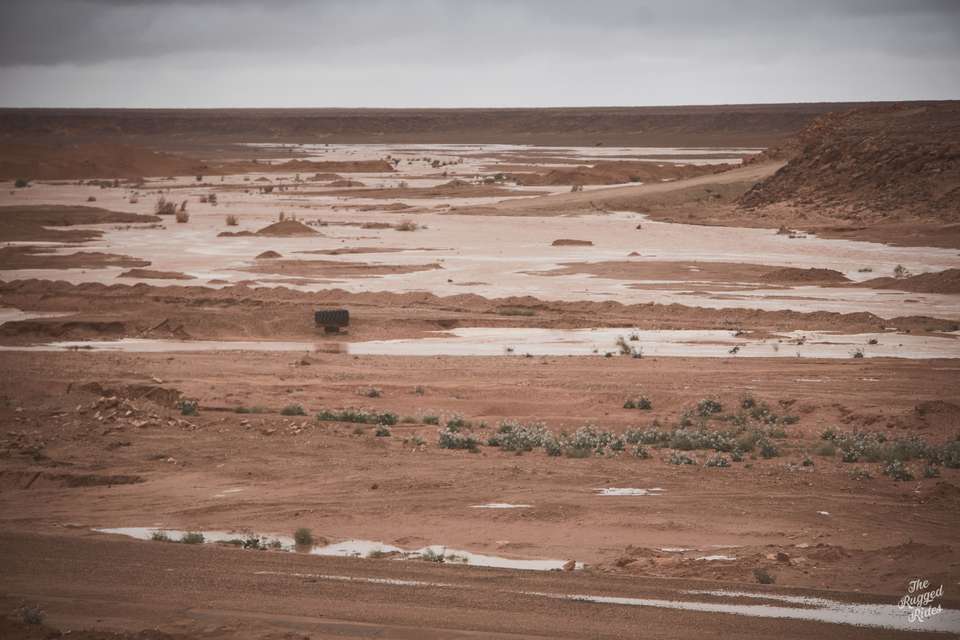
We set off. What I see is entirely new to me. The whole desert has turned into something resembling flooded rice fields. Water is everywhere. Roughly a third of the landscape is underwater. Our track heads south-east, but that's exactly where the terrain drops down, meaning every kilometre brings even more water. We give it a go. After about an hour of fighting and skirting around flooded ground, we finally reach the edge of solid terrain. Ahead are dissolved limestone flats and even lower desert terraces. The moment we enter them, we realise our mistake. The bikes sink straight into thick slime, and the mud-covered tyres dance in every direction.
Then I remember the plateau to the north. What if we climbed back towards the seifs, followed them east, and picked up the road climbing back onto higher ground? I know it exists because I remember drawing it while planning the track. That should get us back onto the tarmac and into Bordj Omar Driss today. The alternative is waiting here and losing an entire day. We turn back.
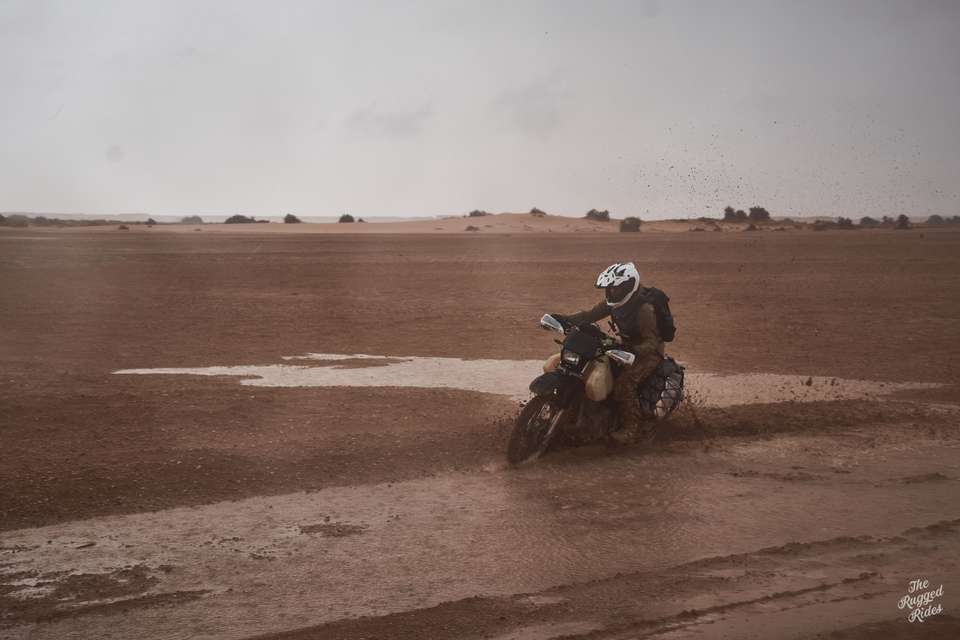
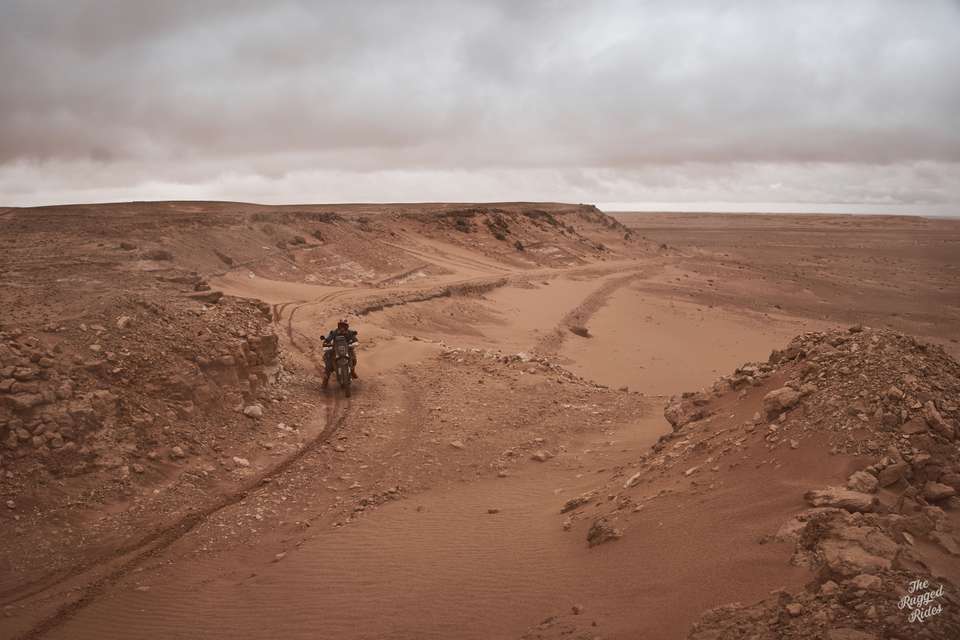
The water continues rising, making even backtracking our own tracks harder than before. Thankfully, near the seifs we stumble across a faintly visible piste. Riding is still possible as long as we stay on it, because the passing cars have dug down to the rocks beneath. Any attempt to freestyle off-piste ends in fountains of mud exploding into the air and the wheels sink nearly 20 cm instantly.
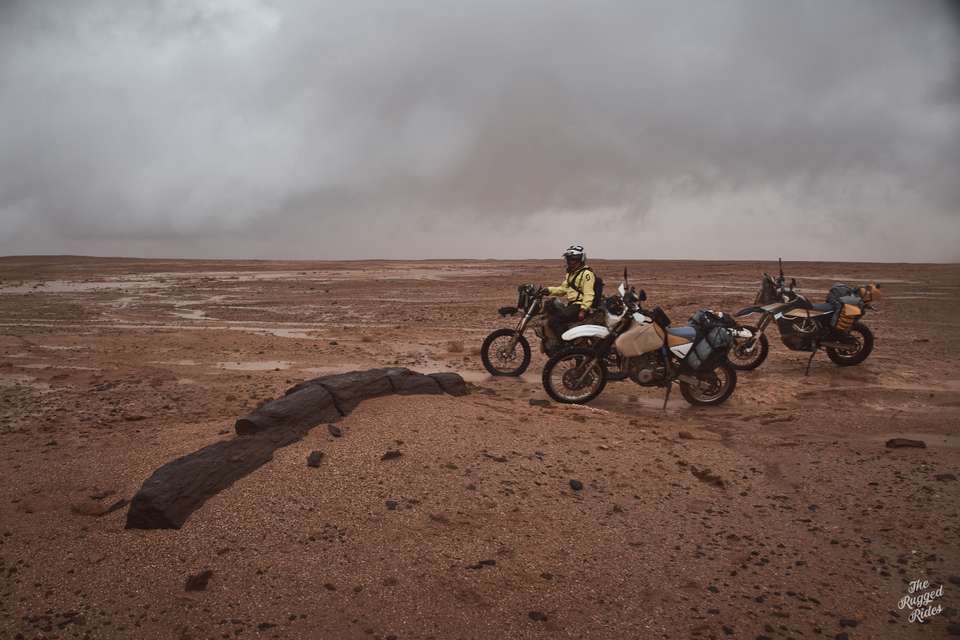
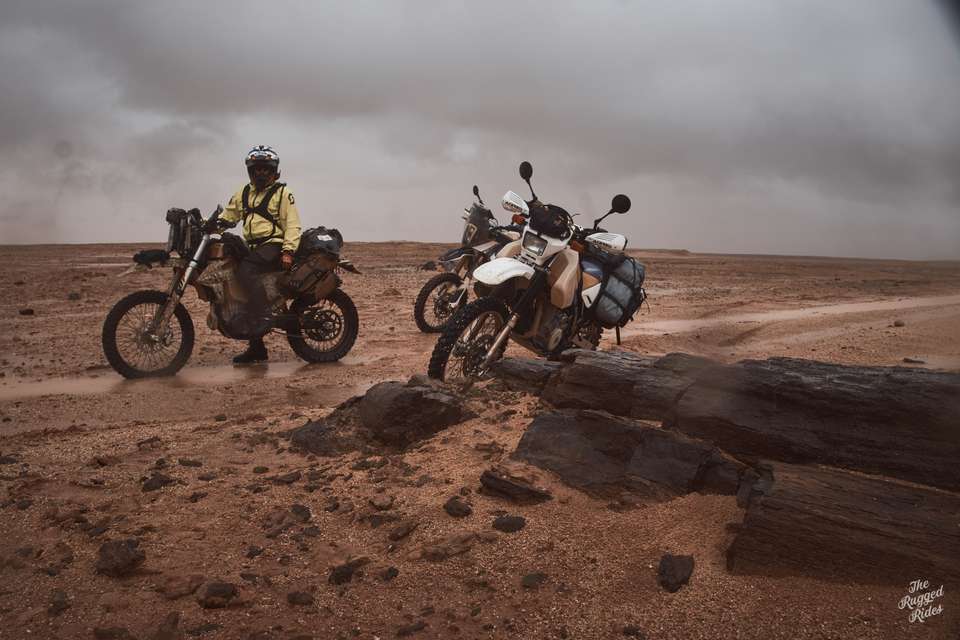
Then we come across something extraordinary. A huge dark shape rising from the sand and scattered stones. The trunk of an ancient tree. How on earth has something like this ended up in the middle of the Sahara?
On closer inspection, it quickly becomes clear the trunk isn't wood. We're standing in front of a petrified natural wonder. A fossil forest is one of the most astonishing reminders of just how dramatically the climate has changed here.
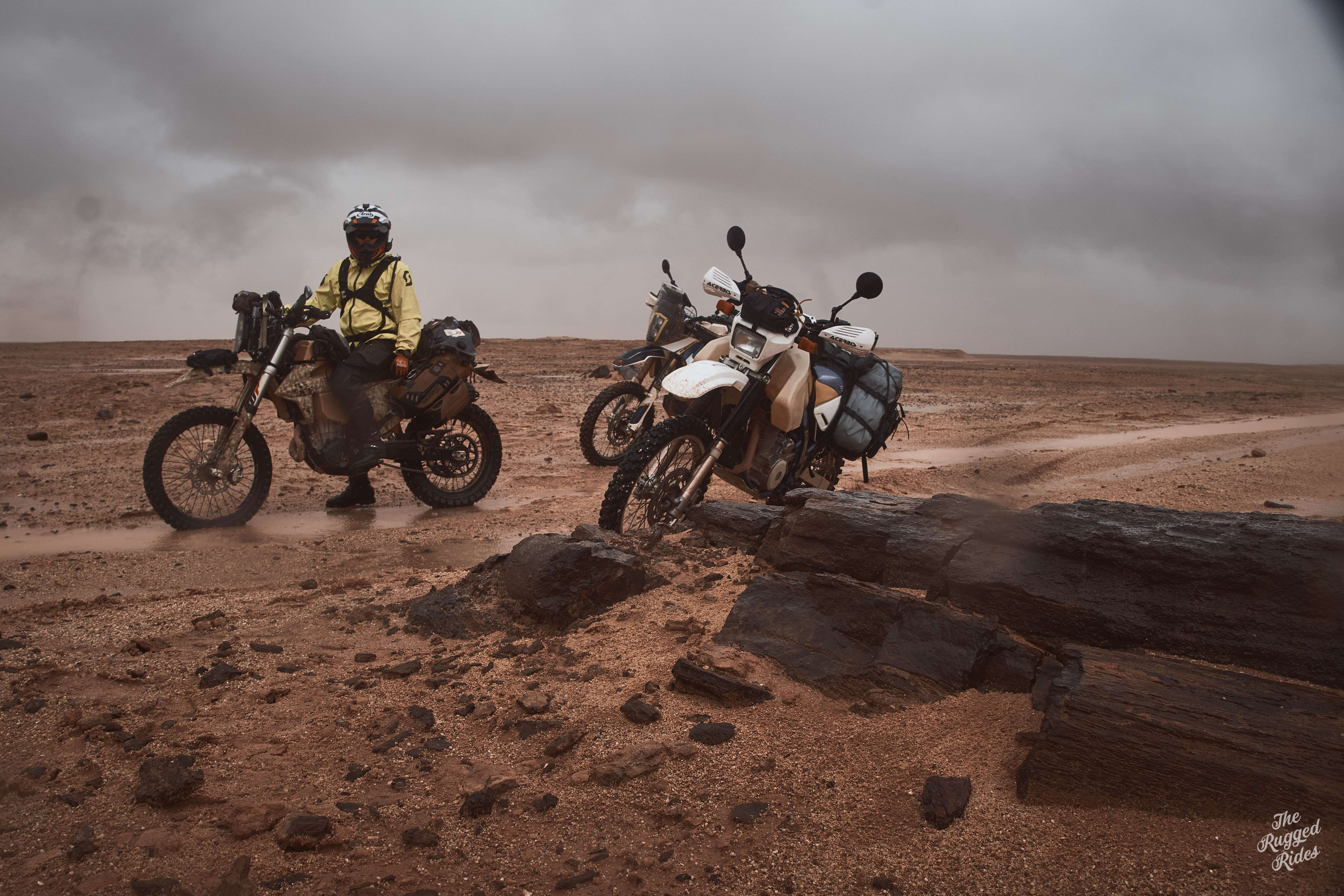
Most of the Sahara's petrified forests date back either to the Cretaceous Period, around 100 million years ago, or to the Oligocene, roughly 30 million years ago. Back then, today's desert was a swampy delta and mangrove forest, home to gigantic conifers and the ancestors of many modern broadleaf trees. Much later, only a few thousand years ago during the so-called Green Sahara period, this region was a lush savannah filled with lakes where hippos and giraffes roamed freely. The people living here immortalised those days in rock art, particularly in the Tassili n'Ajjer mountains. The tree we're standing in front of is a silent witness to those green days. Unreal.
Looking closer still, this petrified tree isn't simply dried out timber. It's solid rock preserving the tree's microscopic cellular structure. Millions of years ago, fallen trees were rapidly buried beneath river sediments, mud or volcanic ash, cutting off oxygen and preventing decay. As they were buried deeper and deeper under immense pressure, mineral-rich groundwater seeped through the porous wood. Molecule by molecule, the organic cellulose was replaced by minerals, usually silica, opal or quartz.
Now, chunks of chipped rock lie scattered all around us, and you can see the rings and the structure of the wood perfectly. I absolutely love discovering places like this on my own, authentic, untouched and still blissfully free from mass tourism.
The rain finally eases and we head towards the now clearly visible road climbing onto the plateau. There are still dozens of kilometres left, and the floodwater continues slowing us down. All that wandering in the mud has burned far more fuel than we'd planned. We briefly discuss our strategy for entering Bordj Omar Driss, but in the end we simply leave it to fate. We're deep in the south now. Inshallah.
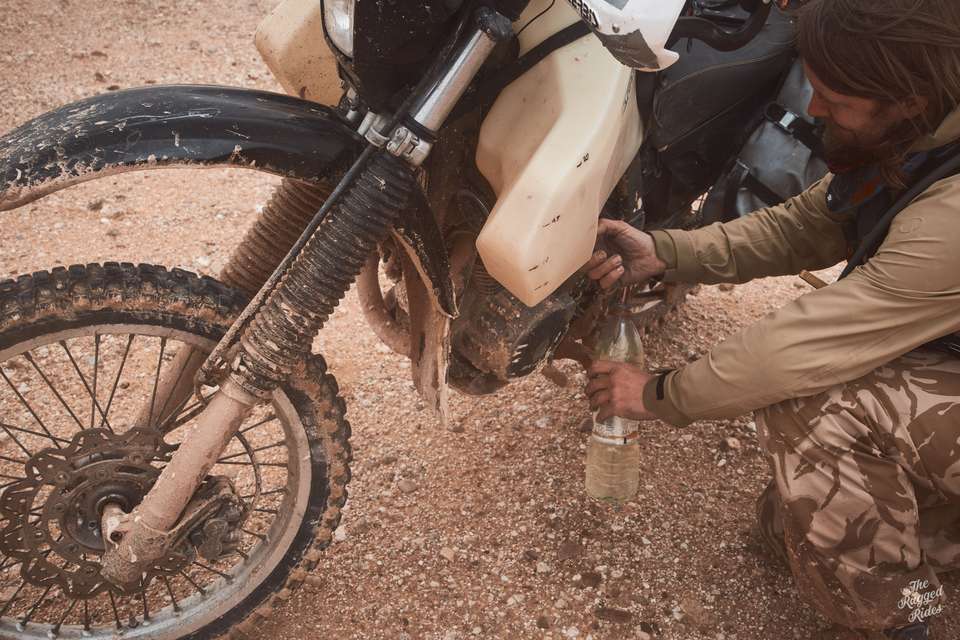
We roll into town from the front. It's not big, it's basically a single street and a roundabout. We track down a petrol station only to find out there's no essence left. Not ideal, especially since Kondzio ran completely bone dry moments earlier, and the rest of our bikes aren't exactly living in luxury fuel-wise either. From there, everything somehow sorts itself out. Thankfully, we're in the desert, where people genuinely look after one another. The guys at the station immediately offer to drive a "taxi" 70 kilometres to Hassi Bel Guebour to fetch fuel for us. Completely soaked through, we decide to check into the town's only auberge.
This evening we're lounging in battered old armchairs devouring grilled chicken. Tents, sleeping bags, and the rest of our gear are drying out on the terrace. There's even a pool table, probably dating back to the first Moon landing, but we've got ice-cold cola and a stash of sweets, so life is good. Brilliant evening. A little earlier we'd managed to fill both the bikes and every fuel bladder with a grand total of 150 litres of petrol. Beautiful.
We did it. The queen stage of this adventure is officially in the bag. Tomorrow... the graveyard piste.
Track: https://loc.wiki/t/273290915?wa=sc
Comments
M
Epic
CS
Well done the Rugged Team. You had quite an adventure. I don't think any motos have been down this way, maybe the Dakar in the early 80s? Followed by Moktar bel Moktar and his Marlboro convoys in the 00s. I see there was an old, part-buried piste visible on the sat image some of the way (but not on old maps). Did you pre-draw your gpx route to wind through the dune barriers and hope the dunes lined up on the day, or just wing it when you got to barriers? I imagine a drone could be very helpful in these situations. We came across from Fort Mirabel near the TSH east to HbG one time (in the infancy of 'Nav Star' sat nav) and also came across a lot of petrified wood. Looking forward to the Graveyard write up – a great route which has it all. I see there is road from BoD part of the way towards Amguid now.
TRR
Thanks, Chris! That means a lot coming from you. Yeah, it definitely doesn't look like a route that sees much traffic. Before we set off, I hadn't heard of anyone in the overlanding community riding it, or at least nobody who'd shared anything about it. If you're saying the same, then I guess that confirms it. I mapped the whole thing in Google Earth. Fuel range was my biggest concern, so I wanted to avoid unnecessary dune crossings since I had no idea how soft or difficult they would be. I spent quite a bit of time following every visible track on the satellite imagery, and it turned out we'd only have to cross the higher dunes in two places. Once we got there, though, it was much easier than expected. The corridors between the dunes were nice and firm, and even the dunes themselves were relatively easy. The track you mentioned—from TSH via Amguid to HbG—is a my dream so far. Unfortunately, from what I can see on the satellite imagery and from reports online, the tarmac keeps creeping further south. The obvious detoru would be to cut through the erg south of BoD and bypass it completely. The only catch is the fuel range—that would make for a pretty serious 800 km leg. As for the Graveyard Piste... I'm afraid you'll be disappointed. We were running out of time, so we took the easy option and stayed on the main track through the middle of the valley. The last stretch before Illizi is tarmac now, too.
CS
I think the Amguid piste will eventually be a new road. Alg is definitely learning from Morocco on how to build new roads fast, but mostly they are for military/prospecting? purposes, not villagers. It makes sense to link central TSH with the oil region, and there is an army base at Amguid (pass on the west side of Amguid erg to avoid it). I am told this piste is 'closed', but they all are. Are you saying you rode 'CW02' carving south from BoD into the dunes? It is on my OSM Alg map for BaseCamp. It joins the original Graveyard Piste at Tabelbalet well and as you say, the last 140km to Illizi are tarmac. If yes, will be interesting to read what CP02 from BoD is actually like; it looks a lot clearer on sat than what you just did in the GEO gassi, or the old A2 way to Tabelbalet. With fuel at Illizi, back at what was Ain el Hadjhadj well (now a big base), you can cross the jebel SW to Route A12, go around the south tip of the erg, and then reach Route A5 by leaving A12 via stony Oued Ta Haft (45km; on OSM) and eventually the Toukmatine area you know. I know cantone-libero.ch yellow Sprinter did that this winter or before (amazing tombs around there; they give tracklogs). But you need to go into Illizi for fuel. You are clearly desert pros now so it would be a shame not to capitalise on your experience. So this, or something like it, is your next mission, should you choose to accept it ;-) Go in Nov, I would – into the cool season. Less water stress and zero risk of that storm you had.
TRR
Amguid – I remember that when I was investigating this area on satellite imagery, the base immediately caught my eye. It doesn't look much smaller than the village itself, and there's also the airstrip. Something to keep in mind for the future: is there actually any fuel available there? Google Maps shows a fuel station, although I assume it's probably just jerrycans? As for the track itself – yes, we followed the entire CW02 road. It's all gravel and, honestly, it's a fantastic ride. In places it's partially covered by sand dunes. Roughly halfway between BOD and Illizi there's a few kilometres of compacted gravel (a mix of gravel and what seems to be either cement or bitumen), around the point where vegetation starts appearing in the bed of Oued Irarraren. After that it goes back to gravel, which eventually gives way to tarmac for the final 100 km through Illizi before you reach the town itself. That is the situation as of April this year. The idea of taking the route around Erg Tiffernine along its southern edge and then continuing further south had already crossed my mind on this trip. Unfortunately, we'd lost five gallons of fuel from one of our Giant Loop bags, so we simply couldn't afford to risk it. But I definitely have to go back there. You're making that mission sound very tempting, I'll be giving it some serious thought in January :-)
Leave a comment