Do You know what tastes best? The unknown… At least if you're not a settled farmer with a bad back who worships moldy wheat, and your genes are actually a bit closer to a hunter-gatherer. Today's topic is Zakarpattia, an amazing and yet wild land lying obscenely close to my home. Somehow, I'd just never managed to head out there until now…
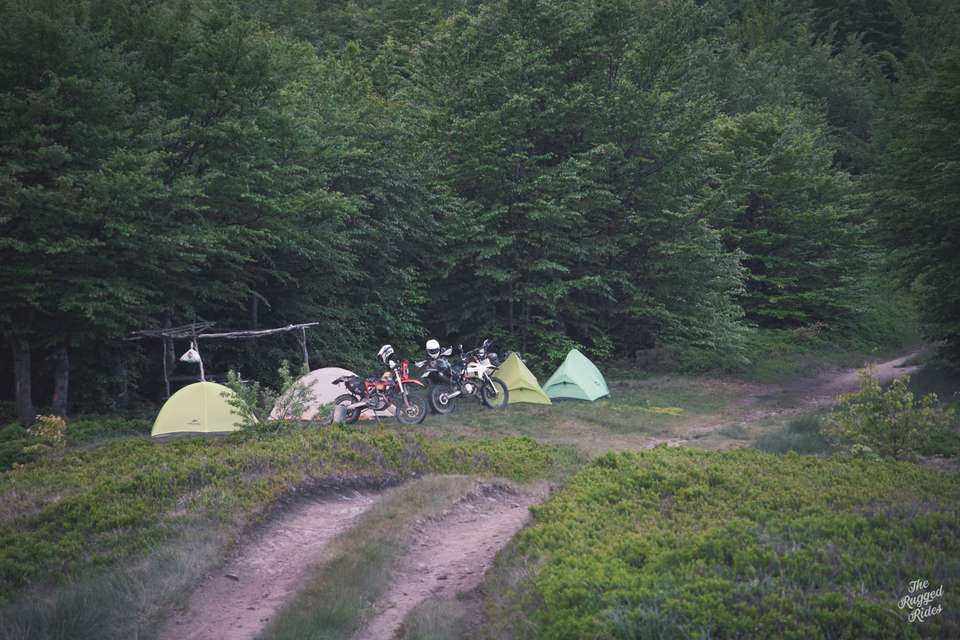
I could probably write right now about how the people living in Zakarpattia are wonderful, super friendly, how they bake beautiful cakes, and that the girls are delicious, or something like that, but I don't know. I won't write that, because as usual, we were just bumming around in the bushes, hunting for mind-blowing landscapes, so we basically lived a bit of an autistic lifestyle by travel standards. Scandalous!, but what can you do, that's just how we are.
Alright then, I'll write a bit about the history and the things I found interesting there. Zakarpattia, otherwise known as Subcarpathian Rus, is one of the most fascinating and historically complicated regions in Europe. Why did every second person speak to us in Czech? After all, Poland, Slovakia, and Hungary are just across the border, not Czechia… This is probably the biggest shocker for many travelers. The affection for the Czechs and knowledge of the Czech language is a direct keepsake from the interwar period. After the Great War and the collapse of Austria-Hungary, under the treaty of Trianon, this region became part of the First Czechoslovak Republic as Subcarpathian Rus. For Zakarpattia, this was a true golden age. Prague pumped monumental amounts of cash into this backward agricultural region. They built roads, bridges, public buildings, and tons of schools. The Czechs also had no ambition to erase the culture of the Rusyns, they let them speak their own language and keep their culture. So, it's no wonder they look back at the Czechs with such fondness today. The older generations learned Czech at school.
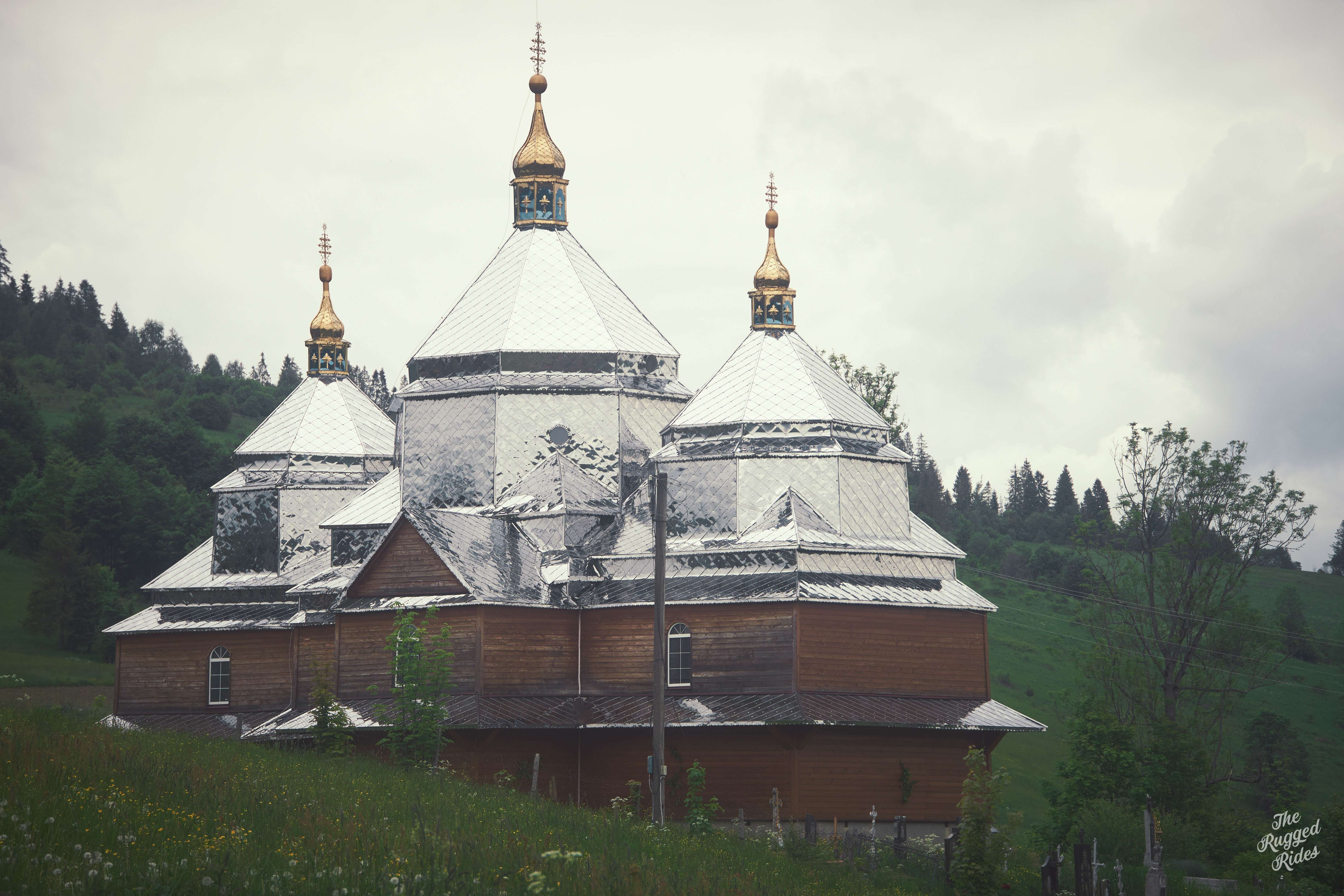
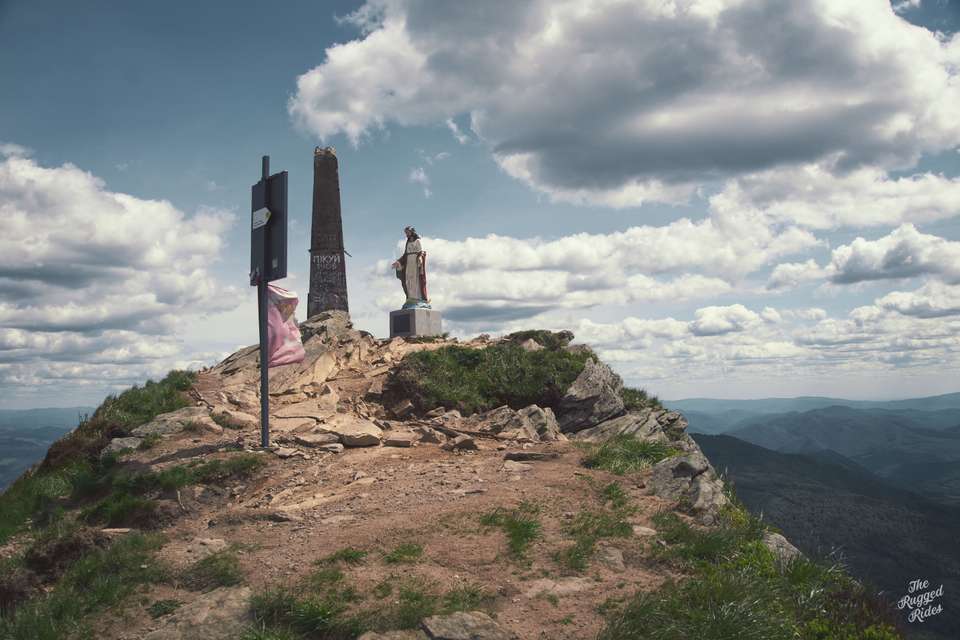
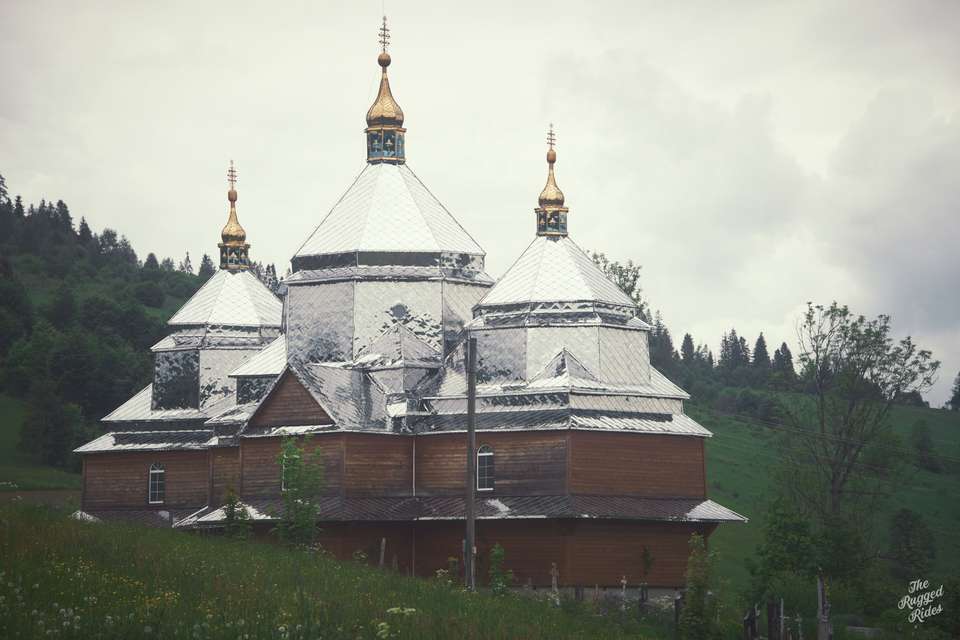
Second thing, all the churches are absolutely pimped up to the max. Why? Zakarpattia is a deeply religious region with incredible denominational diversity. Orthodox, Greek Catholics, Roman Catholics, and Calvinists all live side by side here. On Sunday, we saw dozens of people in highly traditional clothing. Hundreds of years old wooden churches are being heavily clad in shiny, brand new sheets of metal, often gold or bright blue. For the locals, it's a symbol of modernity, for us, it might look like erasing their historic character.
Black and red flags also catch the eye. Nowadays, these are the colors less of the Ukrainian Insurgent Army (UPA) and more of Ukrainian heroes, a very positive flag here, a symbol of resistance, especially after 2014. We saw these flags in cemeteries by soldiers' graves. Likely from the Zakarpattian 128th Mountain Assault Brigade, which took heavy losses on the eastern front.
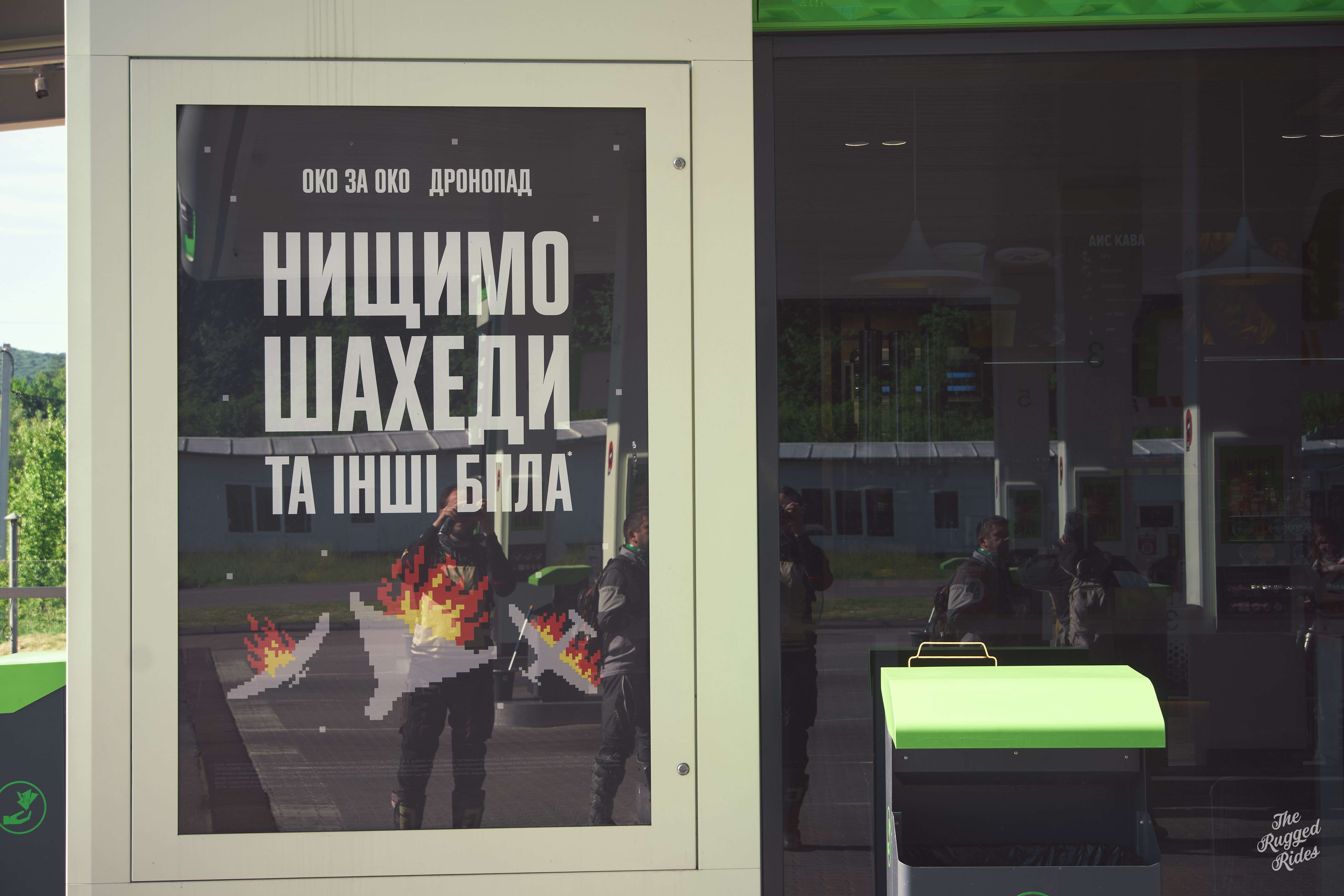
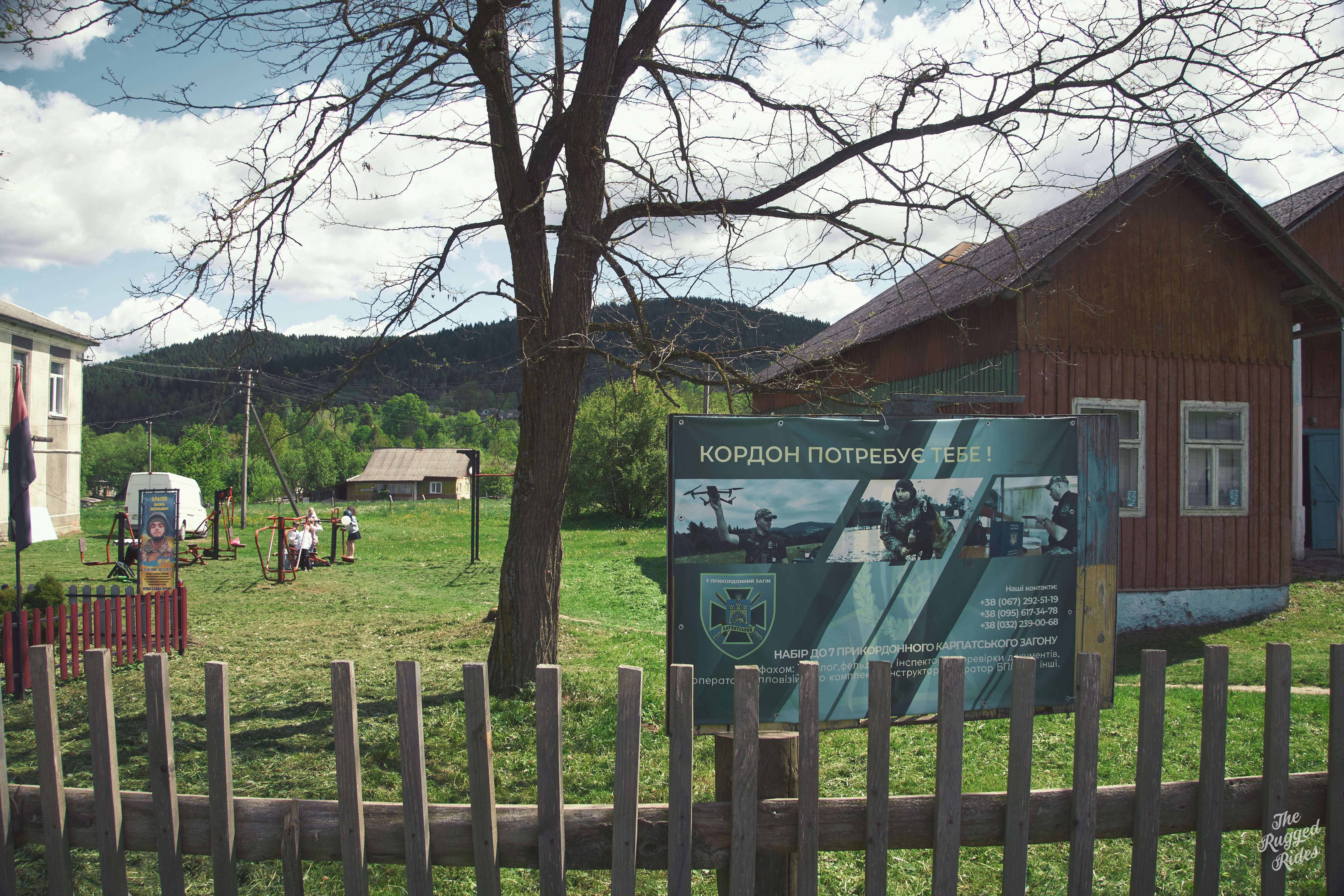
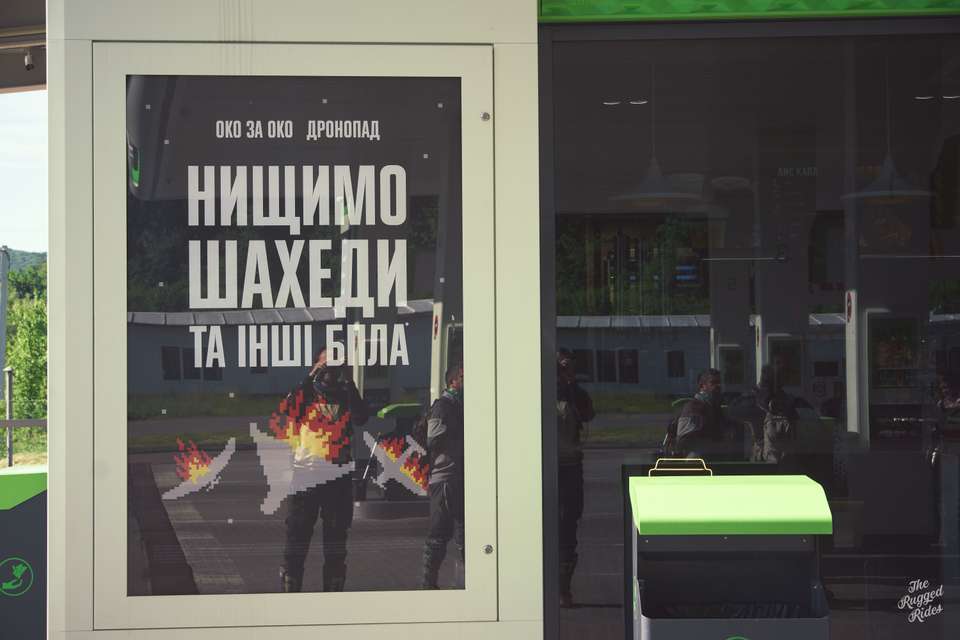
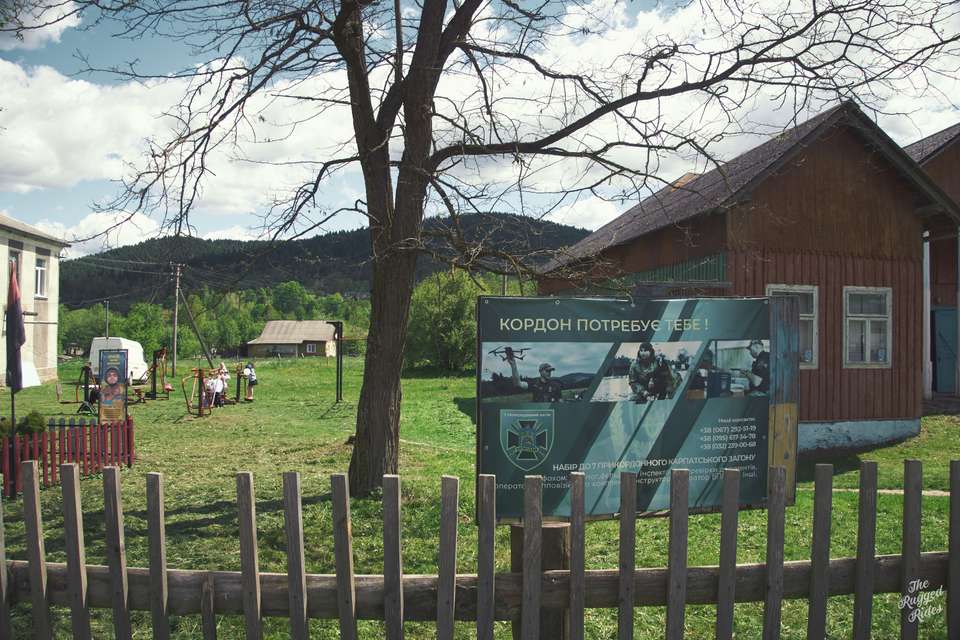
And that's the thing. There's a war going on, right? What are we even doing here, eh? Back in Poland, we often have a warped view of war, tied to Soviet propaganda but also backed up by the tragic fate of many Polish lands. In reality, though, it looks different. Here in Zakarpattia, life goes on. People go to work, bakeries bake bread, kids learn in schools, new roads are being built, and tourists hike in the mountains. People don't want to feel like lepers, they want us to come and visit. Area wise, it's also a completely different world from the conflict zones, we're over 1,000 km from the front line. Of course, you can feel the war in the air. You're reminded of it by drone army posters, flags, portraits of soldiers, and slogans at petrol stations. I also checked out a few cemeteries, expecting to find nothing but fresh graves of young lads. I didn't. The newest graves belonged to all sorts of people, not just soldiers. Still, it doesn't change the fact that a drone flew over us at night, a patrol drone, but it leaves a peculiar impression nonetheless.
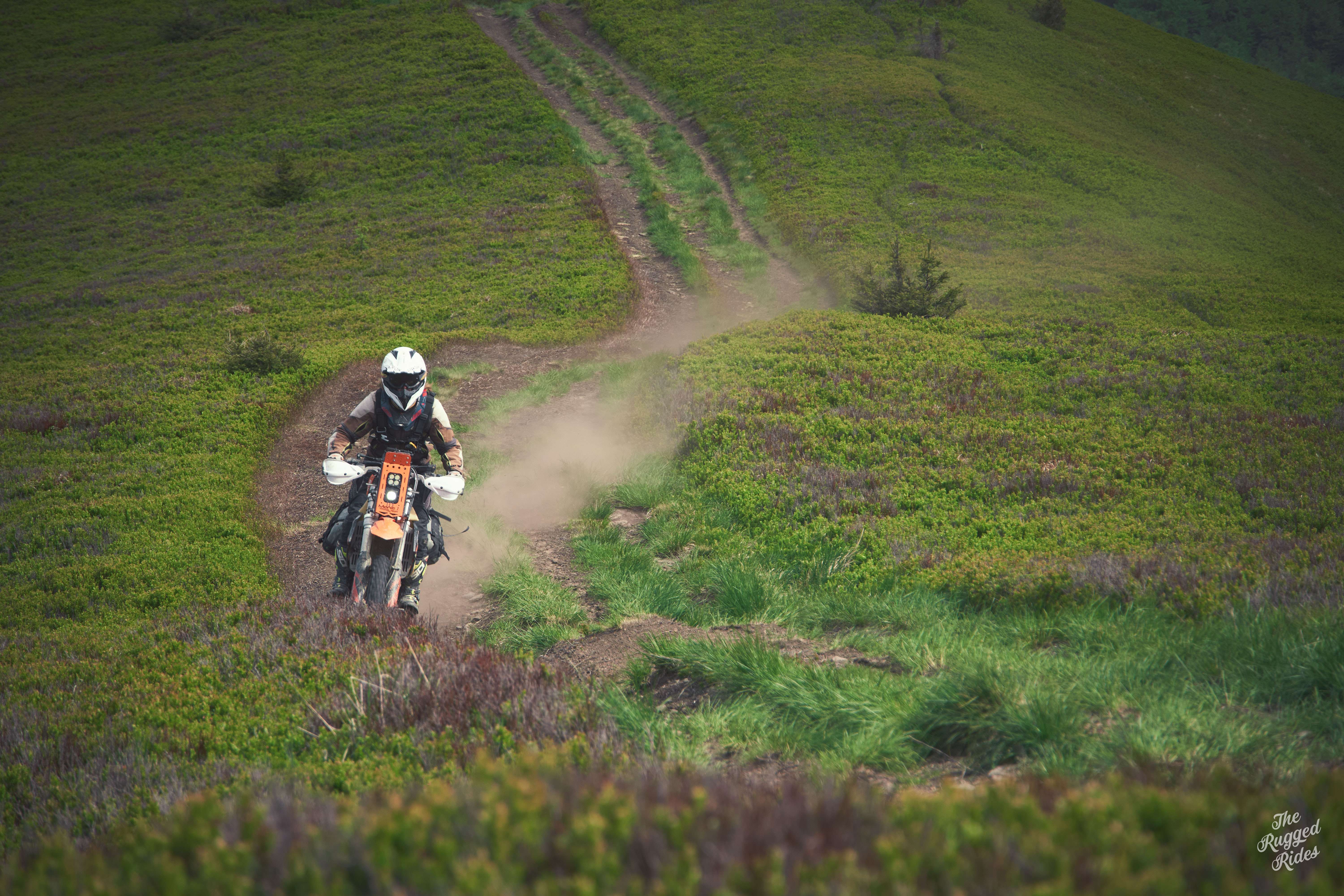
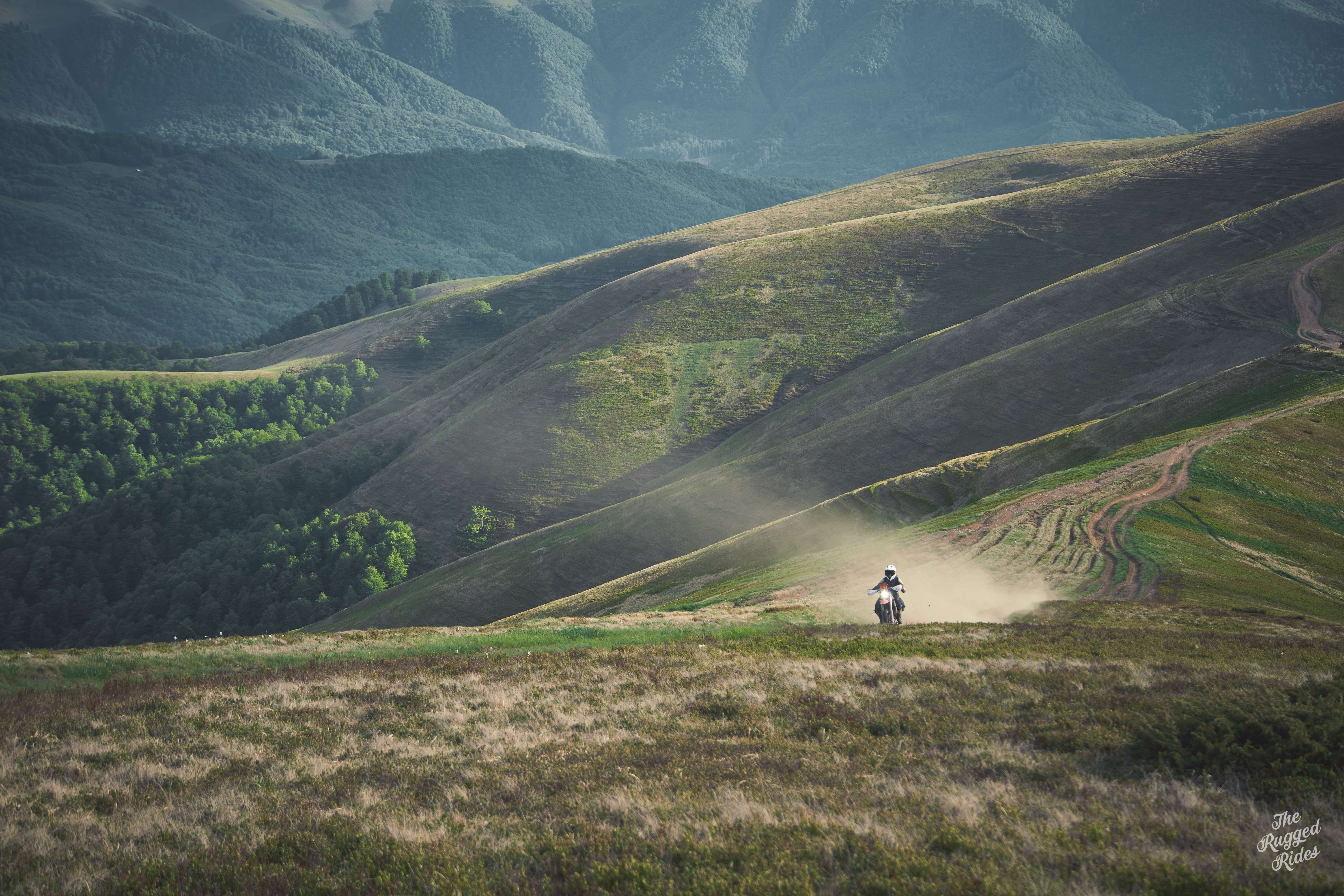
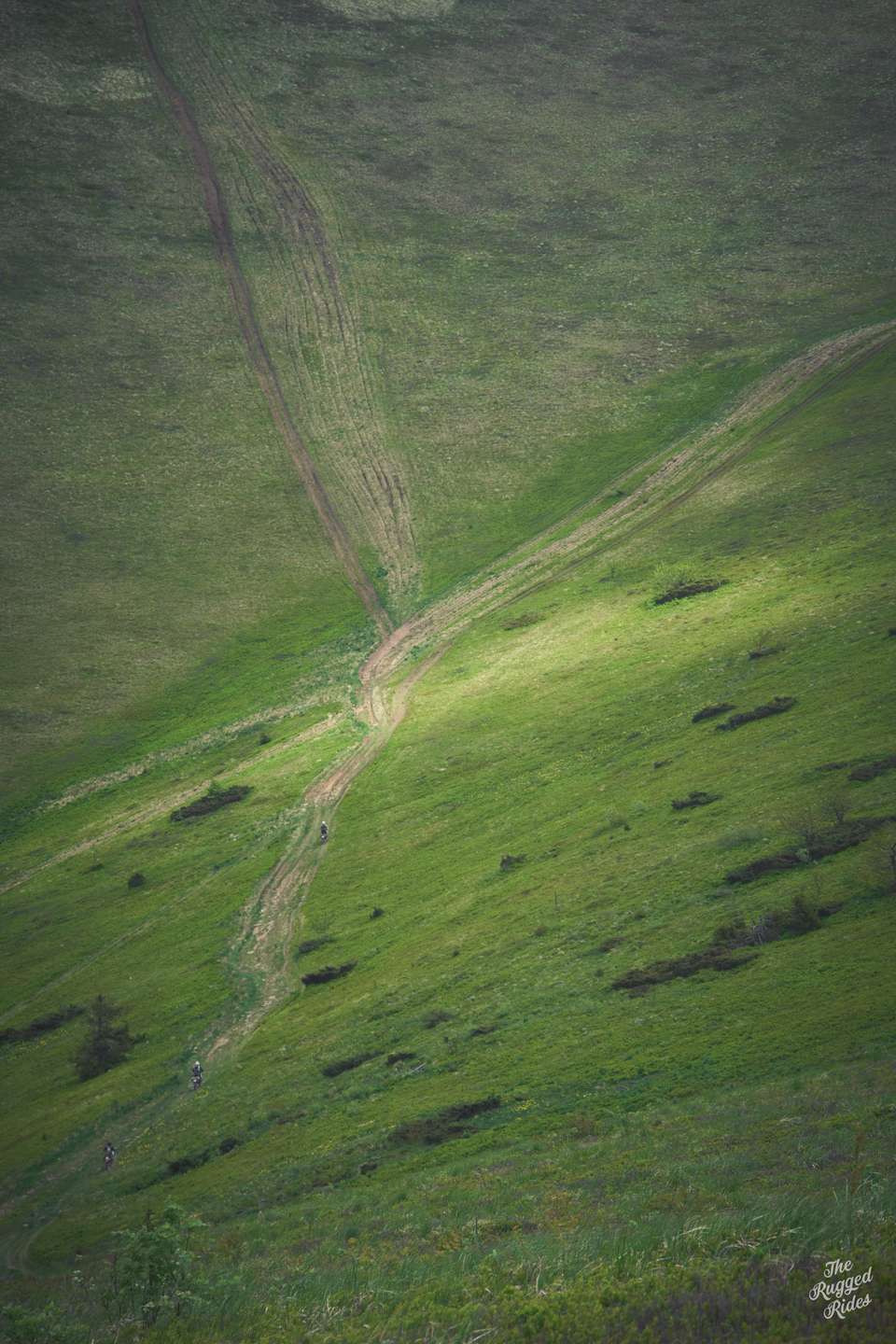
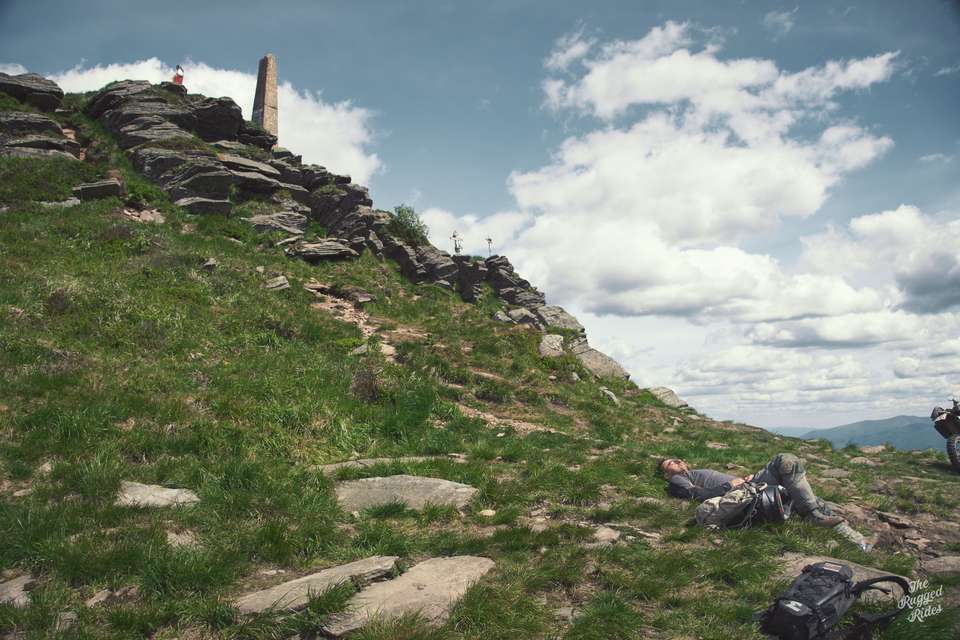
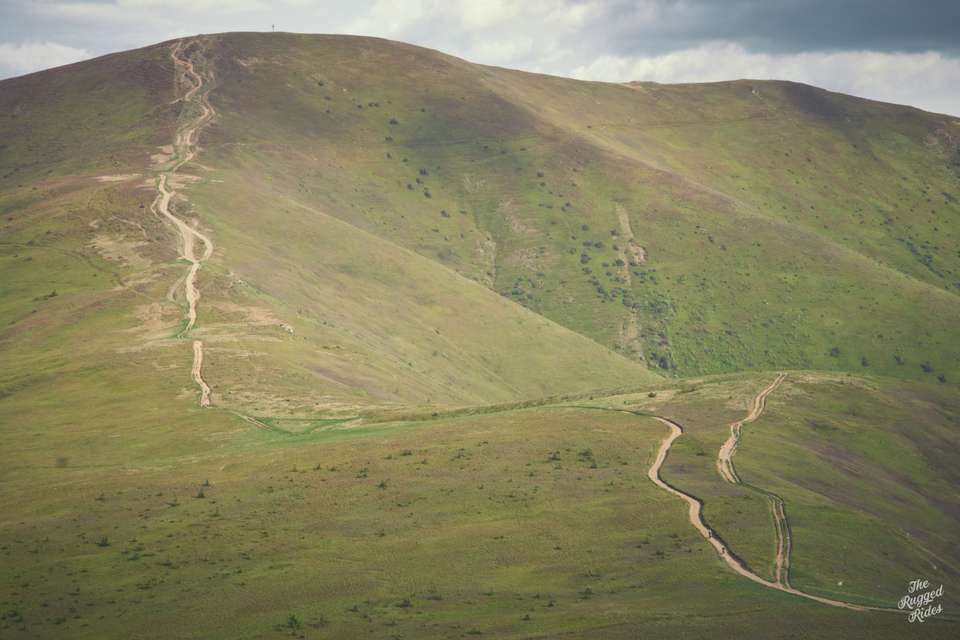
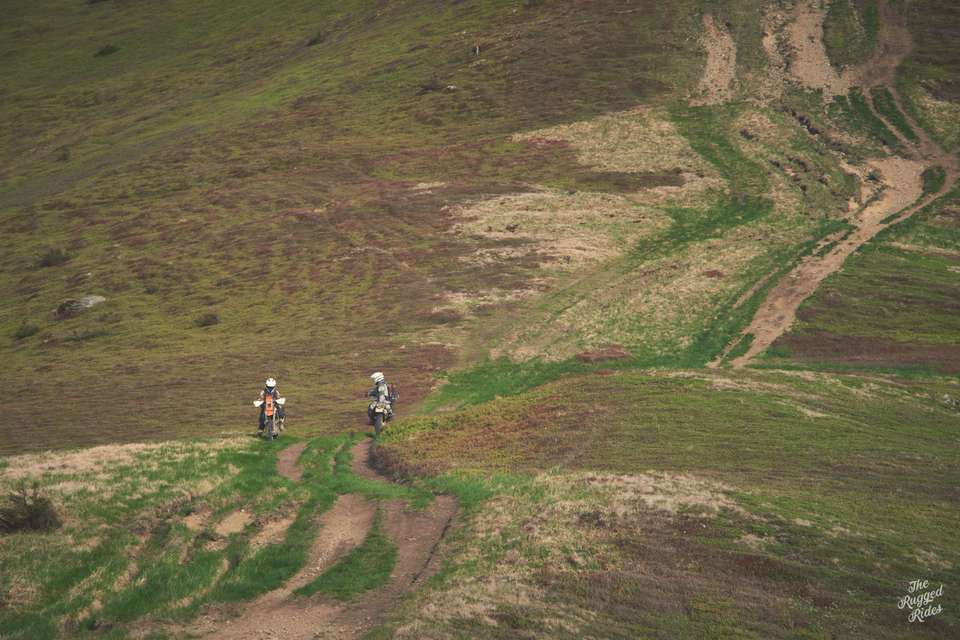
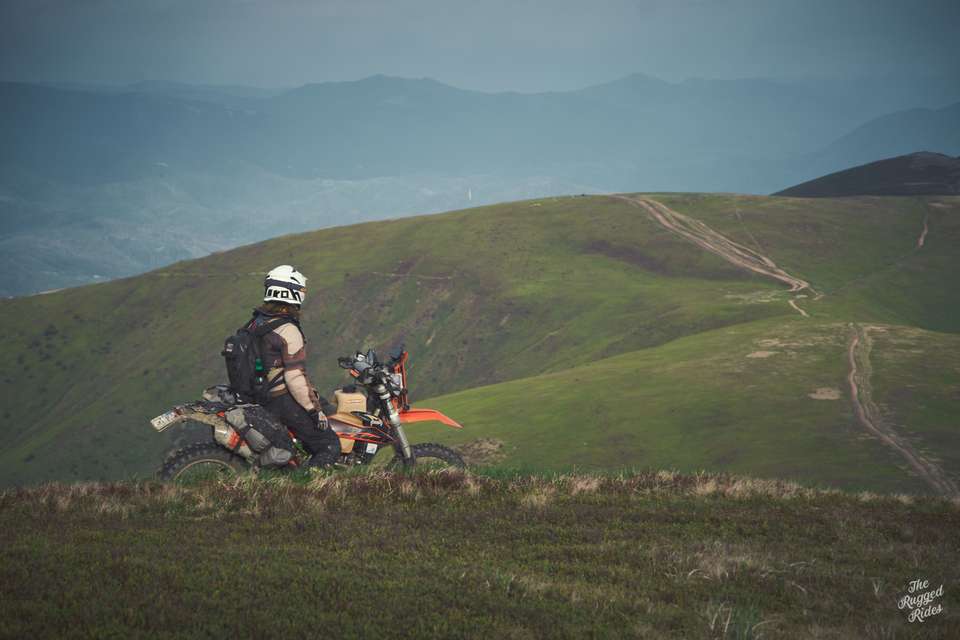
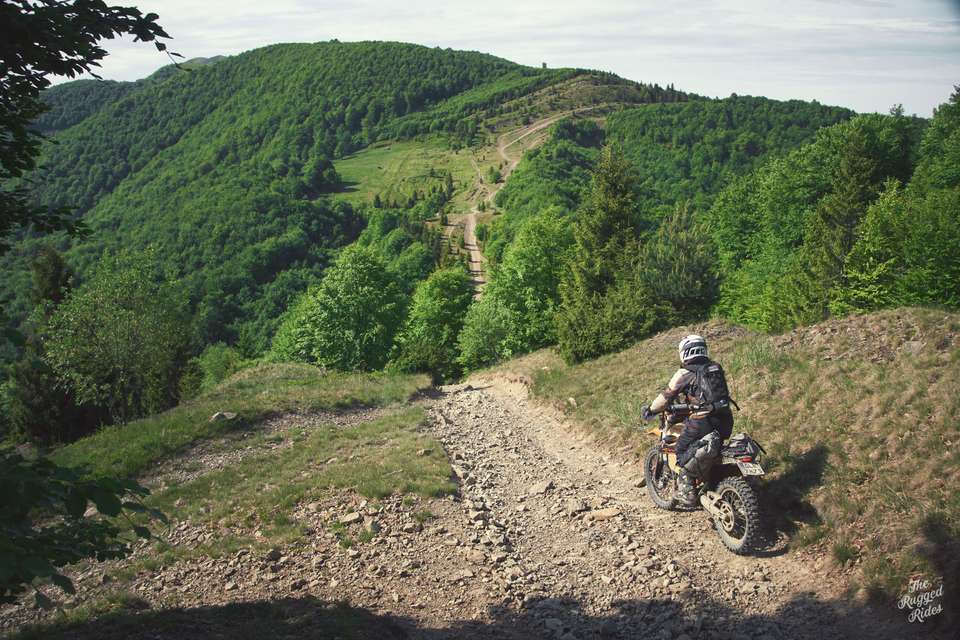
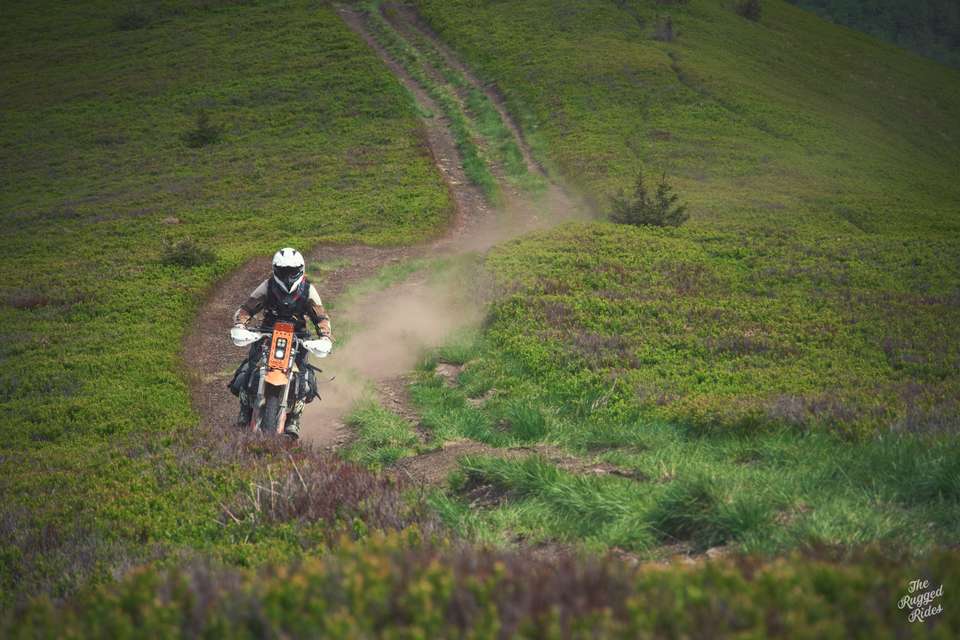
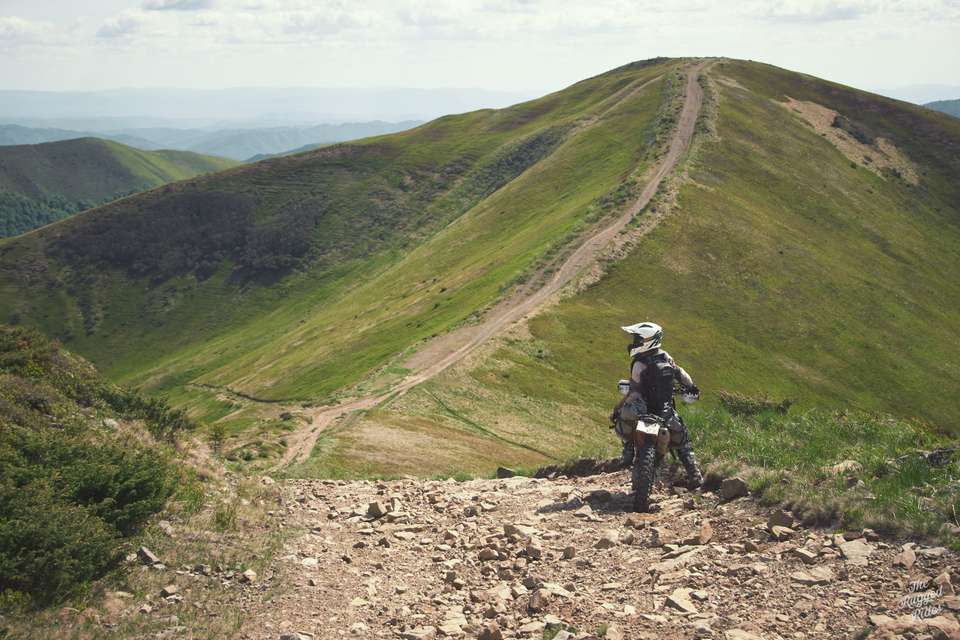
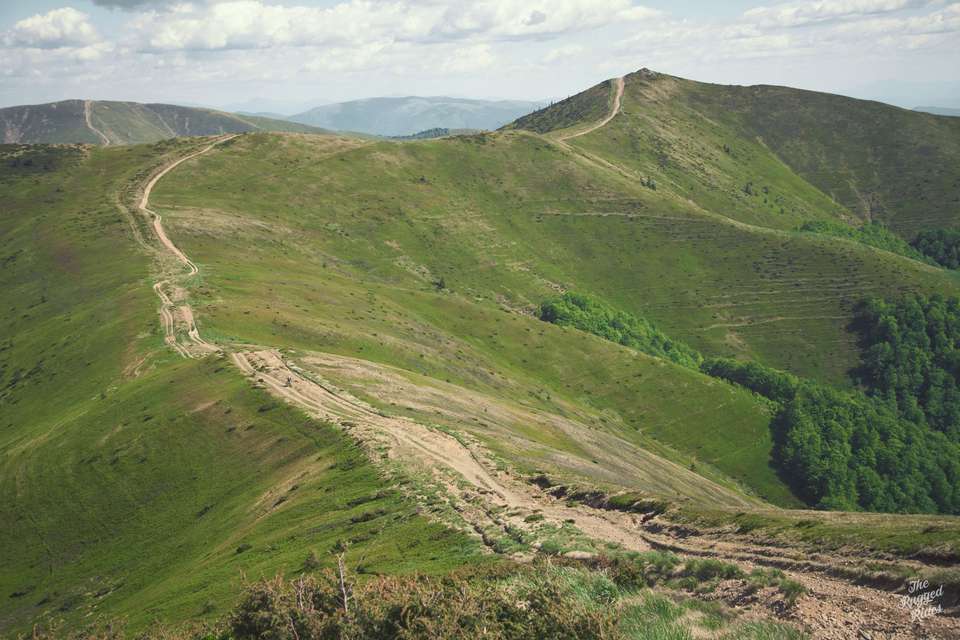
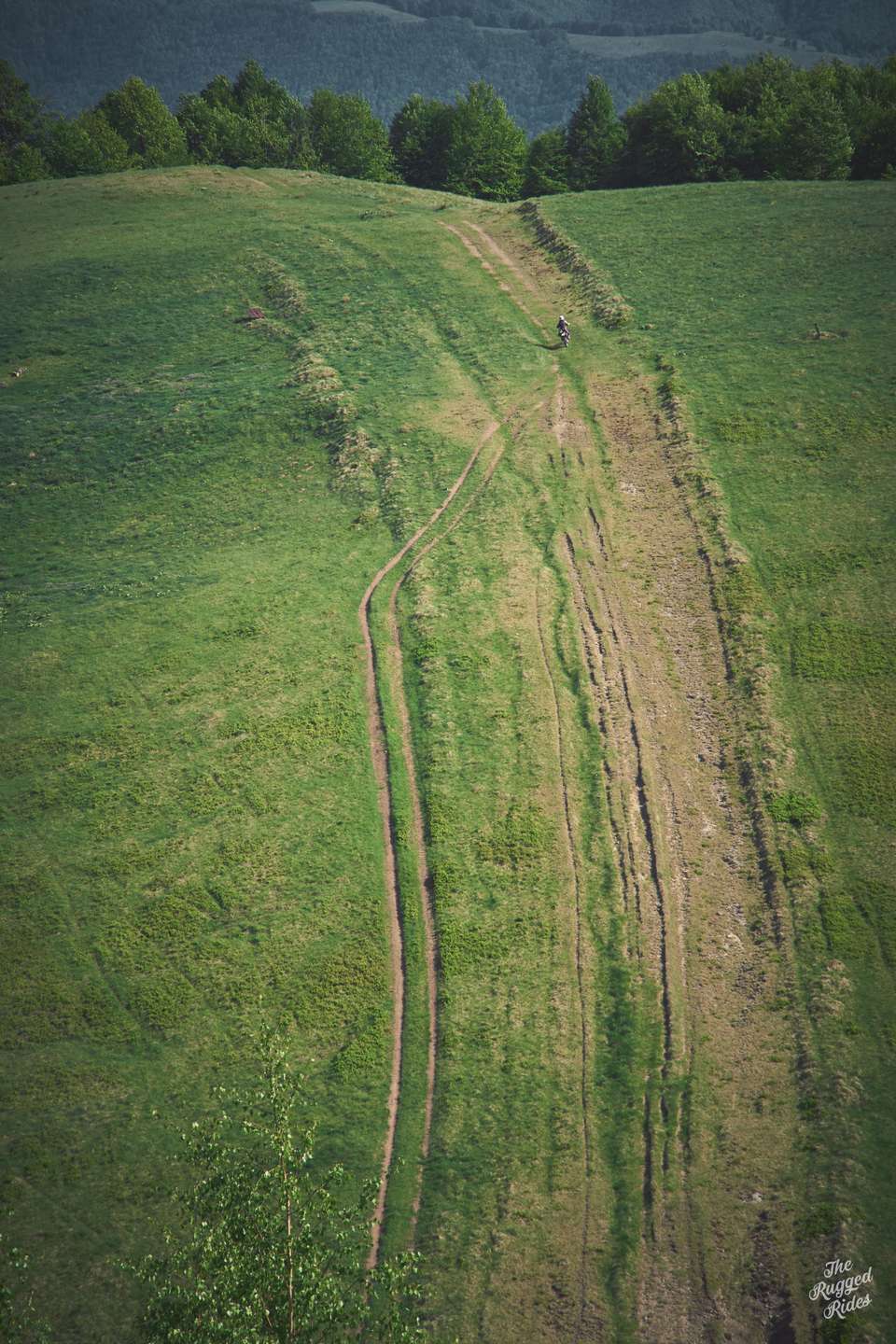
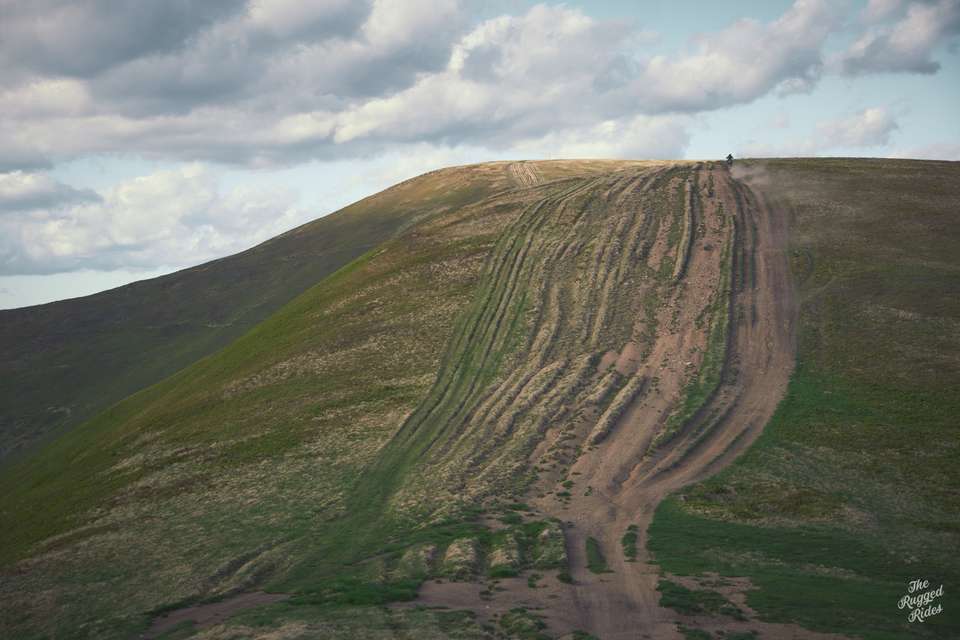
Right, let's go. Ukraine is one of the last bastions of true freedom when it comes to motorbikes. Riding a motorbike is widely accepted, mind you, it could hardly be otherwise when the locals head out to pick blueberries in a massive ZIL truck. And this is exactly where I get a massive mindfuck. On one hand, I value this freedom and always actively chase for it, on the other hand, I see the deep wounds that wheels have carved into the mountain pastures - polonynas. Obviously, it's mainly the huge trucks that do the damage, but no traffic leaves the bare peaks completely unscathed. Exactly, no traffi, even hikers can wear a trail down to the bare stone. I think sometimes we do get a bit too paranoid about all of it, though. From that point on, I closely watch the shapes of these wounds, the older ones are healing up, soil reappears in them, and then plants. Even older ones slowly lose their shape entirely, nature heals itself. The mindfuck stays in your head, though, our lives aren't without impact on the world, and they will never be. One rule, we stay on the track, always.
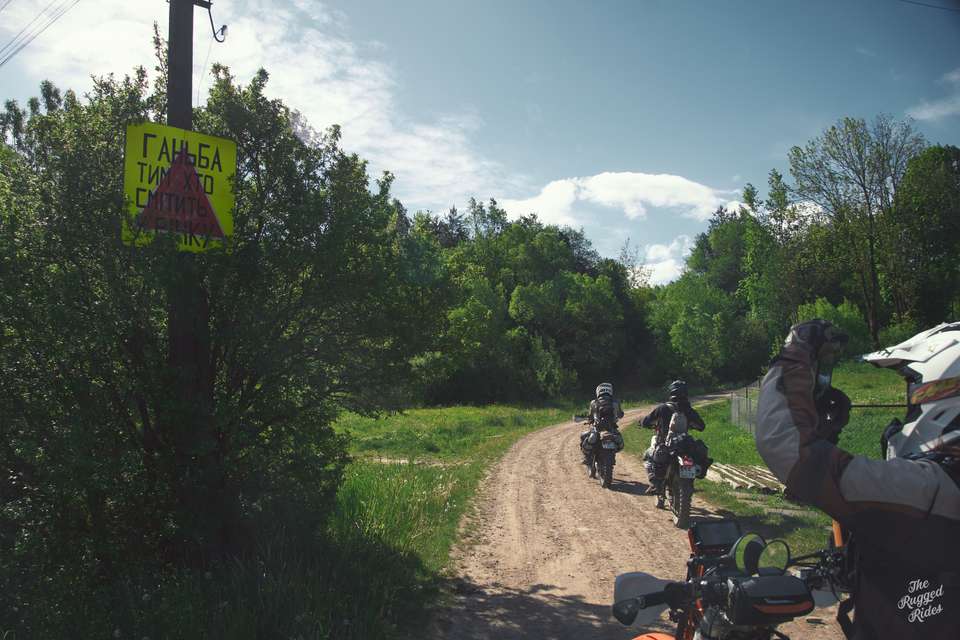
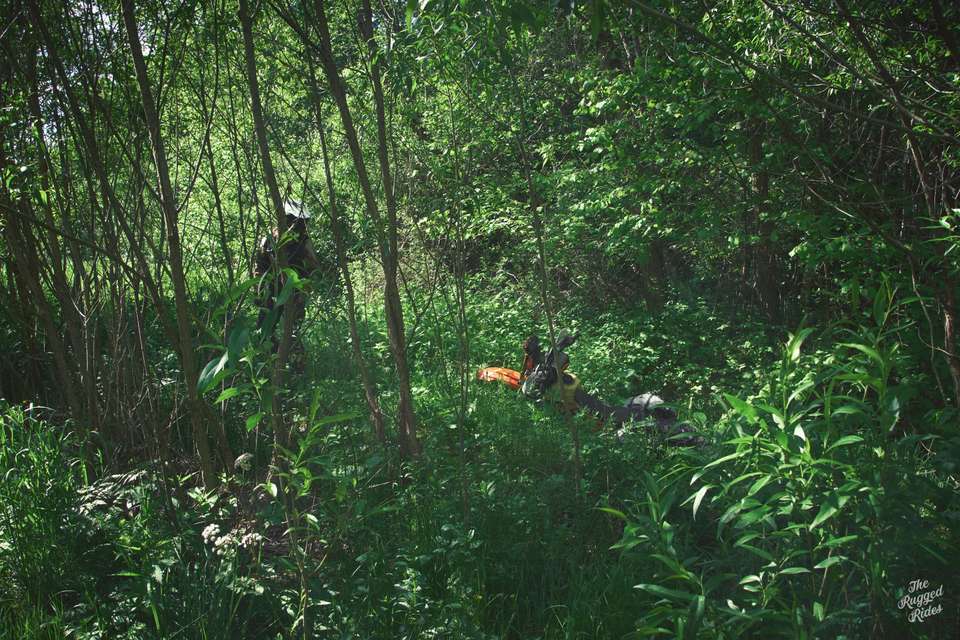
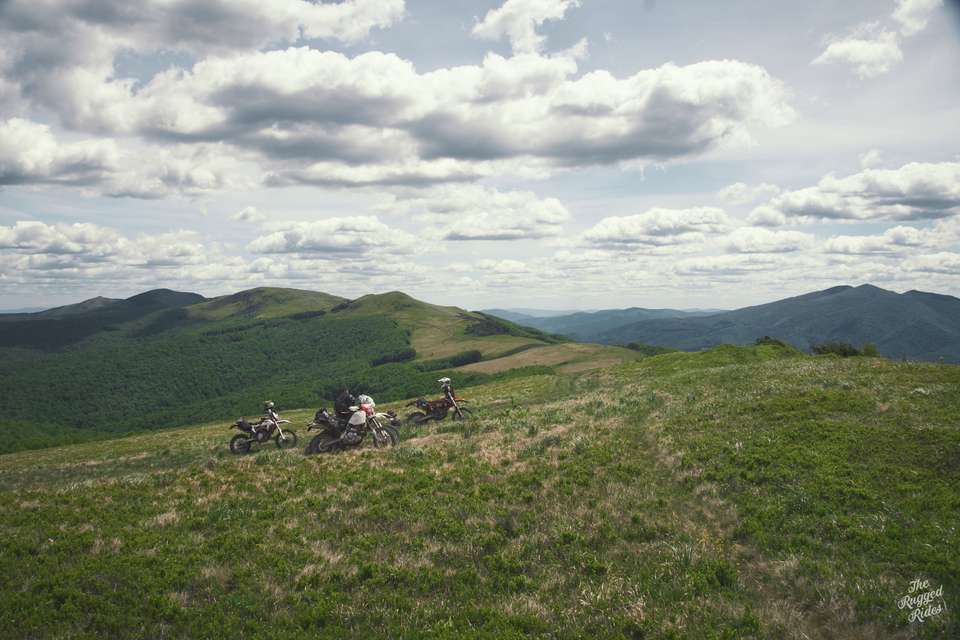
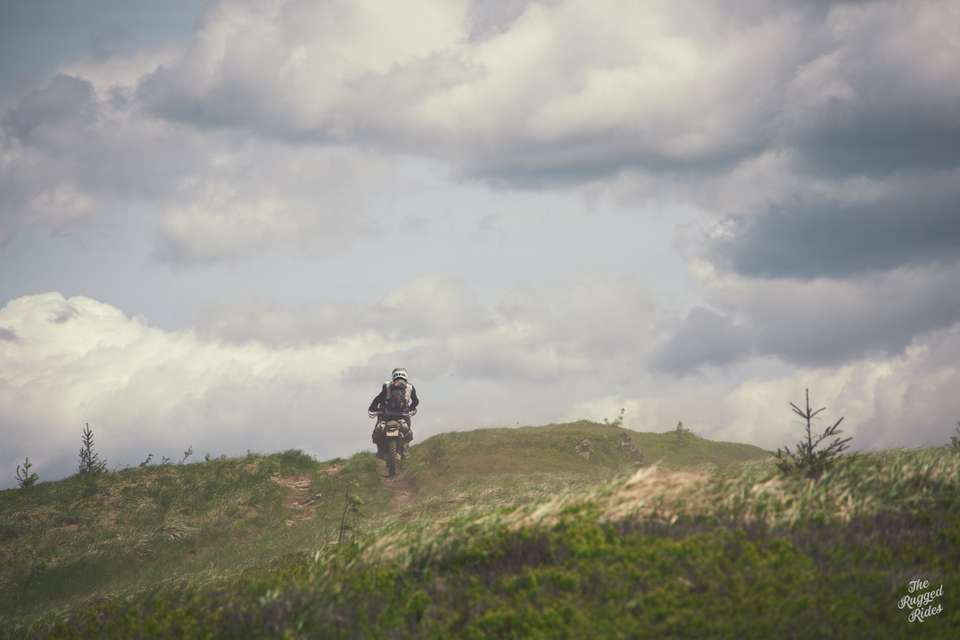
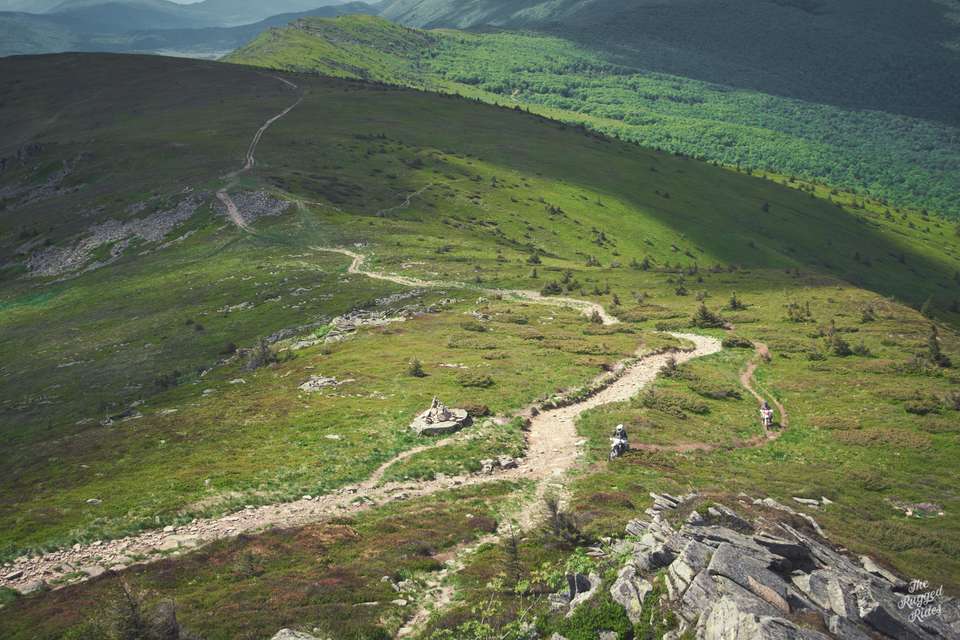
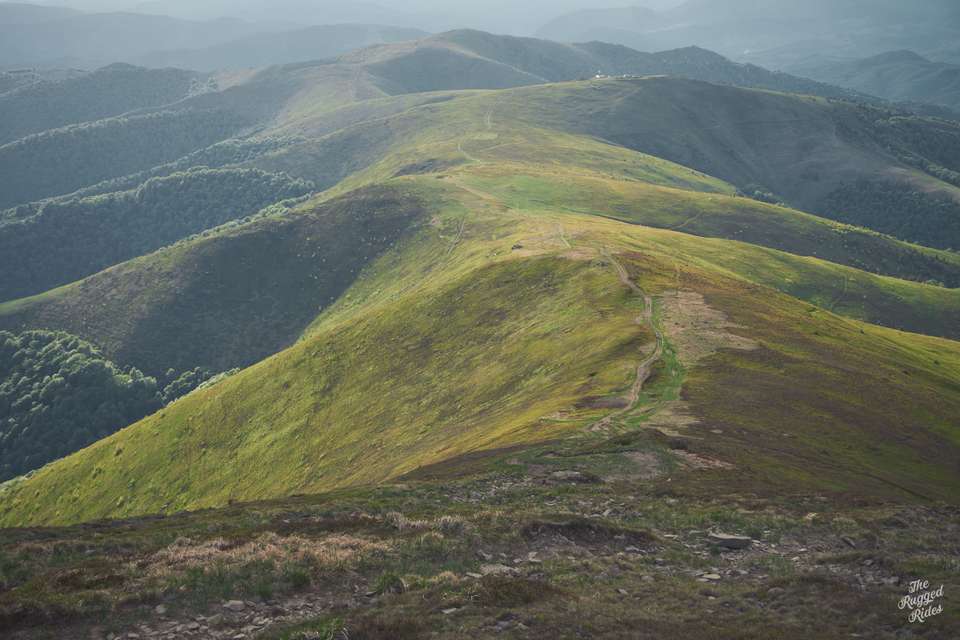
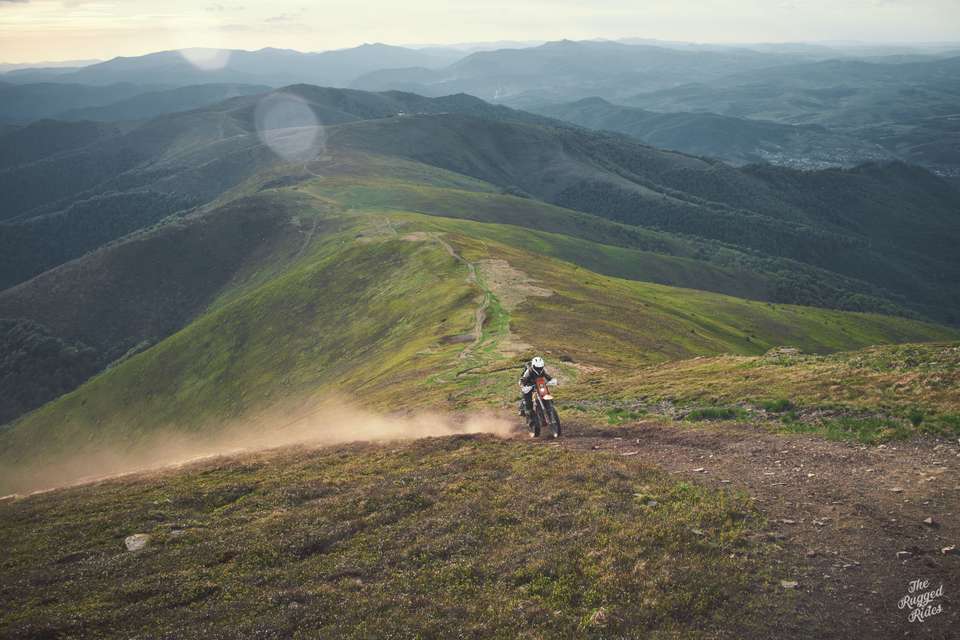
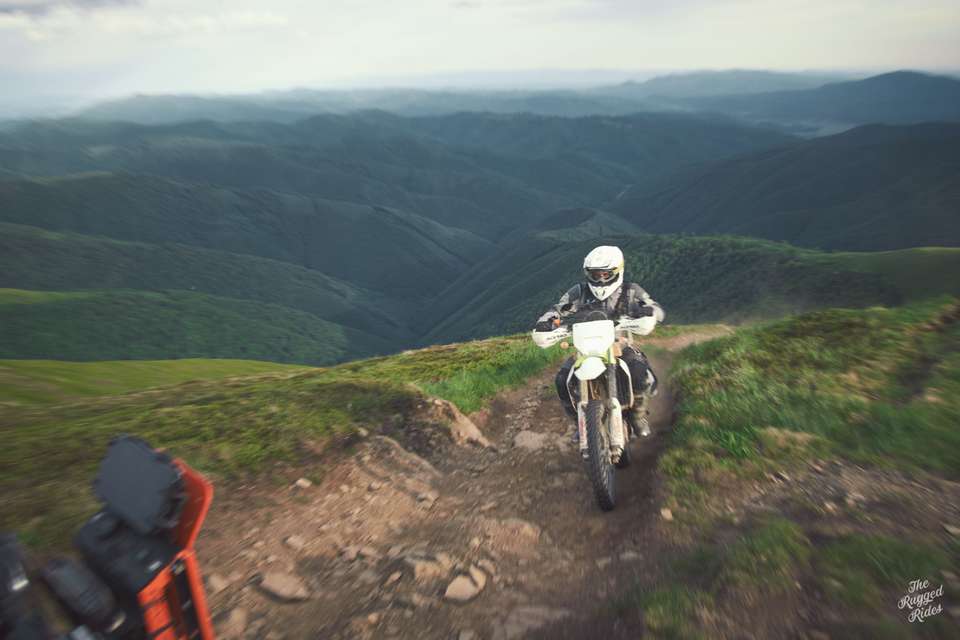
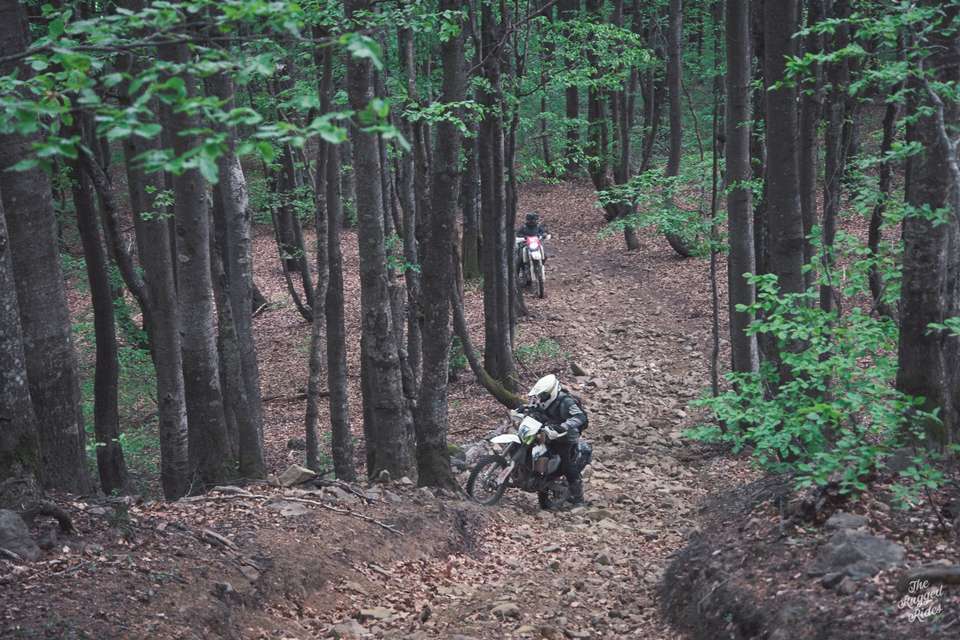
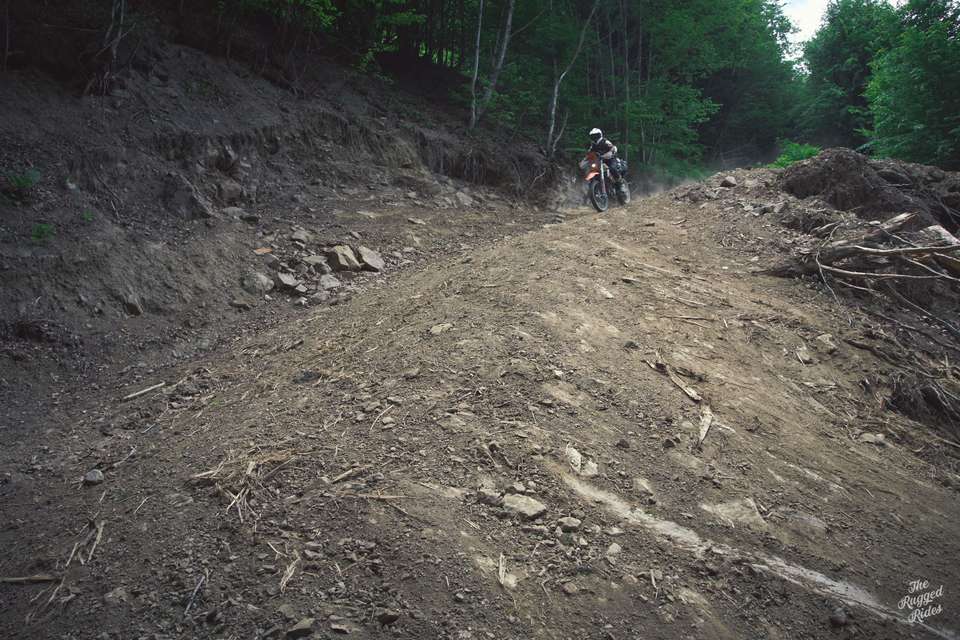
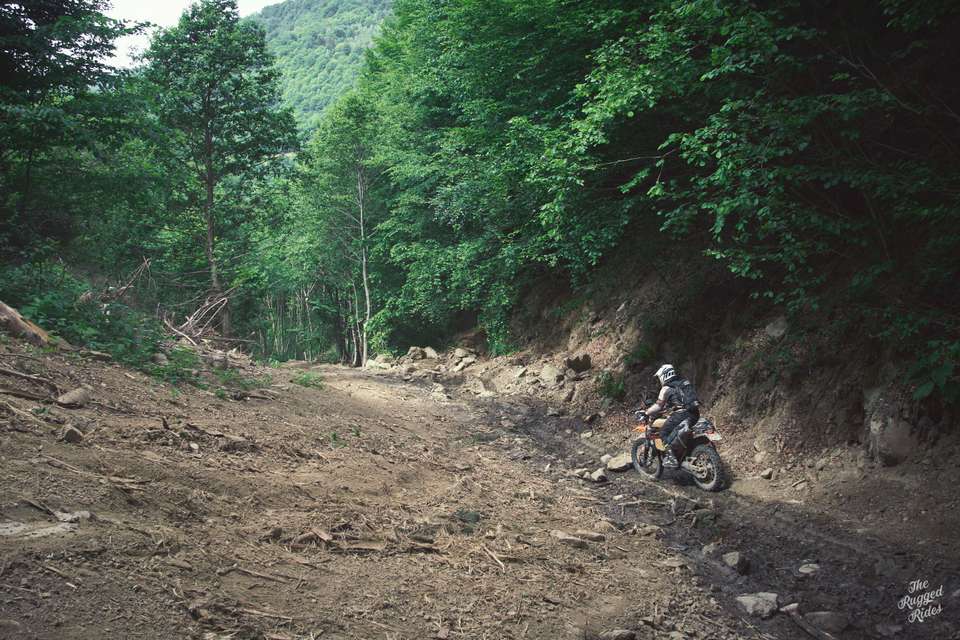
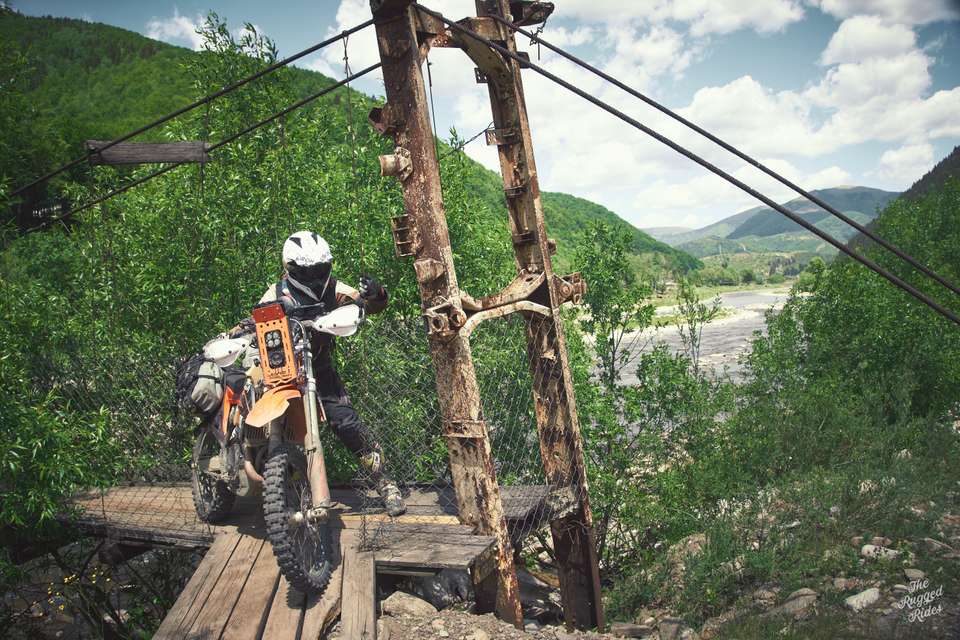
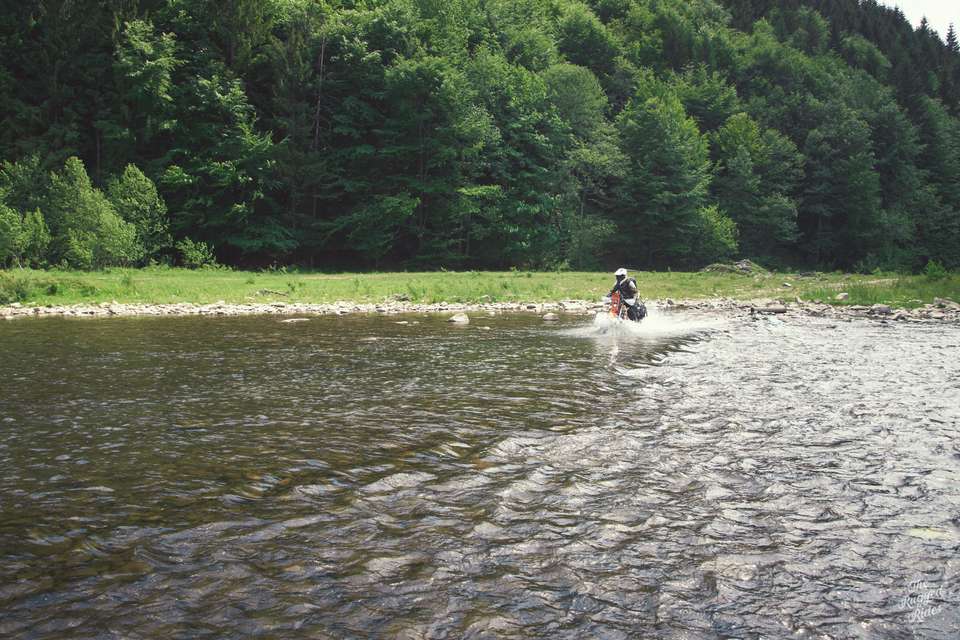
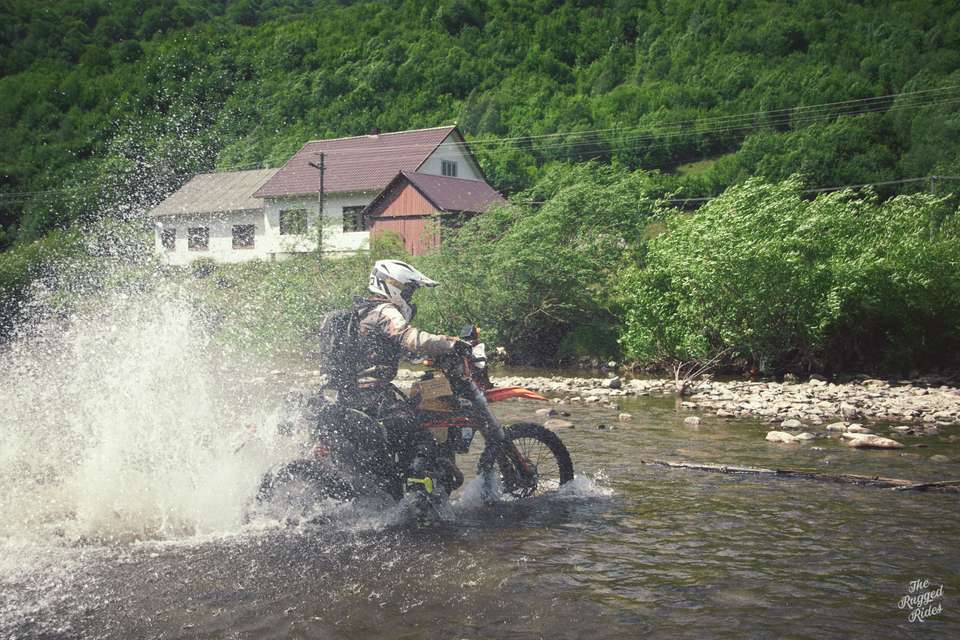
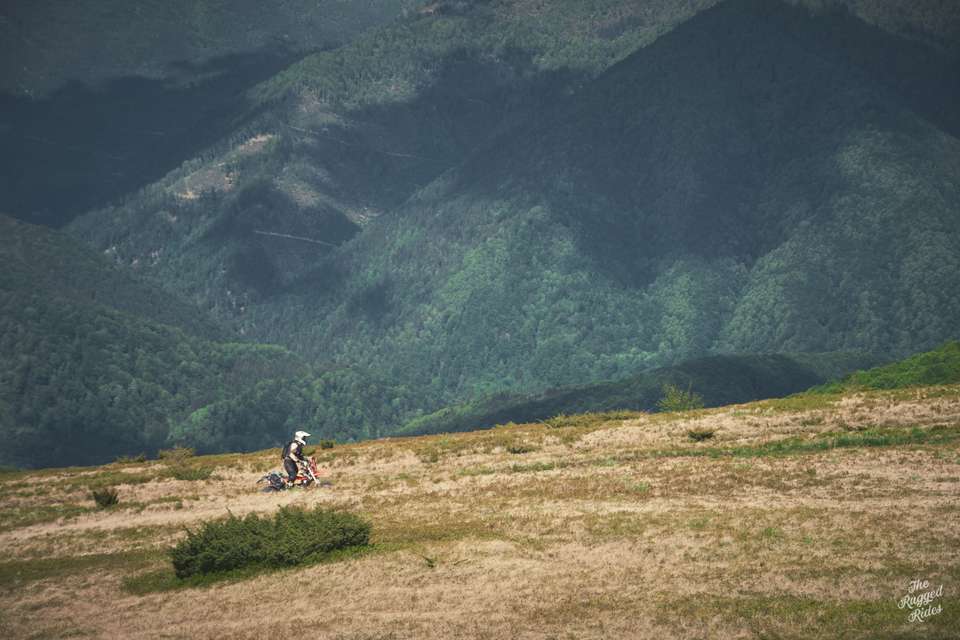
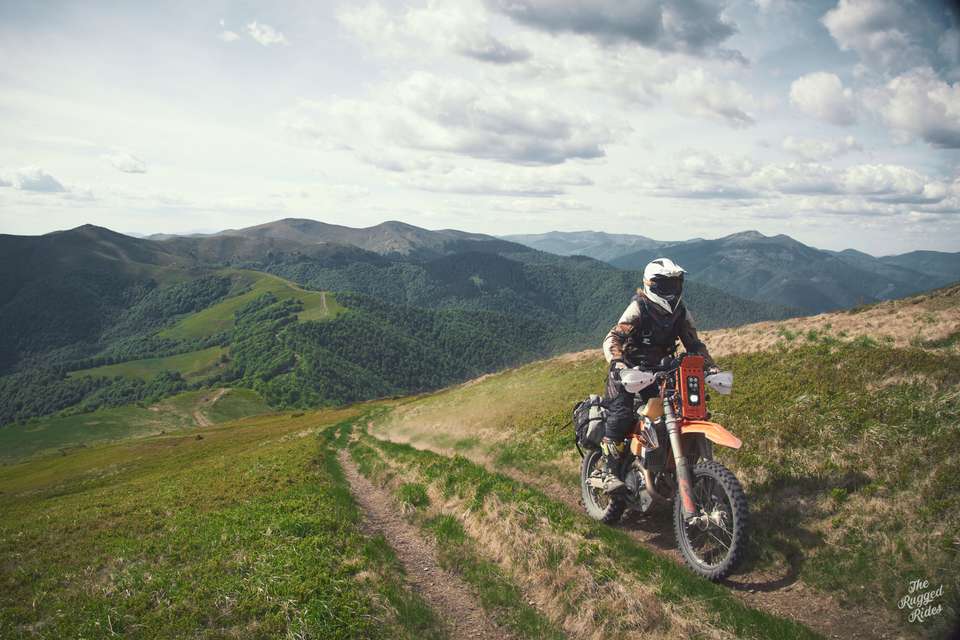
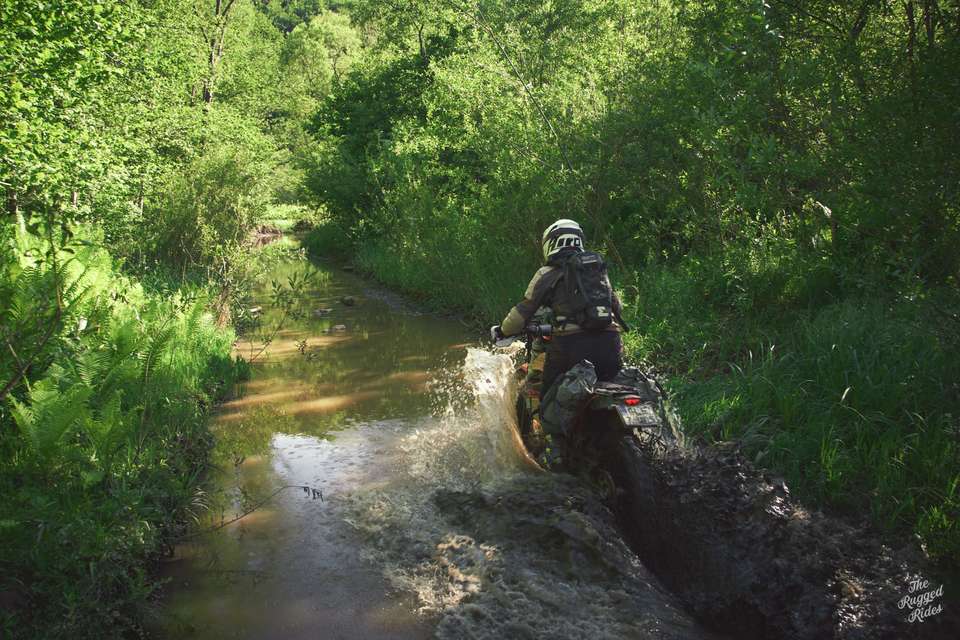
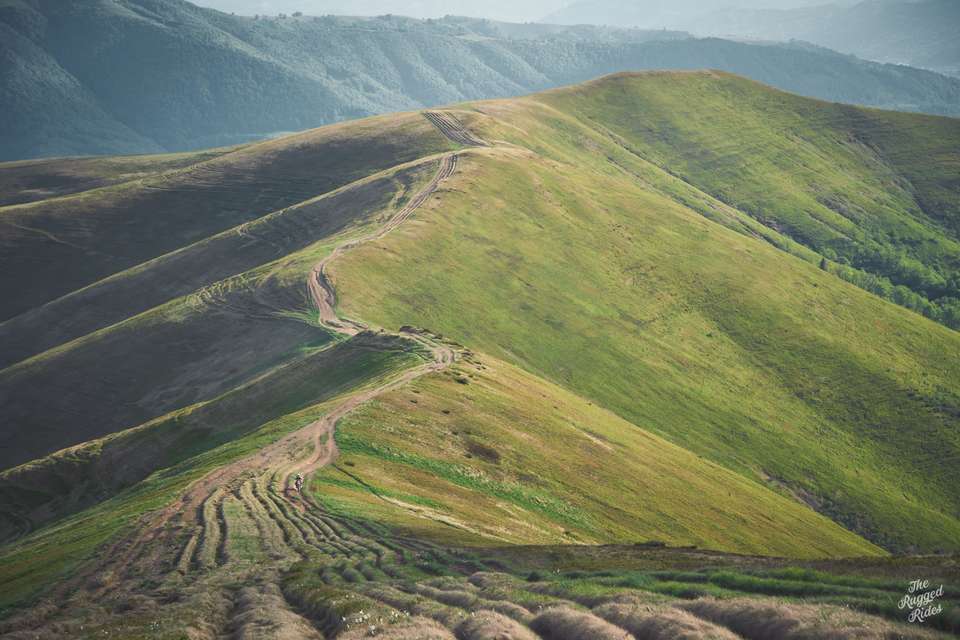
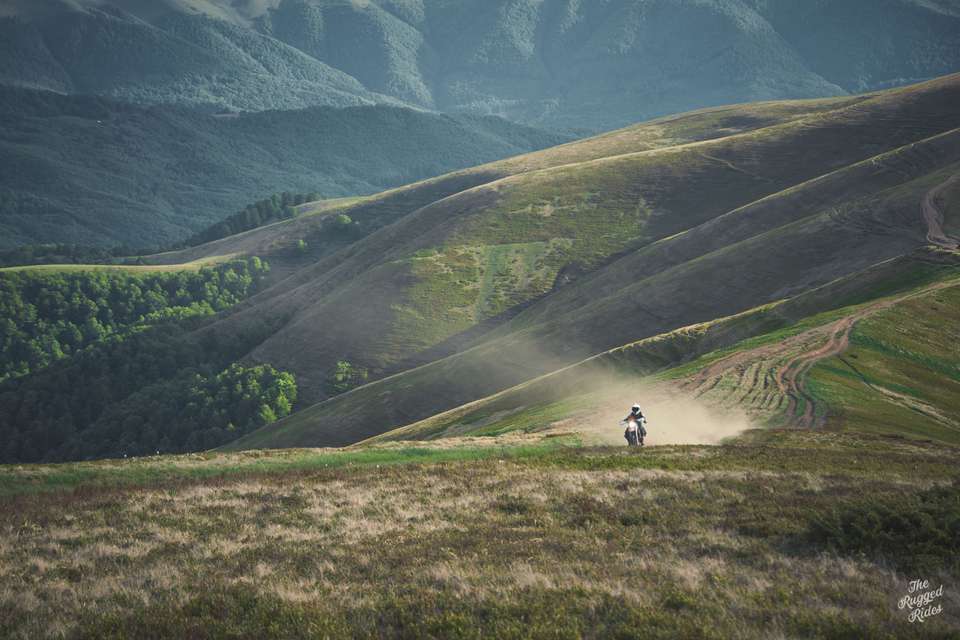
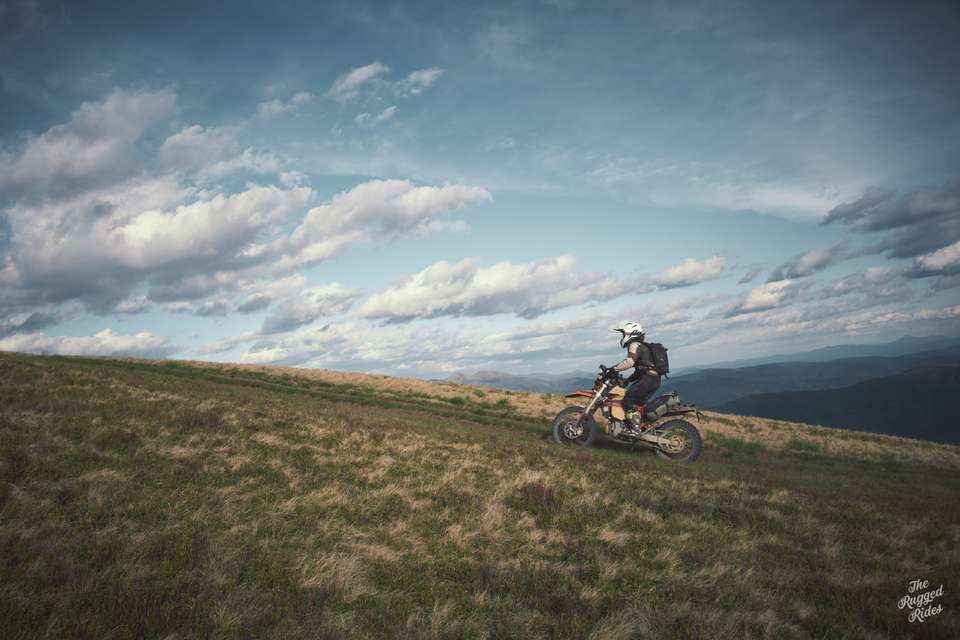
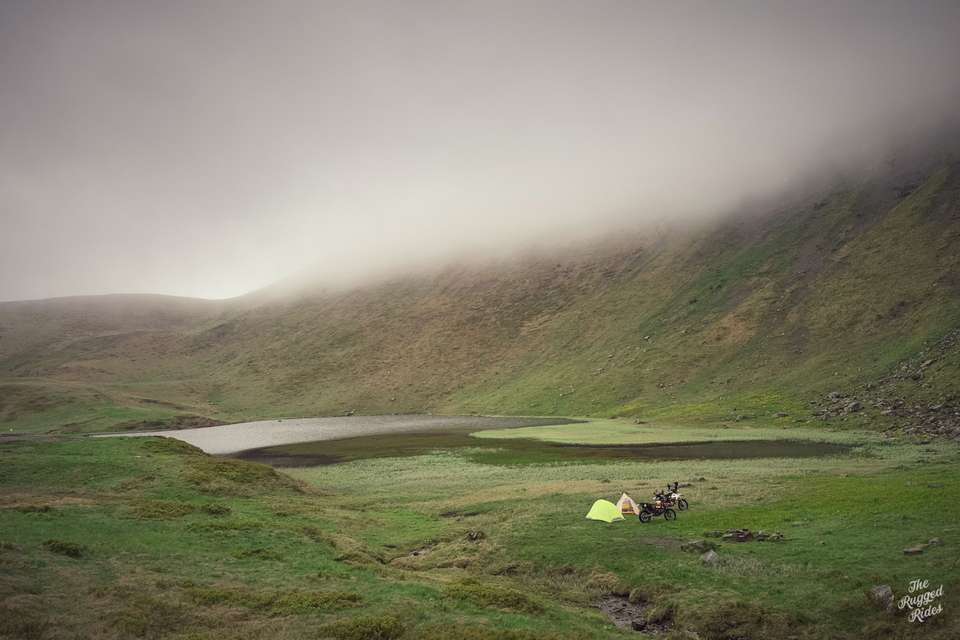
And speaking of riding, the riding here is exhausting! We're in solid shape, but a heavy 3 days spent to the absolute fullest in the Ukrainian Carpathians cured me of any excessive self-exaltation. Balance is the archduke of riding technique in these conditions. A strong grip with your knees is the second essential ingredient. The polonynas are straight-up enduro. Honestly, there isn't a single moment without a rock garden, ruts, or mud, or everything all at once. In the woods, if it's dry, the mud dries up and forms hard troughs, jumps, and holes. Forest tracks are often overgrown, with branches sticking right out into the middle. Because of all this, your arms are pumped solid all the time, there's no time to recover, you're working the bike non-stop. The work is hard, but the reward is exqusite. You can ride along the ridges of the polonynas for dozens of kilometers without a break, without a single intruder in the form of a house or a tarmac road cutting across a pass. The horizon is pristine.
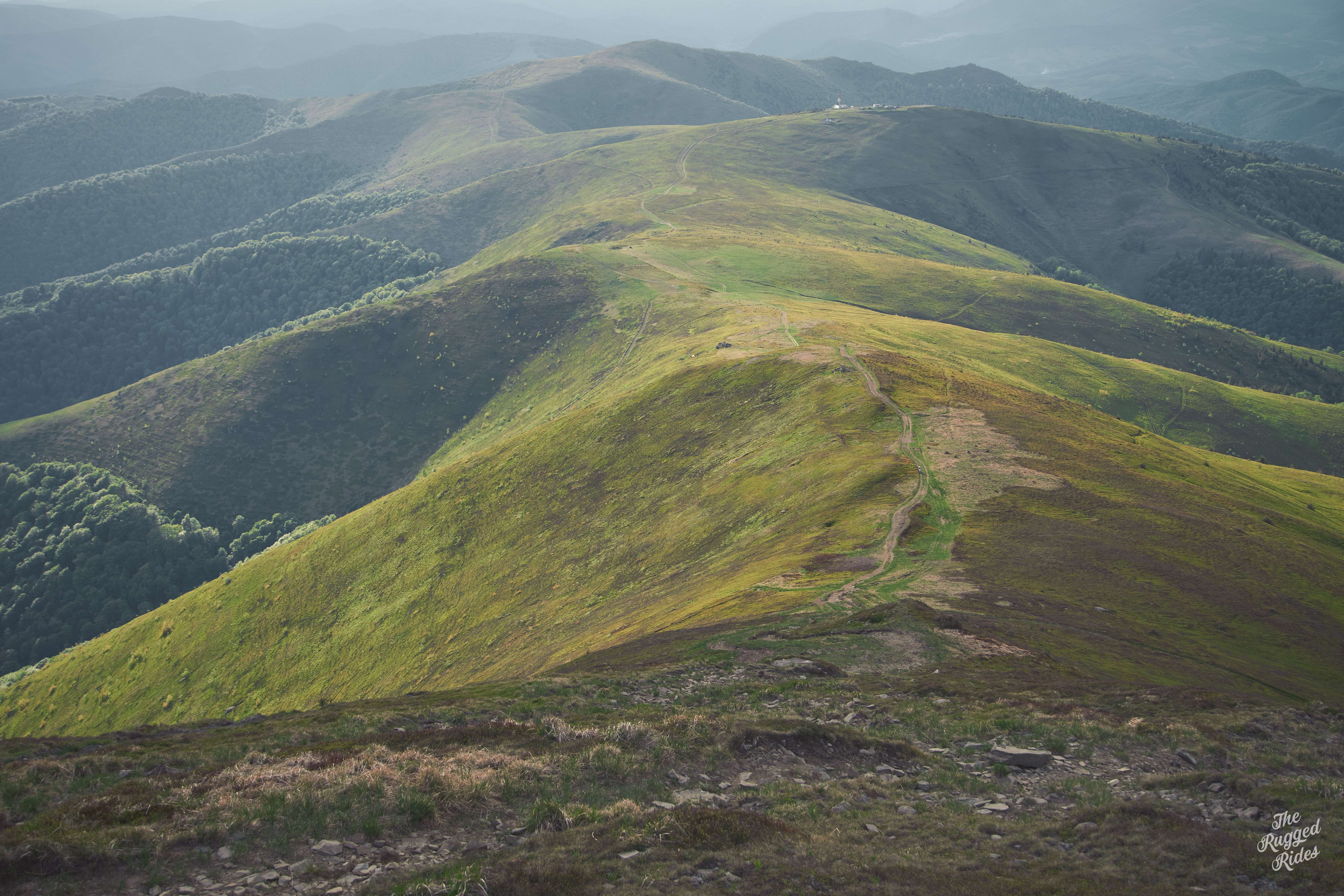
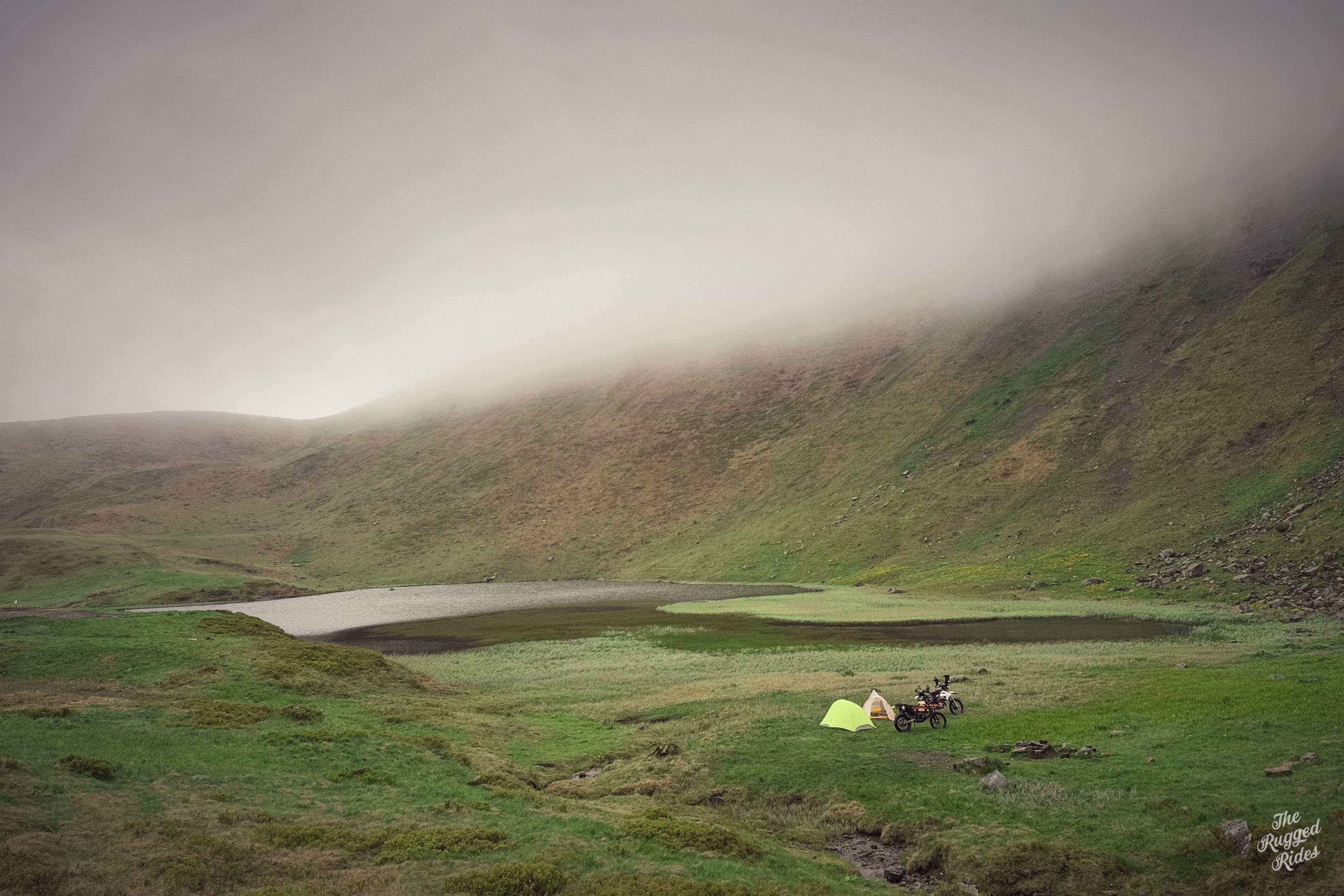
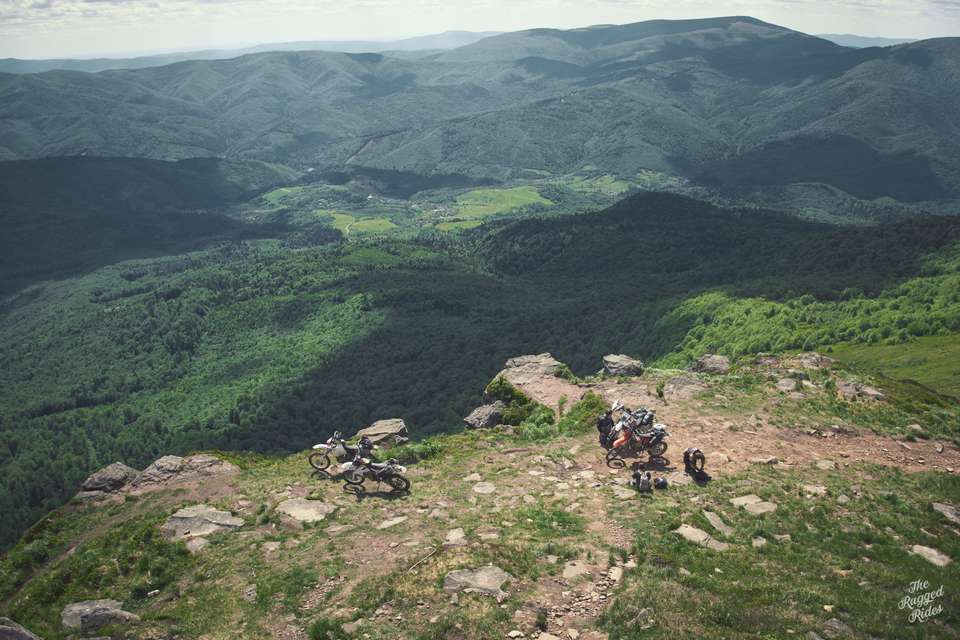
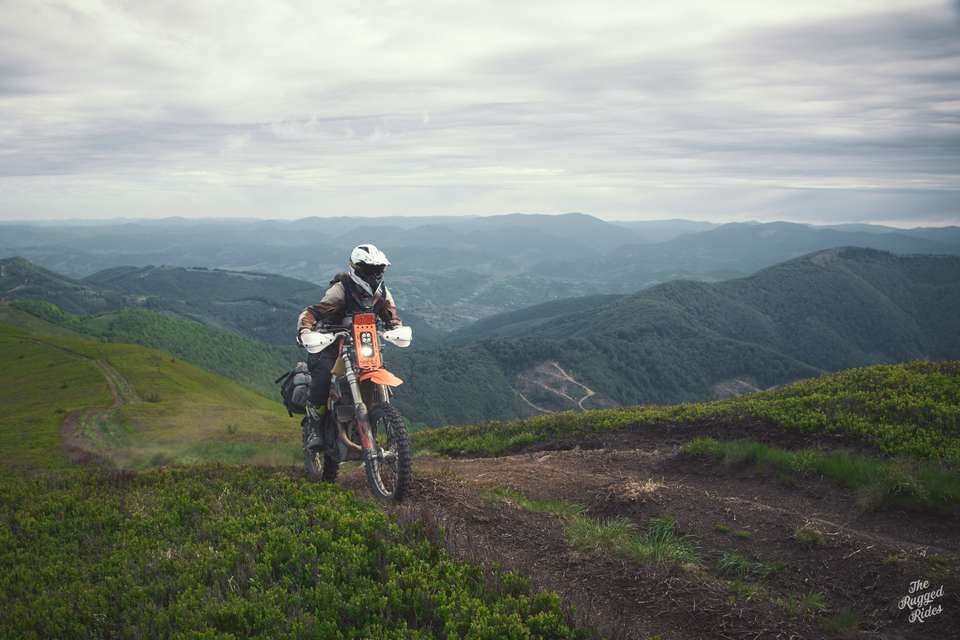
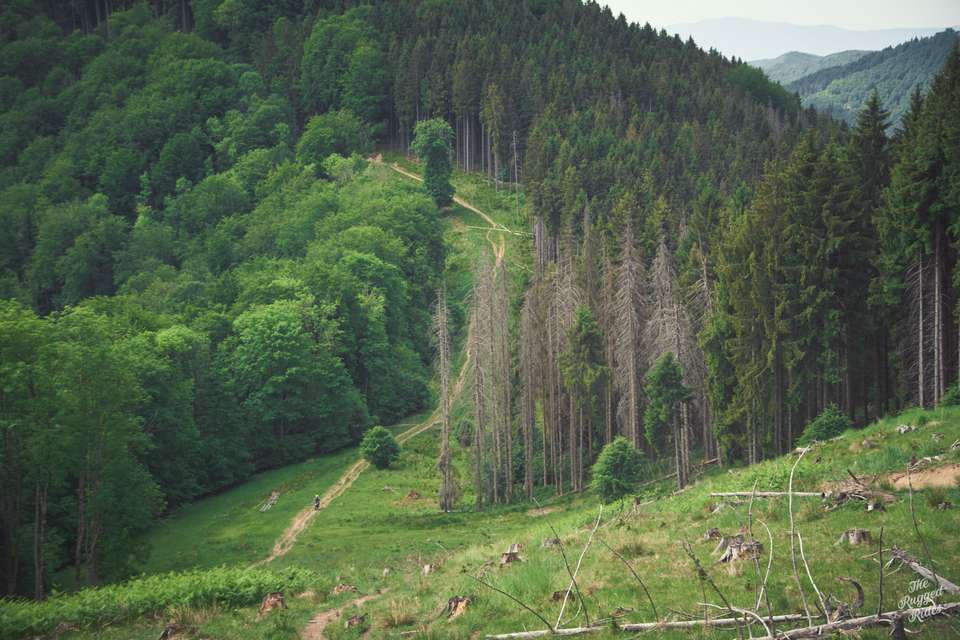
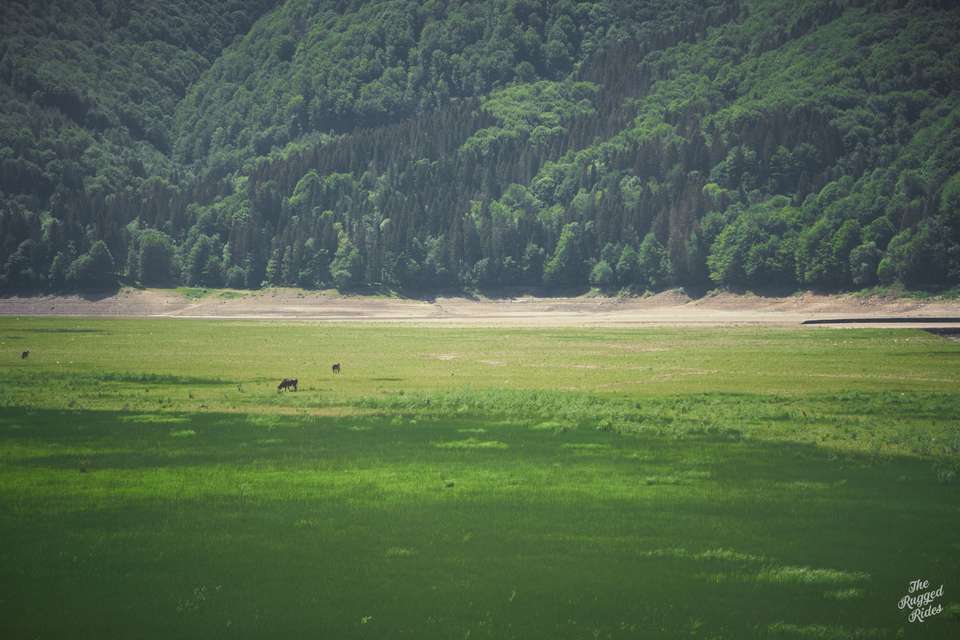
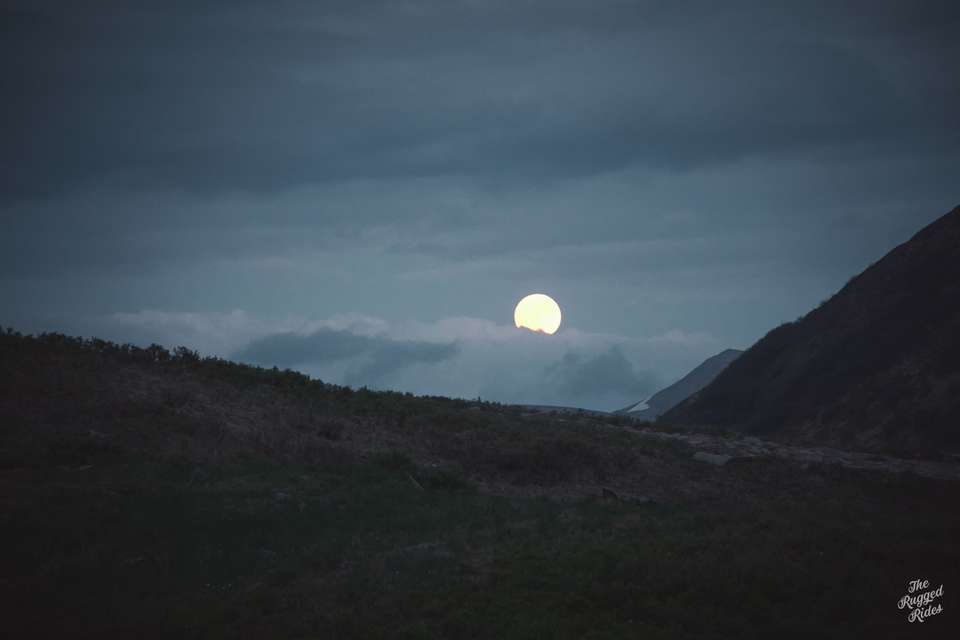
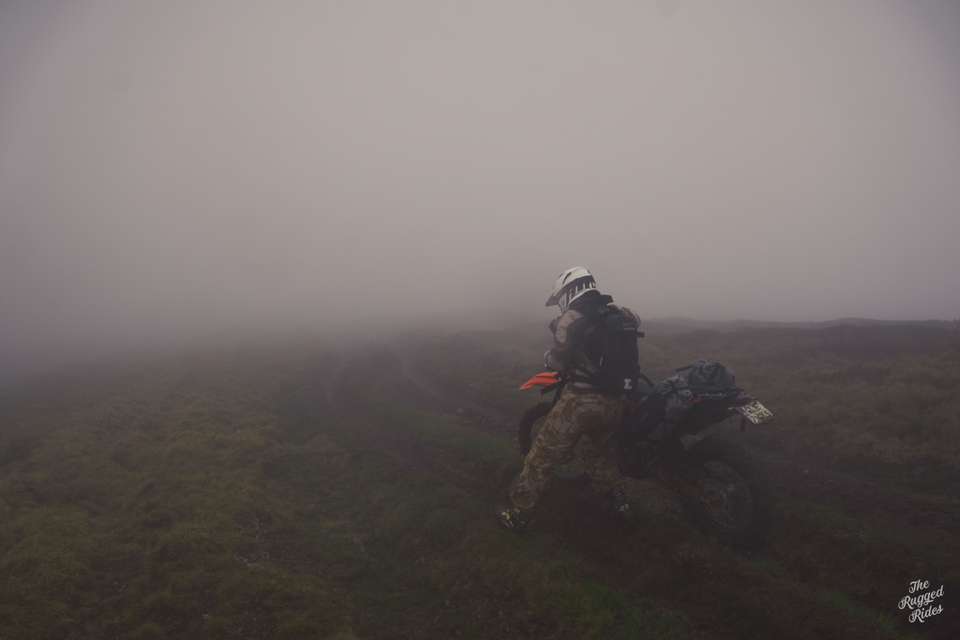
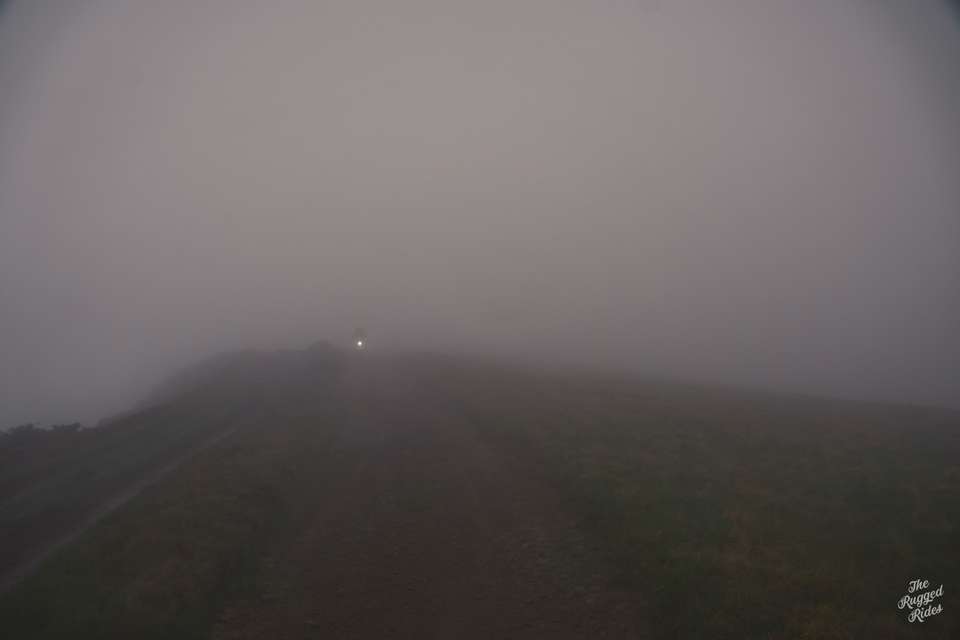
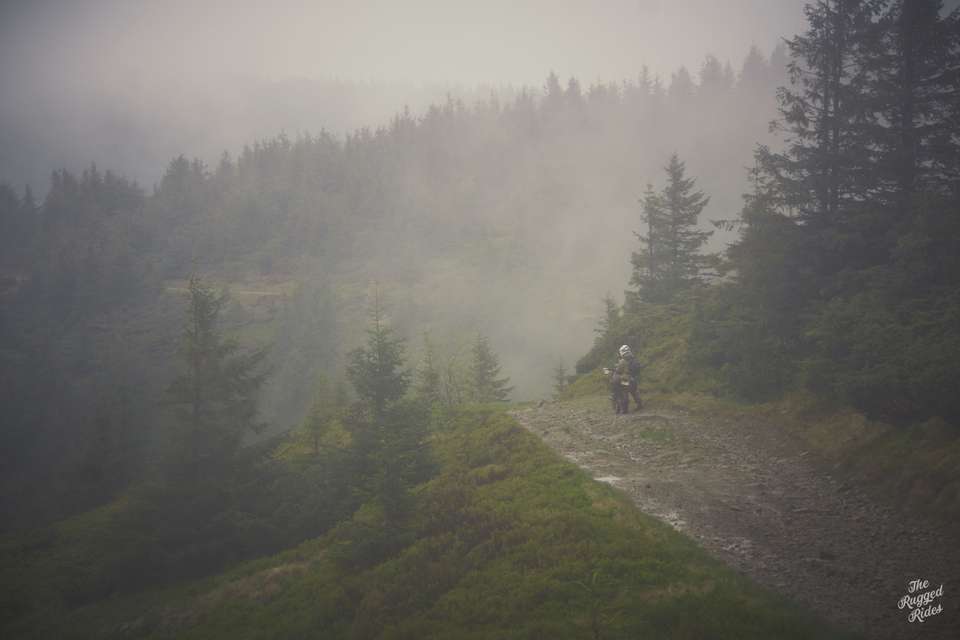
The view from a polonyna looks like a rolling green ocean. These mountains aren't sharp or rocky. They are rounded and almost completely devoid of forest. Over millions of years, water, frost, and wind have rounded off the mountain ridges, wearing away the sharp edges. That's because the mountains are built from soft material prone to these processes. For the geeks, it's the so-called Carpathian Flysch, meaning alternating sedimentary layers of an ancient sea, sandstones, clays, marls... The lack of forest is a fascinating phenomenon because these ranges are relatively low, often around 1,500m above sea level. One of the reasons is human activity. For centuries, pastoral farming thrived in these areas. To gain massive pastures for sheep and cattle, people deliberately cleared and burned the upper tree line and dwarf mountain pine. The Eastern Carpathians are characterized by a specific microclimate. The ridges of the polonynas are exposed to powerful, powerful winds and heavy snowfall. Young trees trying to grow back and reclaim the pasture face a brutal task. The weather is totally unsettled, as it always is in the mountains. We were bracing ourselves for 3 days of blue skies, but on the last day, we were riding down from Svydovets in the clouds after it rained all night.
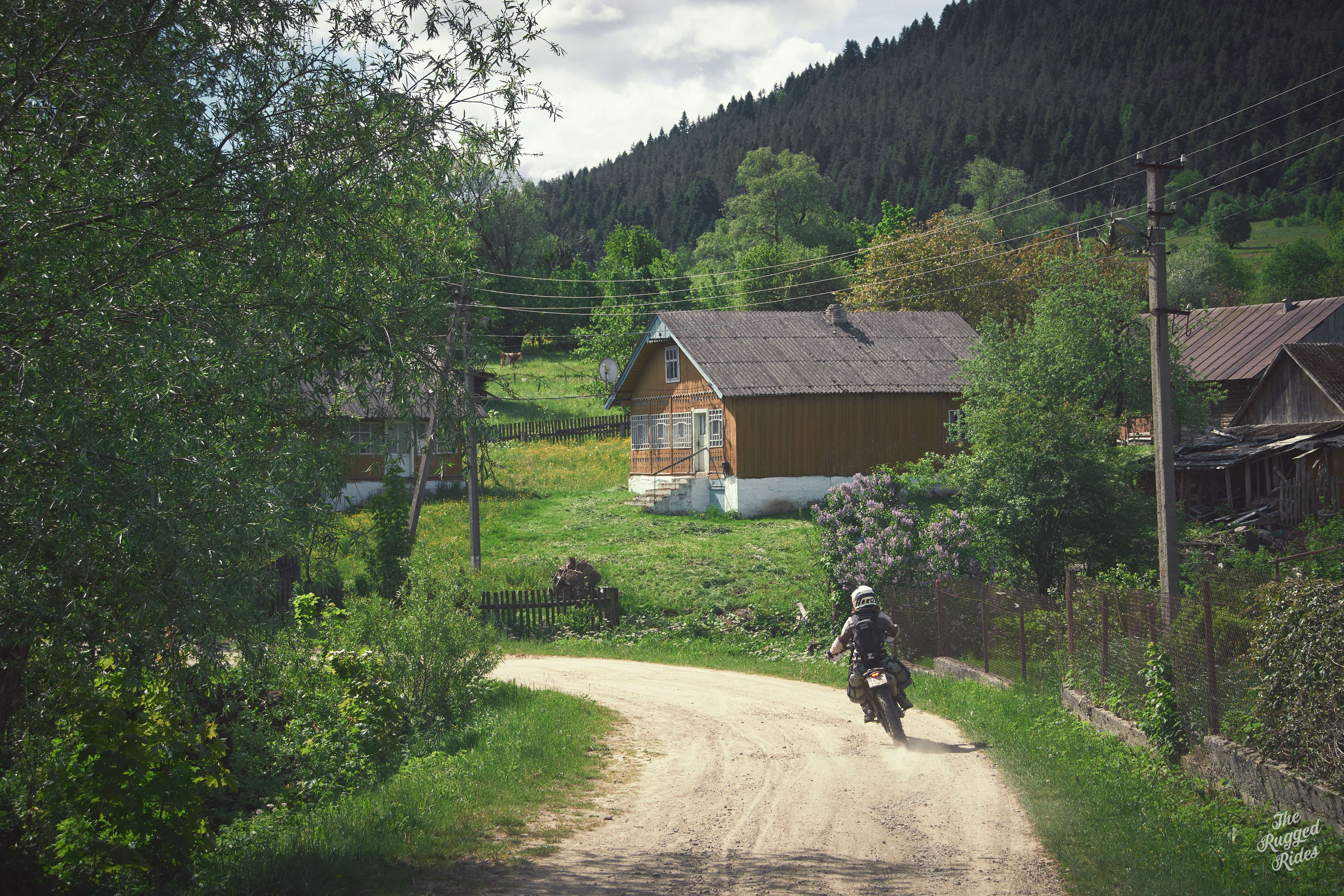
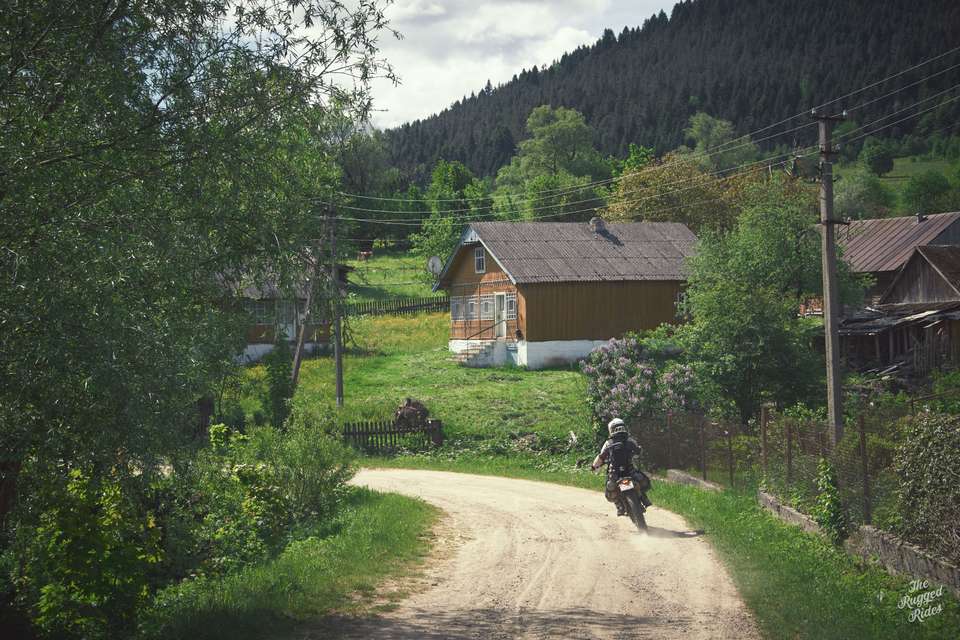
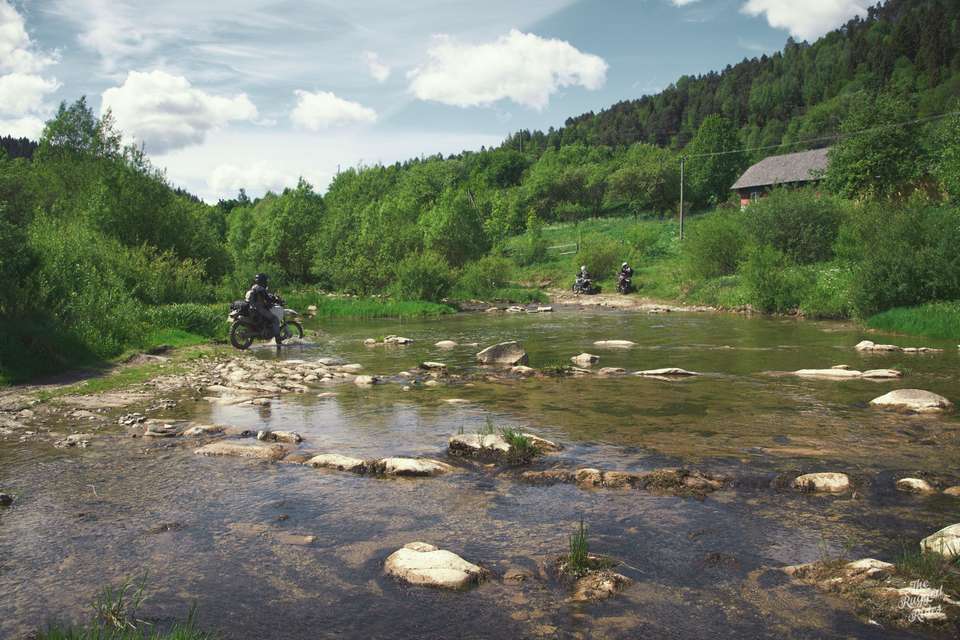
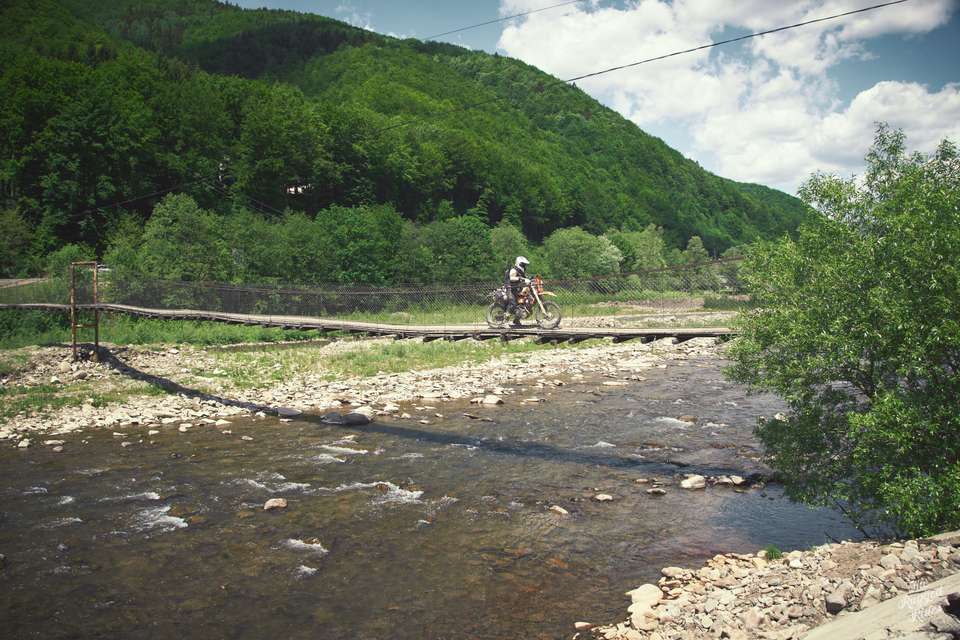
The valleys are filled with gravel roads, the ones with the lowest grade on the map are actually quite interesting, often winding between the mountains and having some decent elevation gains. The main ones are just ordinary car roads, only with a gravel surface instead of tarmac. Is anyone going to tell me we have better roads in Poland? :-) The villages are still built of wood, with rail fences and roads that are simply worn down to the bare stones. Sometimes you can lose track of what year it is, because nothing around you suggests it's the 21st century.
Overall? We did it intensely, as usual. Karl (the KTM EXC) is a versatile piece of machinery. He can easily cover the miles to the UA border in an evening, no problem. From there, he rides fast pace through forests and meadows towards the polonynas. He hops onto them and that's when he truly comes wild, the light construction, suspension, and overall character make him the perfect tool such a trip. Especially since we packed ultra-light.
And the track? This is a classic. Here You are, It's attached below. If you aren't an organizer of commercial tours, feel free to help yourselves. Just make sure your wheels stay on existing tracks, don't blaze new ones. Let's respect this green sea, because it's gorgeous and easily accessible. It's a paradise right on our doorstep.
Track: https://loc.wiki/t/267607718?wa=sc
Comments
R
Hej. Przeczytalem ta opowiesc I mnie zachecilo to zakarpacie. Problem tylko ze link mi mapy w Wikiloc nie chce sciagac. Mozesz zapodac np link w Osmandzie. Z gory dziekuje Pozdro
TRR
Robert, sprawdziłem i normalnie możesz wejść na wikiloc i jest tam przycisk Download, duży zielony, w górnym prawym rogu.
R
Wiec tak. Owszem jest tak jak mowisz z tym ze klikajac na link otwiera sie strona wikiloc a potem jak klikniesz na zielony Download to kieruje cie do apki wikiloc otwiera apke I nic sie nie dzieje. Czy ty masz platna wersje czy nie bo chyba w wersji free nie da sie sciagac zadnych map bo nic nie moge zrobic a jedynie tylko przegladac trasy
Leave a comment