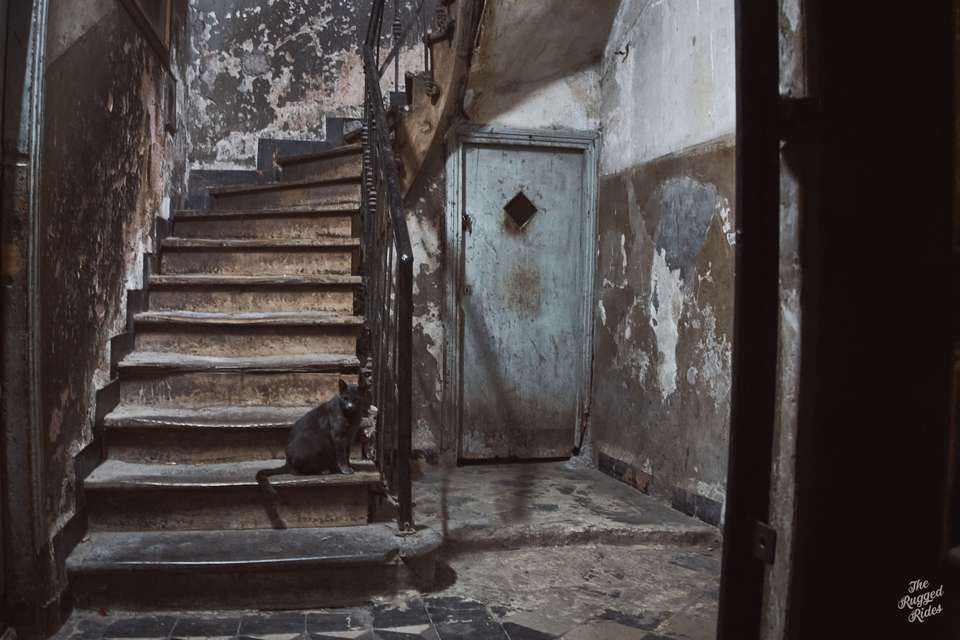
I'm sitting in a hotel I was never supposed to end up in. Someone's having a shower, water echoes through the pipes, and I'm just taking it all in, the walls, the corridors, the staircase, the railings, the view from the windows. The hotel is perfect. Exactly the kind of place I'd always imagined finding in Algeria. Full of patina, a little worn around the edges, but elegant, unmistakably French, absolutely oozing old-school vibes. Sometimes I wish I'd been born earlier, in a different era, when you could roam a mysterious Africa more freely, when borders were more open and conflicts hadn't yet disturbed the peace of these lands.
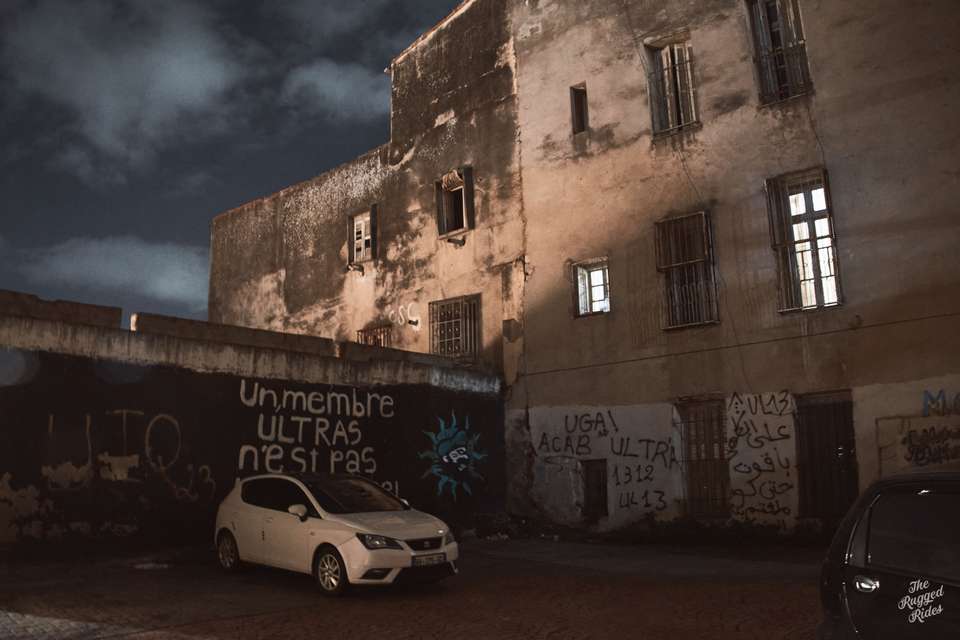
I'm also thinking about where we've actually managed to get to. On one hand, everything has gone brilliantly. A lightning fast crossing of Tunisia, a decent wait at the border, and then, we made it into Algeria! On the other hand, we've been assigned a police escort that we're forced to follow at the pace of a sleepy tortoise. It was already dark. We pulled up, dug our heels in, and gave them an ultimatum, either we head back to that hotel we passed a minute ago, or we're pitching up right here.
But then again... what exactly was I expecting? Before this trip, nothing was guaranteed. Algeria isn't the sort of place where you can plan everything down to the last detail. The difficulty level is a notch higher here. You have to adapt, improvise, and deal with obstacles as they come. To be honest, I wasn't even certain we'd make it across the border. In the grand scheme of things, an escort is a fairly minor inconvenience.
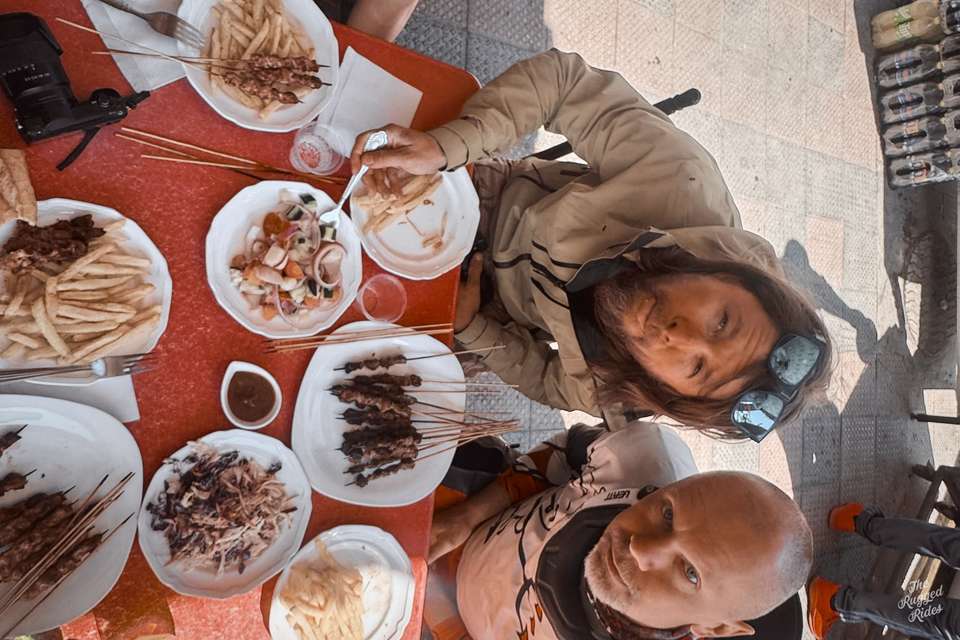
We're sitting in the middle of a small town. Life has already gone quiet for the night, but the last grill still open is firing up food especially for us. As we're discussing various escape plans for shaking off the escort the following day, a police car rolls onto the edge of the square. We're being watched the entire time. It feels a little like being stuck inside a Louis de Funes film.
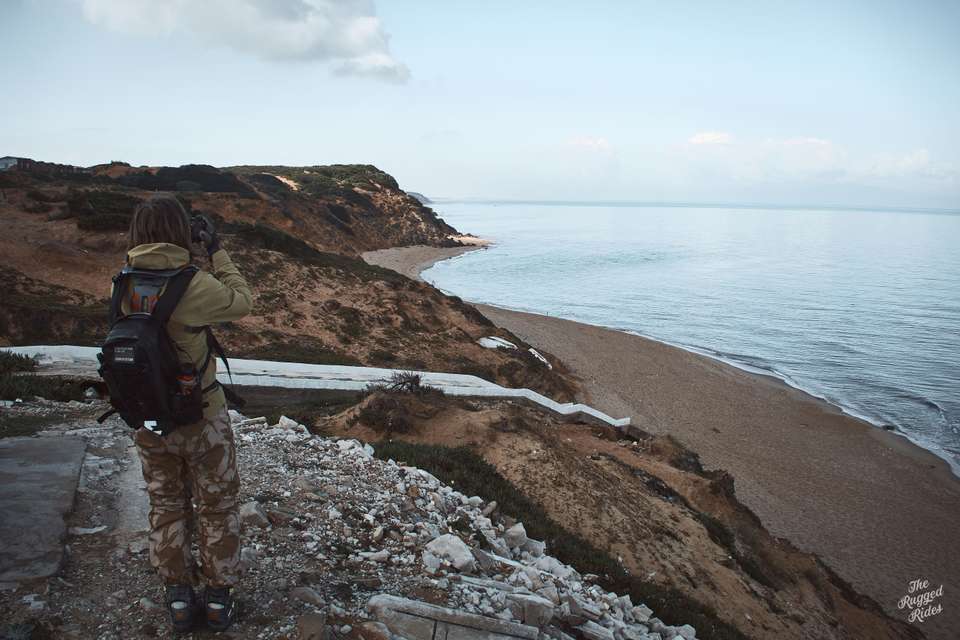
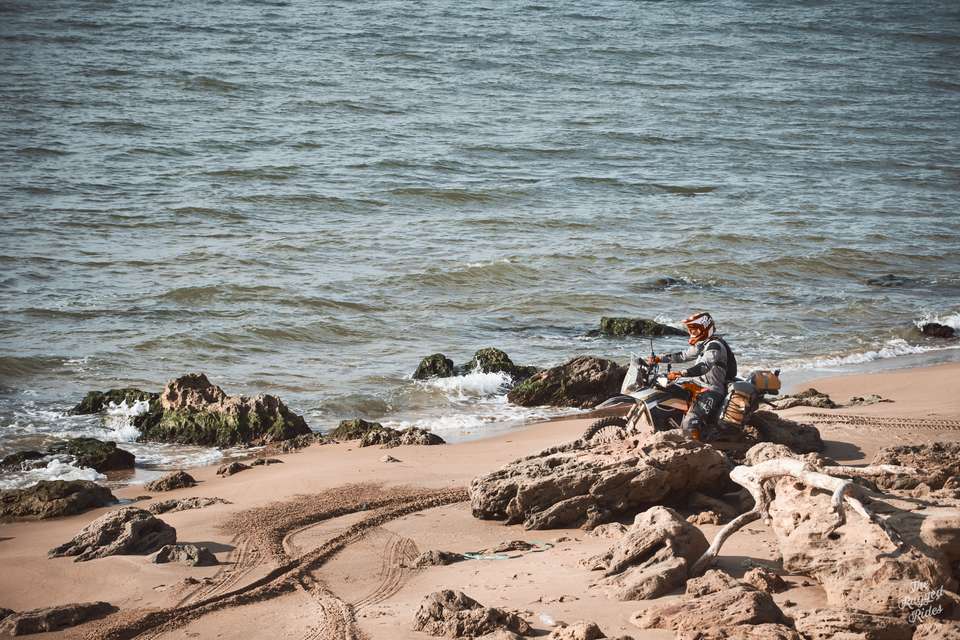
The next morning, the escort is already waiting for us. We try to speed things up and launch into our carefully prepared speech: we're experienced travellers, this isn't our first time in North Africa, we know the country's geography, we've got maps, satellite communications, and we're fully equipped. A whole catalogue of arguments. Completely useless. Their orders come from above - we're riding together. So we ride. First - to Essebaa, because that's where we've decided we're going. We announce that we'd like to visit the beach, so naturally... we all visit the beach together. I wonder when they were last here. :-)
The escorts keep changing, and we keep negotiating. Eventually one of them finally says: "Yes, the next team will include someone higher-ranking. You can talk to them." My heart is thumping when I hear this. When the next officers arrive, we have the conversation. Yes, we'll be free as soon as we reach Annaba. As we crawl through traffic entering the city, I suddenly see the gesture I've been waiting for. The highest-ranking officer, dressed entirely in civilian clothes, nods and points down the road, and waves us on.
We're free.
We can ride on our own.
A massive wave of relief and joy hits me!
Still buzzing with emotion, I push ahead until I find a quiet spot. We regroup, look at one another, and suddenly an overwhelming feeling hits us all. At first I can't quite identify it. Then it clicks. This is what freedom tastes like.
It was only a day and a half. Just an escort. Yet the joy is practically spilling out of us. We've done it. We're riding Algeria. We're following the track. The adventure starts now.
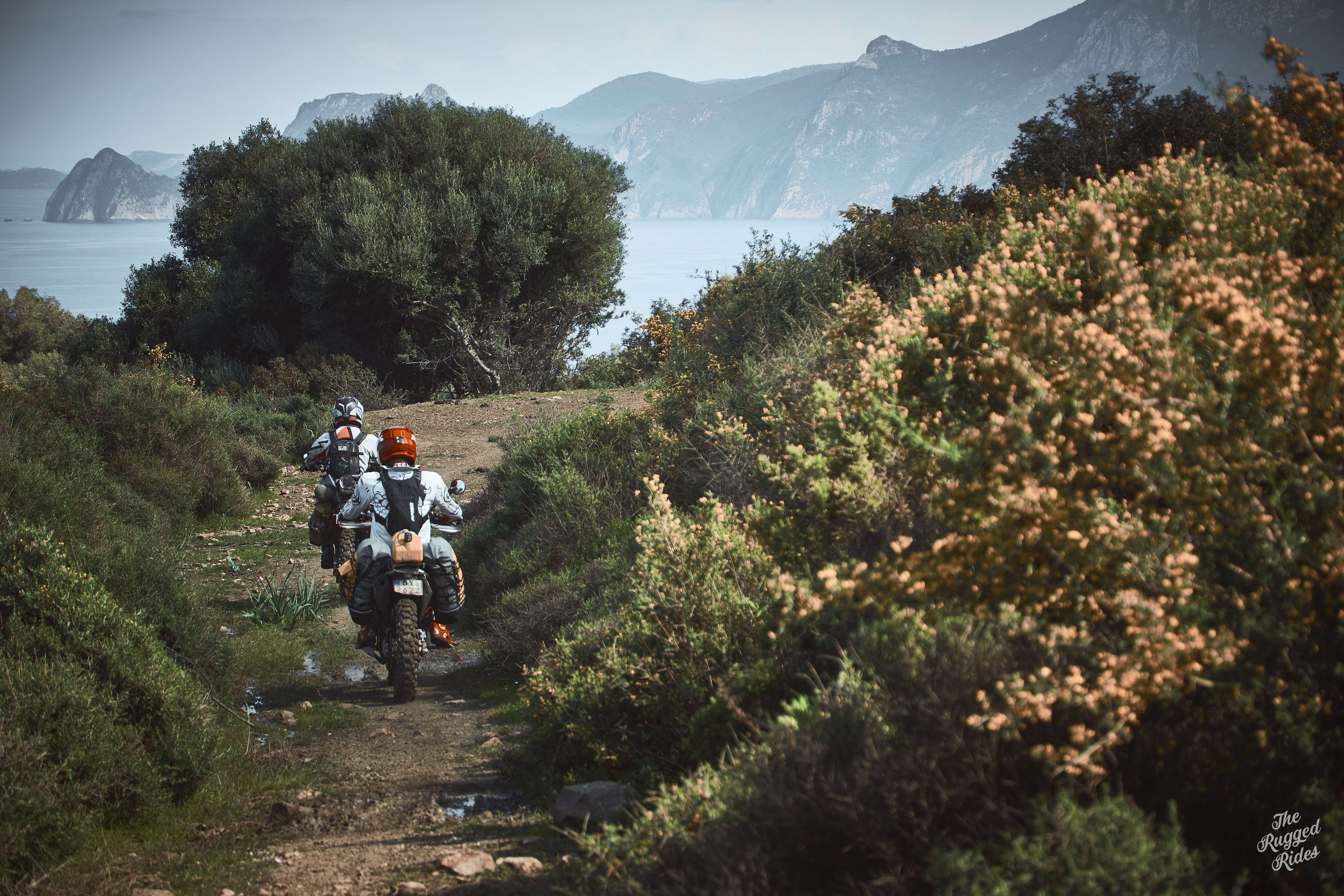
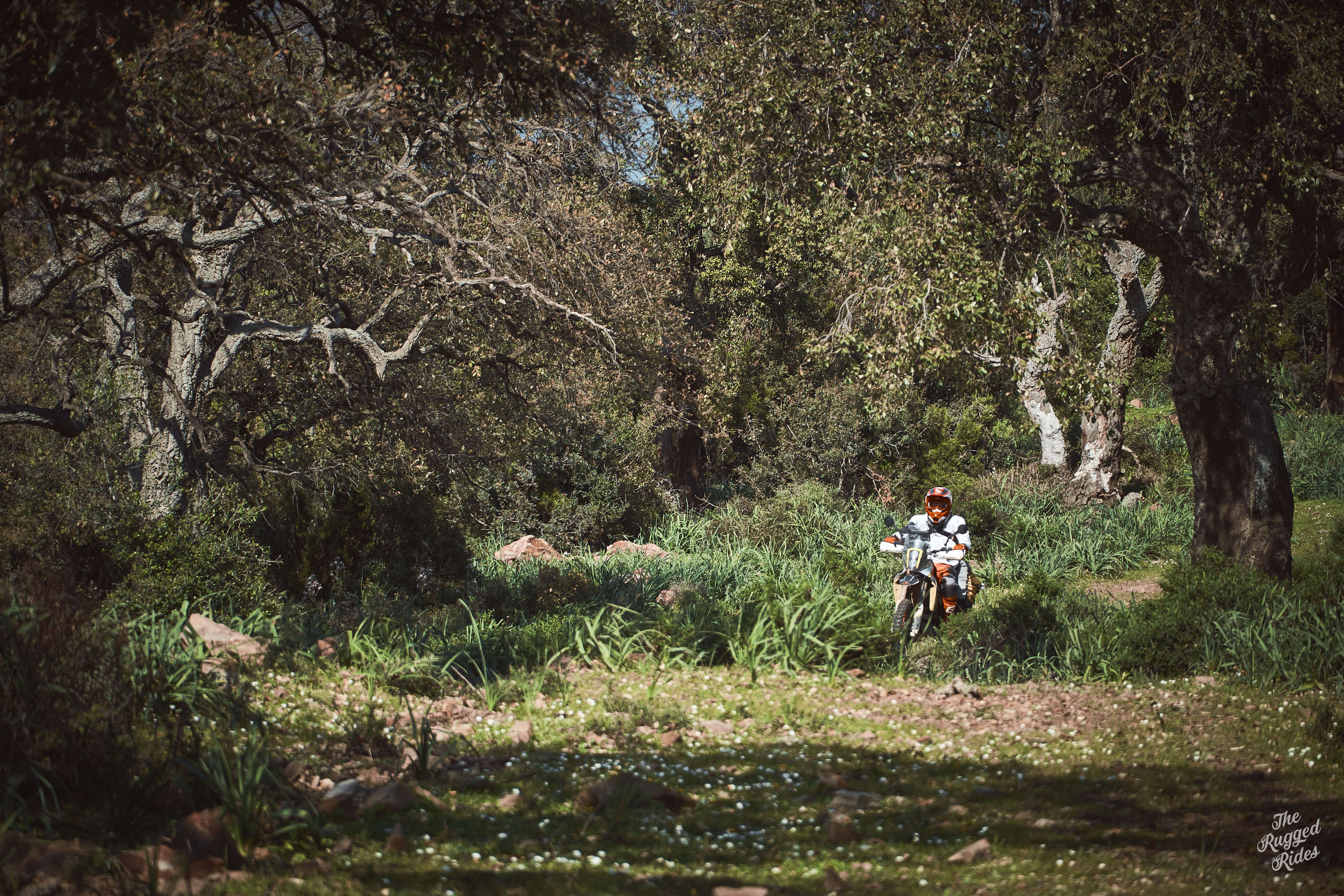
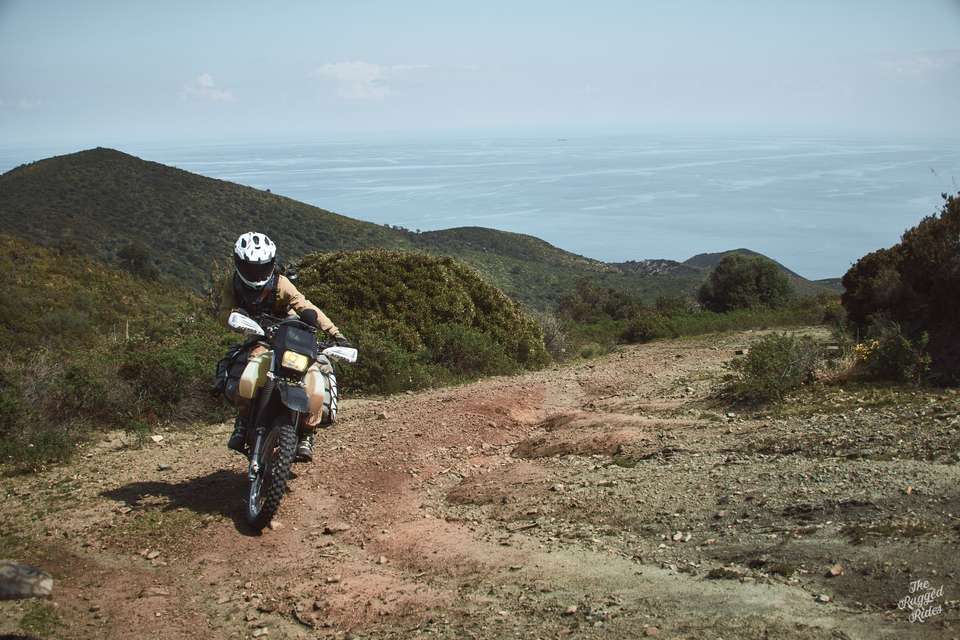
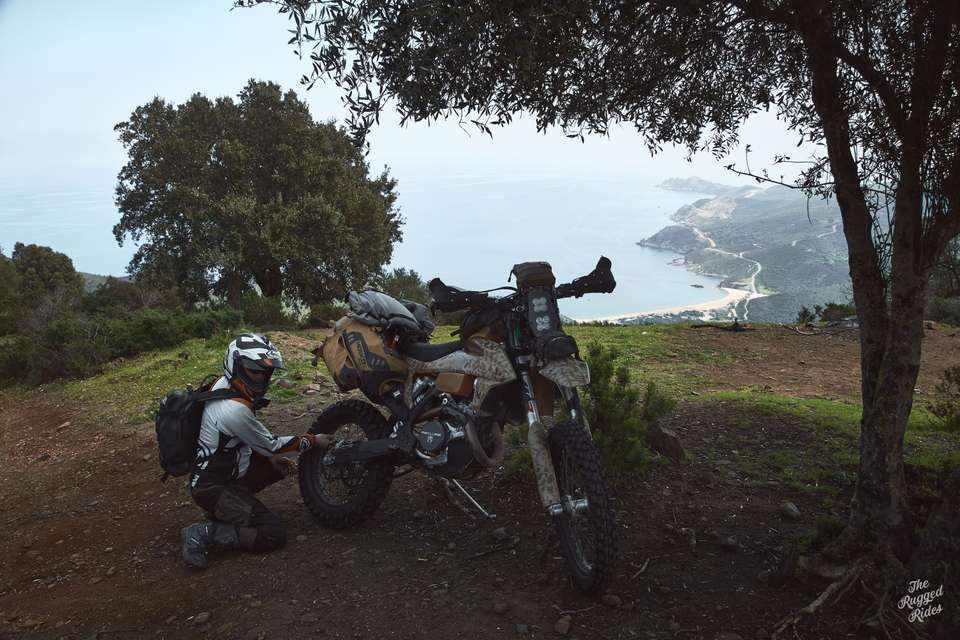
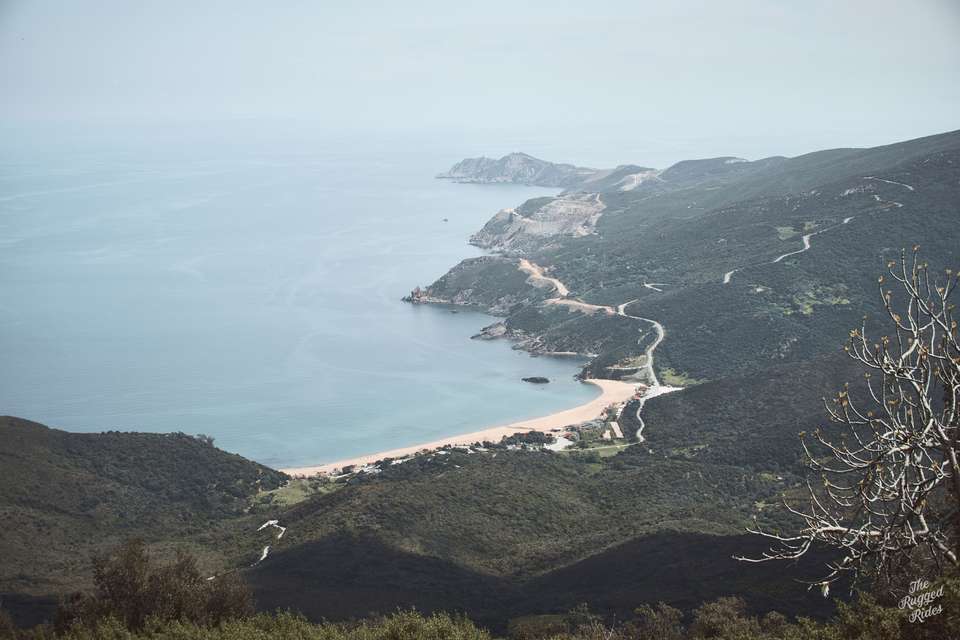
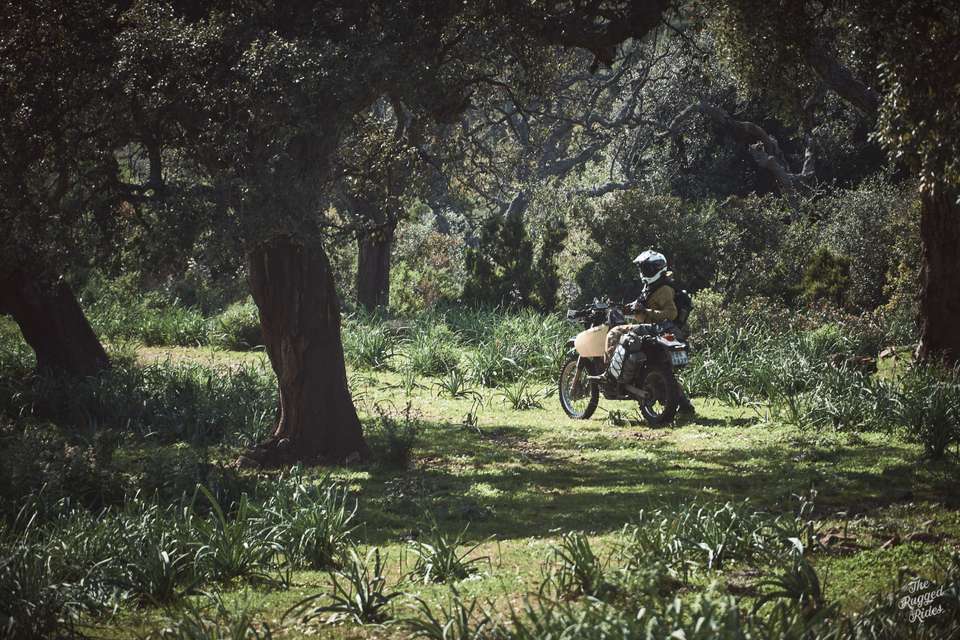
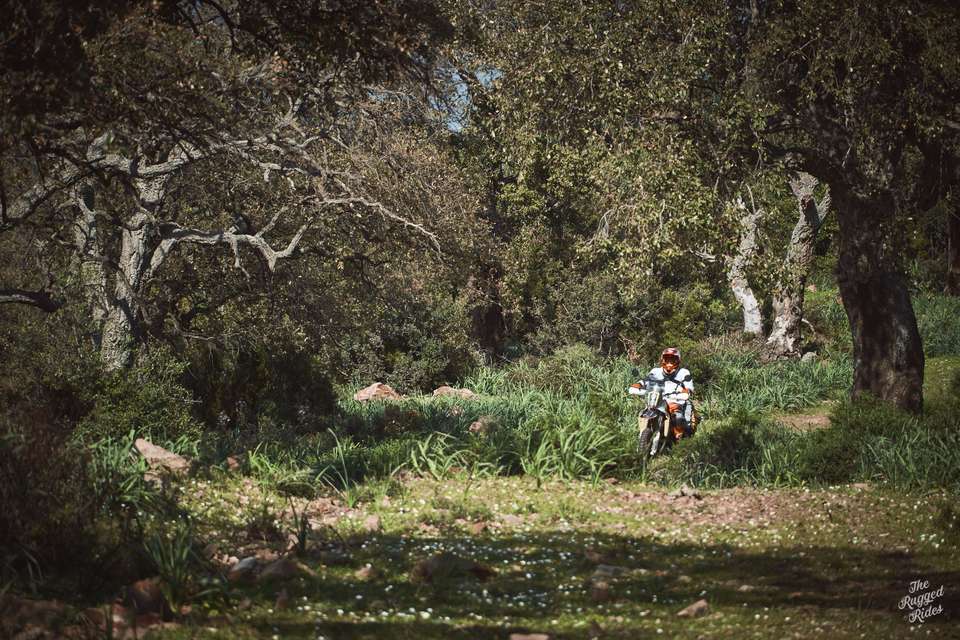
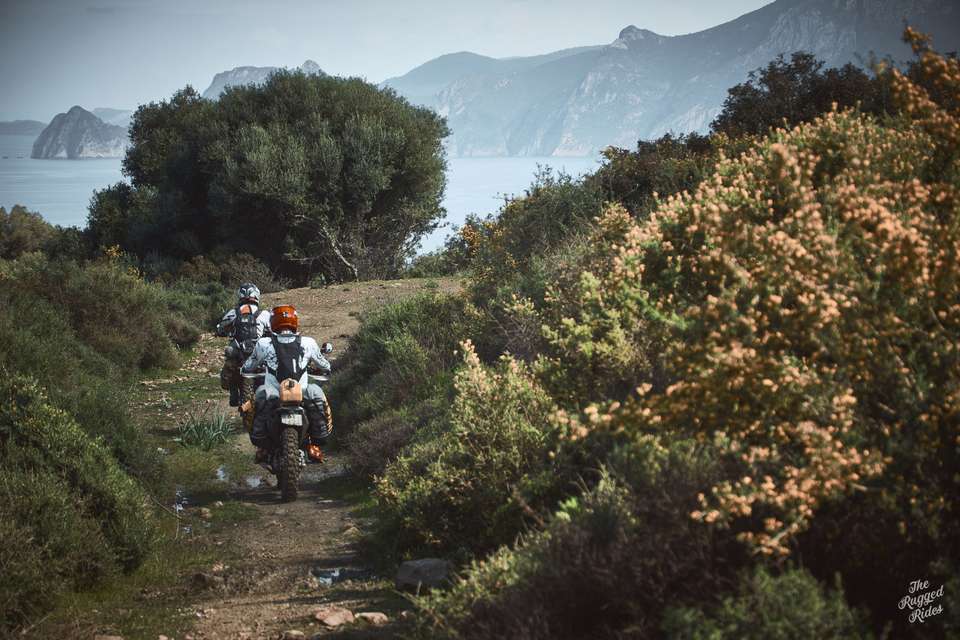
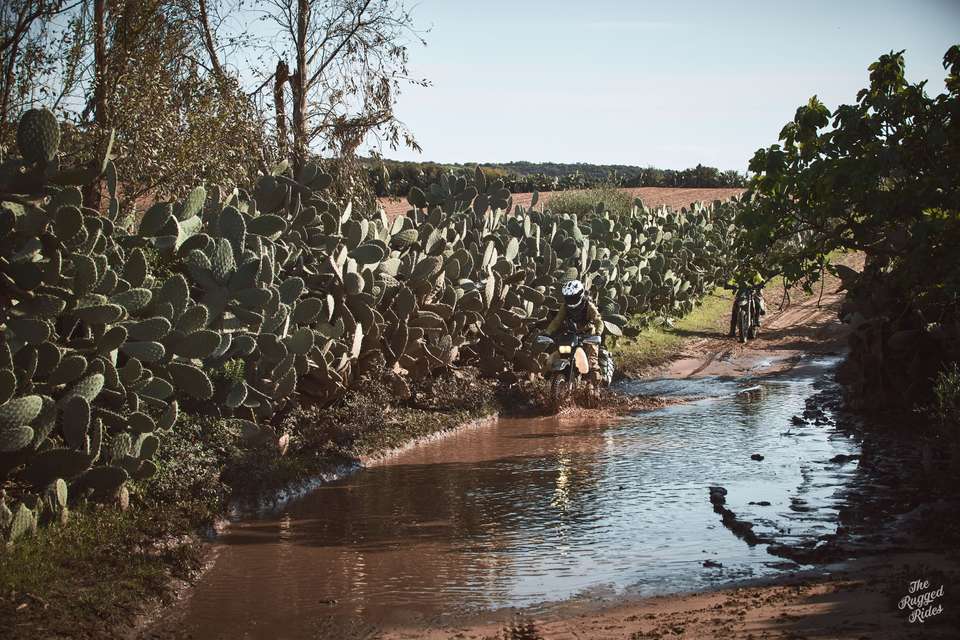
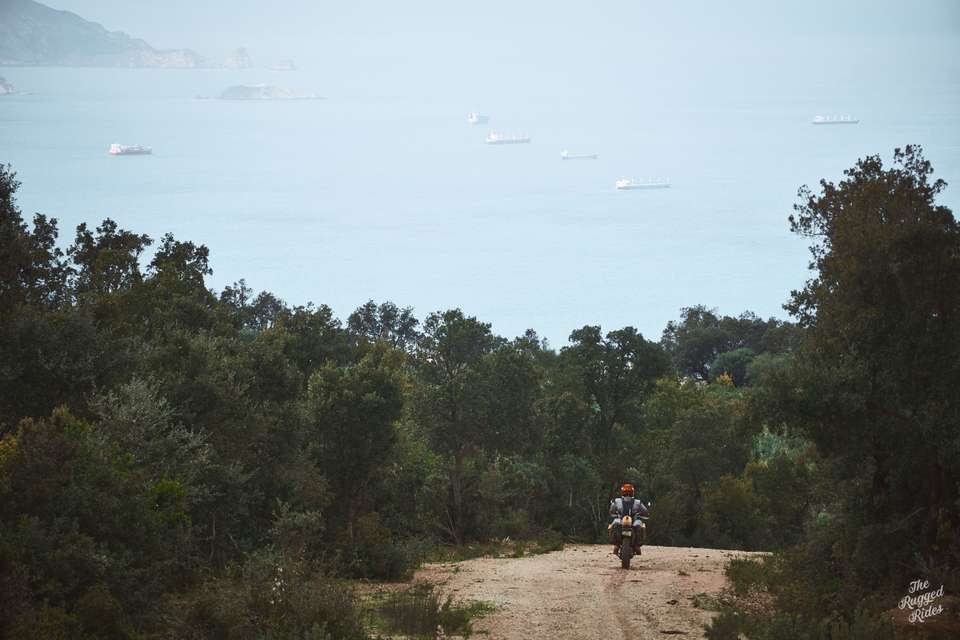
We fill the tanks and head along the coast. The goal is simple, shake off the city as quickly as possible and disappear into the green forests of northern Algeria. The roads are absurdly steep. On every downhill section my DR crackles and bangs through the exhaust like a machine gun, corner after corner. We reach Djenen El Bey beach, where the national park begins. Slightly surprised, we pay the entrance fee and finally leave the tarmac behind for the first proper off-road riding of the trip. The trail immediately throws steep rocky switchbacks. I was curious, but also slightly concerned about how the DR would cope off-road. Well, now I have my answer. The carb fed engine keeps chugging away, puffing out half-burnt fuel with all the elegance of a steam locomotive. It's unstoppable. It climbs confidently and feels as though absolutely nothing could stop it.
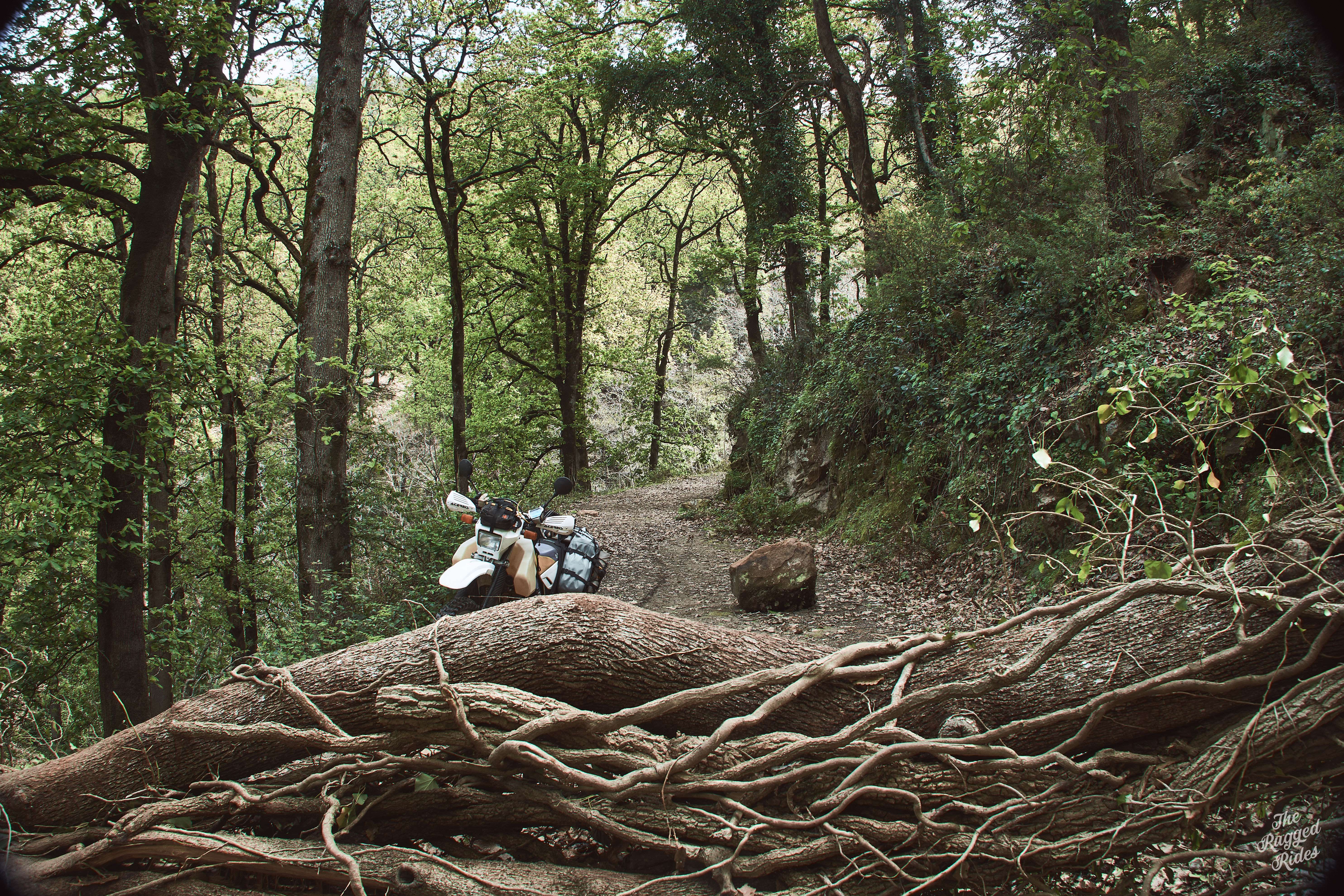
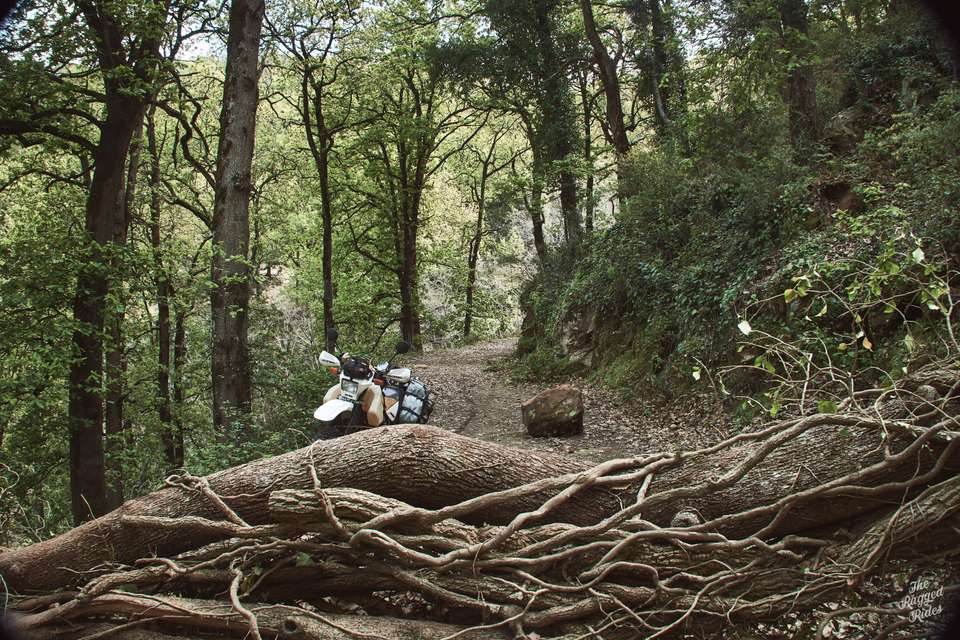
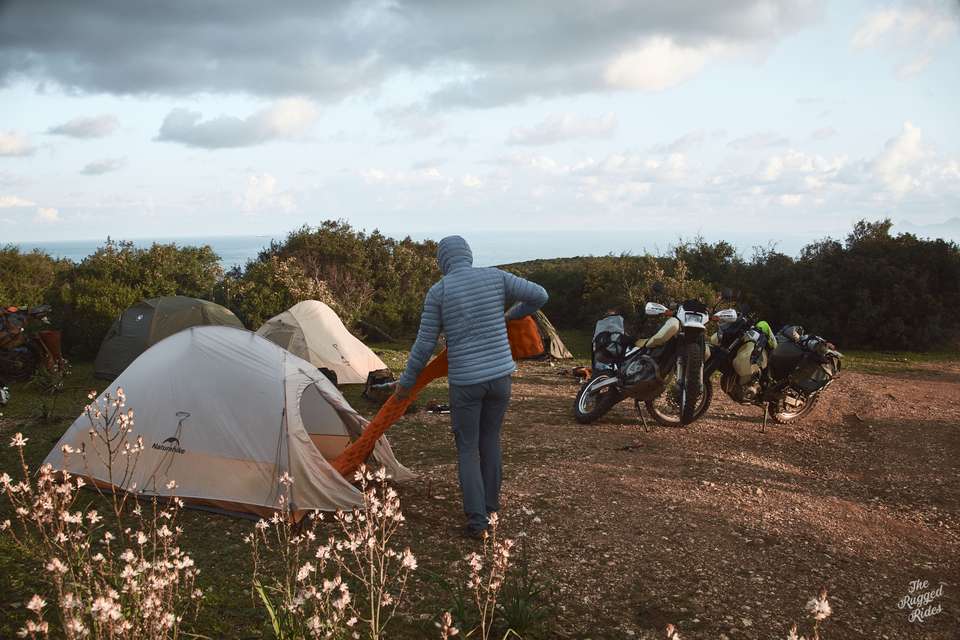
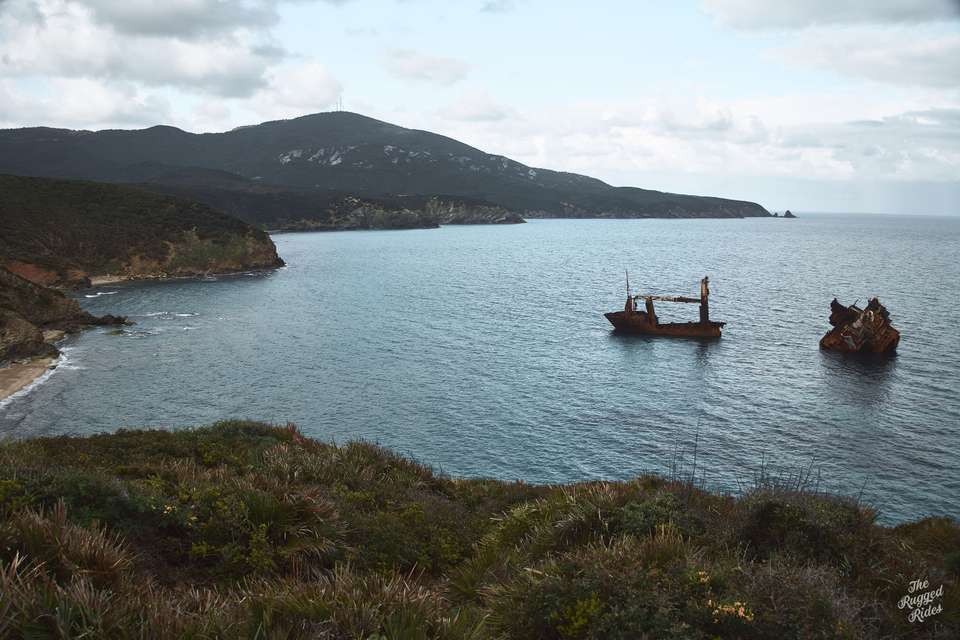
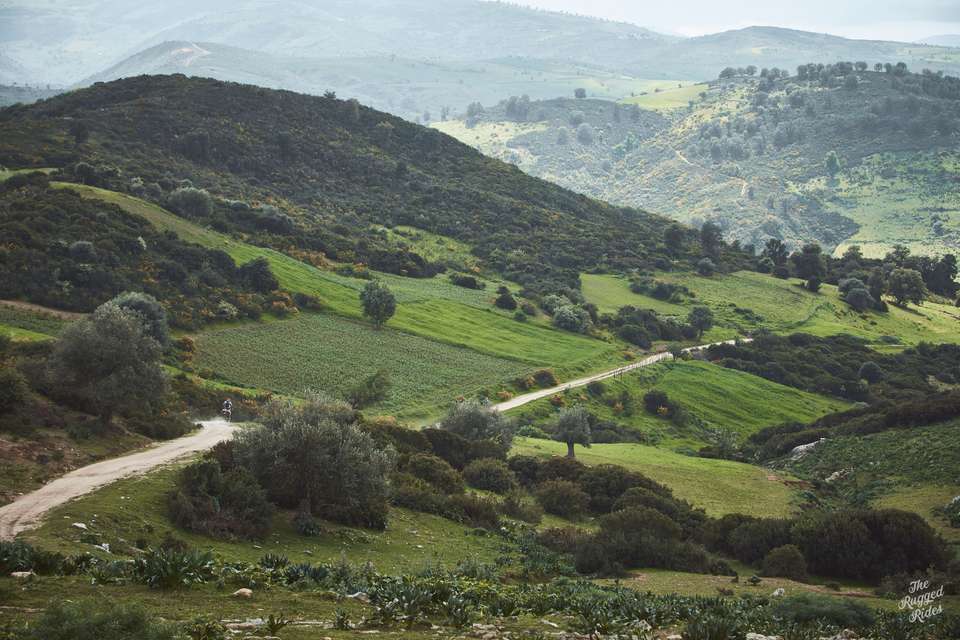
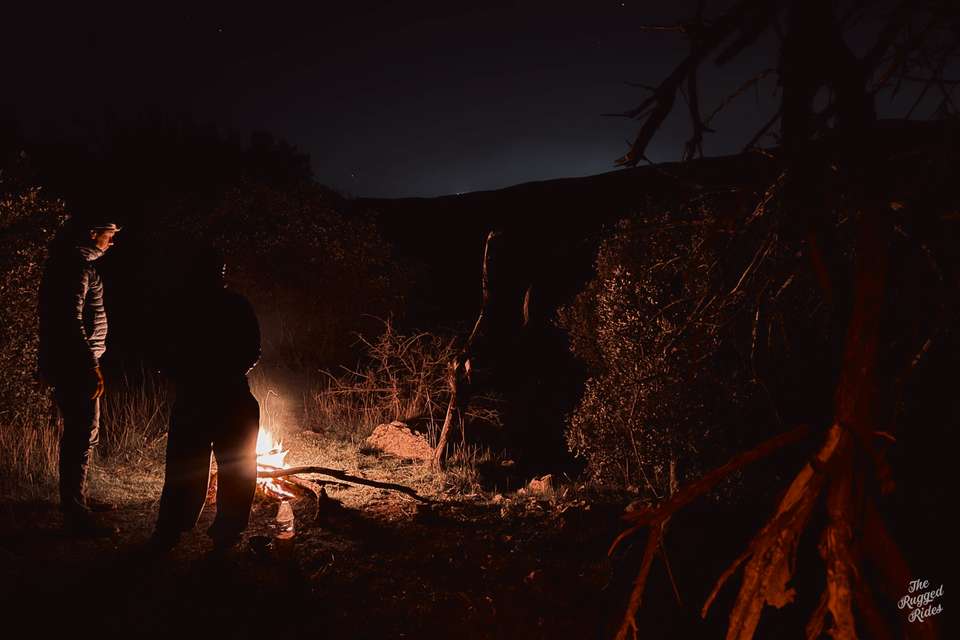
The surroundings are magnificent. Ancient giant deciduous trees tower above, vines hang from the branches, and endless shades of green surround our narrow track. The terrain is demanding because it is really steep. Roads here have either been concreted over or slowly abandoned to nature. Naturally, we choose the routes without asphalt. Some planned tracks turn out to be dead ends because they've fallen completely out of use. Others reveal themselves as spectacular singletracks. We're running on fresh energy and keep riding until late in the evening. For the night, we choose a spot from which we should be able to see the wreck of the Sophia. We sit talking long into the night. Truth be told, northern Algeria itself isn't particularly surprising. It feels much like the coasts of Morocco or Tunisia. Similar landscapes, similar rhythms, familiar patterns.
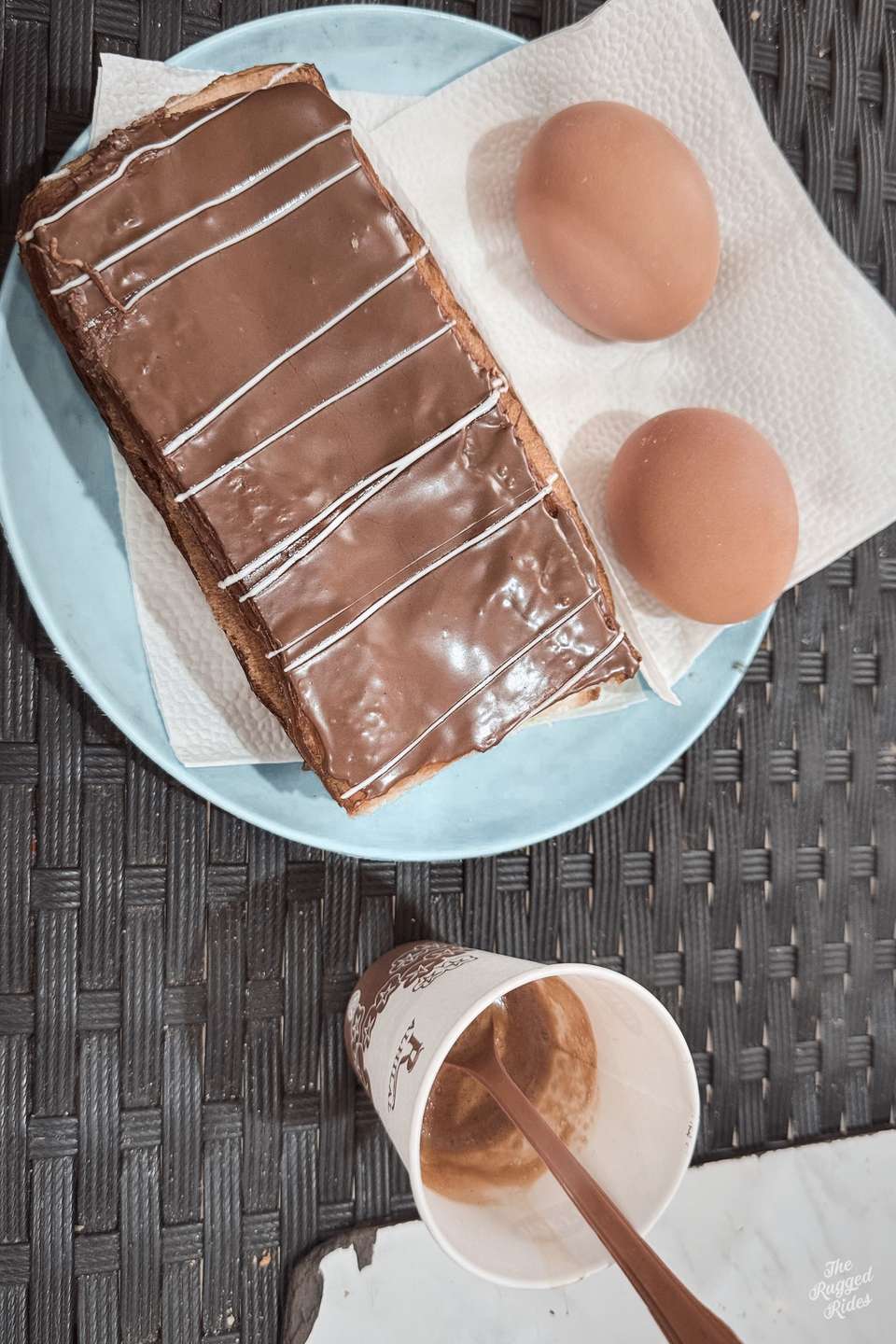
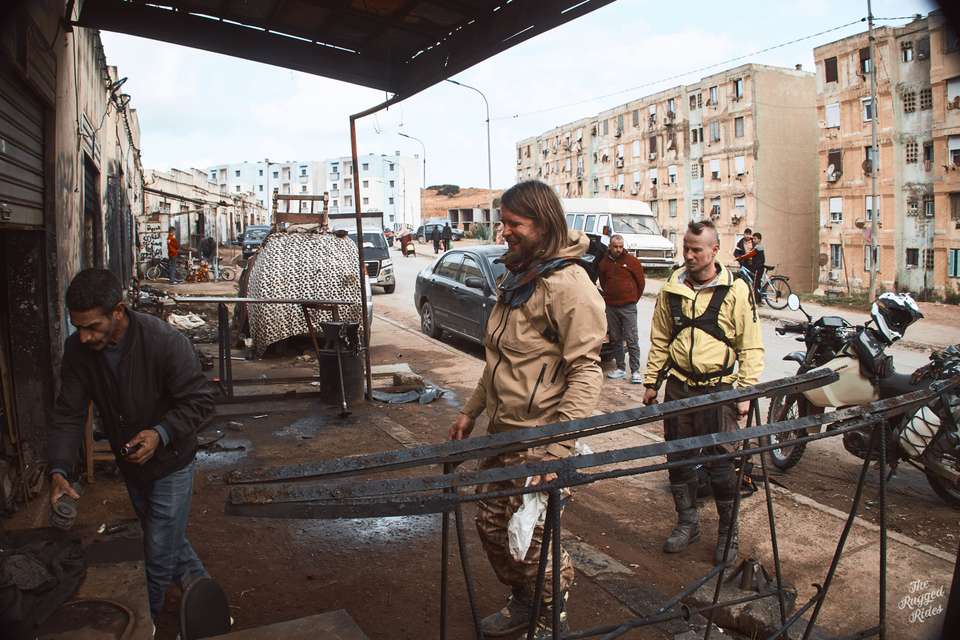
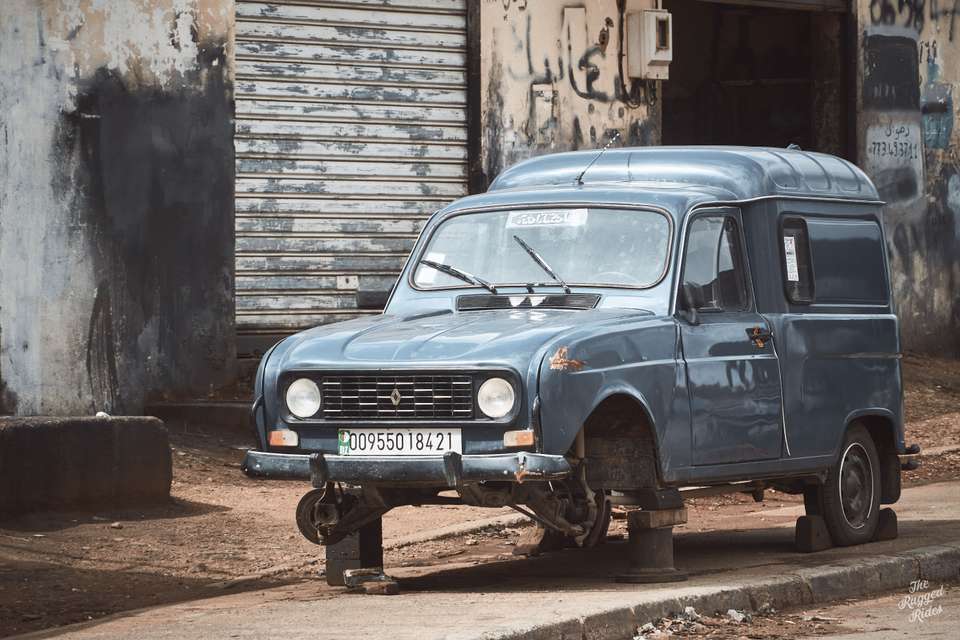
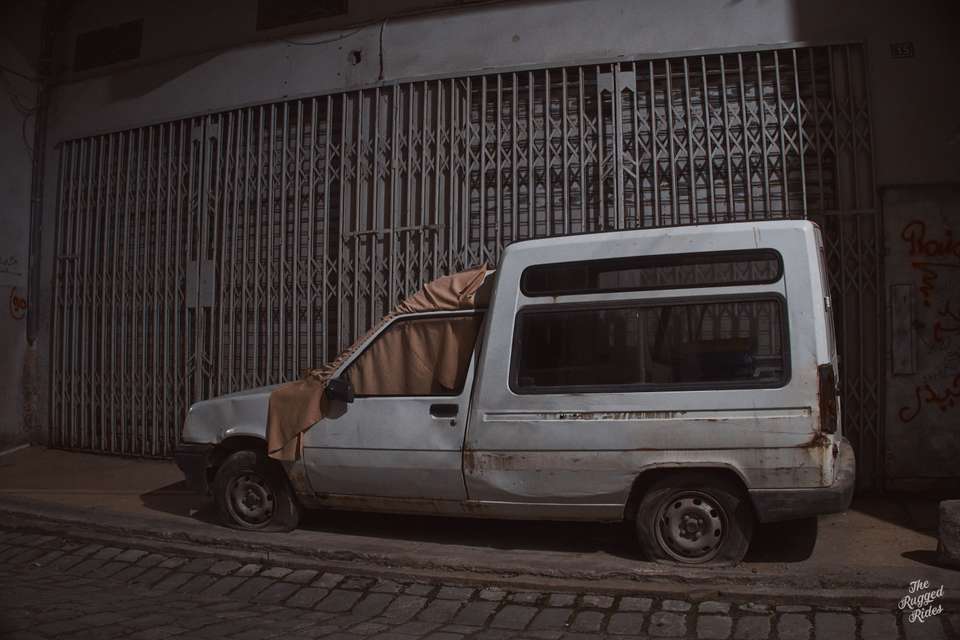
The next morning we ride into Filfila for breakfast and supplies. We order food on one side of the street and fetch coffee from the other. Then, on the street lined with car workshops, we shorten Kuba's dB killer with a grinder until it's just right, not too loud, but free enough to let the bike breathe. All done right there on the pavement. This town, too, feels familiar. In its essence it's much like countless other North African towns. So what? Nothing can surprise me anymore? I've seen it all? Absolutely not. I can feel the south calling me. Algeria is hiding secrets. Lots of them.
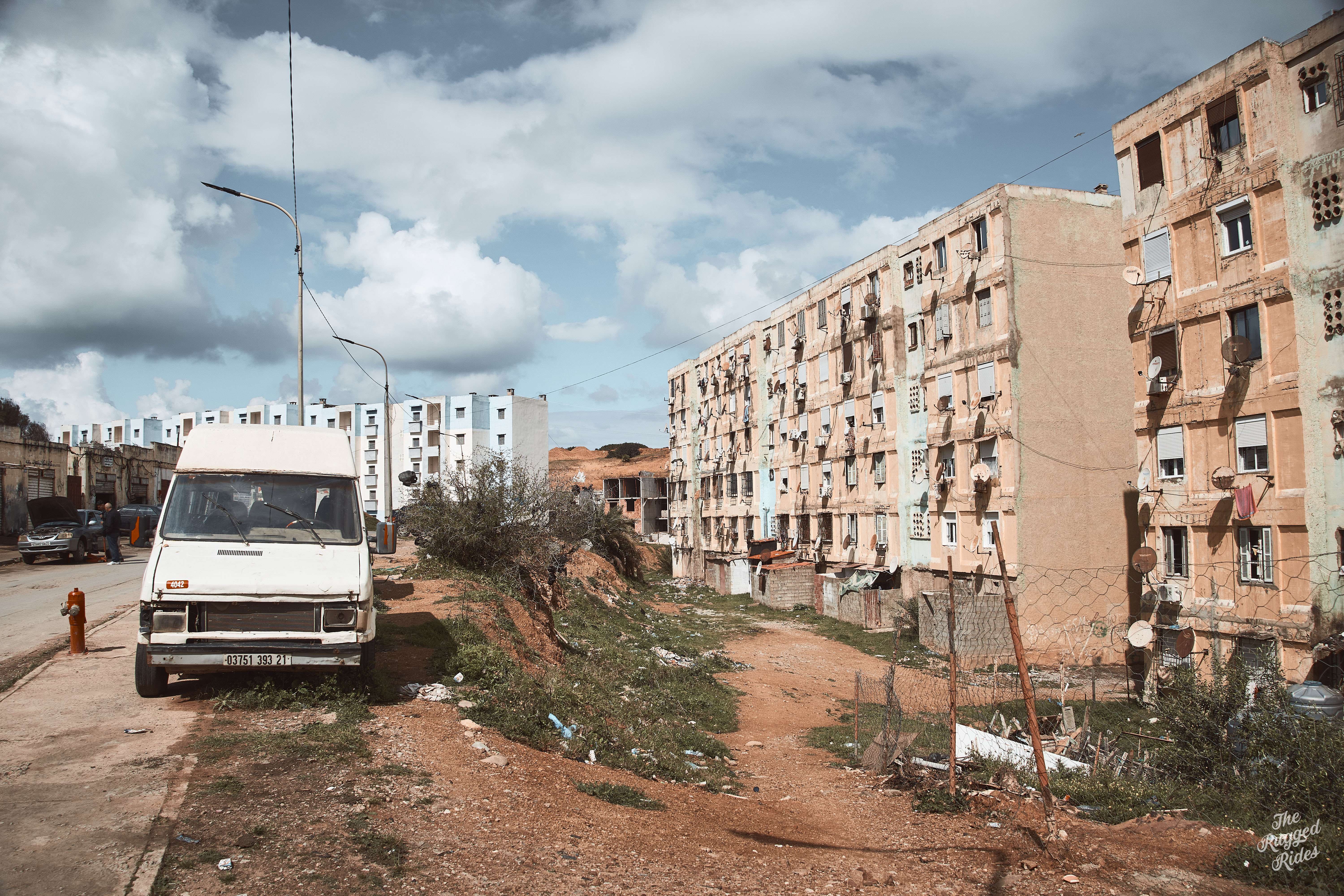
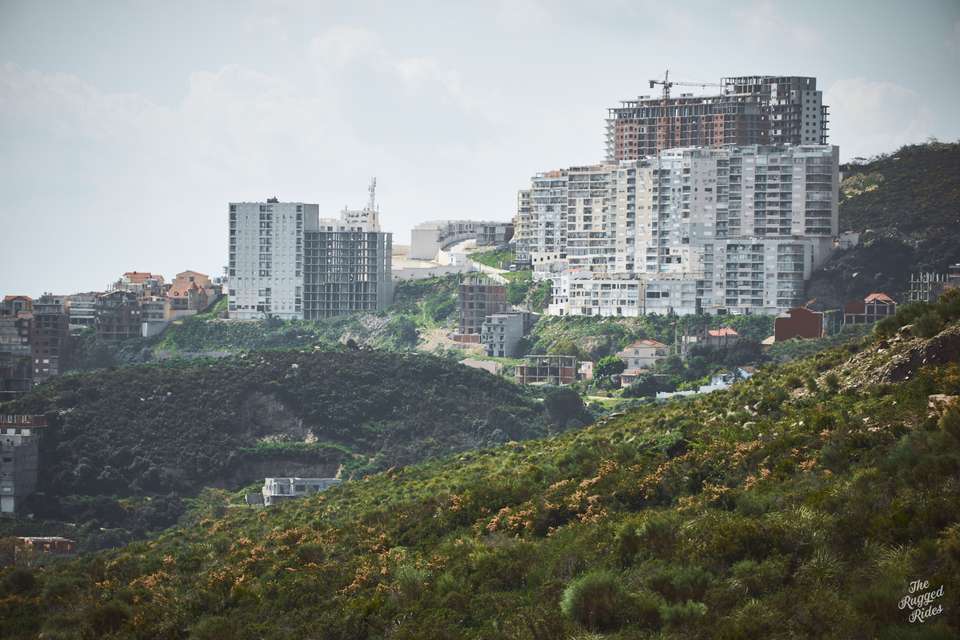
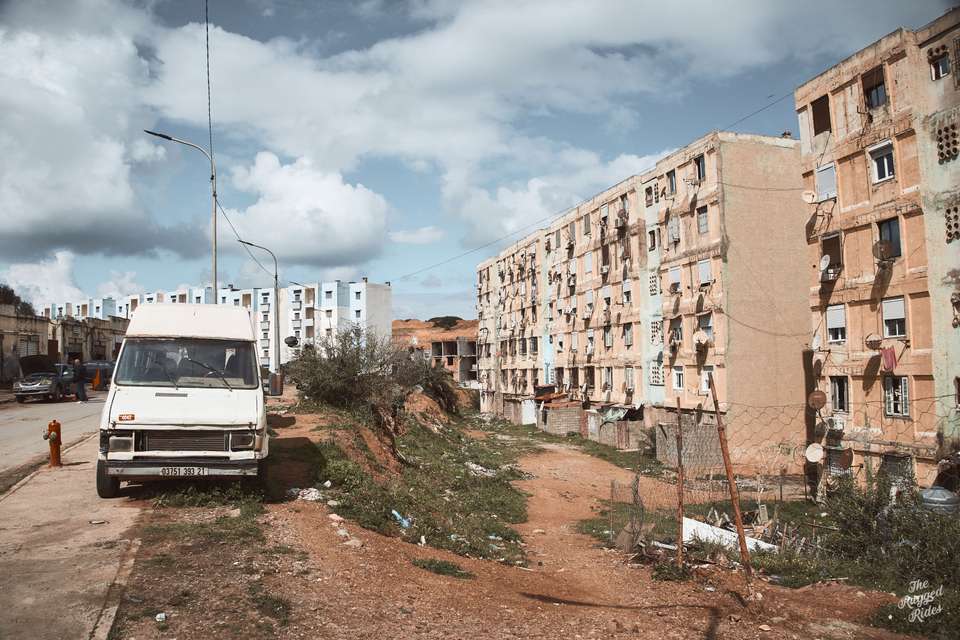
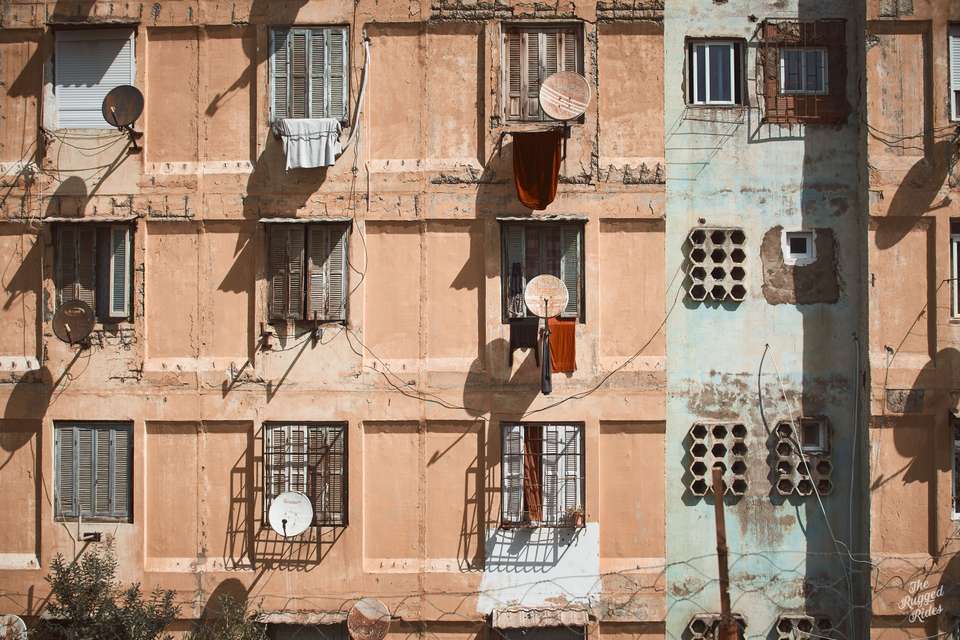
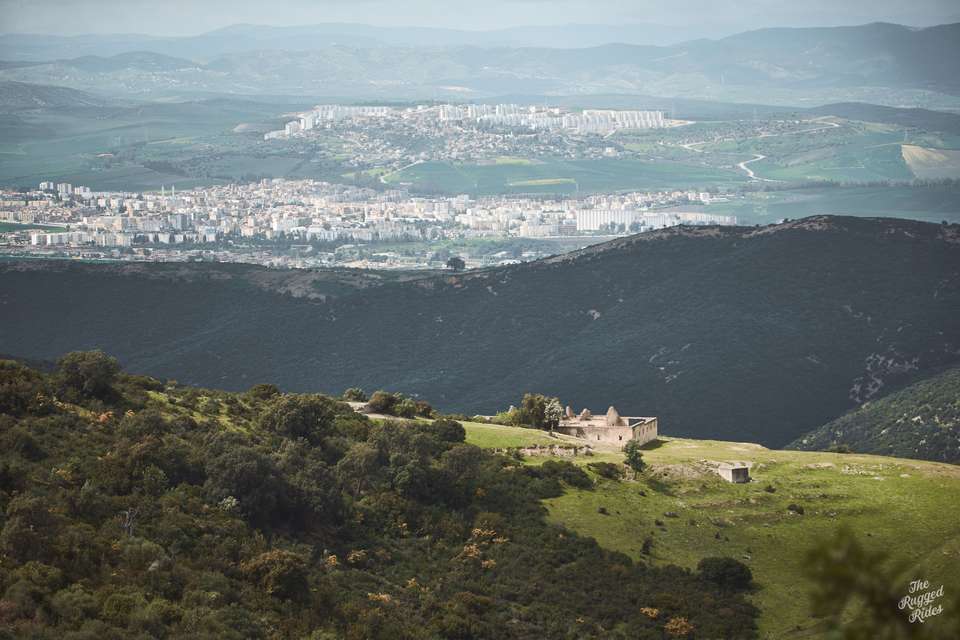
For now, though, my attention is drawn to the ugly apartment blocks inspired by Soviet housing estates. Algeria's history is fascinating, and one of its most recent chapters is painted red. After gaining independence from France, the country moved closer to the Soviet Union, and these concrete blocks still stand here as permanent reminders of that choice.
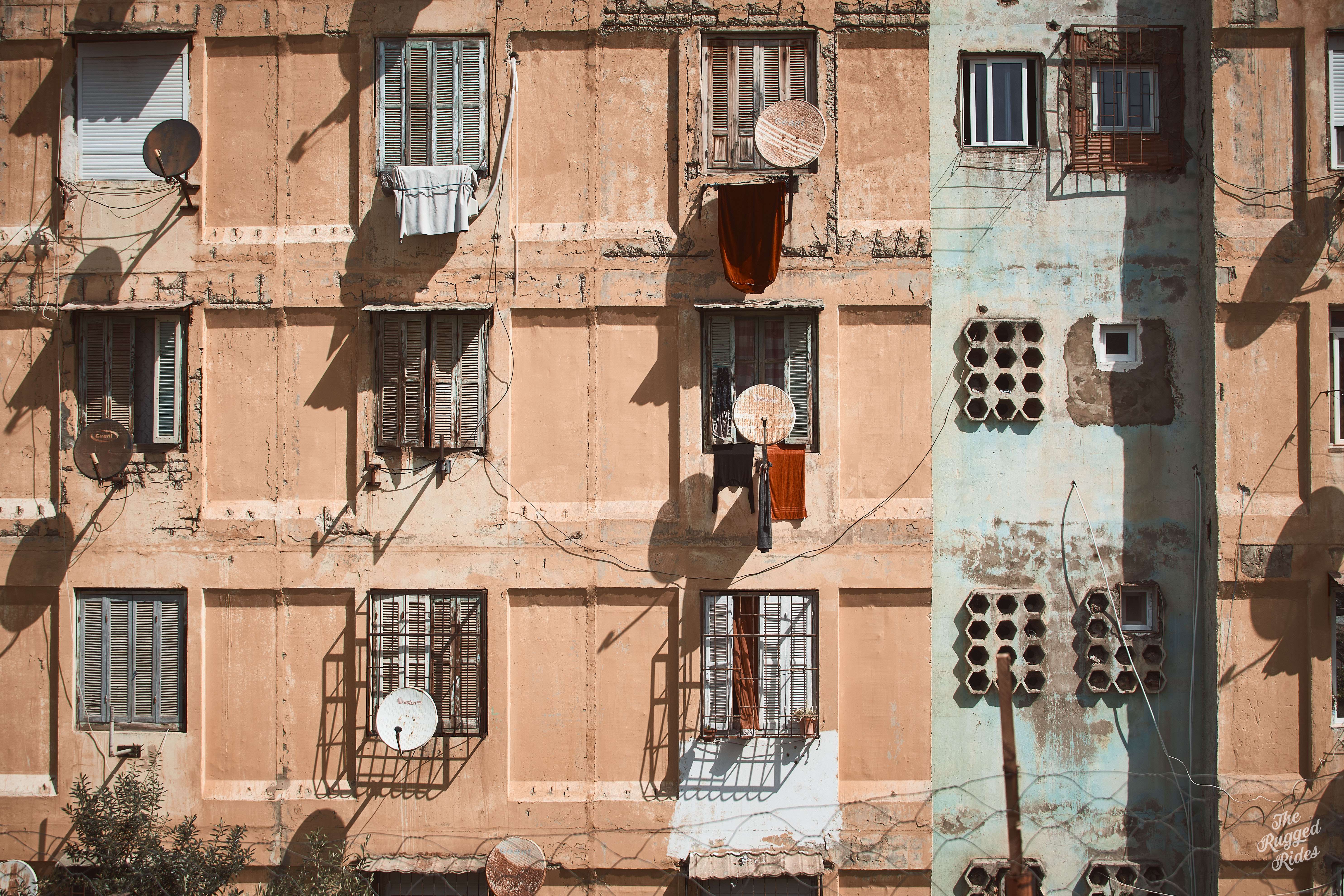
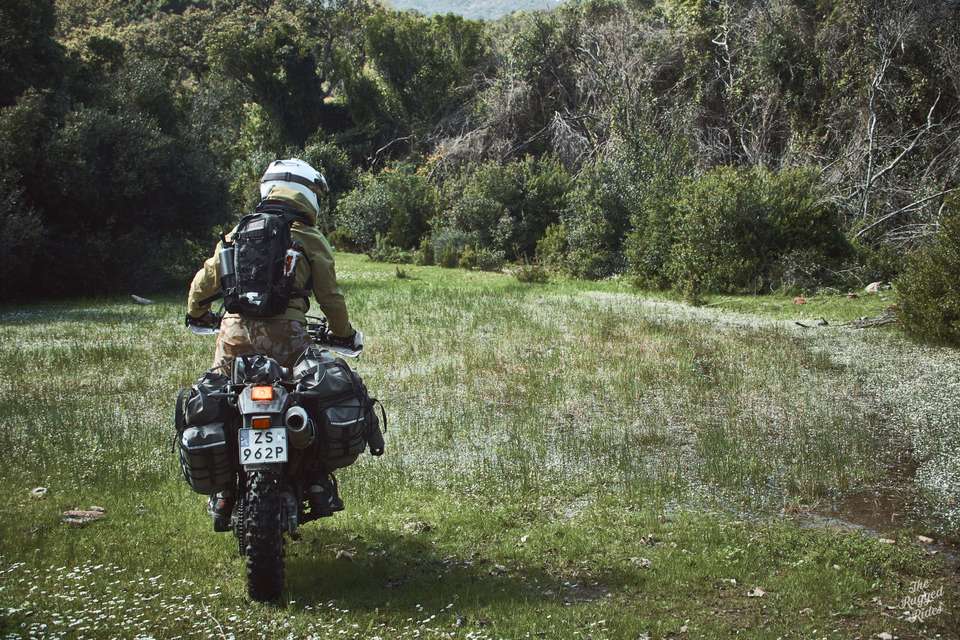
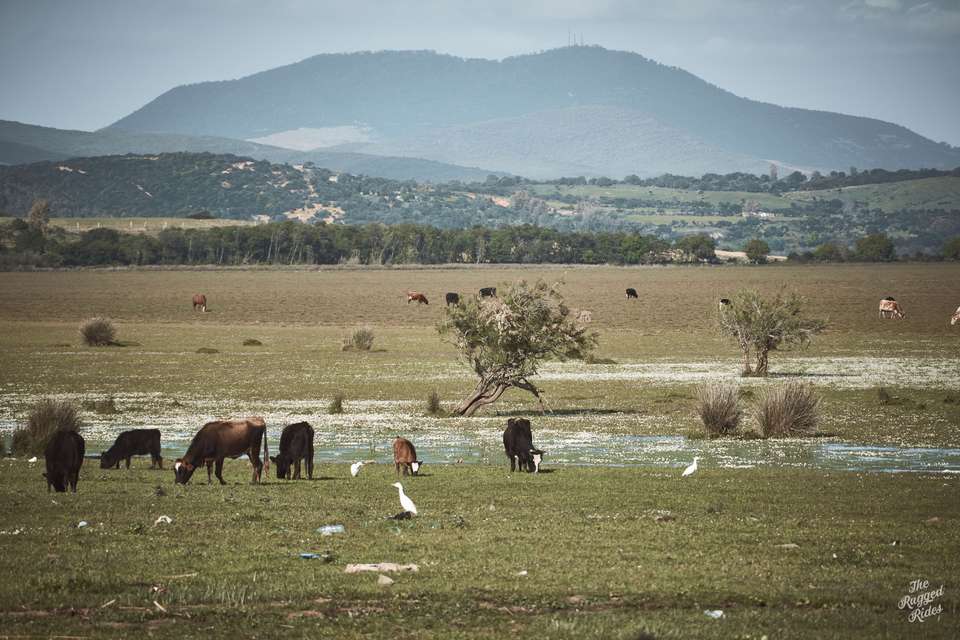
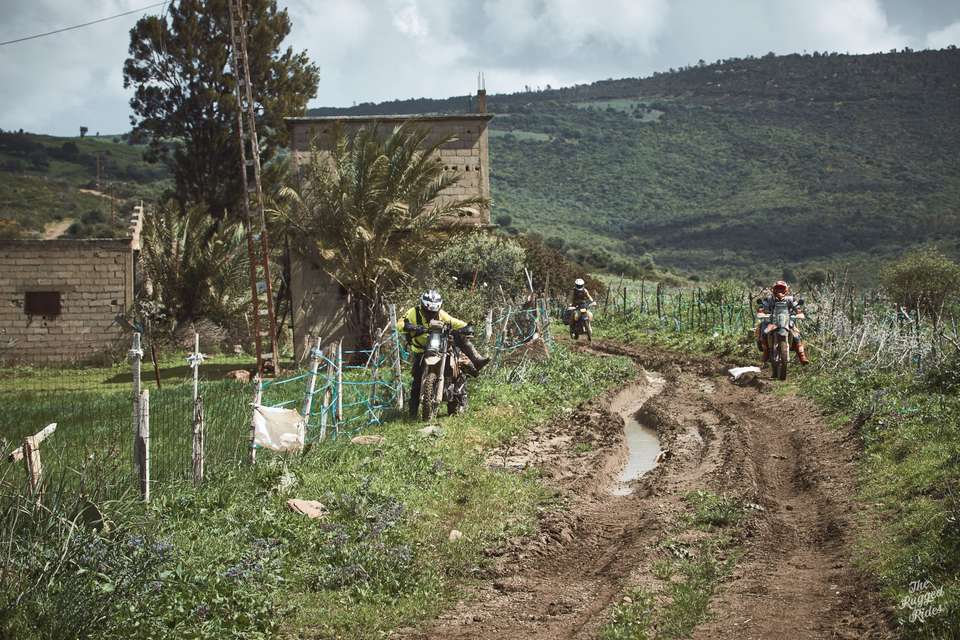
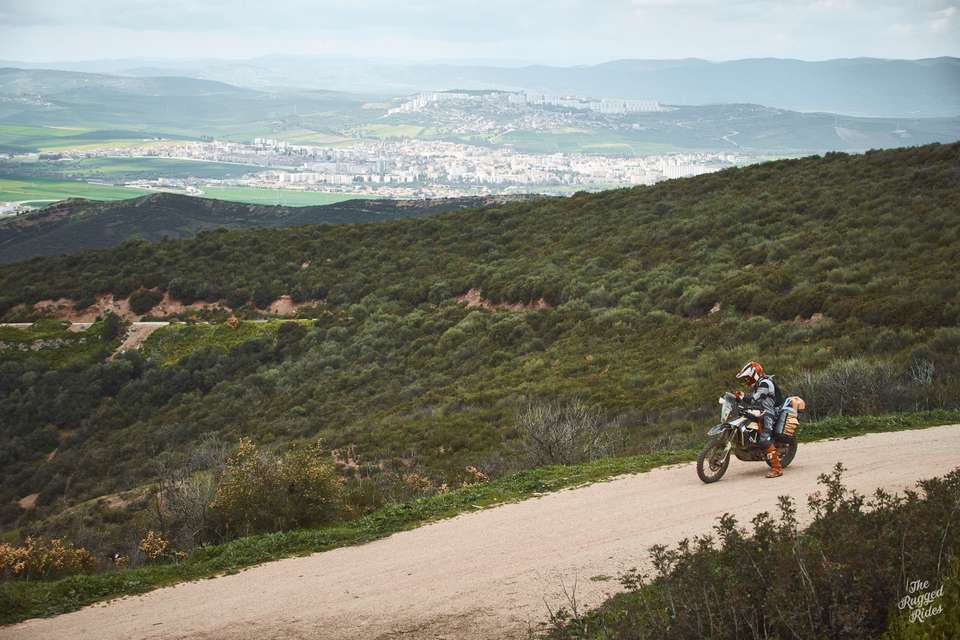
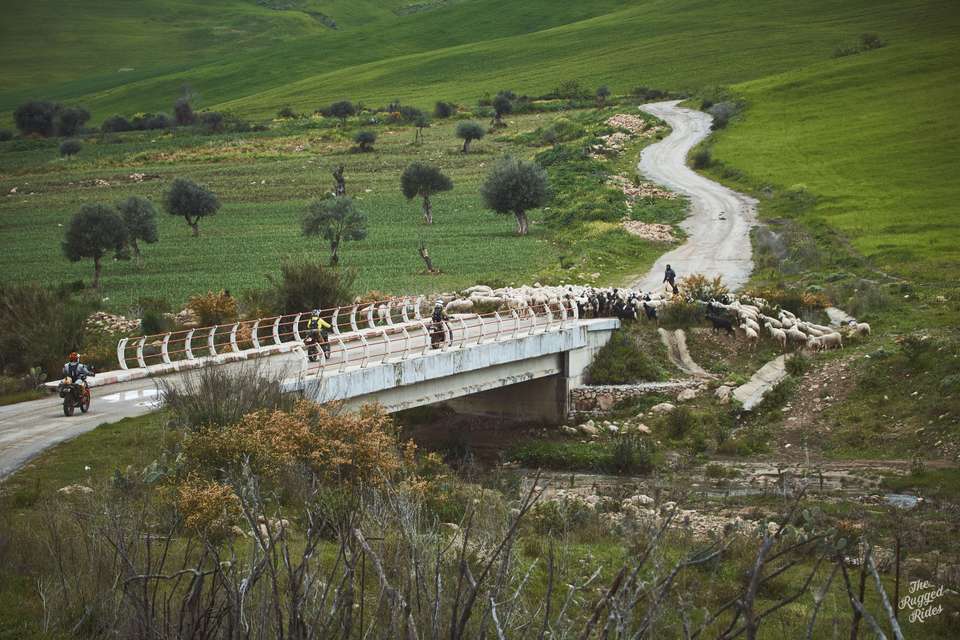
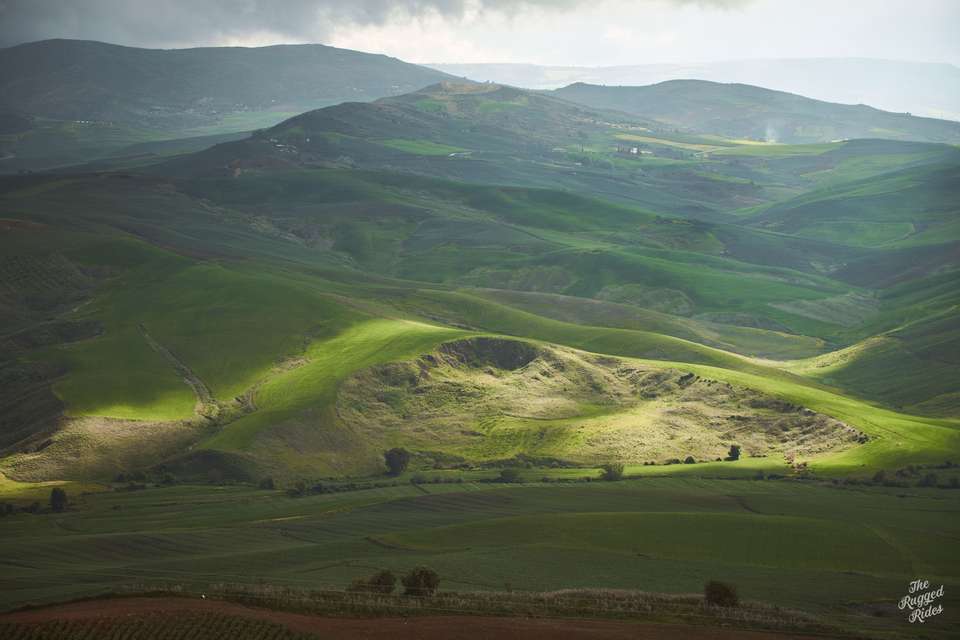
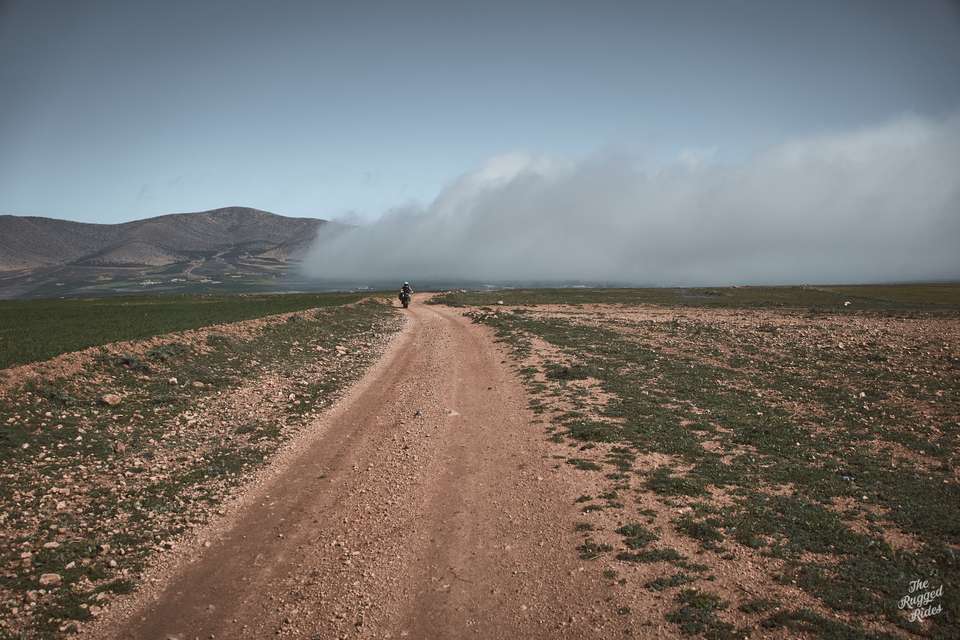
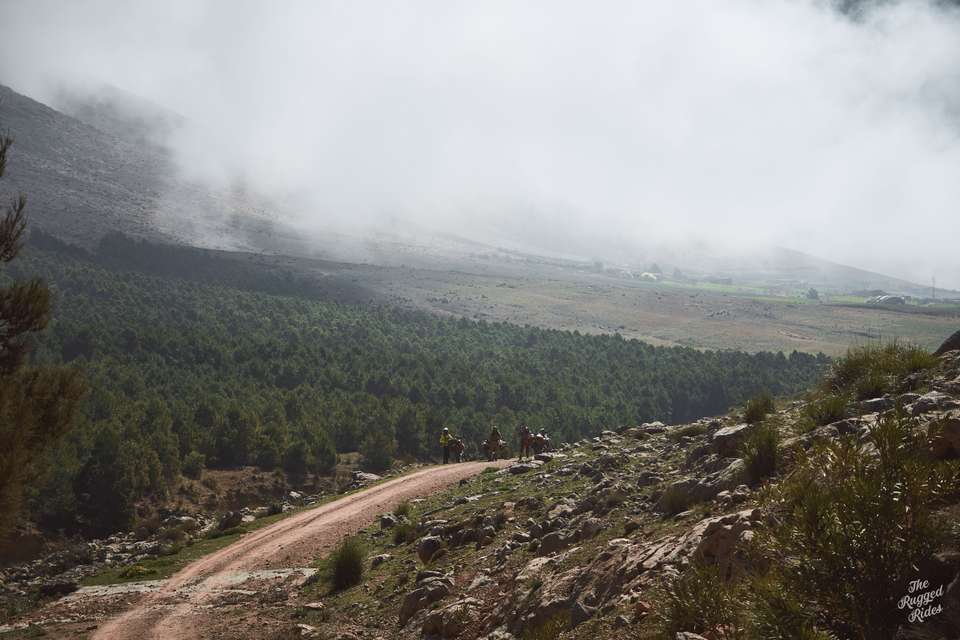
We continue through successive mountain ranges. Low pines line the ridges. We blast along fast fire roads with views stretching for miles. Every now and then we pass villages seemingly forgotten by the world. Occasionally the road simply dissolves into a worn track. Slowly, we approach Constantine. Just before reaching the city, the track climbs into a substantial mountain range and straight into a wall of silver-grey storm clouds. The wind picks up. And we catch the storm. By the time we reach the city we're soaked and freezing.
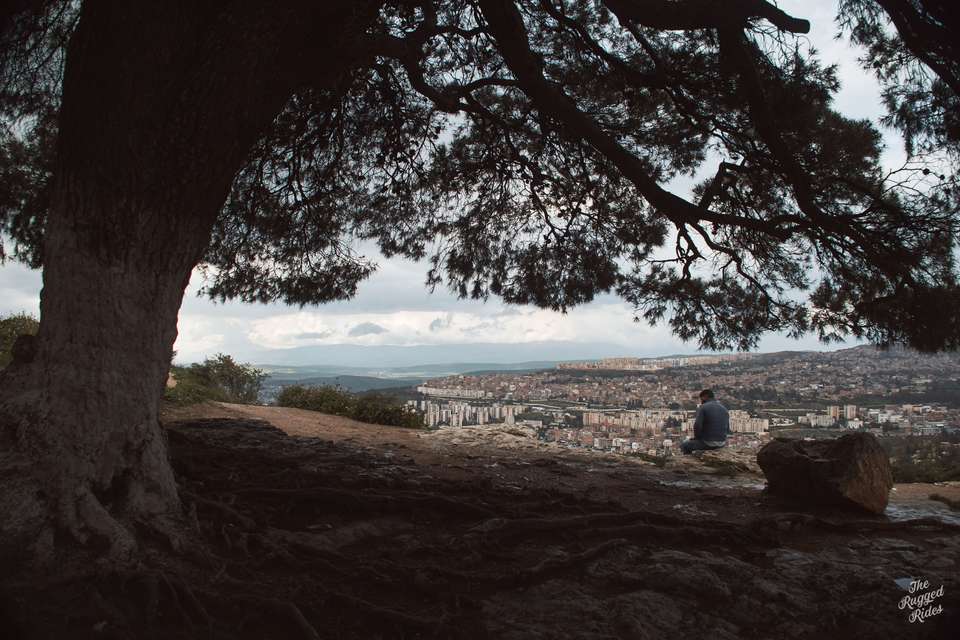
At one of the viewpoints we end up chatting with a group of students. They glance around cautiously before admitting that they plan to leave the country one day, just like most of their generation.
France?
No.
Canada.
They're also yet another group warning us to remove our GPS units whenever we leave the bikes unattended. Apparently it's dangerous. For the record, I didn't remove the ignition key once during the entire trip.
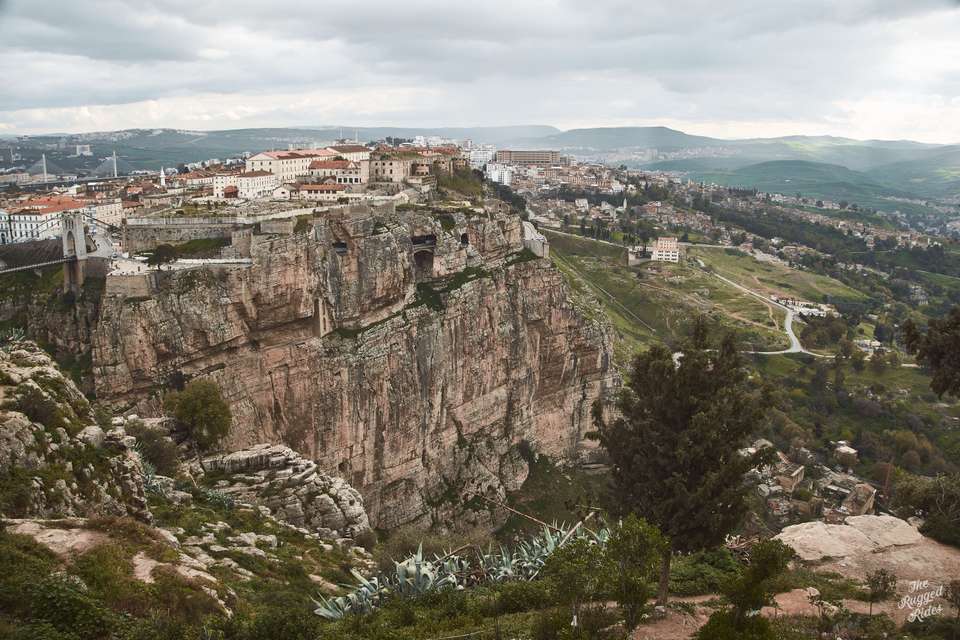
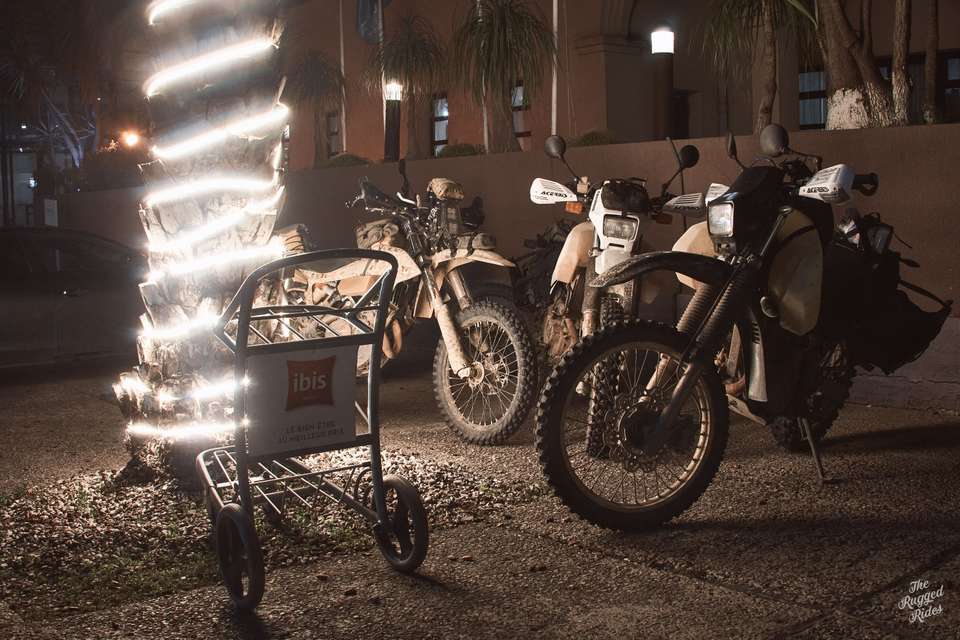
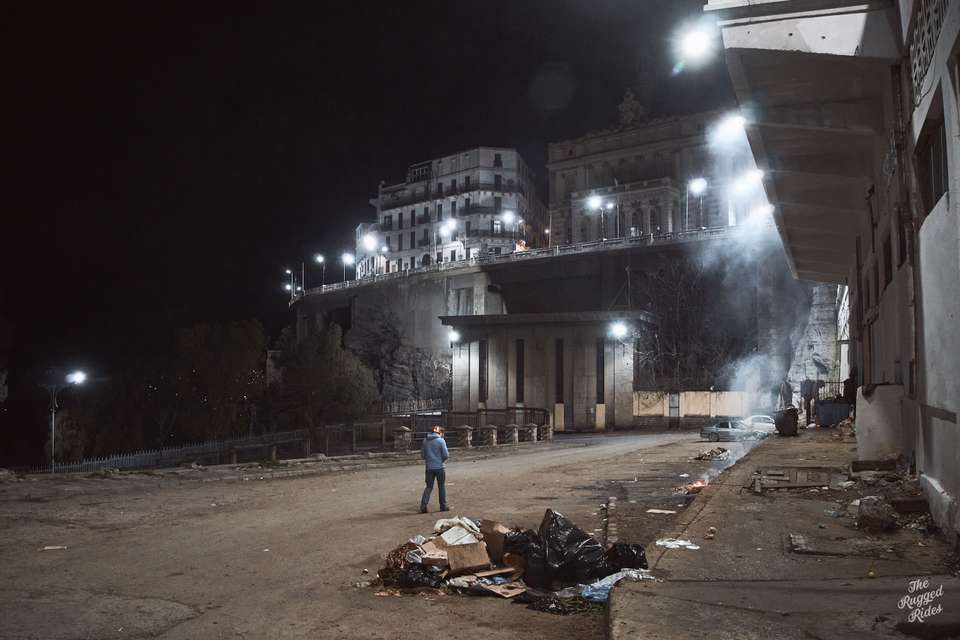
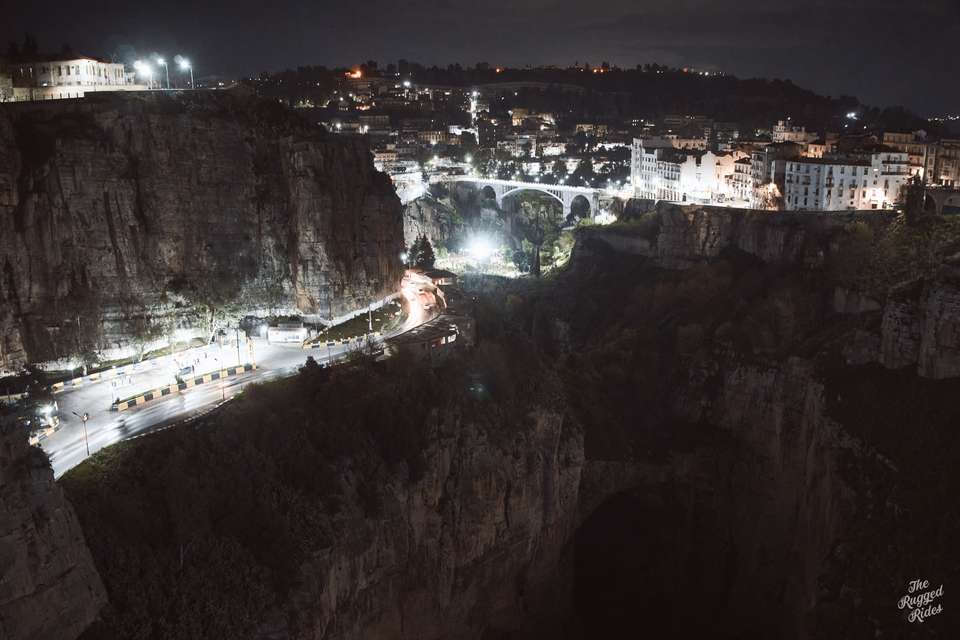
Constantine is breathtaking. Honestly, I can't remember the last time a city made such an impression on me. Perhaps because it feels genuinely authentic. It's not a polished theme park built for tourists. The walls themselves seem to breathe history. We decide to stay. Which creates a slightly awkward situation, because it means booking a hotel. In exchange for giving up a wild campsite in a spectacular location, we gain the chance to explore a city that's every bit as fascinating. We park beneath a streetlamp next to a palm tree, load our mud-covered panniers onto the hotel's luggage trolleys, naturally, and moments later set off to explore Constantine by night.
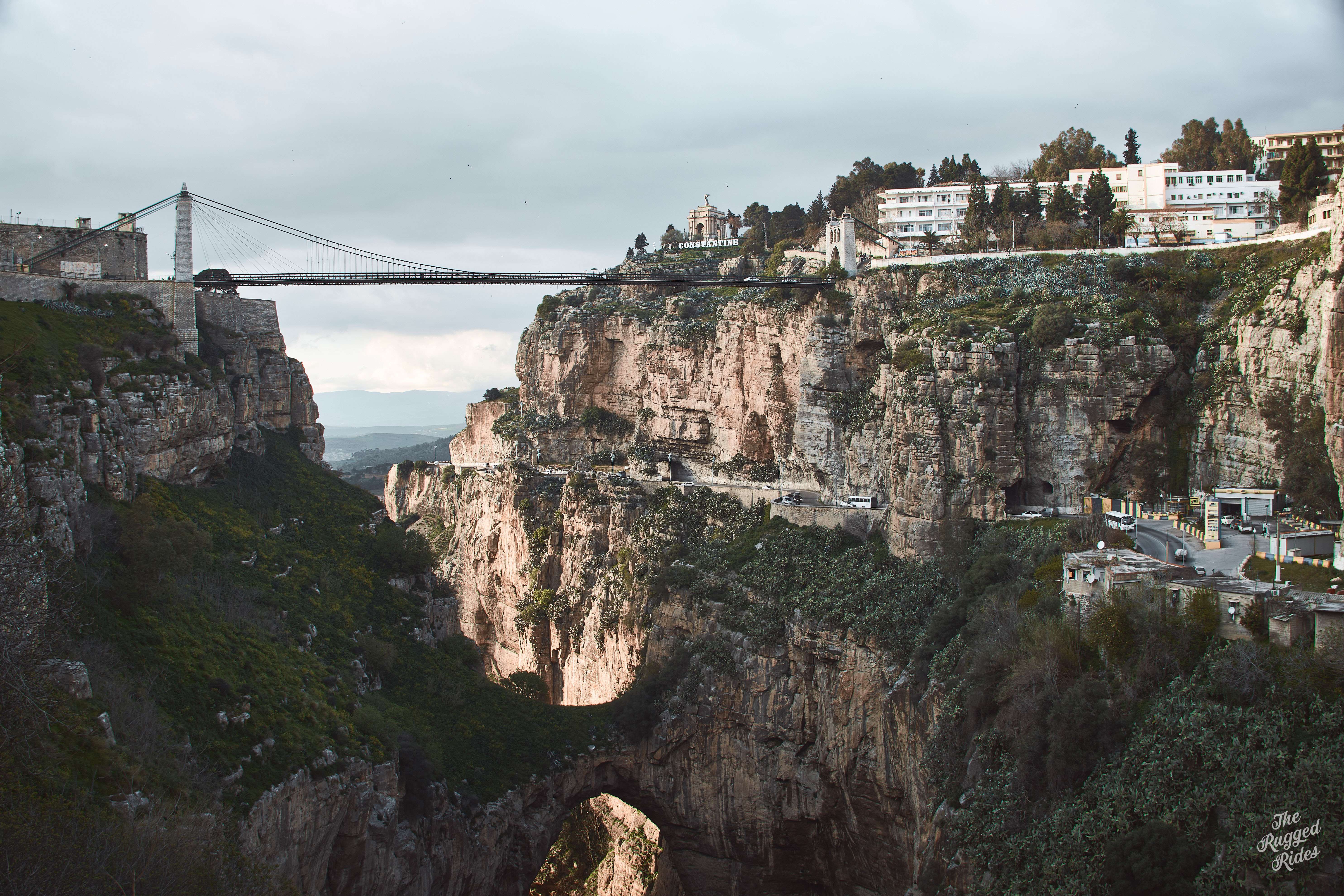
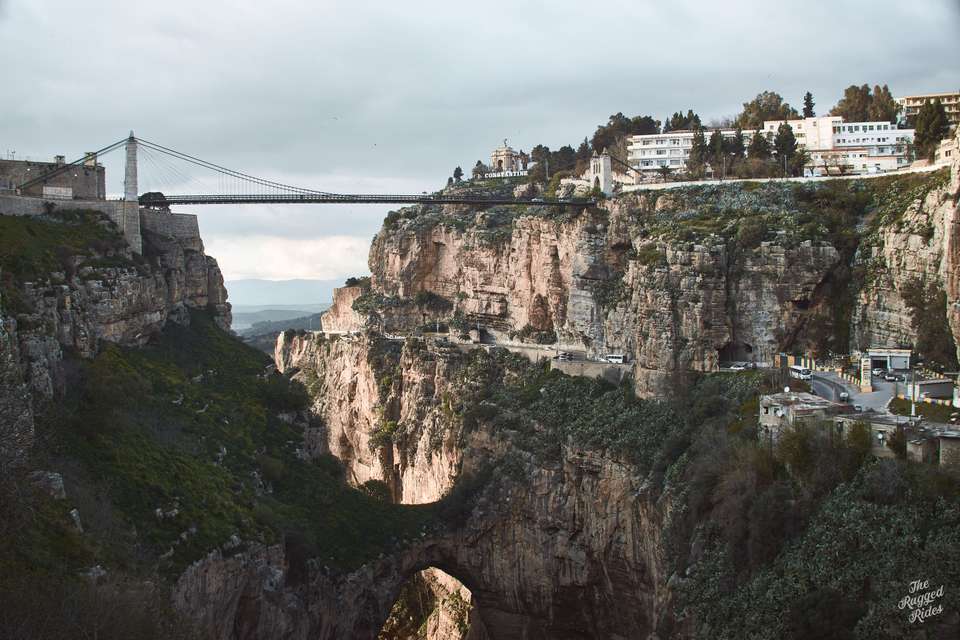
Constantine stands in a location that looks like a natural fortress. The city was built atop massive rock formations split apart by the deep gorge of the Rhumel River. On three sides it was protected by sheer cliffs, as if nature itself had decided to fortify it.
In ancient times it was known as Cirta, the capital of the Berber Kingdom of Numidia. Rulers whose names echoed through Rome's wars once governed here. City was wealthy, proud, and difficult to conquer. Eventually, and this is where the rather interesting legend of Sophonisba enters the story, the city was destroyed during conflicts with Rome. In 313 AD it was rebuilt by Emperor Constantine the Great, from whom it inherited not only its survival but also its present-day name.
Today, Constantine remains one of North Africa's most extraordinary cities. Its defining feature is a network of bridges suspended above incredible drops, connecting districts separated by the monumental gorge. The most spectacular of them is Sidi M'Cid bridge, built by the French and opened in 1912. For many years it was the highest suspension bridge in the world.
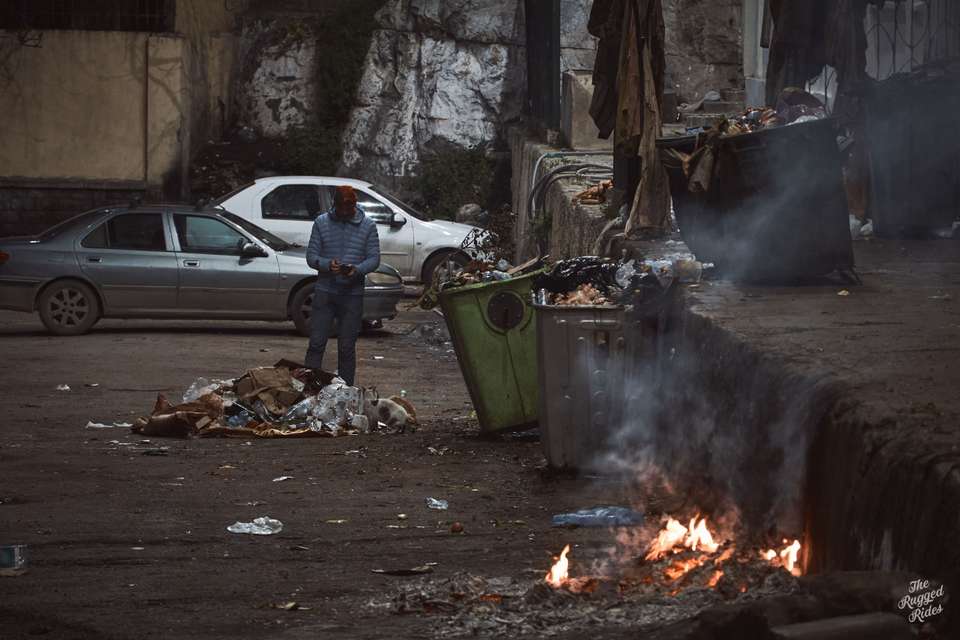
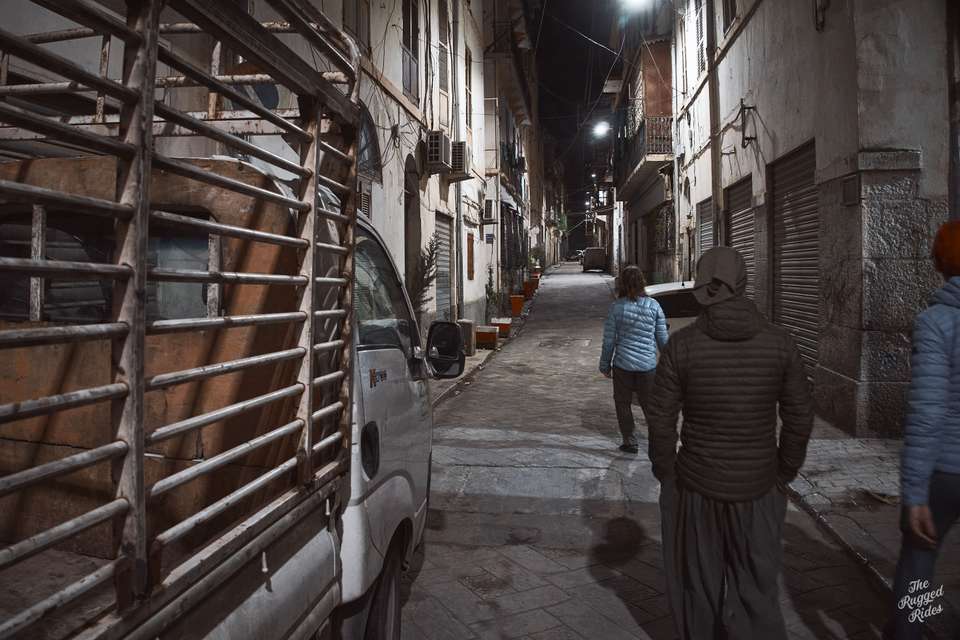
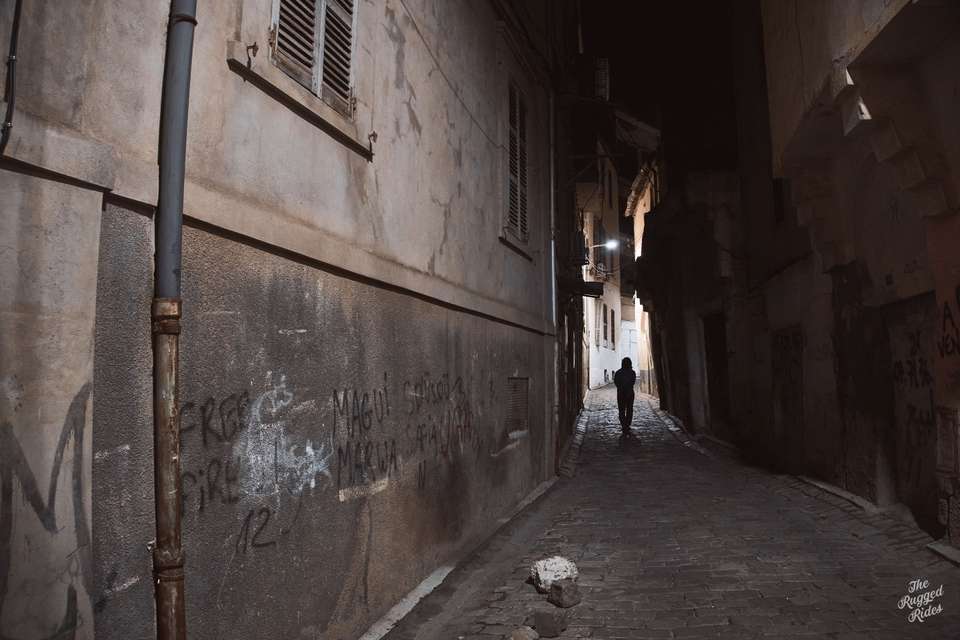
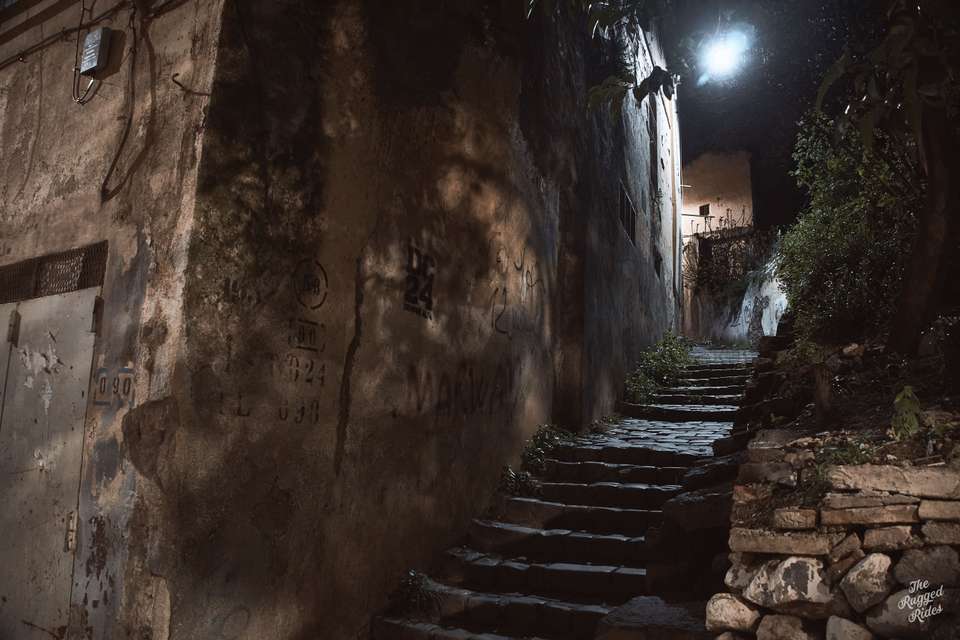
Enough history. Meanwhile, we're wandering through empty streets. The darkness is softened by streetlights and the glow from people's homes, but the city is asleep. Quiet. Still. We walk the entire rim of the canyon, constantly discovering hidden corners worth to be explored. Ancient, colonial and Arab influences spill from every street and every wall. My only disappointment is that we never found the nightlife I'd been hoping for.
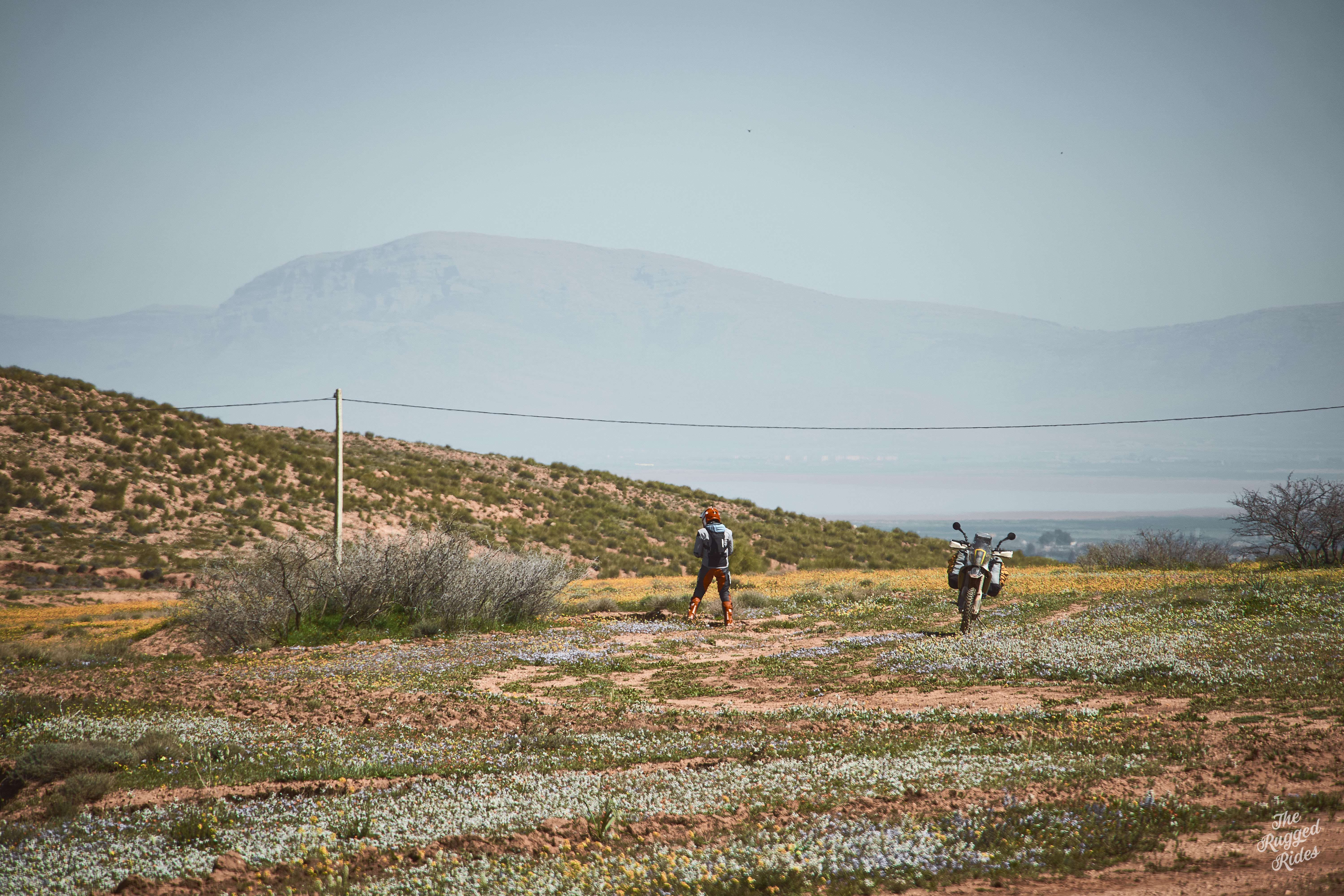
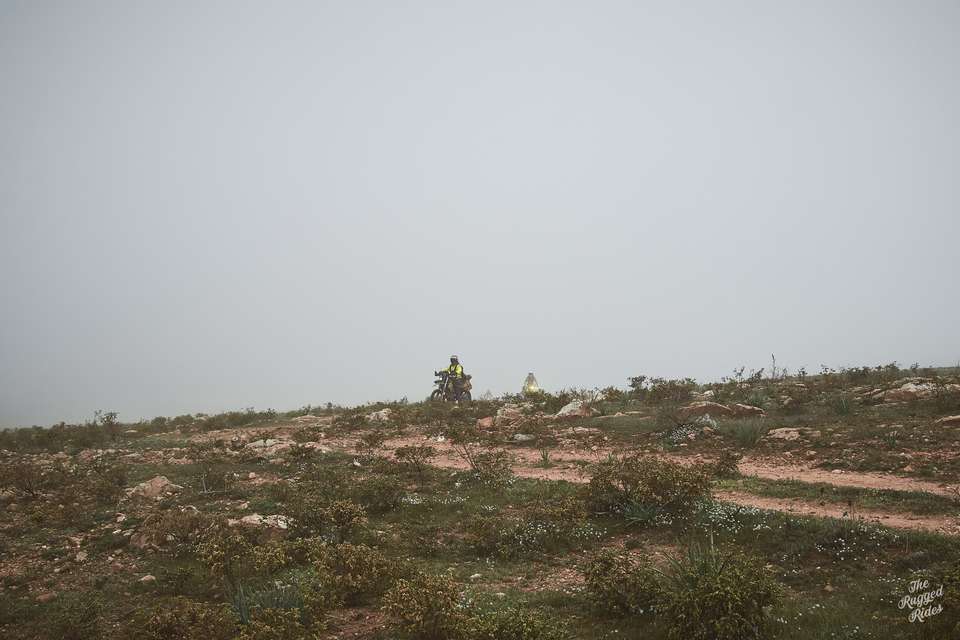
The next morning the sky is wrapped in wet clouds. I'd hoped the weather would clear overnight and we'd ride under blue skies. Apparently not at this altitude. Cold, soaked and riding through 100% fog, we cross the plateau. Water builds up on the goggles until riding becomes almost instinctive. As long as there's a road beneath the wheels, we're happy though. That's how we cover the first several dozen kilometres. Then suddenly, in the next mountain range, the fog vanishes. Blue sky. Rocky peaks. Mountain pines. For a moment it feels almost like riding somewhere in the Tatras. The mountains grow wilder. Valleys become deeper. Roads become narrower. Eventually we find ourselves in such remote country that herds of wild boar, gazelles and even startled foxes regularly bolt away from our path. And that's how we practically roll straight into the centre of Timgad.
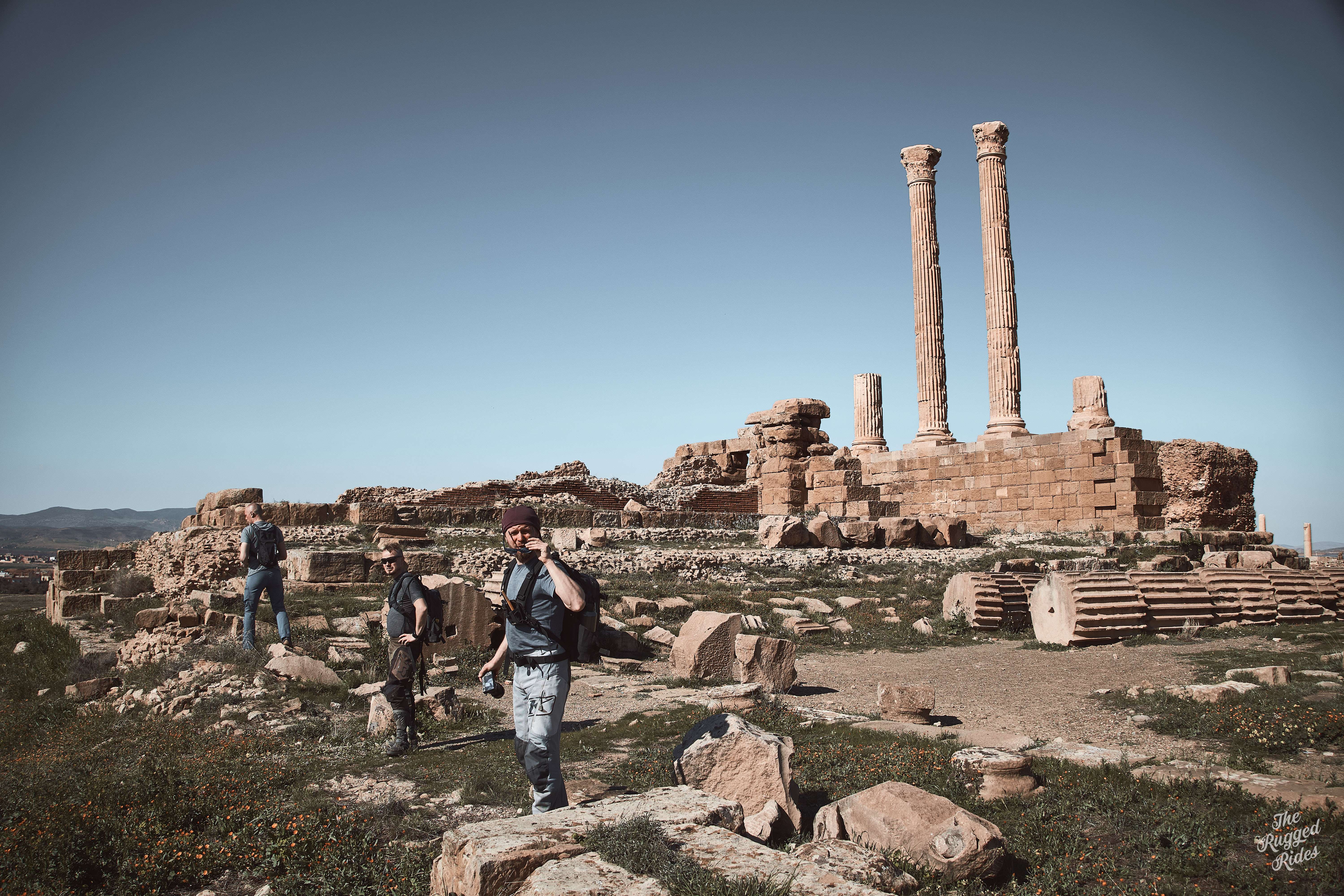
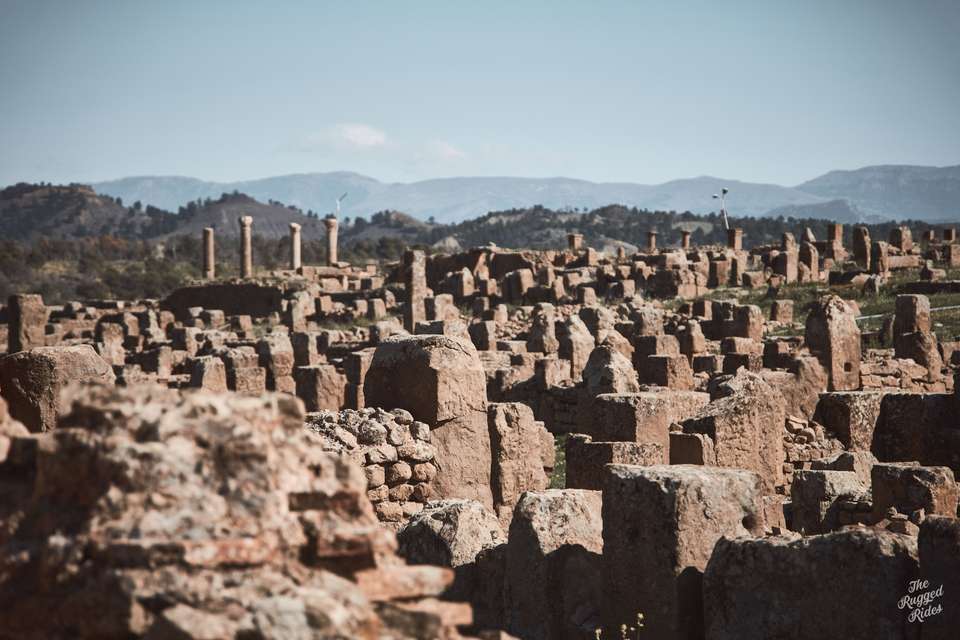
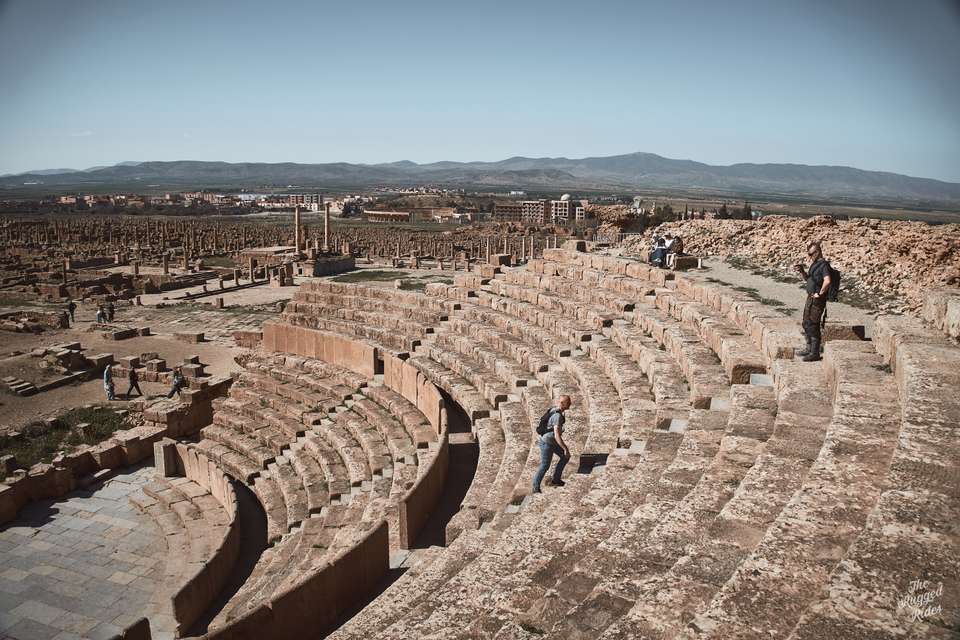
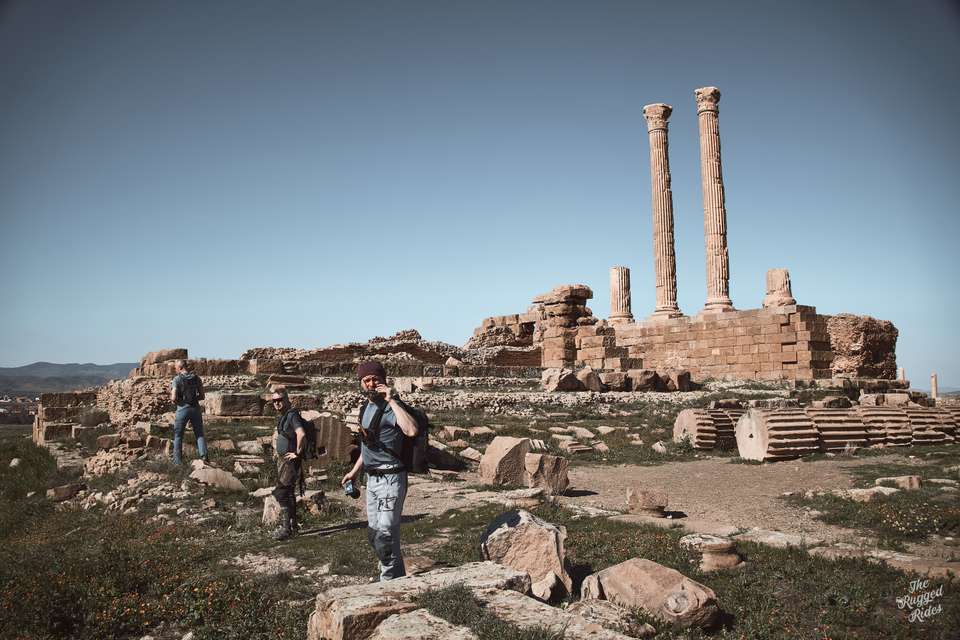
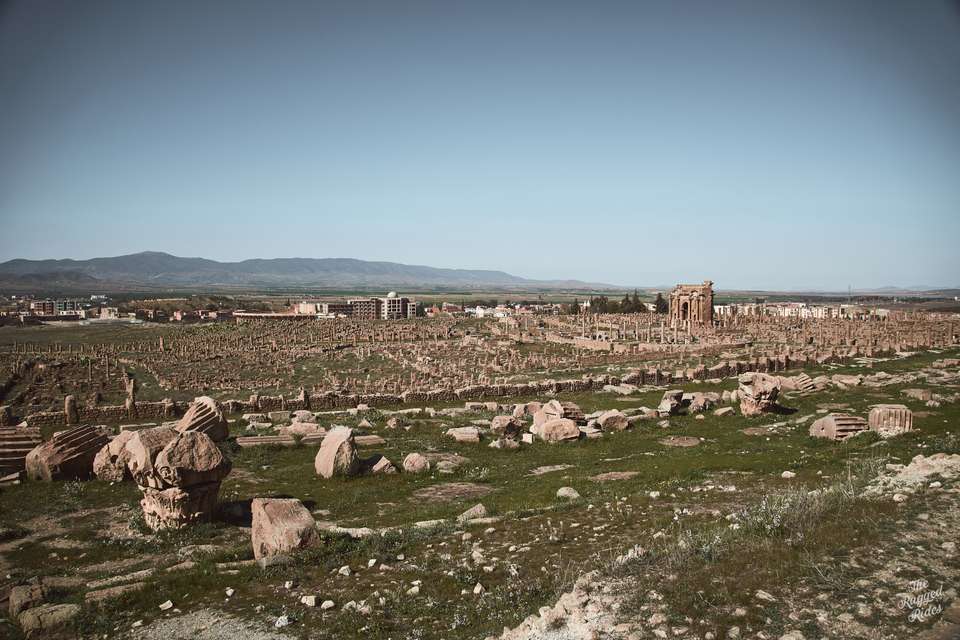
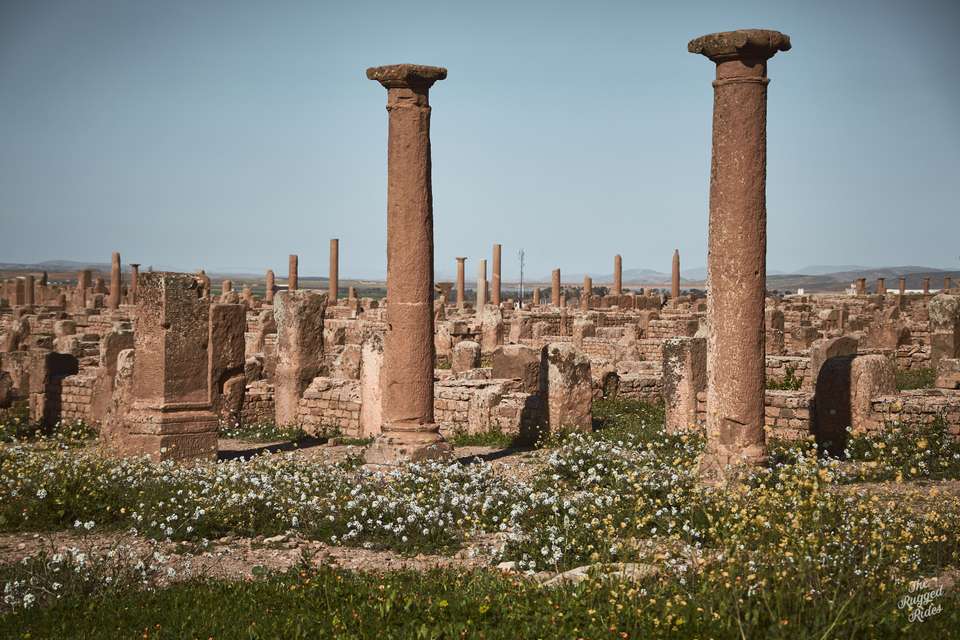
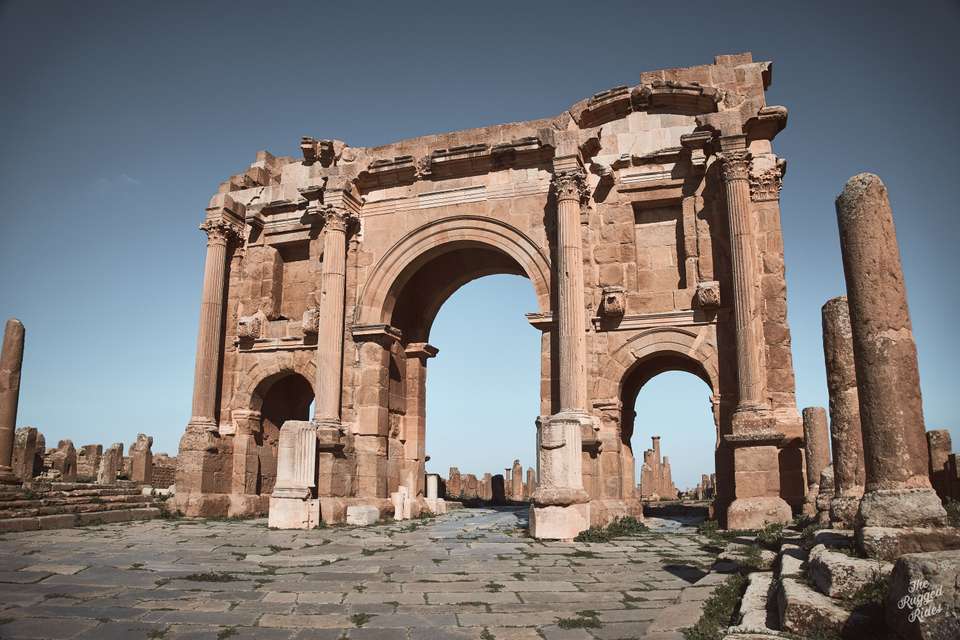
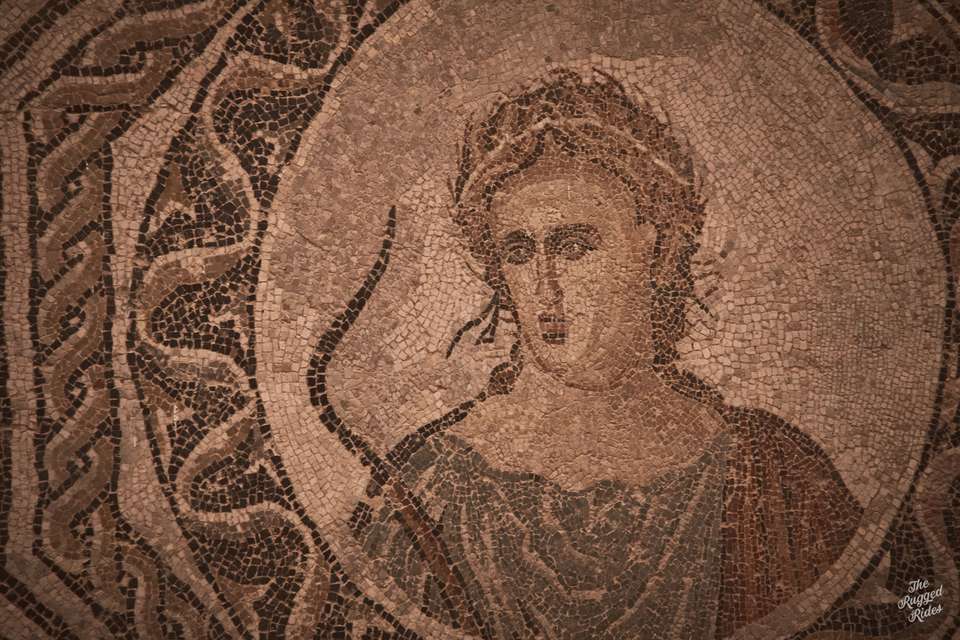
Timgad is the only truly tourist hive on our route. It's also an absolute gem and one of the places I'd been most excited about. This is one of the best-preserved Roman cities anywhere in the world. Even while drawing the track months earlier, I struggled to believe how vast the site was. And almost all of it still stands today, the columns, the streets, the grand avenues.
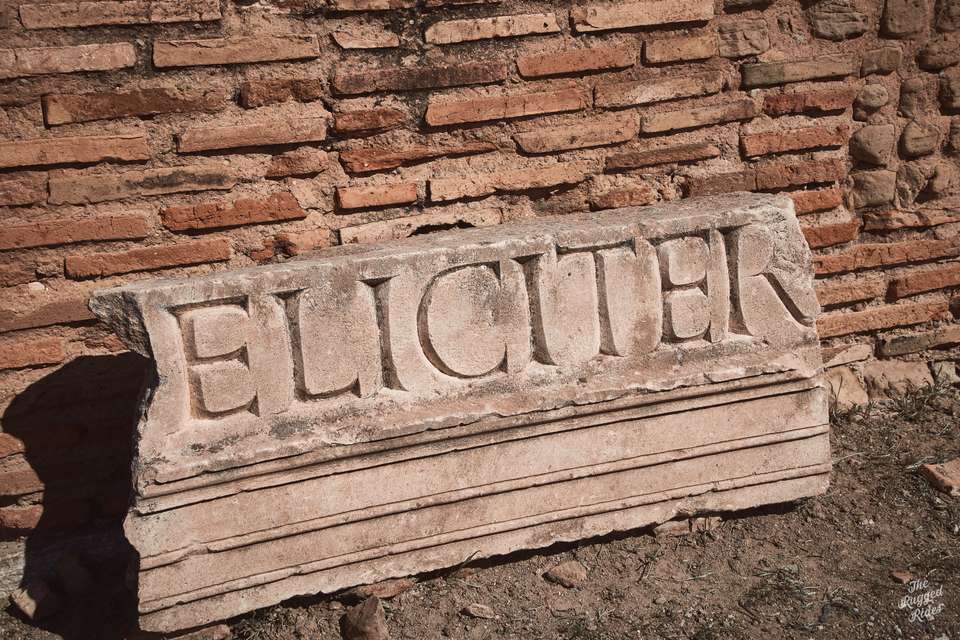
Timgad was founded around 100 AD by Emperor Trajan as a military colony for Roman veterans. From day one, it was designed to be perfect. Everything was planned with ruler-straight precision. There was a theatre, fourteen public baths, a library… A paradise. A centre of hedonism. Perhaps that's why a city intended for 2,000 inhabitants eventually grew to around 15,000. In the forum, carved into stone, is a phrase that perfectly captures the spirit of the place:
"Venari, lavari, ludere, ridere, hoc est vivere."
("To hunt, to bathe, to play, to laugh — that is life.")
Fair enough. I'd only make a tiny adjustment: To travel, to camp, to ride motorbikes and to laugh — that is life.
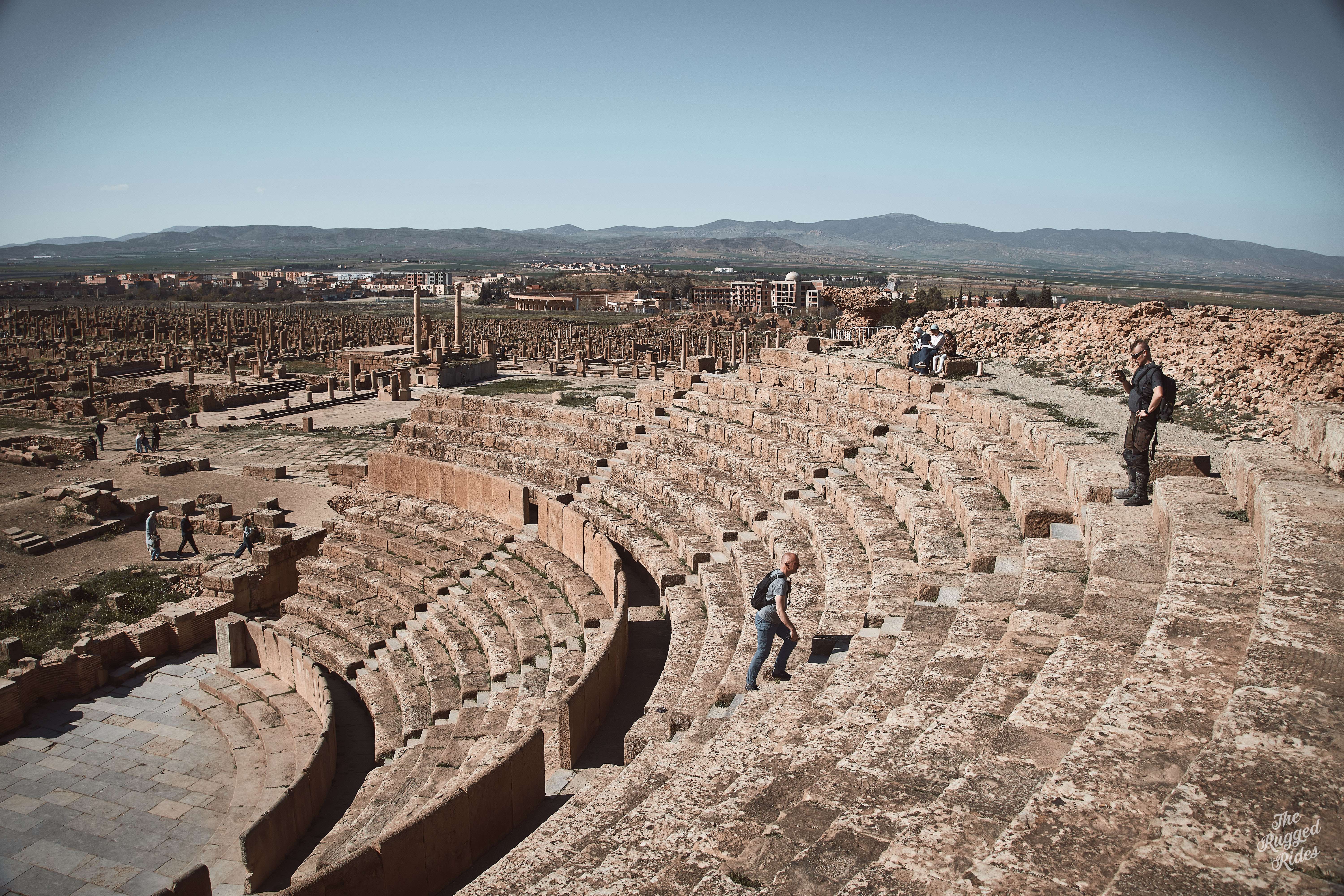
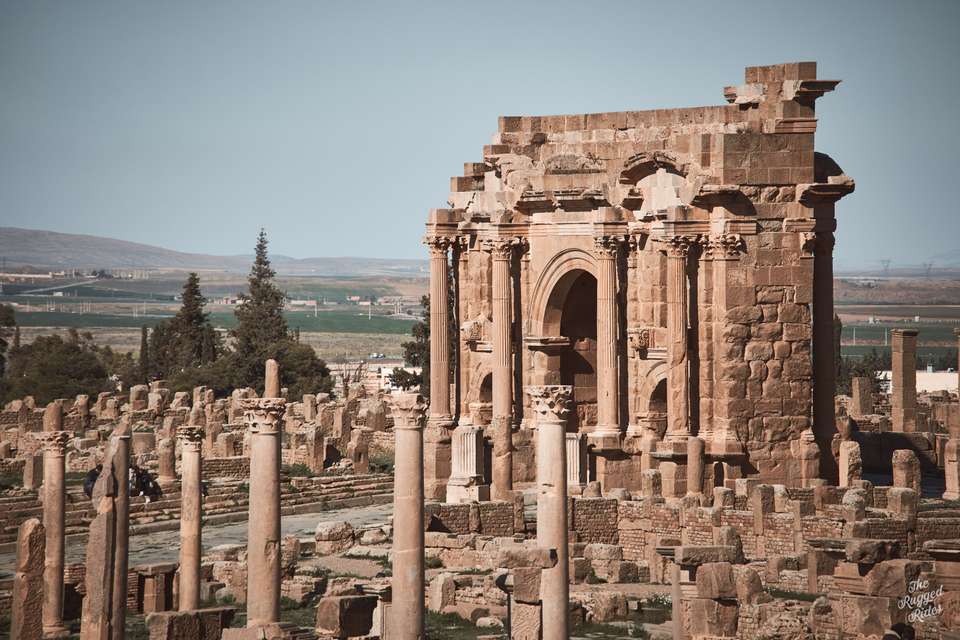
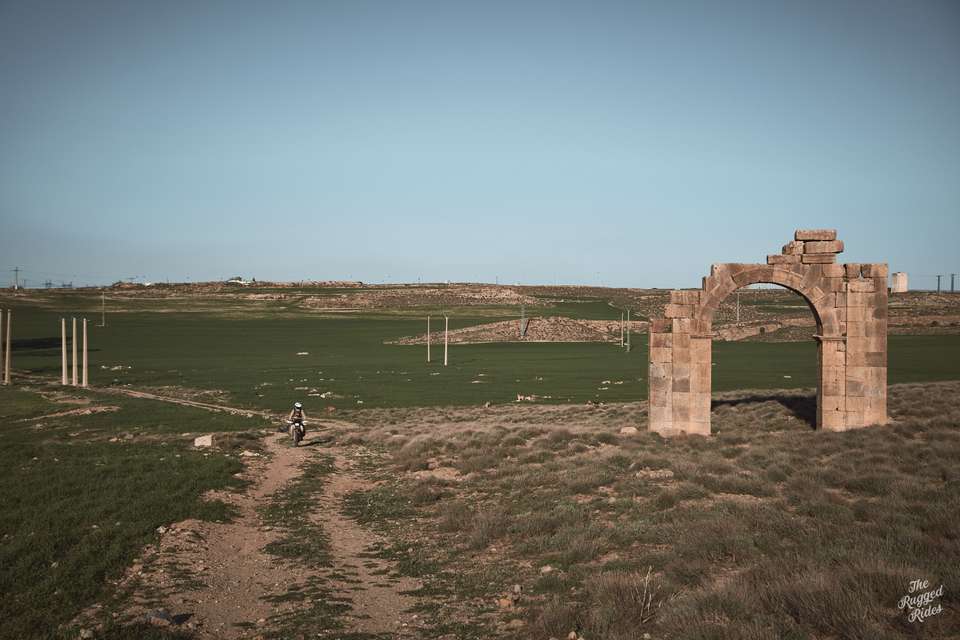
In the 5th century, the Roman Empire lost control of its finances and the city was plundered by the Vandals, later by Berber tribes, and eventually buried beneath the sands of the Sahara. For a very long time. In 1765, the Scottish explorer James Bruce became the first European to rediscover Timgad. He wrote that all he could see was the top of a triumphal arch protruding from the sand. Nobody believed him. People thought he'd made the whole thing up. The city was finally uncovered during French excavations beginning in 1881. What a discovery that must have been. What a feeling!
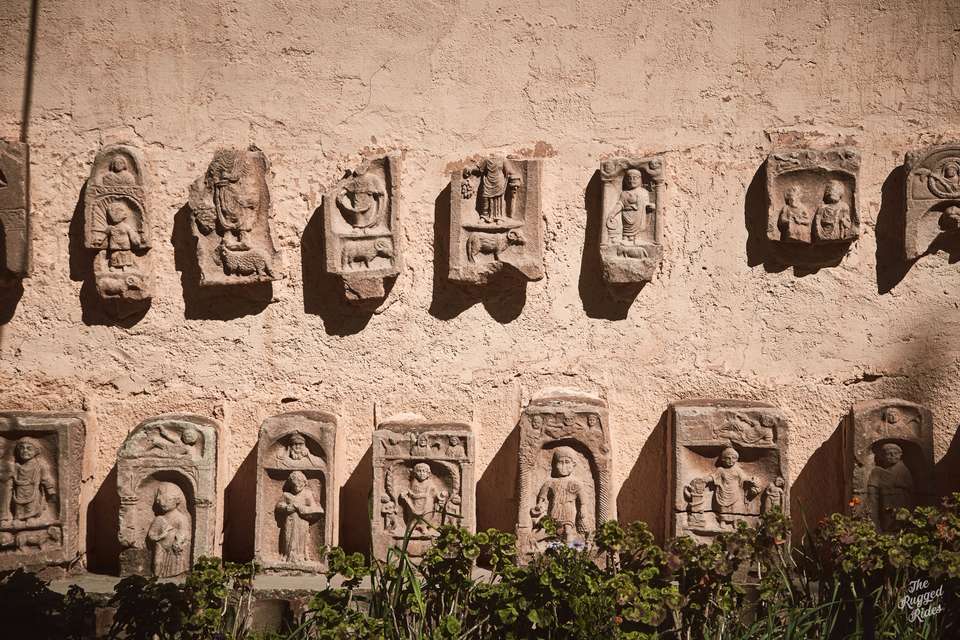
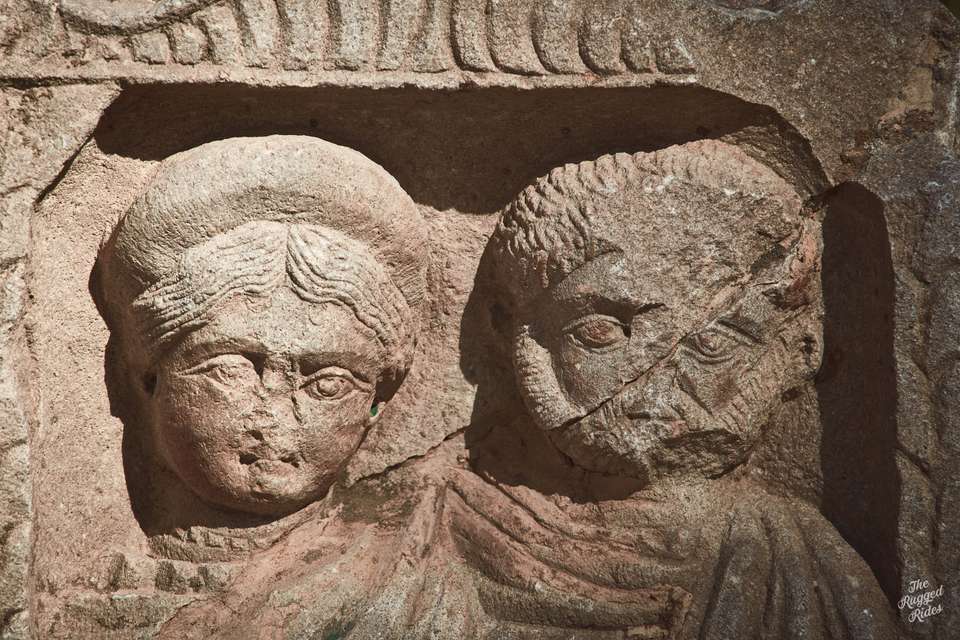
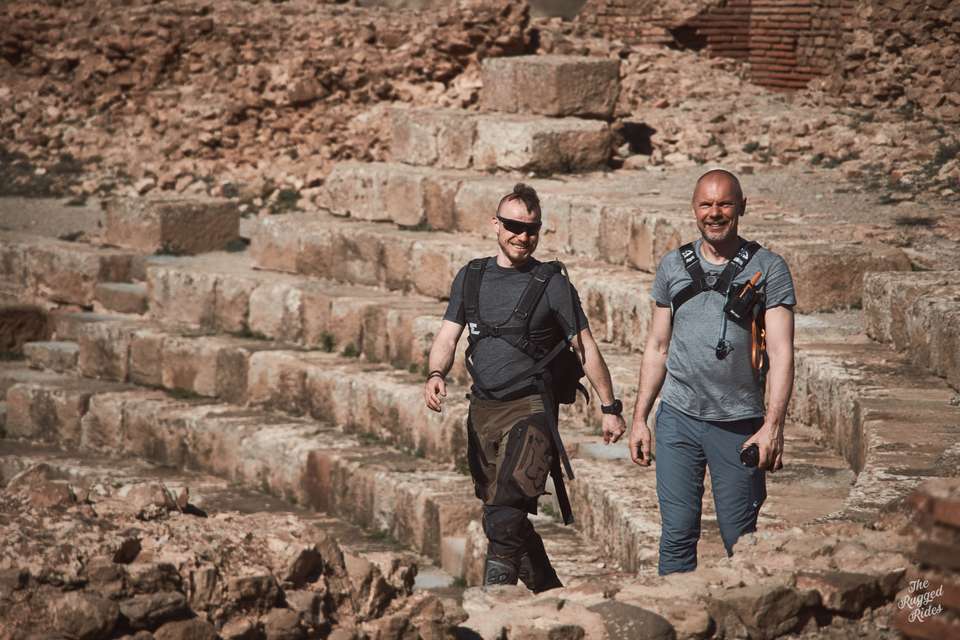
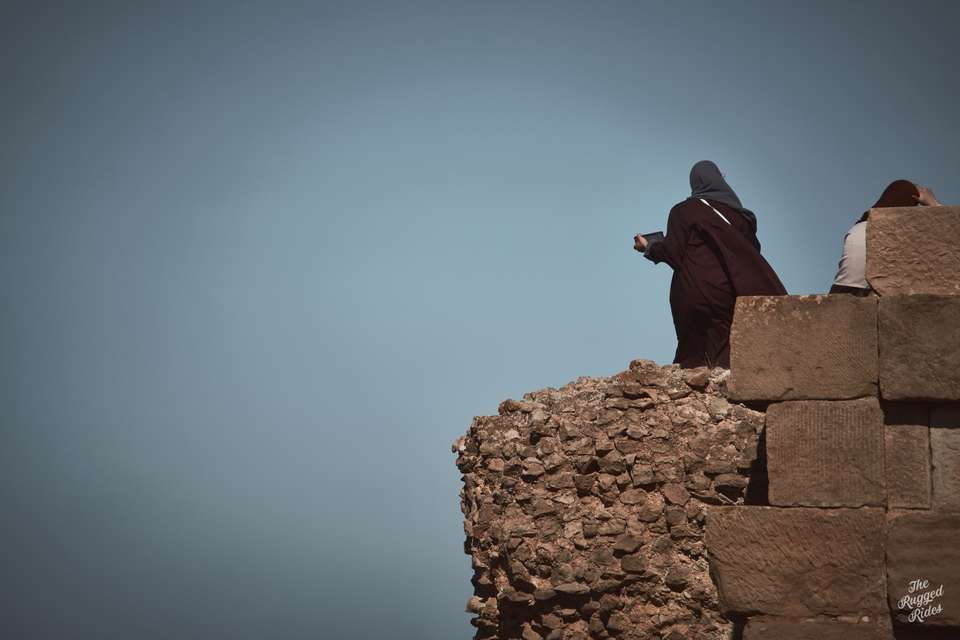
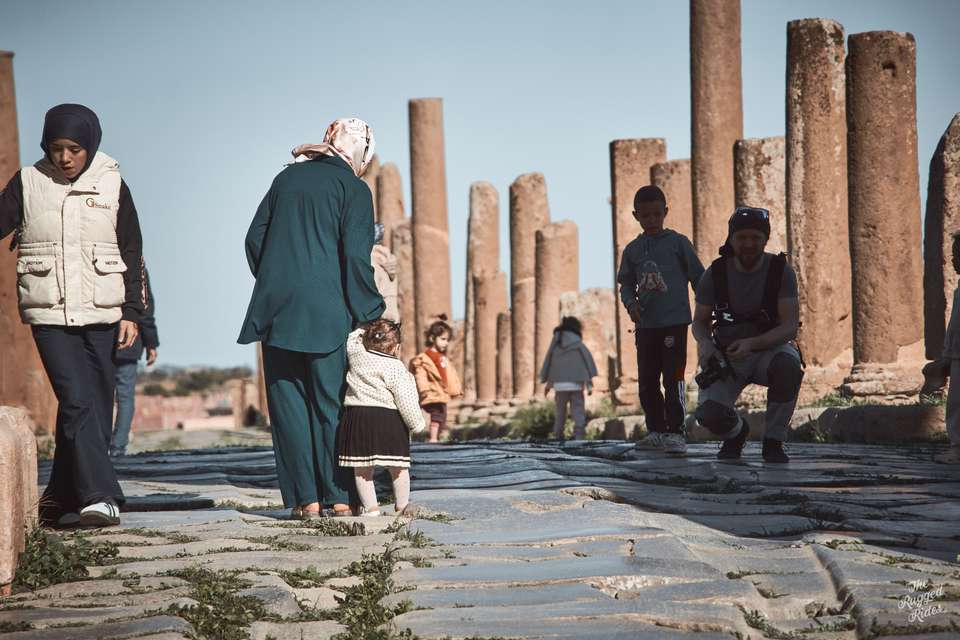
As we walk among the ruins, the history feels alive. If you're interested in the subject, I highly recommend reading about Marcus Aemilius and what he accomplished here. I called Timgad a tourist destination, but not in the European sense. The only common elements are the entrance tickets and the fence around the site. Beyond that, you're free to wander almost anywhere, touch the walls, touch the sculptures. Perhaps that's the perfect balance. Protected from looters, yet still open to people. Most visitors are Arabs, travellers from places like Qatar, or simply Algerians themselves. Standing beneath Trajan's Arch, I notice deep grooves carved into the stone. They're nearly 1,900 years old. Left by Roman chariots. Incredible.
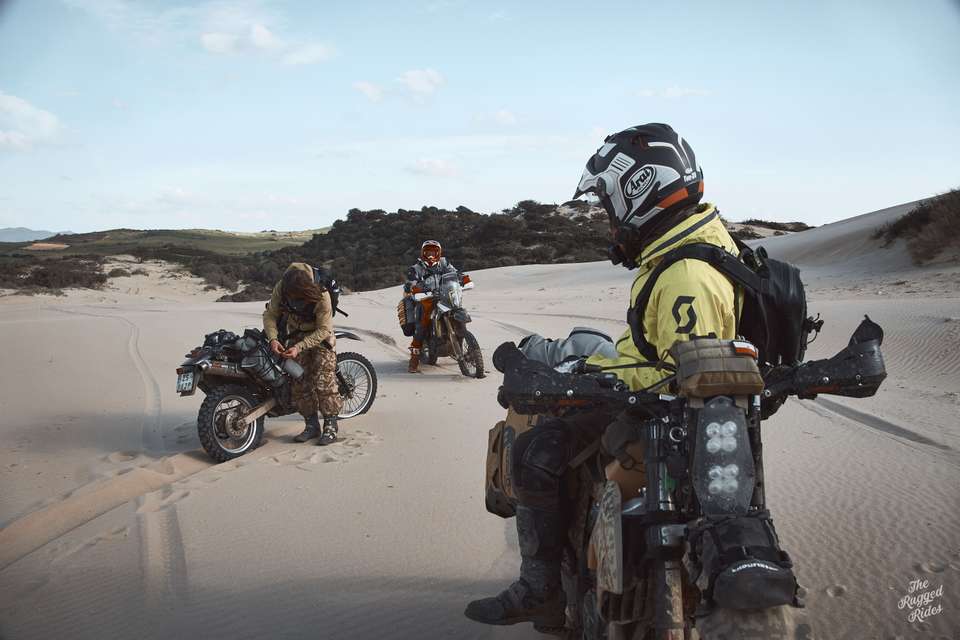
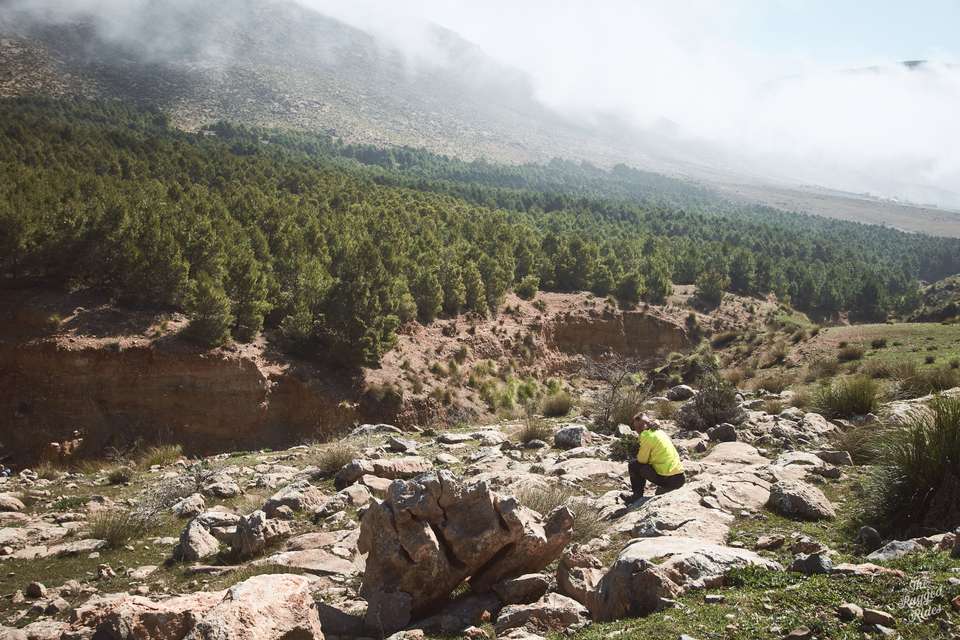
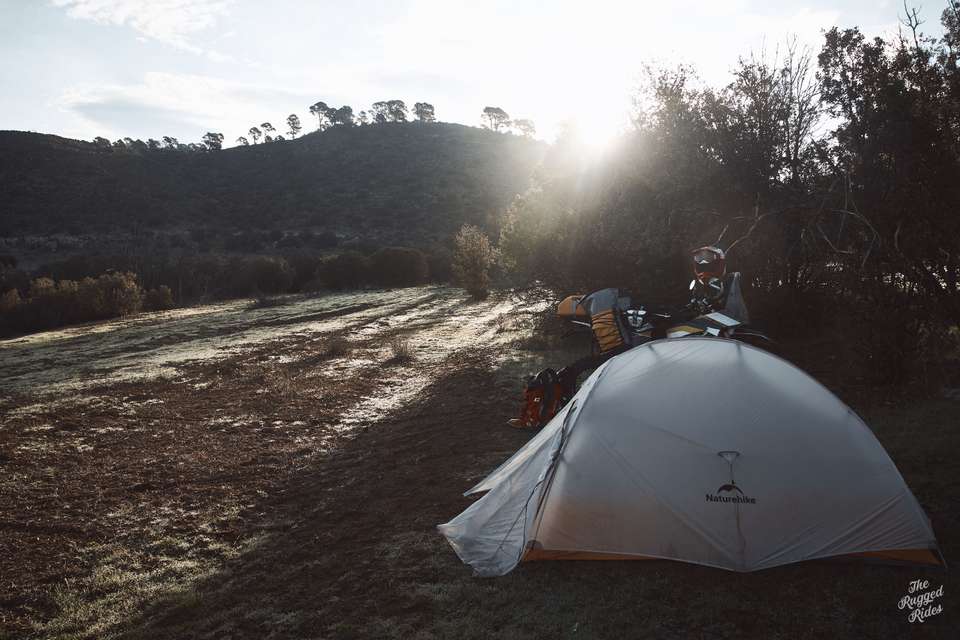
It's getting late, so we jump back onto the track and head towards the mountains beyond the city. The entire region is littered with traces of Roman civilisation. Arches, fragments of aqueducts and ruins emerge unexpectedly from fields and hillsides. The mountains begin to change character. Rock replaces forest. The trees become smaller and twisted. Eventually we find a bivouac on the edge of a magnificent canyon. Far in the distance, the only sign of civilisation is the light of an observation tower. Tomorrow, we'll reach the desert.
Track: https://loc.wiki/t/270303458?wa=sc
Leave a comment